The Ultimate Engagement Ring Size Guide (2025–2026)
Ensure a perfect fit with our comprehensive 2025 engagement ring size guide. Learn measurement hacks, the latest sizing tech, and expert tips for a surprise proposal.
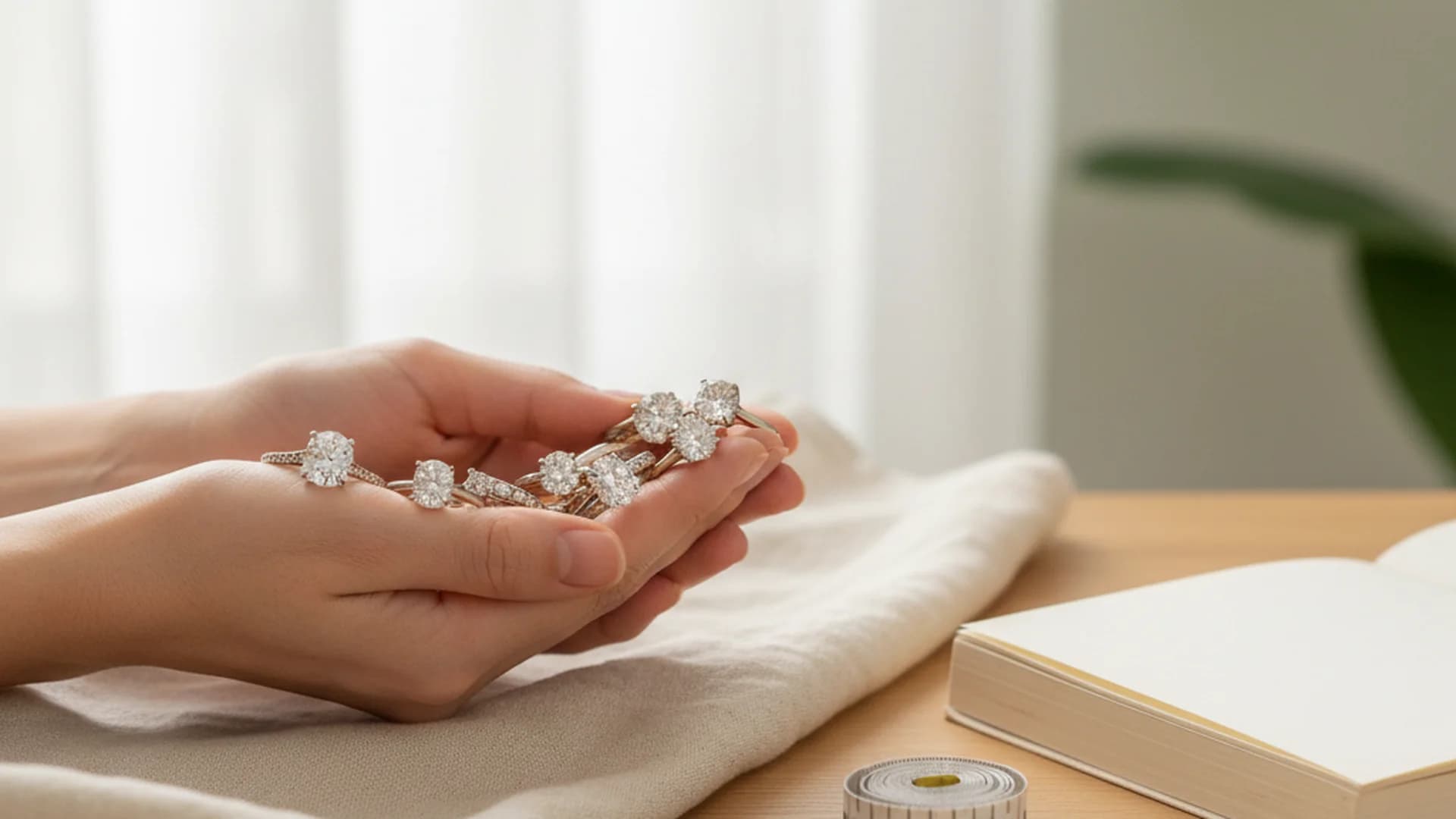
- Measure your finger at the end of the day when it is at its largest.
- 40% of rings require resizing, so understanding the 'Goldilocks fit' is essential.
- Modern AI sizing apps and band width adjustments are critical for 2025 trends.
A marriage proposal is one of the most significant milestones in a couple's journey. It is a moment of pure emotion, surprise, and commitment. However, nothing halts the momentum of a romantic "Yes!" quite like a ring that won't slide past the knuckle or one that spins loosely around the finger. This Engagement Ring Size Guide is designed to take the guesswork out of the process, ensuring that when the box finally opens, the fit is as perfect as the moment itself.
As an interfaith wedding officiant, I have seen many couples struggle with the technicalities of jewelry before they ever reach the altar. In 2025 and 2026, the landscape of engagement rings is shifting. With the rise of larger lab-grown diamonds and a return to bolder, sculptural bands, getting the size right is more complex—and more important—than ever before.
Understanding the "Goldilocks Fit"
Before you begin measuring, you must understand what a "perfect" fit actually feels like. Jewelers often refer to this as the "Goldilocks Fit"—not too tight, not too loose, but just right.
A properly sized ring should slide over the knuckle with a small amount of ease but offer "gentle resistance" when you try to take it off. This ensures the ring stays secure during daily activities like washing your hands or reaching into a pocket. If the ring spins freely around the base of the finger, it is likely too large. If it leaves a deep, red indent on the skin or causes the finger to bulge, it is too small.
Tip
2025 Engagement Ring Sizing Trends
The way we select and size rings has evolved rapidly. As we move into 2026, several key trends are influencing how couples use an engagement ring size guide.
The Lab-Grown "Carat Bump"
According to the 2024 The Knot Jewelry Study, the average center stone size has risen to 1.8 carats. This is largely due to the affordability and popularity of lab-grown diamonds. However, larger stones are "top-heavy." A ring that is even slightly too loose will cause a large diamond to "flop" to the side of the finger. This requires a more precise fit than the smaller, 1-carat stones of the past.
The Return of Chunky Bands
For years, dainty 1.5mm bands dominated the market. In 2025 and 2026, we are seeing a shift toward "chunky" and sculptural yellow-gold bands. These wider bands take up more "real estate" on the finger. Because they cover more surface area, they feel tighter than thin bands. Experts recommend sizing up by 0.25 to 0.5 when choosing a band wider than 4mm.
High-Tech Sizing Tools
The days of relying solely on a plastic strip from the mail are fading. 2025 has seen a surge in high-accuracy smartphone sizing apps. Tools like Ring Sizer by Jason Withers or RingFit use your phone’s camera and augmented reality (AR) to measure within 98% accuracy. These are excellent tools to cross-reference with traditional methods.
Essential Facts and Sizing Statistics
When using an engagement ring size guide, it helps to know where you sit relative to the average. While everyone is unique, these statistics from major retailers like The Knot and Taylor & Hart provide a helpful baseline:
| Metric | Women (U.S.) | Men (U.S.) | Women (UK) | Men (UK) |
|---|---|---|---|---|
| Average Size | 6 to 6.5 | 9 to 10 | L to M | T to Q |
| Dominant Hand | +0.5 size | +0.5 size | +0.5 size | +0.5 size |
| Resizing Frequency | 40% | 25% | 40% | 25% |
Note
How to Measure Your Ring Size at Home
While visiting a professional jeweler is the most accurate method, many couples prefer to start the process at home—especially if the proposal is meant to be a surprise.
The Paper Method
- Cut a thin strip of non-stretching paper (about 1/2 inch wide).
- Wrap it snugly around the base of the ring finger.
- Mark the point where the paper overlaps.
- Measure the length in millimeters and use a conversion chart to find your size.
Heads up
The "Borrow and Trace" Method (For Surprises)
If you are trying to keep the proposal a secret, "borrow" a ring that your partner already wears on their left-hand ring finger. Place it on a piece of paper and trace the inside circumference of the band. Take this drawing to a jeweler. Alternatively, you can use a smartphone app to measure the physical ring while they are in the shower or asleep.
Professional Sizing Beads
If your partner has large knuckles but slender fingers at the base, the ring may fit over the knuckle but spin once it is on. In this case, ask your jeweler about "sizing beads." These are two small metal bumps added to the inside of the band that grip the finger without making the ring too tight to get over the knuckle.
From the OurVows workspace
Ring sorted — now the wedding.
Set a realistic budget and a checklist that knows what's next, all in one free workspace.
Best Practices for Accuracy
Fingers are more dynamic than we realize. They change size based on temperature, diet, and time of day. To ensure your engagement ring size guide results are accurate, follow these pro-tips:
- The Afternoon Rule: Always measure in the late afternoon or evening. Fingers are at their smallest in the cold morning and largest after a full day of activity and warmth.
- Three-Time Verification: Measure at least three different times on three different days. This accounts for fluctuations in water retention or changes in weather.
- Account for Setting Style: If you are looking at Engagement Ring Settings that are "low-profile," they tend to feel more secure and may require a snugger fit than high-set cathedral styles.
Do this
Common Mistakes to Avoid
Even with a detailed engagement ring size guide, it is easy to make simple errors that lead to a poor fit.
1. The "Cold Finger" Trap
If you measure your finger immediately after a cold shower or a walk in the winter air, your measurement will be too small. When you warm up, the ring will become uncomfortably tight or even impossible to remove.
2. Ignoring "Comfort Fit" vs. "Standard Fit"
A "Comfort Fit" ring is domed or rounded on the inside, while a "Standard Fit" ring is flat. Because there is less metal touching the skin in a Comfort Fit design, you usually need to go 0.5 size smaller than your standard measurement. Always check which fit your chosen Engagement Ring Guide or jeweler uses.
3. Assuming All Rings Can Be Resized
This is a critical misconception. While many gold and platinum bands are easy to adjust, certain styles are permanent:
- Eternity Bands: Diamonds that go all the way around the band cannot be cut or resized.
- Alternative Metals: Rings made of Tungsten, Titanium, or Cobalt cannot be resized by traditional methods.
- Intricate Pavé: If a band has many small side diamonds, resizing it more than one full size can cause the tiny prongs to loosen, leading to lost stones.
Heads up
The Financial Side of Sizing
Getting the size right isn't just about comfort; it's about protecting your investment. While some jewelers offer one free resizing within the first year, others charge between $50 and $200 depending on the complexity of the metal and the stones.
Additionally, every time a ring is resized, the metal is slightly weakened. If you are planning a Custom Engagement Ring Guide project, the jeweler will emphasize the importance of getting the size right at the casting stage to maintain the structural integrity of the piece. This is also why Engagement Ring Insurance is vital; it often covers damage that might occur during the resizing process or if a stone is lost due to a poor fit.
Frequently asked questions
Can I use a ring from a different finger to find the size?
What if I am between two sizes?
Does the shape of the diamond affect the ring size?
How much does it cost to resize a ring?
Conclusion
Finding the perfect fit is a blend of science, technology, and a little bit of secret investigation. By using this engagement ring size guide and following the "measure thrice" rule, you can approach your proposal with total confidence. Whether you are opting for a classic solitaire or exploring Alternative Engagement Rings, the comfort and security of the ring are what will allow your partner to wear it with joy for a lifetime.
Remember, while DIY methods and AI apps are fantastic starting points, a quick visit to a professional jeweler is still the "gold standard" for accuracy. Take the time to get it right—your future self (and your partner's finger) will thank you.
Do this
Ready when you are
Start Planning Your Ceremony
Let’s design a wedding ceremony that reflects your unique love story.
Ready when you are
Plan your wedding without the chaos.
Free forever for couples just getting started. Two minutes to set up. No credit card.
Keep reading
The Ultimate Guide to Engagement Ring Insurance: Protecting Your Symbol of Love
Protect your investment with our comprehensive guide to engagement ring insurance. Learn about costs, 2025 trends, coverage types, and how to avoid common pitfalls.
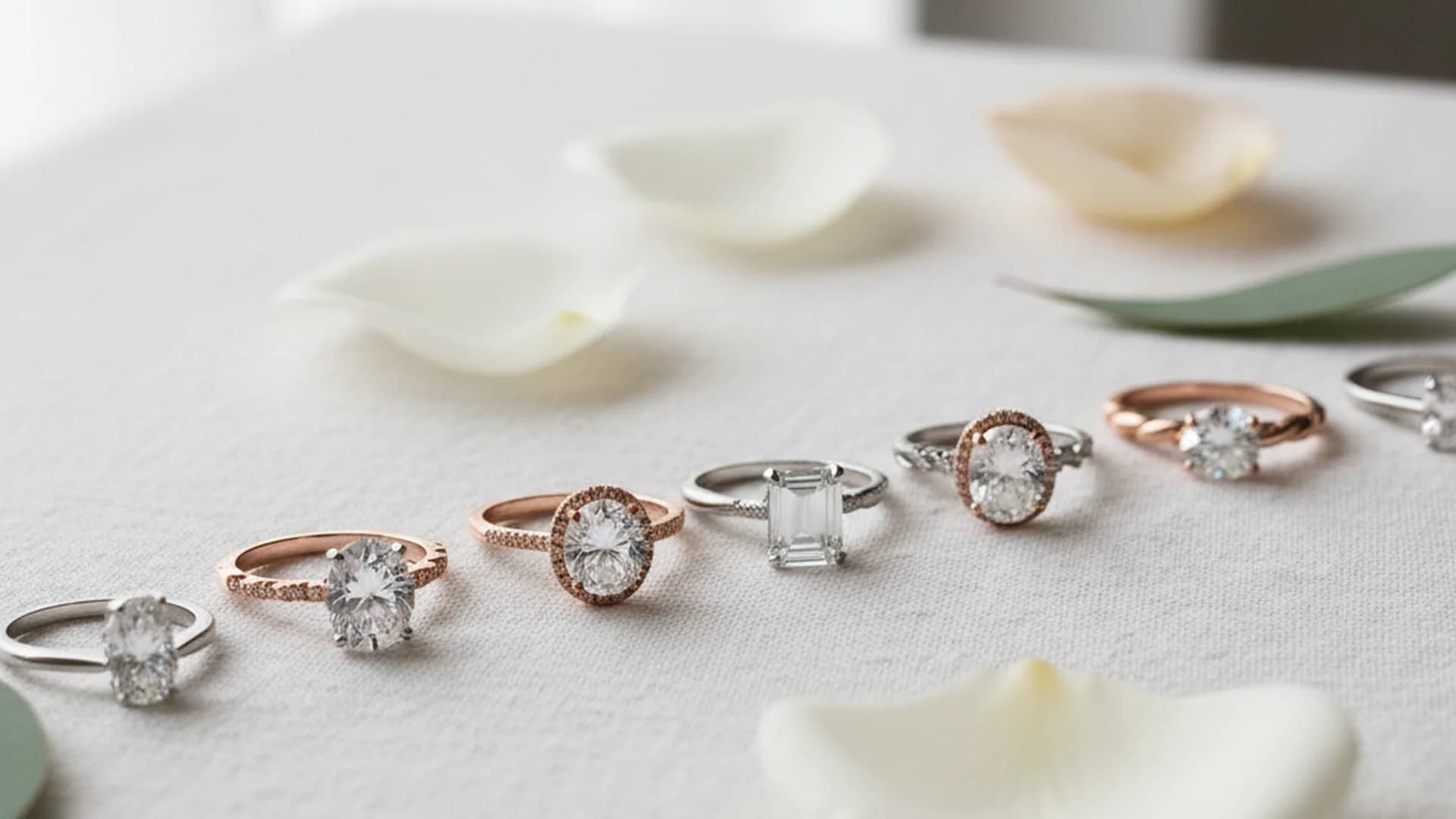
2025-2026 Guide to Engagement Ring Styles: Trends, Costs, and Expert Tips
Explore the top engagement ring styles for 2025-2026. From lab-grown diamond trends to vintage revivals and yellow gold's comeback, find your perfect ring.
The Ultimate Mens Wedding Band Guide: Metals, Styles, and 2025 Trends
Discover the perfect ring with our comprehensive Mens Wedding Band Guide. Explore top metals, 2025 trends like meteorite inlays, and expert tips on fit and sizing.