The Ultimate Guide to Engagement Ring Cuts: 2025-2026 Trends and Sparkle Science
Discover the best engagement ring cuts for 2025. From the rise of Ovals to the 'quiet luxury' of Emerald cuts, learn how to choose the perfect shape for your style.
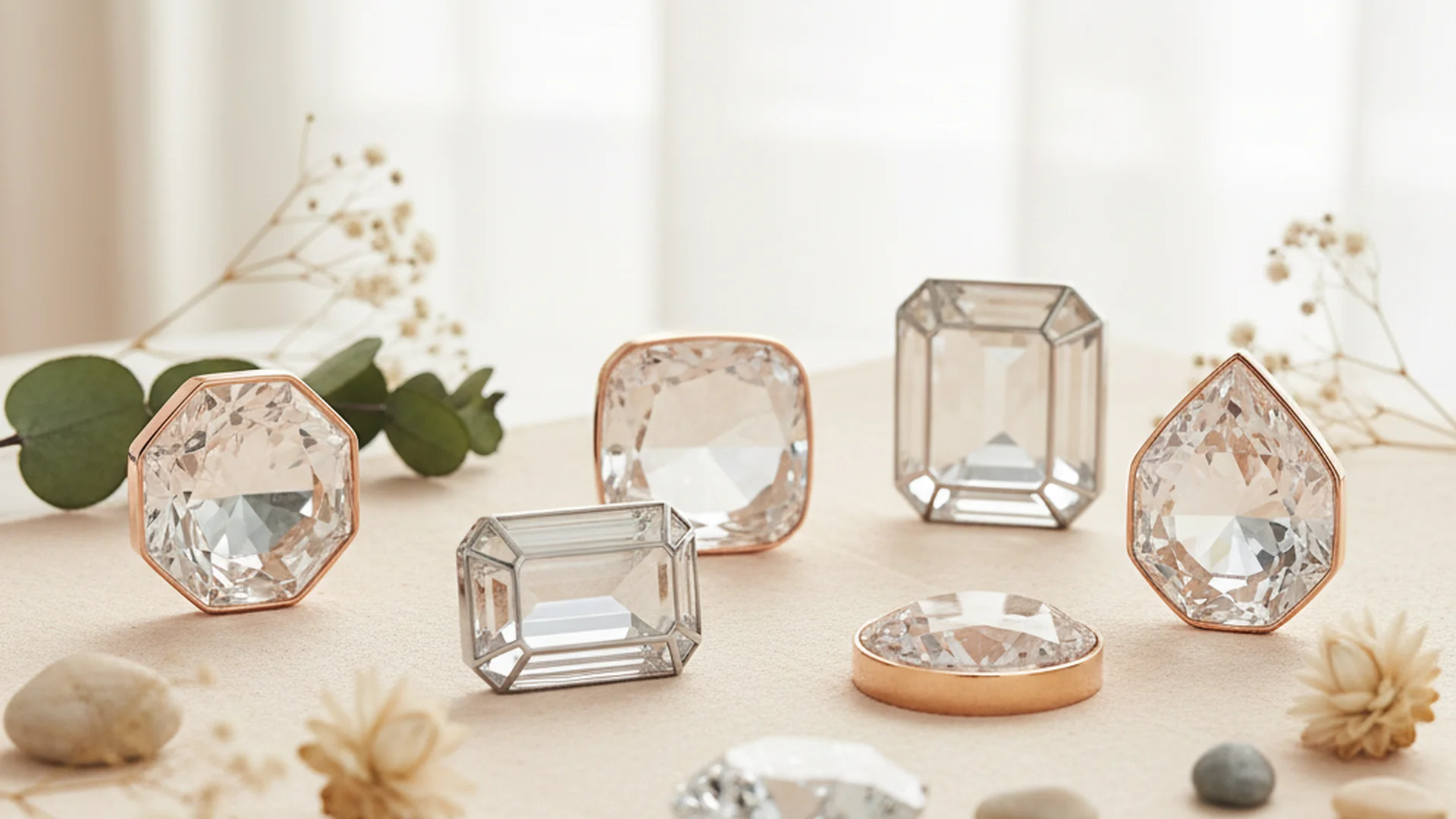
- The cut of a diamond determines up to 90% of its sparkle and brilliance.
- Oval cuts have surged to 33% market share, rivaling the traditional Round Brilliant.
- Lab-grown diamonds now make up over 52% of the market, allowing for much larger carat weights.
Choosing from the various engagement ring cuts is perhaps the only time in your life where "cutting corners" is actually a highly technical, multi-thousand-dollar engineering feat. While most people walk into a jewelry store thinking about size, the reality is that the cut is the most critical factor in your purchase. It is the engine under the hood; a poorly cut diamond is like a Ferrari with a lawnmower engine—it might look expensive from a distance, but it’s not going to perform when the light hits it.
As we move into the 2025–2026 wedding seasons, the landscape of bridal jewelry is shifting. We are seeing a move away from the "one-size-fits-all" approach of the early 2000s toward more personality-driven shapes, elongated silhouettes, and the undeniable dominance of lab-grown stones. Whether you are looking for a "quiet luxury" aesthetic or a high-octane "Sparkle King," understanding the nuances of diamond geometry is your first step toward a successful proposal.
The Science of Sparkle: Why Cut is King
When jewelers talk about "cut," they aren't just talking about the shape (like a pear or a heart). They are talking about the quality of the facets and how they interact with light. Scientifically, the Round Brilliant remains the undisputed champion of light return. Thanks to its 57 or 58 facets, it reflects roughly 90% of the light that enters it.
However, choosing the right cut isn't just about math; it's about visual perception. A well-cut diamond can hide inclusions (flaws) and mask a lower color grade, saving you thousands of dollars. Conversely, a "Deep Cut" diamond hides its weight in the bottom of the stone (the pavilion), meaning you’re paying for a 2-carat stone that only looks like a 1.5-carat stone from the top.
Tip
Trending Shapes for 2025 and 2026
The era of the Round Brilliant’s absolute monarchy is ending. While it still holds the top spot, its lead has narrowed significantly. In 2022, Rounds held a 59% market share; today, that has plummeted to 36%. So, where is everyone going?
The Rise of the Oval and the "Moval"
Oval cuts are the primary beneficiary of the modern shift, now holding a massive 33% of the market. Why? Because they are "visual liars" in the best way possible. Because of their elongated shape, they have a larger surface area than a round diamond of the same weight, making them appear bigger.
In 2025, we are seeing the emergence of the "Moval"—a hybrid between a Marquise and an Oval. It offers the soft edges of an oval with the dramatic length of a marquise, creating a look that is both vintage and cutting-edge.
Step Cuts and Quiet Luxury
If the Round Brilliant is a disco ball, the Emerald and Asscher cuts are hall-of-mirrors. These are known as "Step Cuts." Instead of the triangular facets used in "Brilliant" cuts, step cuts feature long, parallel facets. This creates a sophisticated, understated glow rather than a frantic sparkle. This "quiet luxury" trend is favored by those who want an architectural, clean look.
The Princess Cut Revival
After a decade of being labeled "dated," the Princess cut is seeing a niche revival for 2026. However, it’s not your mother's Princess cut. The modern trend is to kite-set the stone, rotating it 45 degrees so the corners point north, south, east, and west. This simple change transforms a traditional square into a modern, geometric masterpiece.
| Cut Type | Sparkle Level | Finger Effect | Best For |
|---|---|---|---|
| Round | Maximum | Neutral | Traditionalists |
| Oval | High | Lengthening | Maximizing Size |
| Emerald | Low/Subtle | Slimming | Sophisticated Style |
| Radiant | High | Neutral | Modern Glamour |
The Lab-Grown Revolution
We cannot discuss engagement ring cuts in 2025 without addressing the elephant in the room: lab-grown diamonds. As of this year, over 52% of all engagement ring center stones are lab-grown. This has fundamentally shifted "carat expectations."
In 2019, the average lab-grown center stone was around 1.31ct. Today, that average has jumped to 2.45ct. Because a lab-grown diamond costs significantly less—often $1,000 or less for a 1-carat "Excellent" cut compared to $4,200 for a natural equivalent—couples are opting for much larger stones and more intricate cuts. If you're curious about how this fits into your overall plan, check out our Engagement Ring Guide.
Do this
Matching the Cut to the Finger and Metal
Did you know that certain engagement ring cuts can actually change the appearance of your hand? Elongated cuts like the Oval, Pear, and Marquise create a vertical line on the finger, providing a lengthening and slimming effect.
Furthermore, the metal you choose should complement the cut and color of your stone.
- Platinum or White Gold: Best for D-F (Colorless) stones to maintain that icy, modern look.
- Yellow Gold: The "2026 favorite." Yellow gold is incredibly popular right now because it masks the slight warmth found in G-J (Near Colorless) diamonds.
Heads up
From the OurVows workspace
Ring sorted — now the wedding.
Set a realistic budget and a checklist that knows what's next, all in one free workspace.
Advanced Trends: Settings and Orientations
The cut is only half the story; how you set it defines the "vibe."
1. East-West Settings
A top trend for the upcoming year is the East-West setting. This involves taking an elongated stone—like an Emerald, Oval, or Marquise—and setting it horizontally across the band rather than vertically. It’s an instant way to make a classic stone look unconventional and modern. For more on this, see our guide on Engagement Ring Settings.
2. Chunky and Bezel Settings
We are moving away from the "whisper-thin" pavé bands of the 2010s. 2026 is the year of the chunky gold band and sculptural bezel settings. Bezel settings, where the metal completely surrounds the edge of the stone, are not only stylish but also provide maximum protection for the diamond's edges.
3. The Antique Revival
There is a massive surge in demand for Old Mine and Old European cuts. These are "hand-cut" diamonds from a bygone era. They have larger facets and a higher "crown," producing a soft, romantic glow. They look particularly stunning in Alternative Engagement Rings that lean into a bohemian or vintage aesthetic.
Common Mistakes to Avoid
Buying an engagement ring is a high-stakes game. Avoid these common pitfalls to ensure you get the best value for your budget.
The "Carat = Size" Myth
Carat is a measure of weight, not visual size. A 1ct Marquise has a much larger "face-up" size than a 1ct Asscher. The Asscher is "bottom-heavy," meaning much of its weight is hidden beneath the setting where no one can see it. If you want the most "bang for your buck" visually, look at Ovals and Pears.
Ignoring the "Bow-Tie" Effect
Elongated cuts (Oval, Pear, Marquise) often suffer from a dark shadow across the center that looks like a bow-tie. While almost all elongated stones have a slight bow-tie, a poorly cut one will have a black void in the middle. Always view these stones in person or via 360-degree video.
Forgetting Security for Points
If you choose a Marquise or a Pear cut, you must ensure the sharp points are protected. These corners are prone to chipping if they hit a hard surface. Ensure your setting includes "V-prongs" to wrap around those delicate tips. You can learn more about protecting your investment in our How to Choose Engagement Ring guide.
Buying Based on a Paper Grade Only
Two diamonds can both be graded "Excellent" by the GIA but look vastly different in real life. One might have "fluorescence" that makes it look cloudy in sunlight, or the facet alignment might be slightly off, killing the "scintillation" (the flashes of light you see when the stone moves).
Note
Frequently asked questions
Which diamond cut sparkles the most?
Is the Princess cut out of style?
Do elongated cuts really make fingers look thinner?
What is the difference between a 'Step Cut' and a 'Brilliant Cut'?
Conclusion
Finding the perfect engagement ring cut is a balance of science, trend-watching, and personal style. Whether you are drawn to the classic fire of a Round Brilliant, the finger-slimming elegance of an Oval, or the vintage charm of an Old Mine cut, remember that the quality of the cut will always be more important than the number on the carat scale.
As you begin your search, keep the 2025 trends in mind—think about elongated shapes, consider the value of lab-grown stones, and don't be afraid to experiment with East-West settings or yellow gold. For a deeper dive into how to pair these cuts with the perfect mount, visit our guide on Engagement Ring Styles.
Ready when you are
Start Planning Your Dream Wedding
Use our tools to manage your budget and checklist effortlessly.
Do this
Ready when you are
Plan your wedding without the chaos.
Free forever for couples just getting started. Two minutes to set up. No credit card.
Keep reading
The Ultimate Guide to Engagement Ring Insurance: Protecting Your Symbol of Love
Protect your investment with our comprehensive guide to engagement ring insurance. Learn about costs, 2025 trends, coverage types, and how to avoid common pitfalls.
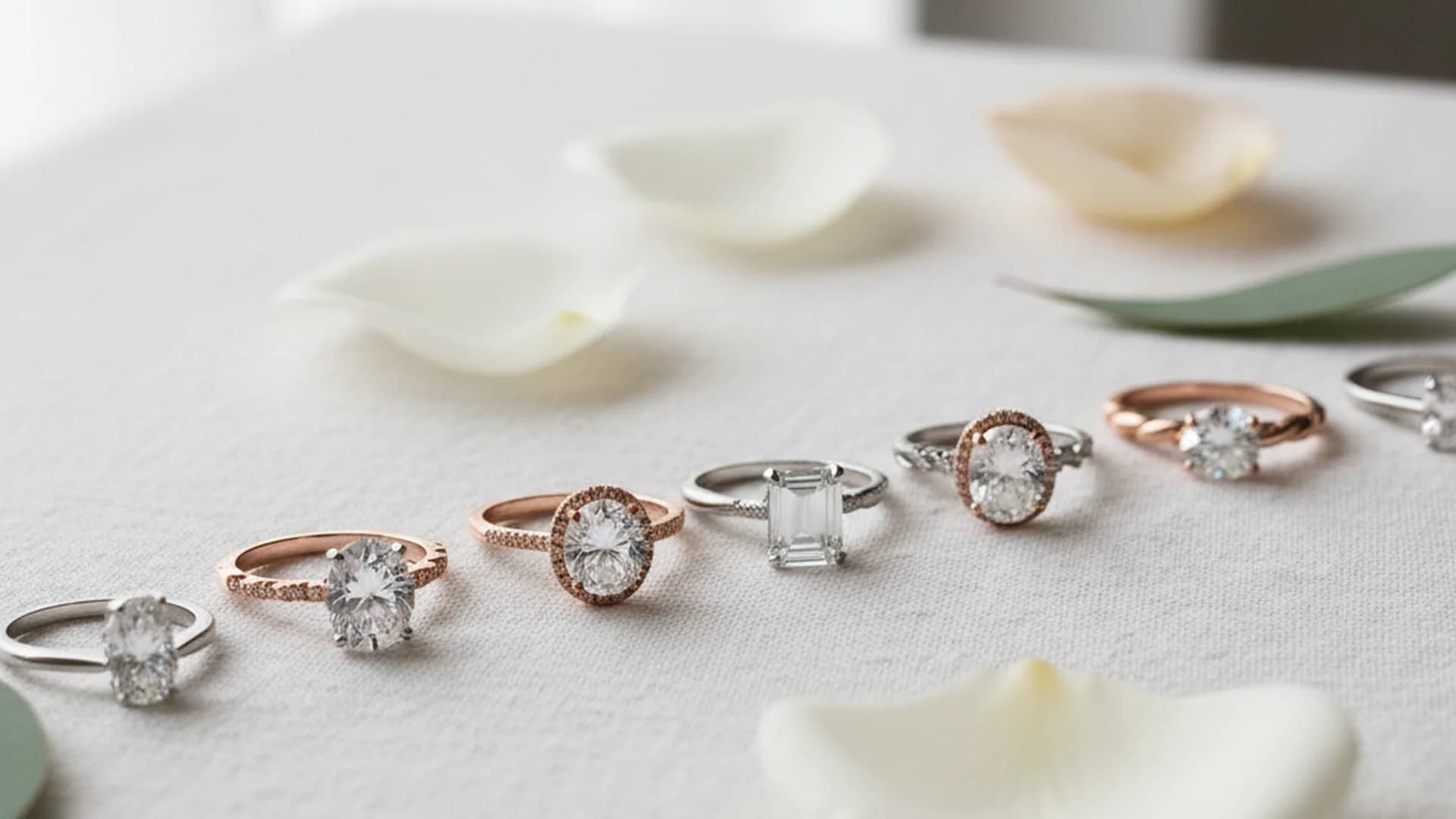
2025-2026 Guide to Engagement Ring Styles: Trends, Costs, and Expert Tips
Explore the top engagement ring styles for 2025-2026. From lab-grown diamond trends to vintage revivals and yellow gold's comeback, find your perfect ring.
The Ultimate Mens Wedding Band Guide: Metals, Styles, and 2025 Trends
Discover the perfect ring with our comprehensive Mens Wedding Band Guide. Explore top metals, 2025 trends like meteorite inlays, and expert tips on fit and sizing.