Mastering Family Table Wedding Seating: A Guide to Stress-Free Layouts
Navigate complex family dynamics and modern trends with our guide to family table wedding seating. Learn about sweetheart tables, VIP layouts, and 2025 trends.

- Modern couples favor Sweetheart Tables to simplify complex family seating logistics.
- Prioritize accessibility for elderly guests and avoid overcrowding tables (limit to 8 guests for 60-inch rounds).
- Use alphabetical guest lists rather than numeric ones to prevent reception bottlenecks.
Organizing your Family Table Wedding Seating is often described as a "high-stakes puzzle," and for good reason. As an interfaith officiant, I have seen firsthand how the reception layout can either foster a sense of communal joy or create unnecessary friction. In 2025 and 2026, we are seeing a massive shift away from rigid, traditional hierarchies toward "social engineering"—layouts that prioritize inclusivity, guest comfort, and the unique nuances of modern blended families.
Whether you are navigating the delicate balance of divorced parents or trying to decide between a traditional head table and a private sweetheart table, the way you arrange your nearest and dearest sets the tone for the entire evening. In this guide, we will explore how to master the family table to ensure your celebration is as seamless as your ceremony.
The Evolution of the Family Table
Traditionally, wedding seating followed a strict protocol: the bride’s family occupied "Table 1" (the second-best seat in the house after the head table), and the groom’s family took "Table 2." However, modern etiquette has evolved to reflect the "unity" aspect of marriage. Today, many couples choose to seat both sets of immediate parents at a single, large "Table 1" to signify the merging of two families.
This shift is part of a larger trend where many couples now opt for a "Sweetheart Table." By choosing to sit alone as a couple, you remove the logistical headache of choosing which family members or wedding party partners get the "prime" real estate. This allows your parents to act as hosts at their own respective VIP tables, surrounded by their own siblings and close friends.
Note
Traditional vs. Modern Table Layouts
Choosing the right physical layout is the first step in successful social engineering. While round tables remain a staple, new shapes are trending for 2025.
The Rise of the "King’s Table"
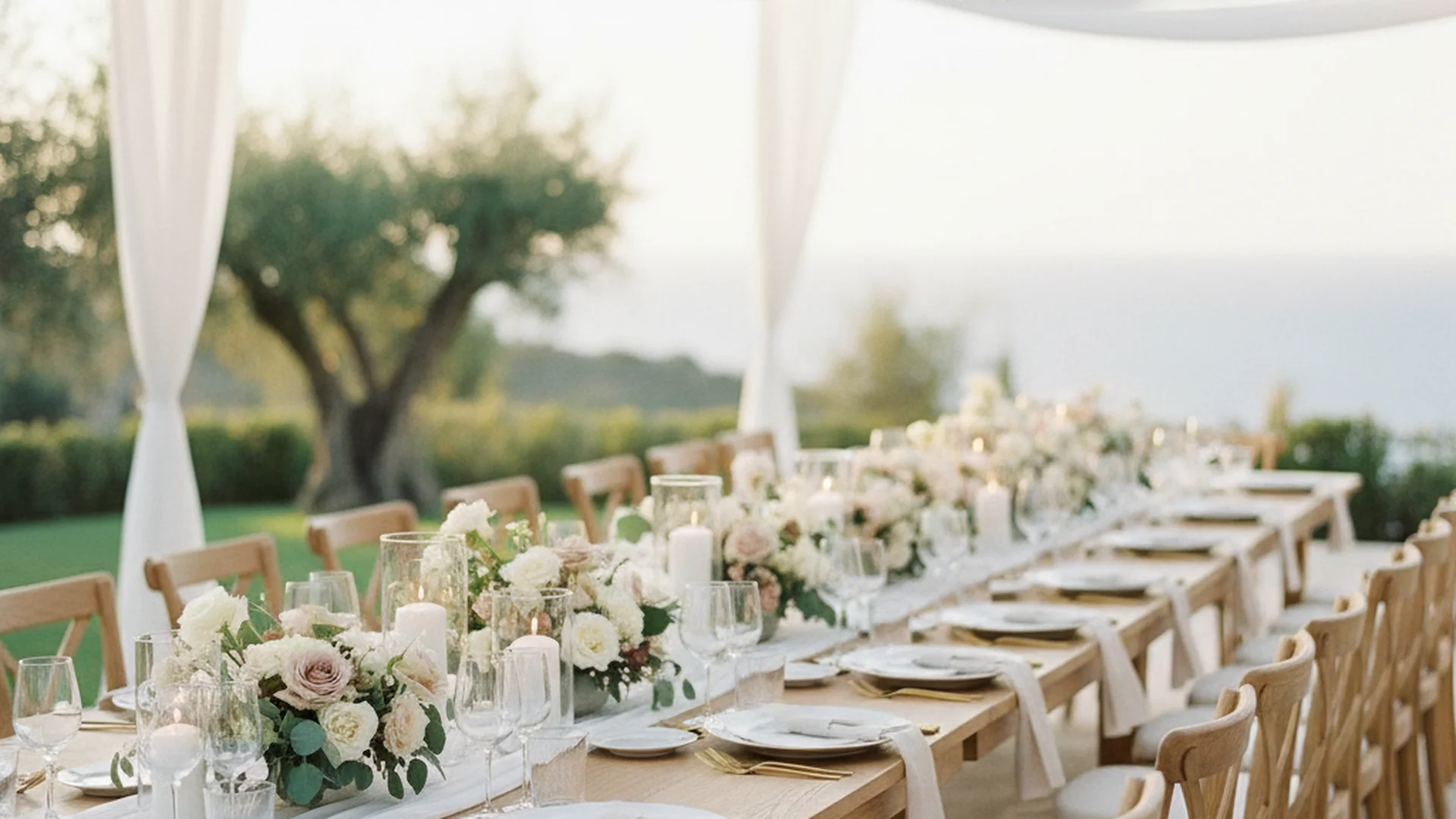
A King’s Table is a long rectangular table where the couple sits with their entire wedding party and their partners. This is a highly inclusive option that prevents bridesmaids or groomsmen from being separated from their significant ones.
The U-Shaped and E-Shaped Trends
For 2026, we are seeing a resurgence of U-shaped and E-shaped configurations. These layouts foster a communal, "family-style" dining experience. The couple sits at the center "prong," literally surrounded by their inner circle. This layout is particularly effective for smaller, intimate weddings where the goal is to make everyone feel like they are part of one long dinner party.
The Serpentine (Snake) Layout
Curvy, winding tables are replacing straight rows in high-end designs. These "snake" tables create an organic flow through the venue and allow more family members to feel "close" to the center of the action, rather than being relegated to the "end" of a long straight line.
| Table Style | Best For | Social Vibe |
|---|---|---|
| Round | Large Groups | Classic & Conversational |
| Sweetheart | Complex Families | Private & Romantic |
| King’s | Wedding Party | Inclusive & High Energy |
| Serpentine | Modern Venues | Artistic & Flowing |
Tip
Navigating Complex Family Dynamics
The most common question I receive is: "Where do we seat divorced or estranged parents?" This is where Family Table Wedding Seating requires a delicate touch.
The "Buffer" Strategy
If parents are not on amicable terms, the golden rule is to seat them at separate tables. They should each be surrounded by their own "support systems"—their siblings, parents (the grandparents), or lifelong friends. If you are using a long rectangular table, place the parents at opposite ends with neutral family members (like a favorite aunt or a sibling) acting as "buffers" in the middle.
Seating Blended Families
For families with multiple stepparents, the "Table 1" tradition can be claustrophobic. Instead of trying to cram eight "parents" into one table, create multiple "VIP Honored Guest" tables. Position these tables equidistant from the couple so no one feels demoted.
Heads up
Best Practices for Guest Comfort
Social engineering isn't just about family politics; it's about the physical experience of your guests.
The "Alphabetical Over Numeric" Rule
When guests arrive at the reception, they look for their names on a seating chart or escort card display. Always list names alphabetically by last name. Organizing a chart by table number creates a massive bottleneck, as every guest has to read the entire list to find their name. An alphabetical list allows guests to find their table in seconds.
The 8-Guest Limit
A common mistake is overstuffing tables. While a 60-inch round table can fit 10 people, it often leads to a cramped experience. To allow for glassware, chargers, and elbow room, experts recommend "rounding down" to 8 guests per table.
Do this
Accessibility and Logistics
Always place elderly guests or those with mobility issues at tables near the exits and restrooms. Furthermore, keep them away from loud speakers or the DJ booth. Younger guests are usually more tolerant of high-volume areas, while your grandparents will appreciate the ability to converse without shouting.
For more on managing your guest list, see our guide on Guests Per Table Wedding.
From the OurVows workspace
Solving the seating puzzle?
Drag-and-drop tables, relationship warnings, and printable charts — built into your guest list.
2025-2026 Seating Trends
As we look toward the next two years, the aesthetics of the seating chart are becoming just as important as the logic.
- Statement Installations: Seating charts are doubling as art. We are seeing "cocktail walls" where a guest’s name is attached to a champagne glass, and sculptural acrylic installations that serve as a focal point in the foyer.
- Maximalist Tablescapes: The "minimalist" white-on-white look is fading. 2025 is all about "sensory, layered" designs. Expect to see fruit and vegetable centerpieces (think clusters of grapes or stone fruits) and "silver renaissance" metallics.
- Digital Integration: With most guests now expecting digital RSVPs, many couples are using a Digital Wedding Seating Chart to manage real-time updates.
Note
Common Mistakes to Avoid
Even the most well-intentioned couples can fall into these common seating traps:
- Skipping the Seating Chart Entirely: Some believe "open seating" is more relaxed. In reality, it causes high anxiety for guests—especially those who don't know many people. It also leads to "orphan seats," where couples are split up because only single seats remain at various tables.
- Ignoring Venue Flow: Never plan your seating without a confirmed floor plan. You don't want to place your VIP family table directly in front of a service door where waiters are constantly rushing past.
- The "Singles Table": Rounding up all your single friends and putting them at one table can feel like a "spotlight" on their relationship status. Instead, disperse single guests among tables where they know at least one or two other people.
- Printing Too Early: Last-minute "no-shows" happen. Never print your final large-scale seating chart more than 7-10 days before the wedding.
Heads up
Frequently asked questions
Do we have to have a Head Table?
What side does the family sit on?
How do we handle "plus-ones" we've never met?
Is it okay to have a mix of table shapes?
How do I start building the chart?
Conclusion
Your Family Table Wedding Seating is more than just a list of names; it is a blueprint for the social success of your wedding day. By prioritizing comfort, respecting family boundaries, and embracing modern tools, you can transform a logistical challenge into an opportunity for connection.
Remember that while etiquette provides a foundation, your specific family needs should always take precedence. Whether you choose a winding serpentine table or a series of intimate VIP rounds, the goal remains the same: creating a space where your loved ones feel honored and ready to celebrate your new beginning.
Do this
Ready when you are
Ready to Plan?
Take the stress out of your reception layout with our digital tools.
Ready when you are
Plan your wedding without the chaos.
Free forever for couples just getting started. Two minutes to set up. No credit card.
Keep reading
The Ultimate Guide to a Kings Table Wedding Setup
Discover the elegance of a Kings Table wedding setup. Learn about dimensions, seating etiquette, and 2026 trends for this majestic "Royal" seating arrangement.

The Ultimate Guide to Choosing the Best Wedding Seating Chart App for 2025–2026
Discover how a wedding seating chart app can save you significant planning time. Explore AI-driven tools, 3D floor plans, and expert seating strategies for your big day.
Navigating the Divorced Parents Seating Chart: A Diplomatic Guide for 2025-2026
Learn how to design a divorced parents seating chart that maintains peace and honors family. Expert tips for ceremony and reception layouts in 2025.