The Ultimate Wedding Table Size Guide: Layouts for 2025-2026
Plan your reception perfectly with our Wedding Table Size Guide. Learn dimensions, seating capacities, and the latest layout trends for 2025 and 2026.
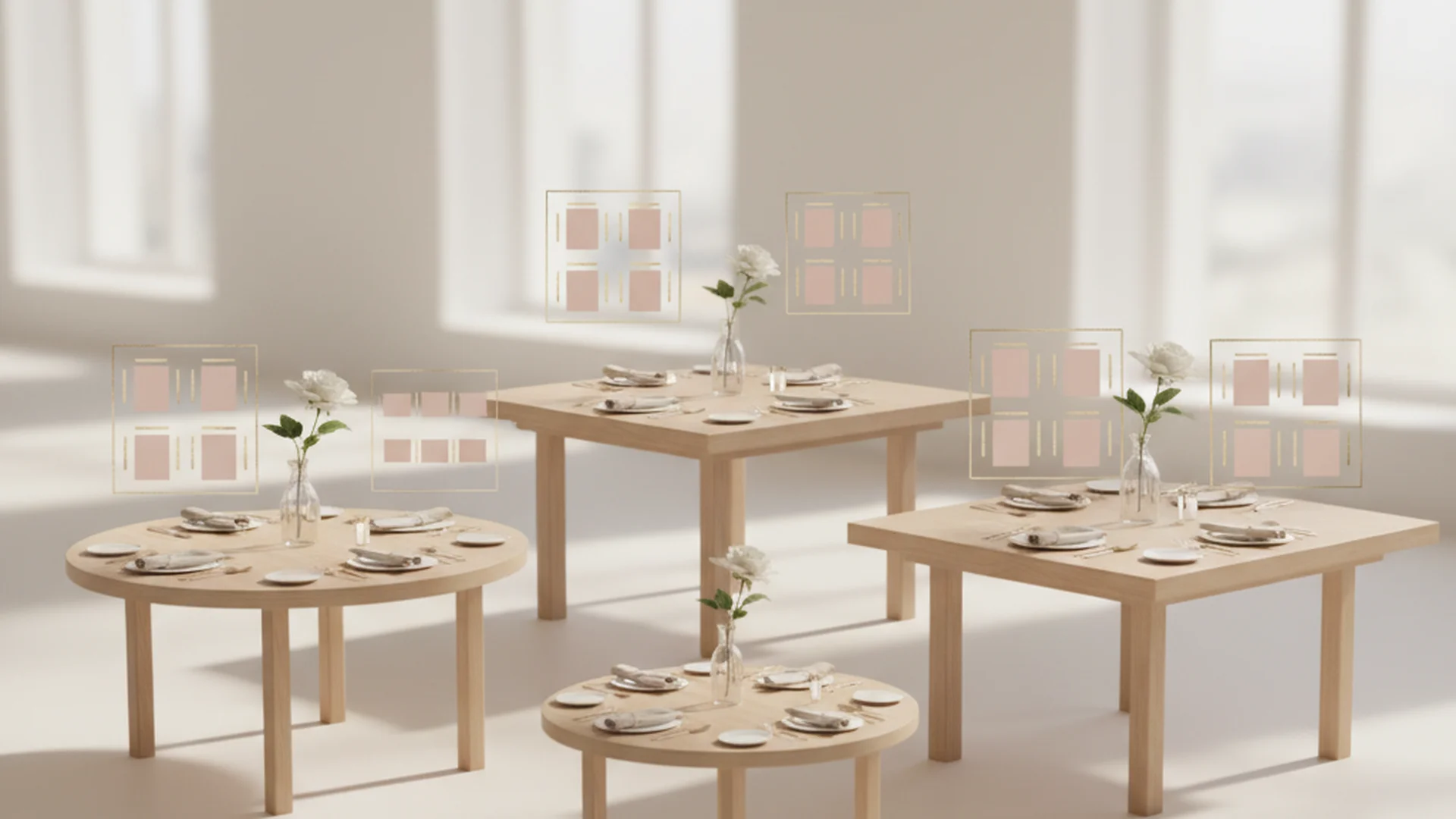
- The 60-inch round table is the gold standard for seating 8 guests comfortably.
- Maintain 5 to 6 feet of aisle space between tables for guest and server mobility.
- Match your table width to your dining style (family-style requires 40-48 inches).
Planning a wedding reception involves a delicate balance of aesthetics, logistics, and social engineering. As a relationship counselor, I often tell couples that your floor plan is the silent host of your wedding—it dictates how people interact, how they move, and how they feel throughout the evening. To ensure your guests are comfortable and the conversation flows as smoothly as the champagne, you need a comprehensive Wedding Table Size Guide.
Choosing the right table dimensions isn't just about what fits in the room; it’s about creating an environment where your blended families, old friends, and new acquaintances can connect without bumping elbows. In this guide, we will break down every measurement you need to design a high-functioning, beautiful reception space for the 2025 and 2026 wedding seasons.
The Foundations of Table Sizing
Before you choose your linens or centerpieces, you must understand the standard dimensions of the furniture provided by your venue or rental company. The "Gold Standard" of the wedding industry remains the 60-inch (5ft) round table. While many venues will tell you it can seat up to 10 guests, seating 8 guests is the professional recommendation for maximum comfort.
When you move up to a 72-inch (6ft) round table, you can accommodate 10 to 12 guests. However, be cautious: seating more than 10 people at a single round table often hinders cross-table conversation because the distance between guests across from one another becomes too great to speak over the ambient music.
Standard Dimensions and Capacities
| Table Type | Dimensions | Ideal Capacity | Max Capacity |
|---|---|---|---|
| Small Round | 48" (4ft) | 4 Guests | 6 Guests |
| Standard Round | 60" (5ft) | 8 Guests | 10 Guests |
| Large Round | 72" (6ft) | 10 Guests | 12 Guests |
| Small Rectangular | 6' x 30" | 6 Guests | 8 Guests (with ends) |
| Large Rectangular | 8' x 30" | 8 Guests | 10 Guests (with ends) |
| King’s Table | 8' x 48" | 8 Guests | 10 Guests |
Tip
Matching Table Width to Your Menu
One of the most common mistakes couples make is choosing a table based on its length without considering its width. This is especially critical if you are planning a family-style meal where large platters are placed in the center of the table.
For a standard plated meal, a traditional 30-inch wide banquet table is perfectly sufficient. There is enough room for a place setting and a modest centerpiece. However, if you are opting for family-style dining or a heavy buffet, those 30-inch tables will quickly feel cluttered and claustrophobic.
In these cases, experts recommend:
- "Queen’s Tables" (40 inches wide): Provides extra breathing room for decor and bread baskets.
- "King’s Tables" (48 inches wide): The gold standard for family-style service, allowing ample room for floral runners, candles, and large food platters.
Heads up
Layout Logistics and Spacing
A beautiful table means nothing if your guests cannot get to it. Designing a functional floor plan requires strict adherence to spacing statistics.
Aisle Space and Flow
To ensure that servers can deliver hot meals and guests can head to the bar without causing a "traffic jam," you must maintain 5 to 6 feet of space between round tables. This measurement is taken from the edge of one table to the edge of the next, accounting for the space chairs occupy when guests are seated.
The Elbow Room Rule
For a comfortable dining experience, each guest needs at least 24 inches (2 feet) of width. If you are using a Long Table Wedding Seating arrangement, this measurement is vital to prevent "elbow-bumping" during the meal.
Do this
Recent Trends for 2025-2026
The upcoming wedding seasons are moving away from the rigid, uniform rows of the past. We are seeing a surge in "Spatial Design," where couples prioritize the "vibe" of the room over traditional symmetry.
1. Serpentine and S-Curves
Breaking away from straight lines, serpentine (curved) tables are a major trend for 2025. These tables create a natural "flow" through the reception space and feel more organic and artistic. They are particularly effective in outdoor settings or venues with unique architectural features.
2. Mixed Layouts
Why choose one shape? Couples are increasingly using Mixed Table Shapes Wedding layouts. You might place larger families at 72-inch rounds, friend groups at 8-foot rectangular tables, and the wedding party at a long King's Table. This creates visual interest and allows for more flexible grouping.
3. U-Shaped Layouts
For intimate weddings (under 50 guests), a single large U-shaped table is becoming the go-to choice. It allows everyone to see the couple and each other, fostering a "family dinner" atmosphere that is hard to replicate with disconnected tables.
4. Maximalist Tablescapes
Moving into 2026, the trend is "Maximalist Tablescapes." This involves layering textures like velvet linens, using sculptural fruits as centerpieces instead of just flowers, and mixing glassware styles. When planning for this trend, ensure you have opted for the wider "Queen" or "King" table sizes to accommodate the extra decor.
Note
From the OurVows workspace
Solving the seating puzzle?
Drag-and-drop tables, relationship warnings, and printable charts — built into your guest list.
Strategic Guest Placement and Accessibility
As a relationship counselor, I cannot stress enough the importance of the human element in your Wedding Seating Chart Etiquette. Your Wedding Table Size Guide isn't just about inches; it's about accessibility.
- Prioritize Accessibility: Always place elderly guests or those with mobility aids at tables closest to the exits, restrooms, or the buffet line. Ensure these tables are not positioned directly next to high-volume speakers.
- The "Buffer" Rule: Always budget for 2-4 "ghost seats" in your floor plan. These are empty spots across your layout that allow you to accommodate last-minute changes or unexpected plus-ones without having to squeeze an extra chair onto a fully set table.
- Alphabetical Organization: For any guest count over 50, your seating chart should be organized alphabetically by last name, not by table number. This prevents "bottlenecks" at the entrance where guests are huddled trying to find their names in a sea of numbers.
Do this
Common Mistakes to Avoid
Even with a great guide, it is easy to fall into common planning traps. Here are three mistakes to watch out for:
1. The "Singles Table"
Grouping all unattached guests at one "leftover" table can make them feel isolated or awkward. Instead, seat singles with people they already know or share interests with. Use your Round Table Wedding Seating strategically to integrate different social circles.
2. Forgetting Table Leg Placement
This is the silent killer of rectangular table layouts. In many rental tables, the legs are at the four corners. If you plan to "cap" the ends (seat a guest at the head and foot of a 6-foot or 8-foot table), those guests may have to straddle the table legs. Always check the leg configuration of your specific rental model before finalizing your seat count.
3. Thinking "No Seating Chart" is Easier
Couples often think open seating is casual and easy. In reality, it causes chaos. Guests scramble for seats, families are split up, and the last few guests are left wandering the room searching for a spot in a crowded space. It is much kinder to your guests to provide at least a table assignment.
Frequently asked questions
How many tables do I need for 100 guests?
What is the best table shape for a narrow venue?
Should we use a Sweetheart Table or a Head Table?
How much space do I need for a dance floor?
Conclusion
Mastering your wedding reception layout is a blend of mathematical precision and social intuition. By following this Wedding Table Size Guide, you ensure that your guests are not just "placed" in a room, but are invited into a comfortable, engaging experience. Whether you opt for the classic elegance of Round Table Wedding Seating or the modern flow of a Mixed Table Shapes Wedding, prioritizing guest comfort and server mobility will always lead to a more successful celebration.
Remember to account for the "human" side of the numbers—the elderly guest who needs a clear path to the door, the blended family members who need a bit of extra space, and the singles who want to feel included. With these dimensions in hand, you are ready to build a floor plan that fosters connection and joy.
Do this
Ready when you are
Ready to Start?
Build your perfect reception layout with our interactive tools.
Ready when you are
Plan your wedding without the chaos.
Free forever for couples just getting started. Two minutes to set up. No credit card.
Keep reading
Mastering the Pivot: How to Handle Last-Minute Seating Chart Changes
Learn how to manage last-minute seating chart changes with expert strategies, 2025 tech trends, and the 5% buffer rule to keep your wedding stress-free.
How to Make Wedding Seating Chart: The Ultimate Stress-Free Guide
Learn how to make wedding seating chart for your big day with our comprehensive guide. Master floor plans, social engineering, and 2025-2026 trends.
The Truth About the Singles Table Wedding: Etiquette, Trends, and Survival Guides
Navigating the "Singles Table" at weddings in 2025. Learn modern etiquette, seating strategies, and how to avoid making your solo guests feel like social exiles.