The Ultimate Guide to a Wedding Seating Chart for 200 Guests
Master your 200-guest wedding seating chart with expert tips on layouts, logistics, and avoiding the dreaded reception bottleneck.
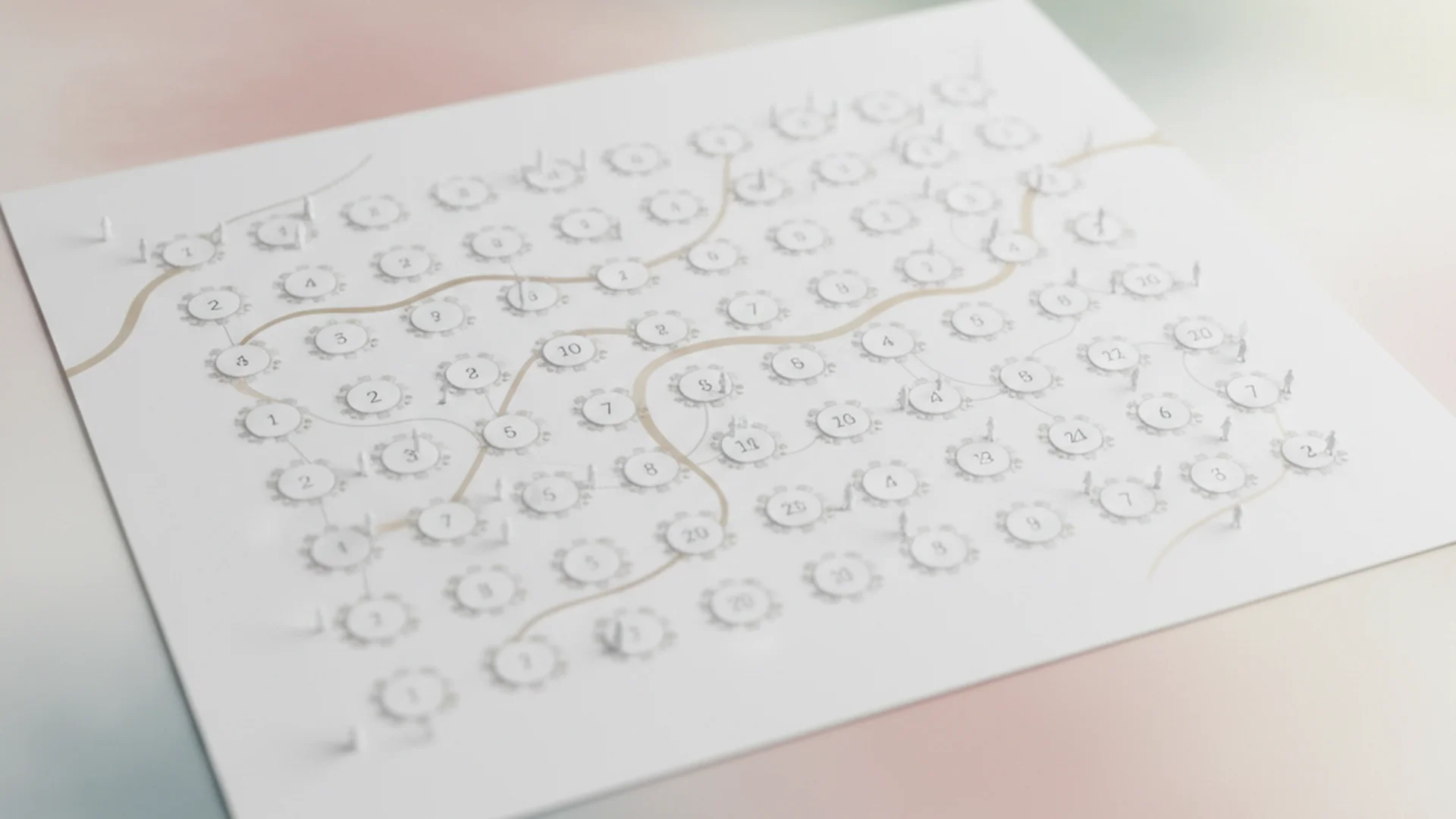
- Alphabetical organization is mandatory for 200+ guest lists to prevent entrance bottlenecks.
- A 200-guest reception requires a minimum of 2,200 to 3,000 square feet of dedicated seating space.
- Use interest clusters rather than "singles tables" to ensure all guests feel integrated.
So, you’ve decided to host 200 of your closest friends, family members, and that one cousin who always brings a "plus one" you’ve never met. Congratulations! You are officially throwing a "large" wedding. While the energy of a 200-person party is unmatched, the logistics of a Wedding Seating Chart for 200 Guests can feel less like a celebration and more like a high-stakes game of Tetris played with human emotions.
As someone who has seen everything from "The Great Table 12 Uprising" to "The Silent Treatment of 2023," I can tell you that seating 200 people requires more than just a piece of foam board and a prayer. It requires a strategic blend of mathematics, spatial awareness, and a healthy dose of social engineering.
The Cold, Hard Math of 200 Guests
Before you start worrying about whether your college roommates will behave themselves, we need to talk about the physical reality of the room. You cannot fit 200 people into a space designed for 150, no matter how much you like "cozy" vibes.
Choosing Your Table Style
The type of table you choose dictates the entire flow of the room. For a group of 200, you are looking at a significant footprint.
| Table Type | Capacity | Number of Tables Needed | Total Square Footage Needed |
|---|---|---|---|
| 60-inch Rounds | 8–10 Guests | 20–25 Tables | 2,800–3,000 sq. ft. |
| 8-foot Rectangles | 8–10 Guests | 20–22 Tables | 2,200–2,800 sq. ft. |
| Square Tables | 8 Guests | 25 Tables | 3,000+ sq. ft. |
Note
The Invite vs. Attendee Ratio
To actually end up with 200 people in seats, you usually need to invite more. On average, 15% to 20% of your guest list will decline. If you want a 200-guest wedding, your initial invitation list should likely sit around 235 to 250 people.
Tip
Solving the "Bottleneck" Problem
This is the most critical advice I can give you for a wedding of this scale: Stop organizing your seating chart by table number.
In a 200+ guest wedding, a single seating chart organized by table number causes a massive bottleneck. Imagine 200 people, all slightly tipsy from cocktail hour, trying to scan a list of 25 tables to find their names. Guests can spend the better part of a minute searching on a non-alphabetical chart. This leads to a 15-minute (or longer) delay in getting everyone seated for dinner.
Heads up
By listing names alphabetically (e.g., Adams, John — Table 4), guests can find their names in under five seconds. You can still use a beautiful Wedding Seating Chart Maker to create a stunning display, but ensure the logic is A–Z.
Strategic Seating: The Human Element
Once you have the math down, it’s time to play matchmaker. Seating 200 people means you’ll have several distinct social circles.
The VIP Strategy
Traditionally, parents and immediate family sit at a "VIP" table near the couple. However, 200-guest weddings often involve complex family dynamics.
- The Divorced Parents Dilemma: If your parents are divorced and the tension is palpable, do not force them onto one table. Give them each their own "host" table. Place these tables equidistant from the couple to ensure both feel equally honored.
- The Anchor Guest: Every table needs an "anchor"—someone who is naturally social and can keep the conversation moving. Identify your "anchors" first and build the table around them.
Avoiding the "Misfit" Table
With 200 guests, you will inevitably have people who don't neatly fit into a category (the "random" work friend, the neighbor, the high school friend who moved away).
Do this
For more on the social "dos and don'ts," check out our guide on Wedding Seating Chart Etiquette.
Accessibility and Room Flow
A 200-guest wedding is a high-traffic environment. You aren't just seating people; you are managing a crowd.
The "Elbow Room" Rule
Venue coordinators often tell you what a table can seat, not what it should seat. If a 60-inch round "can" seat 12, seat 10. Your guests need space for wine glasses, bread plates, and the occasional expressive hand gesture. Overstuffing tables makes dinner feel like a subway commute.
Prioritizing Your Guests
- Elderly Guests: Seat them away from the DJ speakers to protect their hearing and close to the restrooms to minimize long walks.
- The "Party" Crowd: Place your high-energy friends near the dance floor. They are the ones who will start the party, so keep them close to the action.
- Clear Paths: Ensure aisles are at least 6 feet wide. This accommodates guests in wheelchairs and gives the catering staff enough room to serve 200 meals without bumping into chairs.
Tip
From the OurVows workspace
Solving the seating puzzle?
Drag-and-drop tables, relationship warnings, and printable charts — built into your guest list.
Emerging Trends for 2025–2026
If you want your 200-guest wedding to feel modern and organized, consider these emerging trends:
1. QR Code Personal Assistants
Minimalist signs with a QR code are becoming the gold standard. A guest scans the code, enters their name on a custom site, and it instantly shows their table number and a digital map of the room. It’s efficient, tech-forward, and eliminates the "huddle" around a physical board.
2. Serpentine & S-Shaped Seating
Rigid rows are out. In 2026, we are seeing "snake" tables that wind through the venue. This creates a communal, organic feel and makes a large room feel more intimate. It also provides a unique visual for your photographer.
3. Seating Installations as Art
Move away from the standard foam board. Consider a "Champagne Wall" where escort cards are attached to full glasses of bubbly. For a 200-guest wedding, this doubles as your "welcome drink," killing two birds with one stone.
Heads up
Common Mistakes to Avoid
Even the most organized couples can stumble. Here are the most frequent errors I see in large-scale seating:
- Unreadable Fonts: That elegant, gold-foil calligraphy looks great on Pinterest, but in a dimly lit reception hall, it’s unreadable to anyone over the age of 40. Use high-contrast fonts.
- Forgetting the Kids: If you have a kids' table, do not put it in the corner of the room. Seat them near their parents. If the kids are on the other side of the room, parents will spend the whole night walking back and forth, disrupting the flow.
- Relying Solely on Spreadsheets: A spreadsheet is great for tracking data, but it doesn't account for physical space. A spreadsheet won't tell you that Table 5 is actually blocking the kitchen door. Use Wedding Seating Chart Software that includes a floor plan visualizer.
- The Missing Map: For 200 people, a list of names isn't enough. Provide a small "You Are Here" map next to your alphabetical list so guests know which direction to walk once they find their number.
Frequently asked questions
Do I really need a seating chart for 200 people?
Should I organize the chart by table number or alphabetically?
How do I handle guests who don't know anyone?
What is the best way to handle last-minute RSVP changes?
Where should I put the DJ and the dance floor?
Conclusion
Creating a Wedding Seating Chart for 200 Guests is a massive undertaking, but it’s also the final puzzle piece that ensures your reception is a success. By focusing on alphabetical organization, physical room flow, and thoughtful guest groupings, you can turn a potential logistical nightmare into a seamless, high-energy celebration.
Remember, the goal of a seating chart isn't just to tell people where to sit—it's to set the stage for the conversations and connections that make a wedding memorable. If you're feeling overwhelmed, lean on tools like Wedding Seating Chart Maker to help visualize the space.
Do this
Ready when you are
Ready to Start?
Organize your 200-guest masterpiece with ease using our professional tools.
Ready when you are
Plan your wedding without the chaos.
Free forever for couples just getting started. Two minutes to set up. No credit card.
Keep reading

The Ultimate Guide to Choosing the Best Wedding Seating Chart App for 2025–2026
Discover how a wedding seating chart app can save you significant planning time. Explore AI-driven tools, 3D floor plans, and expert seating strategies for your big day.
Navigating the Divorced Parents Seating Chart: A Diplomatic Guide for 2025-2026
Learn how to design a divorced parents seating chart that maintains peace and honors family. Expert tips for ceremony and reception layouts in 2025.
The Ultimate Wedding Seating Chart Timeline: A Month-by-Month Guide
Master your wedding seating chart timeline with our expert guide. From early drafts to last-minute changes, learn how to organize your guests stress-free.