Escort Card vs Place Card: The Ultimate 2025-2026 Wedding Seating Guide
Confused by escort card vs place card etiquette? Learn the differences, 2025 stationery trends, and expert tips to streamline your wedding guest experience.
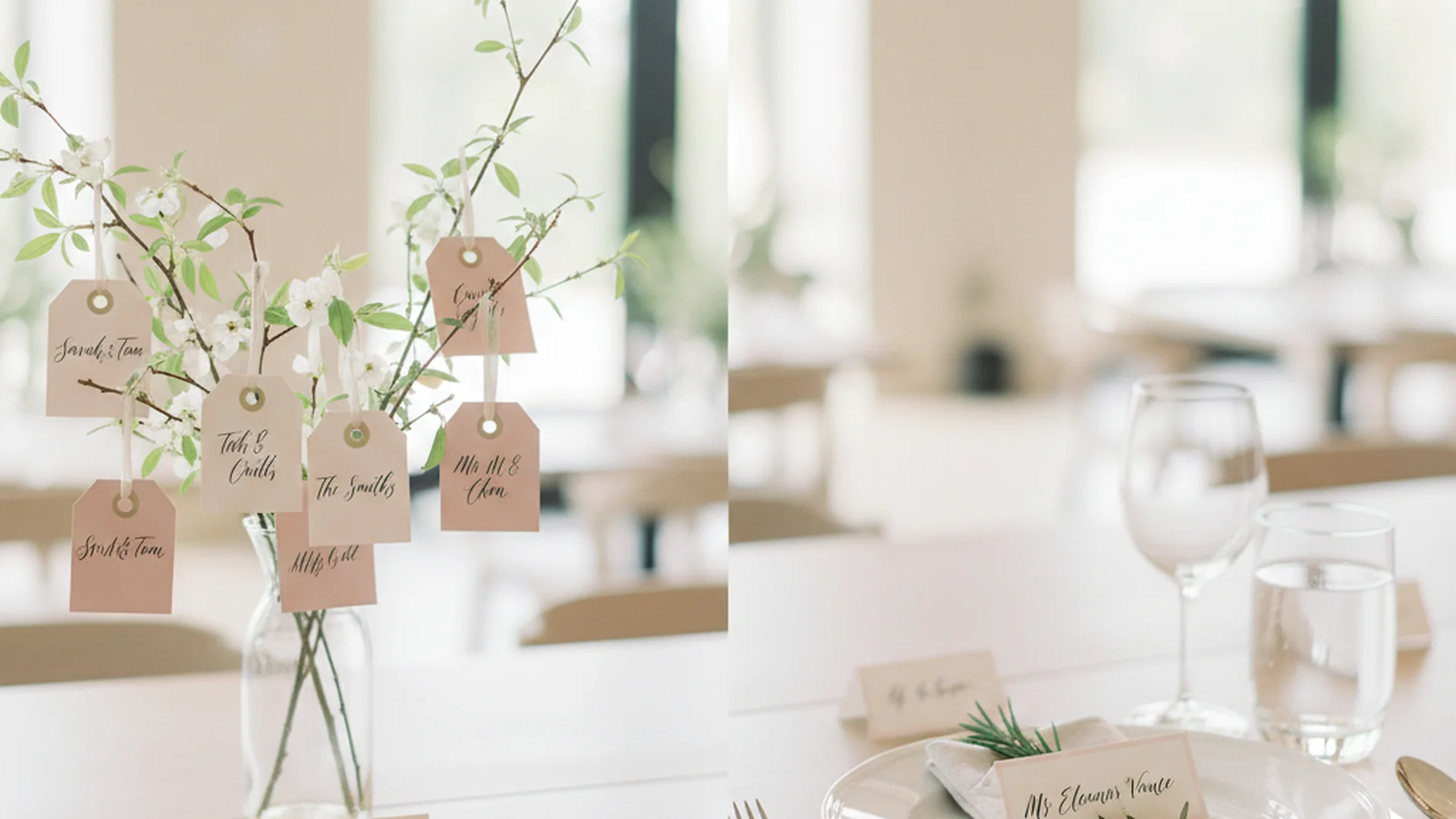
- Escort cards guide guests to a table, while place cards designate a specific seat.
- Plated dinners usually require place cards to help caterers identify meal choices.
- Always alphabetize guest names rather than sorting by table number to avoid bottlenecks.
When you begin the journey of wedding planning, you quickly realize that the "big day" is actually a collection of a thousand tiny decisions. Among the most frequent sources of confusion for modern couples is the debate of escort card vs place card. While they may seem like interchangeable pieces of stationery, they serve two distinct logistical purposes. With so many couples now treating "guest experience" as their top priority, getting these small details right is the secret sauce to a seamless, stress-free reception.
As a relationship counselor and consultant, I often see how "decision fatigue" can impact a couple's harmony. In our experience, many couples feel overwhelmed by small stationery decisions. Understanding the nuances of wedding seating doesn't just help your caterer—it ensures your guests feel welcomed and seen from the moment they step into your reception.
Understanding the Core Differences
The simplest way to distinguish these two items is by their function. Think of an escort card as a "map" and a place card as a "destination marker."
An Escort Card tells the guest which table they are assigned to. These are typically found at the entrance of the reception or in the cocktail hour space. Once the guest finds their card, they take it with them to the table.
A Place Card is already waiting at the table. It tells the guest exactly which chair is theirs. This is the highest level of formality and is often essential for specific catering needs.
Escort Card vs Place Card: Comparison Table
| Feature | Escort Card | Place Card |
|---|---|---|
| Primary Goal | Directs guest to a table | Directs guest to a specific seat |
| Location | Entrance / Cocktail Area | At the individual table setting |
| Information | Name + Table Number | Name (+ Meal Choice Icon) |
| Portability | Guest carries it to the table | Remains at the table setting |
| Formality | Moderate | High |
Note
When Do You Need Which?
Deciding whether to use escort cards, place cards, or both depends largely on your meal service and the "vibe" of your event. If you are struggling with the logistics of complex family dynamics, you might find our guide on Blended Family Seating Chart helpful for navigating those specific challenges.
The Case for Escort Cards
Escort cards are perfect for weddings where you want to provide structure without being overly rigid.
- The Benefit: Guests have the freedom to choose who they sit next to within their assigned group.
- The Logistics: It prevents the "cafeteria scramble" where guests wander around looking for an empty chair.
- Best For: Buffet, stations, or family-style service.
The Case for Place Cards
Place cards are a necessity for formal, black-tie, or highly organized events.
- The Benefit: It allows you to strategically place guests (e.g., putting the loudest friend next to someone who shares their hobby).
- The Logistics: If you are serving a plated dinner with multiple choices (Beef, Salmon, Vegan), the place card serves as a "silent signal" to the waitstaff.
- Best For: Plated meals and formal receptions.
Tip
The Alphabetical Rule: Avoiding the Bottleneck
One of the most common mistakes couples make is organizing their escort cards or seating charts by table number. While it may seem logical to you (the person who designed the layout), it is a nightmare for guests.
Guests know their own names; they do not yet know their table numbers. If you list names under "Table 1, Table 2..." a guest must scan every single list until they find themselves. In a wedding of 150 guests, this creates a massive bottleneck at the entrance.
Always alphabetize by last name. This allows guests to find their cards in seconds, keeping the flow of the party moving toward the bar or the dance floor. For more on managing flow, check out our Complete Wedding Seating Chart Guide.
Heads up
2025–2026 Stationery Trends
Wedding stationery is moving away from traditional cardstock and toward tactile, sculptural experiences. For the 2025 and 2026 seasons, we are seeing a focus on materiality and "interactive" seating.
1. Tactile & Sculptural Materials
Couples are increasingly choosing materials that add texture to the table. Acrylic blocks, velvet-pressed cards, and handmade deckled-edge paper are dominating the luxury market. These materials feel substantial in the guest's hand and serve as a beautiful keepsake.
2. Non-Rectangular Shapes
The standard 2x3 rectangle is being replaced by organic and architectural shapes. Scalloped edges, arches, and even "fruit shapes" like citrus slices or pears are trending for 2026. For coastal weddings, seashells with calligraphy are a massive trend.
3. Interactive "Golden Tickets"
The "Escort Wall" is evolving. Instead of just picking up a card, guests are picking up a glass of champagne with a charm, a mini bud vase with their name on it, or a custom keychain that doubles as a favor. This turns the functional act of finding a seat into an experience.
4. Digital Integration
For the tech-savvy or minimalist couple, the Digital Wedding Seating Chart is rising in popularity. A small, elegant sign with a QR code allows guests to scan and see their table assignment on their phone, eliminating paper waste entirely.
Do this
From the OurVows workspace
Solving the seating puzzle?
Drag-and-drop tables, relationship warnings, and printable charts — built into your guest list.
Pro Etiquette for Modern Couples
As a consultant, I often remind couples that etiquette is just a fancy word for "making people feel comfortable." Here is how to handle the tricky bits of escort and place cards:
The "Plus-One" Gaffe
Never write "John Smith & Guest." It makes the partner feel like an afterthought. Take the extra five minutes to reach out and get the actual name. If you are struggling with the total number of people to invite, our Guest Count Calculator can help you stay within your venue's capacity.
Titles and Formality
For a formal wedding, use "Mr. Jonathan Miller" and "Ms. Sarah Jenkins." For a casual wedding, "Jon & Sarah" is perfectly acceptable. The key is consistency across all cards.
The 20% Rule
Stationery mistakes happen. Calligraphers make typos, and guests change their RSVPs at the eleventh hour. Always order at least 20% extra blank cards. This allows your planner or maid of honor to hand-write a last-minute card that still matches the aesthetic of the wedding.
| Item | Extra Quantity Recommended | Reason |
|---|---|---|
| Escort Cards | 15-20% | Last-minute RSVP changes |
| Place Cards | 10% | Spills or damage during setup |
| Envelopes | 25% | Calligraphy/Addressing errors |
Note
Common Mistakes to Avoid
- The Wind Factor: As mentioned, paper is light. If your reception is on a beach or a breezy lawn, your cards will end up in the bushes. Secure them with clips or use weighted objects.
- Poor Legibility: Reception lighting is often dim. A gold-on-cream script might look beautiful in the daylight, but it's impossible to read at 7:00 PM. Aim for high contrast and a minimum of 12-point font.
- Confusing the Two: The biggest mistake is thinking they are the same thing. If you have a plated dinner but only provide escort cards, your caterer will have to interrupt guests during the toast to ask, "Who had the chicken?"
- Ignoring "Hidden" Family Ties: When seating guests, consider the social dynamics. If you need help with complicated family layouts, our guide on Divorced Parents Seating Chart offers specialized advice.
Frequently asked questions
Do I really need both escort cards and place cards?
Can I just use a Seating Chart sign instead of cards?
Should plus-ones get their own card?
How do I indicate meal choices on a place card?
Where should the escort card table be placed?
Conclusion: Organization is the Key to Celebration
While the debate of escort card vs place card may seem like a minor detail, it is a fundamental part of your reception's infrastructure. By choosing the right system for your meal style and following the rules of legibility and alphabetization, you are setting the stage for a smooth, enjoyable evening.
Remember, the goal of seating is to make every guest feel like a VIP. When a guest walks to their table and finds their name beautifully printed on a card that matches your wedding's aesthetic, they feel considered and cared for. That feeling is what transforms a simple party into a memorable celebration.
Do this
Ready when you are
Ready to Plan?
Take the stress out of your reception with our professional seating tools.
Ready when you are
Plan your wedding without the chaos.
Free forever for couples just getting started. Two minutes to set up. No credit card.
Keep reading

The Ultimate Guide to Choosing the Best Wedding Seating Chart App for 2025–2026
Discover how a wedding seating chart app can save you significant planning time. Explore AI-driven tools, 3D floor plans, and expert seating strategies for your big day.
Navigating the Divorced Parents Seating Chart: A Diplomatic Guide for 2025-2026
Learn how to design a divorced parents seating chart that maintains peace and honors family. Expert tips for ceremony and reception layouts in 2025.

The Ultimate Wedding Seating Chart Timeline: A Month-by-Month Guide
Master your wedding seating chart timeline with our expert guide. From early drafts to last-minute changes, learn how to organize your guests stress-free.