The Ultimate Wedding Band Width Guide: Finding Your Perfect Fit
Choosing the right wedding ring width is a balance of style and comfort. Our Wedding Band Width Guide covers standard sizes, 2026 trends, and durability tips.
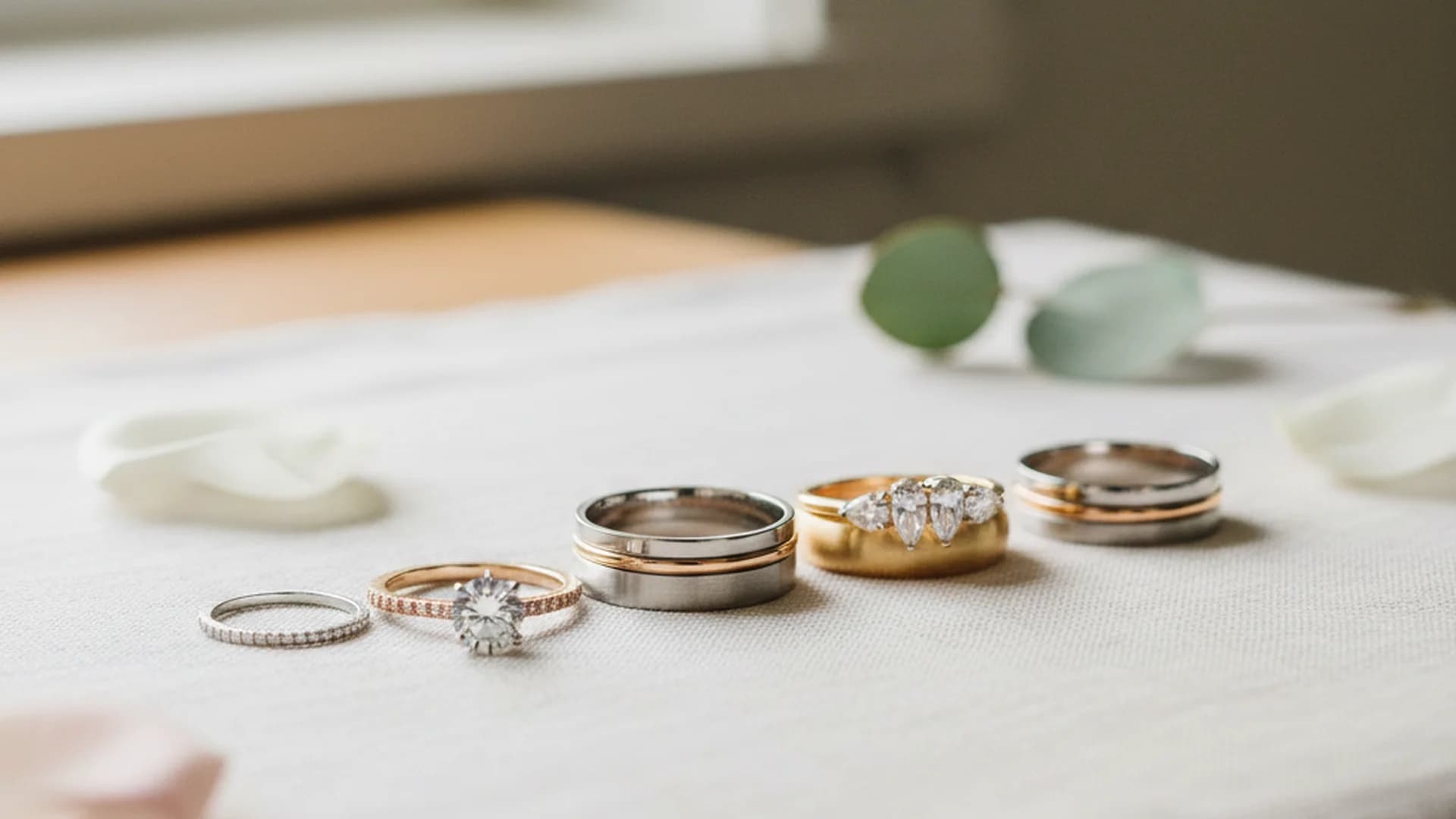
- 2.0mm to 2.5mm is the most popular width for women’s bands.
- Men typically prefer 6mm to 8mm for modern styles and 4mm to 5mm for classic looks.
- Avoid bands thinner than 1.5mm to ensure long-term structural integrity.
Selecting a wedding ring is one of the most significant decisions you will make during your wedding planning journey. While much of the focus often falls on the center stone or the metal type, the width of the band plays a critical role in both the aesthetic appeal and the daily comfort of the piece. This Wedding Band Width Guide is designed to help you navigate the nuances of millimeters, ensuring that the ring you wear for the rest of your life feels as good as it looks. Whether you are looking for a dainty stackable ring or a bold "cigar band" statement, understanding how width impacts durability and proportions is essential.
As a professional vow ghostwriter, I often tell my clients that the best vows are a balance of strength and beauty—your wedding band should be no different. Just as you carefully choose the words for your ceremony using tools like a Wedding Vow Writer, you should approach your ring selection with an eye for detail and longevity.
Understanding Wedding Band Width in Millimeters
When you begin shopping, you will notice that ring dimensions are almost always measured in millimeters (mm). For those who aren't used to the metric system, these small increments can feel abstract. However, even a 0.5mm difference can drastically change the "vibe" of a ring on your hand.
To help visualize these measurements without a jeweler’s caliper, you can use common household items as a reference point.
| Width (mm) | Visual Comparison | Common Use Case |
|---|---|---|
| 1.5mm | Thickness of a penny | Ultra-thin / Minimalist |
| 2.0mm | Thickness of a nickel | Standard women's band |
| 4.0mm | Two nickels stacked | Classic men's or wide women's |
| 6.0mm | Three nickels stacked | Modern men's standard |
| 8.0mm | Four nickels stacked | Bold / Heavy statement |
Tip
Choosing Width for Women: Dainty vs. Bold
For women, the choice of width is often dictated by the style of the engagement ring. According to industry data, approximately 80% of women choose bands between 2.0mm and 2.5mm. This range is considered the "goldilocks zone" because it is thick enough to be durable but thin enough to look elegant.
The Dainty Dilemma
Ultra-thin bands (1.5mm) have seen a surge in popularity on social media over the last few years. While they offer a "barely-there" look that makes a diamond pop, they come with significant risks.
Heads up
The "Cigar Band" Trend (2025–2026)
One of the most exciting shifts in our Wedding Band Width Guide for 2026 is the return of the chunky silhouette. Often referred to as "cigar bands," these rings range from 6mm to 10mm. They are frequently worn as standalone pieces or as part of a "power stack."
Do this
Choosing Width for Men: Finding the Sweet Spot
For men, the width of the wedding band is often the primary design choice. Historically, the classic "standard" was 4mm to 5mm. However, modern trends are shifting toward wider, more substantial rings.
The Classic 4mm to 5mm
This width is ideal for men who aren't used to wearing jewelry. It is low-profile, lightweight, and doesn't interfere with the movement of the finger. It’s a timeless choice that never goes out of style.
The Modern 6mm to 8mm
This is currently the "sweet spot" for most grooms. It provides enough surface area to showcase different finishes, such as hammered textures or wood-grain engravings. For more information on choosing a style that fits your personality, check out our Engagement Ring Guide.
Note
Proportions and Finger Size
A common mistake couples make is ignoring how their finger size interacts with the ring width. The same 3mm band will look very different on a size 4 finger than it will on a size 12 finger.
Small Hands (Size 3–5)
If you have petite hands, wider bands can feel overwhelming. They can actually make the finger look shorter. For these sizes, a band between 1.8mm and 3mm usually provides the most balanced aesthetic.
Large Hands (Size 9+)
Wider fingers have more "real estate." A very narrow band can look "lost" on a large hand. For those with size 9+ fingers, bands starting at 6mm for men and 3mm for women often look more proportional and intentional.
Tip
From the OurVows workspace
Ring sorted — now the wedding.
Set a realistic budget and a checklist that knows what's next, all in one free workspace.
The Impact of Width on Comfort and Sizing
One of the most important technical aspects of this Wedding Band Width Guide is the relationship between width and ring size.
The Sizing Rule
As a ring gets wider, it covers more skin. This creates more friction and traps more moisture, making the ring feel tighter than a thin band of the same size.
- Bands 2mm–5mm: Usually fit true to size.
- Bands 6mm–8mm: You may need to go up a quarter size.
- Bands 9mm+: You will likely need to go up a half to a full size.
Comfort Fit vs. Standard Fit
For any band wider than 6mm, "Comfort Fit" is highly recommended. A standard fit ring is flat on the inside, while a comfort fit ring is domed (rounded) on the inside. This reduces the surface area touching your skin, making it much easier to slide over the knuckle and more comfortable for daily wear.
Do this
Wedding Band Trends for 2025 and 2026
If you want your ring to feel contemporary yet timeless, consider these upcoming trends:
- Mixed Metal Stacks: Instead of a matching set, couples are choosing different widths and metals. Imagine a 2mm rose gold band paired with a 4mm textured platinum band. You can find more inspiration in our Custom Engagement Ring Guide.
- Gender-Neutral Mediums: We are seeing a surge in 4mm to 5mm bands that are marketed to all genders. These "medium" widths move away from the "dainty vs. masculine" extremes of the past.
- Flush-Set Diamonds: For 2025/26, wider bands with diamonds set directly into the metal (burnished or flush settings) are replacing traditional pavé. This allows for a wider band with a sleek, snag-free surface.
- Sculptural Solids: Look for 7mm to 8mm bands with architectural details like step-down edges or "knife-edge" centers that add visual interest without needing gemstones.
Common Mistakes to Avoid
Even with a Wedding Band Width Guide, it is easy to get caught up in the aesthetics and forget the practicalities. Here are the most common pitfalls:
- Ignoring Ring Depth: Width is how wide the band is across your finger; depth is how high it sits off your finger. A band that is both wide and deep can feel bulky between your fingers and make it difficult to close your hand naturally.
- Matching for the Sake of Matching: Your wedding band does not have to match the width of your engagement ring exactly. While a 1:1 match provides a uniform look, a slight difference (e.g., a 1.8mm engagement ring with a 2.2mm wedding band) can add dimension.
- Forgetting About Maintenance: Wider bands have more surface area, which means they show scratches more easily. If you choose a wide, polished gold band, be prepared for it to develop a "patina" of fine scratches over time. Regular cleaning is a must; see our Engagement Ring Cleaning Guide for tips.
- Underestimating Metal Volume: Precious metals like gold and platinum are sold by weight. A 6mm band uses significantly more metal than a 3mm band, often doubling the cost of the ring. Factor this into your budget early on.
Frequently asked questions
Does the wedding band have to match the width of my engagement ring?
Which width is best for manual labor?
Is a 1mm band too thin?
How does finger size affect width choice?
Does a wider band cost more?
Conclusion
Choosing the right width for your wedding band is a personal journey that combines your individual style with the practical realities of your lifestyle. Whether you are drawn to the delicate elegance of a 2mm band or the bold presence of an 8mm statement piece, remember that comfort and durability should always be your top priorities.
As you prepare for your big day—from choosing the perfect ring to polishing your vows—remember that these details are the foundation of your future together. If you need help articulating the love that these rings represent, our tools are here to help.
Do this
Ready when you are
Ready to Write Your Vows?
Now that you've found the perfect ring, let us help you find the perfect words.
Ready when you are
Plan your wedding without the chaos.
Free forever for couples just getting started. Two minutes to set up. No credit card.
Keep reading
The Ultimate Guide to Engagement Ring Insurance: Protecting Your Symbol of Love
Protect your investment with our comprehensive guide to engagement ring insurance. Learn about costs, 2025 trends, coverage types, and how to avoid common pitfalls.
2025-2026 Guide to Engagement Ring Styles: Trends, Costs, and Expert Tips
Explore the top engagement ring styles for 2025-2026. From lab-grown diamond trends to vintage revivals and yellow gold's comeback, find your perfect ring.
The Ultimate Mens Wedding Band Guide: Metals, Styles, and 2025 Trends
Discover the perfect ring with our comprehensive Mens Wedding Band Guide. Explore top metals, 2025 trends like meteorite inlays, and expert tips on fit and sizing.