The Ultimate Lab Grown Diamond Guide: 2025-2026 Edition
Navigate the 2025 lab-grown diamond market with expert advice on pricing, certification, and the best "sweet spot" grades for your engagement ring.
- Lab-grown diamonds are chemically identical to natural diamonds but cost 60-90% less.
- In 2025, over 50% of U.S. engagement rings feature lab-grown center stones.
- Prioritize 'Ideal' or 'Excellent' cut grades to ensure maximum sparkle and value.
Choosing an engagement ring is one of the most significant emotional and financial decisions a couple will make. As a relationship counselor, I often see how the stress of a major purchase can impact the early stages of wedding planning. This lab grown diamond guide is designed to alleviate that pressure by providing you with the most up-to-date information for 2025 and 2026.
The diamond industry has undergone a massive transformation. What was once considered a "disruptive alternative" has now become the primary choice for the majority of modern couples. Whether you are looking for a larger stone for your budget or an ethically transparent sourcing process, lab-grown diamonds (LGDs) offer a path to luxury that aligns with contemporary values.
The State of the Lab-Grown Market in 2025-2026
The lab-grown diamond market has officially moved into a era of "Mainstream Dominance." As we look toward 2026, the global market is valued at approximately $28.27 billion to $30 billion. Projections suggest this will skyrocket to nearly $100 billion by 2034.
What does this mean for you as a buyer? It means more choice, better quality, and significantly lower prices than just a few years ago. In 2019, only about 12% of engagement rings featured a lab-grown center stone. Today, that number has jumped to over 50%. This shift is driven largely by Gen Z and Millennial buyers who prioritize the ability to buy larger, high-quality stones without the "blood diamond" ethical baggage or the massive price tag of mined stones.
The Massive Price Shift
Technological efficiency in 2025 has driven production costs down significantly. You can now expect to pay 60–90% less for a lab-grown diamond than for a natural diamond of identical quality.
| Feature | Lab-Grown Diamond (2025) | Natural Diamond (2025) |
|---|---|---|
| 1-Carat Price | $800 – $1,000 | $3,000 – $6,000 |
| Chemical Composition | Pure Carbon (Crystalline) | Pure Carbon (Crystalline) |
| Hardness | 10 (Mohs Scale) | 10 (Mohs Scale) |
| Resale Value | Lower (Luxury Consumption) | Higher (Investment Asset) |
Note
How Lab-Grown Diamonds Are Created
Understanding how these stones are made helps clarify why they are "real" diamonds. There are two primary methods used in 2025:
CVD (Chemical Vapor Deposition)
This is currently the most popular method for high-quality jewelry. A tiny "diamond seed" is placed in a vacuum chamber filled with carbon-rich gas. Microwave energy breaks down the gas, and carbon atoms rain down onto the seed, growing the diamond layer by layer.
- Expert Insight: In 2025, approximately 80% of CVD diamonds undergo a post-growth treatment to reach "Colorless" (D-F) grades.
HPHT (High Pressure High Temperature)
This method mimics the earth’s natural process by subjecting carbon to extreme pressure and heat. HPHT is often used for smaller stones or to enhance the color of existing diamonds.
Heads up
The Expert Guide to the "Four Cs" in 2025
When using this lab grown diamond guide to shop, you need to adjust how you view the traditional Four Cs (Cut, Color, Clarity, and Carat). Because lab diamonds are more abundant, you should never settle for "good enough."
1. Prioritize Cut Above All Else
The "Cut" determines how light enters and exits the diamond. In the lab-grown market, there is no excuse to buy anything less than an "Ideal" or "Excellent" cut.
- Why? A poorly cut 3-carat stone will look dull and smaller than a perfectly cut 2-carat stone. The sparkle is what gives a diamond its life.
2. Finding the "Sweet Spot" for Color and Clarity
Don't overpay for grades you can't see with the naked eye.
- Color: Aim for G or H. These appear colorless to the eye when set in a ring but cost significantly less than the "perfect" D-F grades.
- Clarity: Seek out VS1 or VS2. These stones are "eye-clean," meaning you cannot see inclusions without a microscope. Paying for "Internally Flawless" (IF) is a common mistake that offers no visual benefit.
3. Visual Impact and Shapes
If you want the most "bang for your buck" regarding size, consider fancy shapes.
- Oval, Pear, and Marquise: These shapes have a larger "spread," making them look bigger than a Round Brilliant of the same carat weight.
- The 2026 Trend: The average lab-grown carat size has increased from 1.3ct in 2019 to 2.45ct in 2025.
Tip
Real-World Examples of the Lab-Grown Advantage
To help visualize how these choices impact your budget and style, consider these three common 2025 scenarios:
- The "Maximalist" Dream: Sarah and James had a $5,000 budget for a center stone. In the natural market, they could only afford a high-quality 0.90-carat round diamond. By choosing lab-grown, they purchased a stunning 3.10-carat Oval diamond with an "Ideal" cut, leaving money left over for a premium Engagement Ring Setting.
- The Vintage Revival: Elena wanted an "Old Mine" cut—a vintage style that is rare in the natural market. In 2025, specialized labs are now producing these unique antique cuts, allowing her to have a 2.5-carat vintage-style ring for under $2,500.
- The Sustainable Set: A couple concerned about environmental impact chose an SCS-007 Certified lab diamond. They used the savings to buy matching lab-grown diamond wedding bands, staying well within their Wedding Budget.
From the OurVows workspace
Ring sorted — now the wedding.
Set a realistic budget and a checklist that knows what's next, all in one free workspace.
Recent Trends & Market Updates (2025-2026)
The landscape for lab diamonds is shifting rapidly. Here are the most recent updates you need to know:
The GIA Grading Shift (August 2025)
The Gemological Institute of America (GIA) recently updated its approach to LGDs. They have moved toward a more generalized "Standard" vs. "Premium" classification. This change is designed to help consumers quickly identify the quality tier of a lab stone while clearly differentiating it from the natural stone secondary market. Always ensure your stone has a certificate from either the GIA or IGI (International Gemological Institute).
Maximalism and "Quiet Luxury"
While "quiet luxury" was the theme of previous years, 2026 is seeing a move toward bold, statement pieces. Because lab diamonds are so affordable, 3-carat+ solitaires are becoming the new standard for engagement rings.
Everyday Luxury (Demi-Fine Expansion)
Lab diamonds are no longer just for engagement rings. We are seeing a massive surge in "everyday luxury" items, such as tennis bracelets and chunky diamond link jewelry set in 10k or 14k gold. This makes high-end jewelry accessible for anniversaries and birthdays.
Do this
Common Mistakes to Avoid
Even with a lab grown diamond guide, it is easy to fall into common traps. Avoid these frequent missteps:
- Buying Based on Carat Alone: Never sacrifice cut quality for size. A 3-carat stone with a "Fair" cut will look like glass, not a diamond.
- Assuming All Labs are "Green": Not all diamond labs use renewable energy. If sustainability is your priority, look for brands with SCS-007 Sustainability Certification to avoid "greenwashing."
- Paying for "Flawless" Clarity: As mentioned, VS1/VS2 is the sweet spot. Spending double for "IF" (Internally Flawless) is a waste of money because you cannot see the difference with the naked eye.
- Neglecting the Setting: Because the stone is affordable, don't skimp on the metal. A high-quality setting is vital for the security of your stone. For more information, read our Engagement Ring Styles overview.
- Confusing LGDs with Simulants: Ensure you are not buying Cubic Zirconia or Moissanite if you want a diamond. Lab diamonds are carbon; simulants are different minerals entirely.
Frequently asked questions
Are they real diamonds?
Can a jeweler tell the difference?
Do lab-grown diamonds have resale value?
Will they get cloudy or change color over time?
Which is better: CVD or HPHT?
Conclusion
The 2025-2026 jewelry market offers unprecedented opportunities for couples. By following this lab grown diamond guide, you can navigate the technical jargon and focus on what truly matters: finding a symbol of your commitment that fits your lifestyle, ethics, and budget.
Remember to prioritize the Cut grade, look for the "sweet spot" in color and clarity, and always insist on a reputable certification. By doing so, you'll secure a breathtaking diamond that will last a lifetime.
Ready when you are
Ready to Choose Your Ring?
Explore our comprehensive guides to find the perfect style for your partner.
Ready when you are
Plan your wedding without the chaos.
Free forever for couples just getting started. Two minutes to set up. No credit card.
Keep reading
The Ultimate Guide to Engagement Ring Insurance: Protecting Your Symbol of Love
Protect your investment with our comprehensive guide to engagement ring insurance. Learn about costs, 2025 trends, coverage types, and how to avoid common pitfalls.
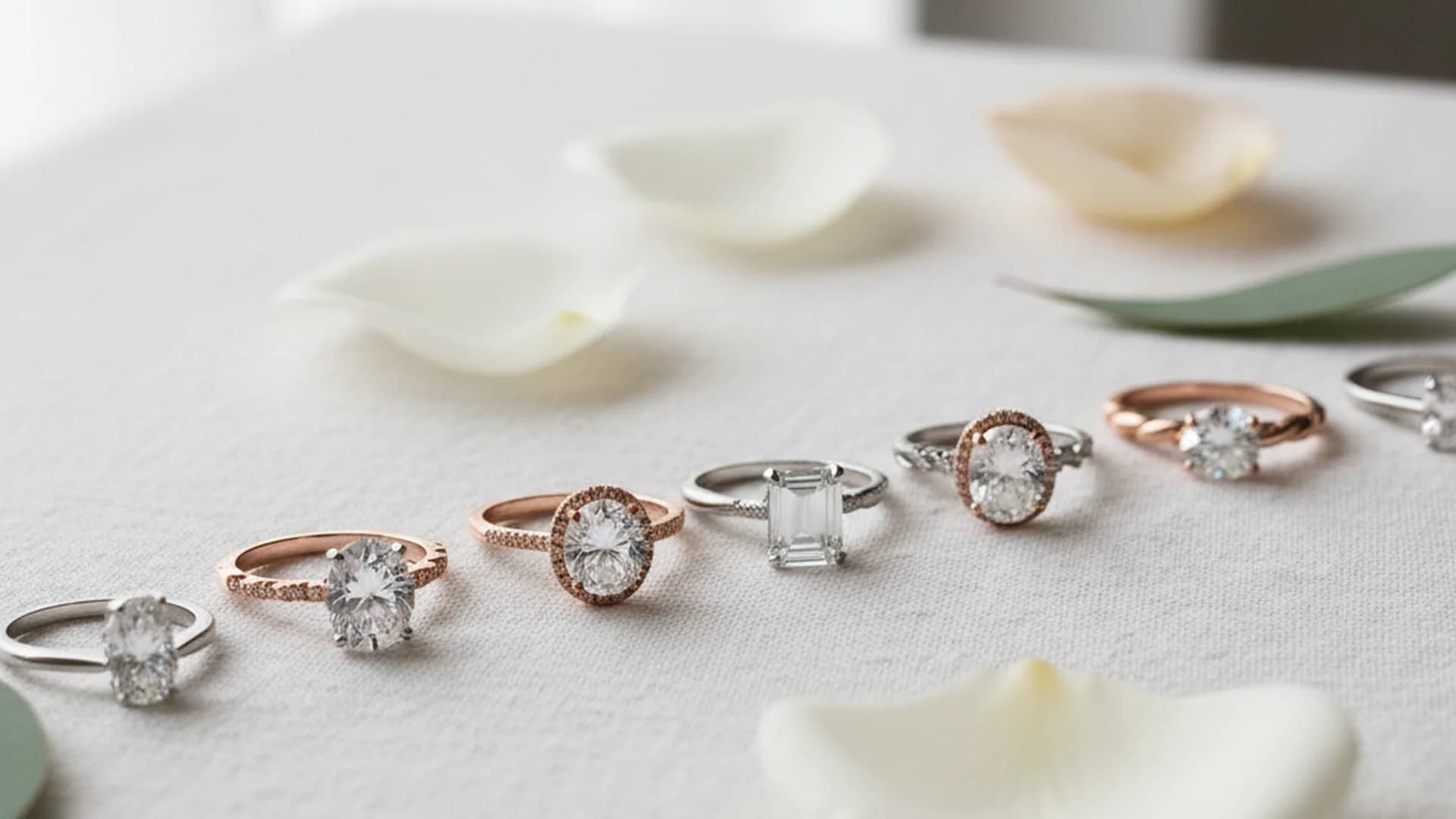
2025-2026 Guide to Engagement Ring Styles: Trends, Costs, and Expert Tips
Explore the top engagement ring styles for 2025-2026. From lab-grown diamond trends to vintage revivals and yellow gold's comeback, find your perfect ring.
The Ultimate Mens Wedding Band Guide: Metals, Styles, and 2025 Trends
Discover the perfect ring with our comprehensive Mens Wedding Band Guide. Explore top metals, 2025 trends like meteorite inlays, and expert tips on fit and sizing.