The Ultimate Guide to Crafting Spiritual Wedding Vows for 2025 and 2026
Discover how to write meaningful spiritual wedding vows that balance tradition and personal truth. Includes 2025 trends, sample templates, and expert tips.
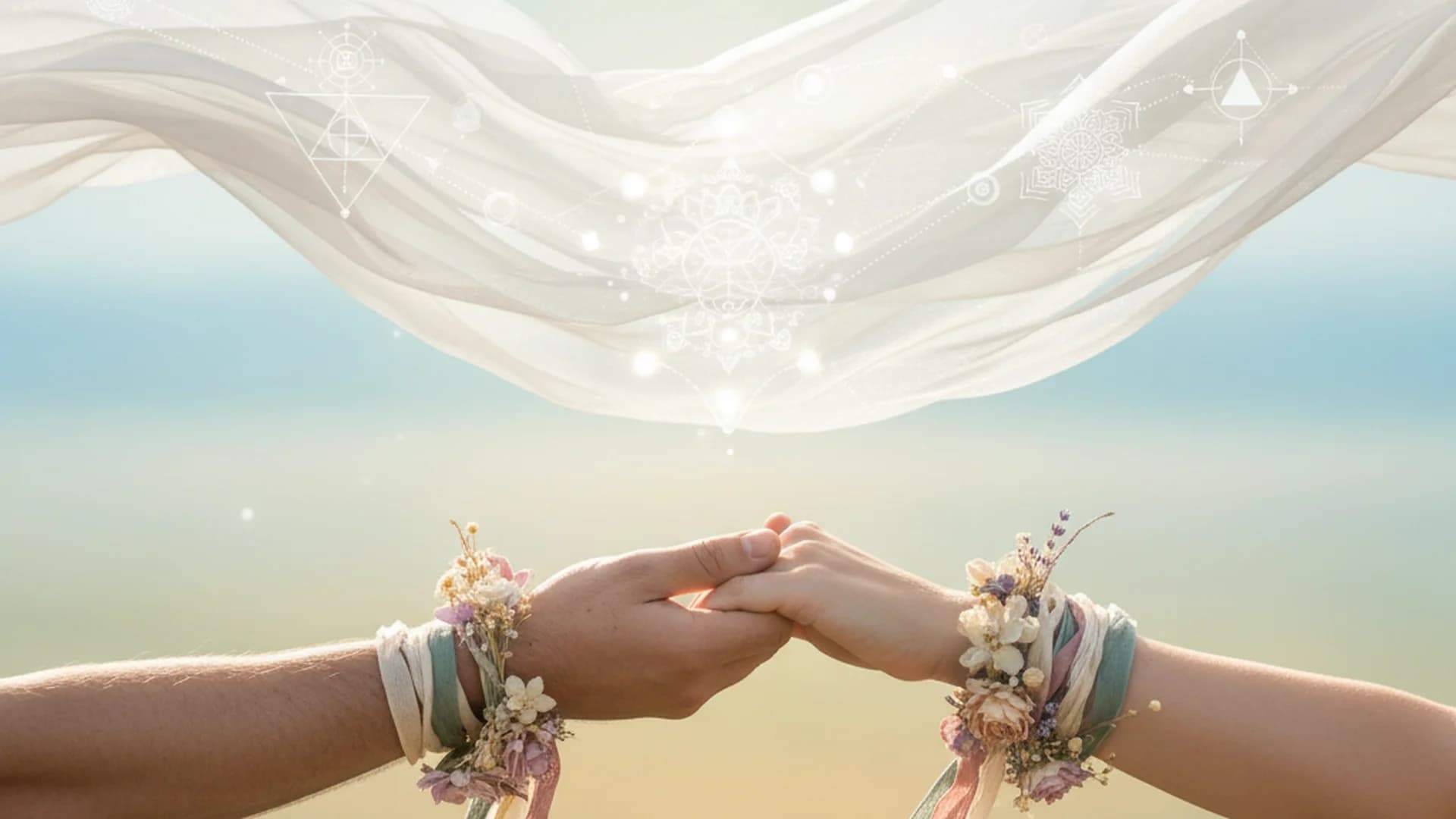
- Spiritual vows differ from religious ones by focusing on universal connection rather than dogma.
- Most modern couples now personalize their vows to reflect their unique spiritual journeys.
- Successful vows balance emotional 'love letter' sentiments with concrete, actionable promises.
In a world where most couples are choosing to personalize their ceremony, spiritual wedding vows have emerged as the definitive bridge between rigid tradition and modern authenticity. For many of the couples I coach, the standard templates of old no longer resonate with their lived experience. They seek something deeper than a legal contract but broader than a specific religious doctrine. Whether you are spiritual but not religious, or simply looking to infuse your union with a sense of the "Divine," "Universe," or "Cosmic Connection," crafting these words is one of the most significant tasks you will undertake for your big day.
Understanding the Spiritual Vow in 2025
The landscape of modern marriage is shifting. As we move into 2025 and 2026, the influence of Gen Z is becoming apparent; a growing share of newlyweds now belongs to this demographic, prioritizing intentionality and authenticity over "tradition for tradition's sake."
A spiritual wedding vow is not just a speech; in many ancient and modern traditions, these are considered "performative utterances"—words that actually change the nature of reality and create a new bond the moment they are spoken. Unlike Catholic Wedding Vows, which must follow specific denominational laws, spiritual vows allow you to reference the "human spirit," nature, or a "Higher Power" in a way that feels true to your specific partnership.
Tip
The Core Differences: Religious vs. Spiritual
One of the most frequent questions I receive as a ghostwriter is: "What is the actual difference between religious and spiritual vows?"
Religious vows are rooted in specific scriptures and are often overseen by a religious institution with a set of requirements. For example, Christian Wedding Vows often center on the covenant between the couple and God through the lens of the Bible.
Spiritual vows, however, are broader. They are "spiritually grounded" but not "dogmatically bound." They might incorporate a "cord of three strands" metaphor from Ecclesiastes or a Rumi poem about souls meeting in a field, without requiring the couple to adhere to one specific church's rules.
| Feature | Religious Vows | Spiritual Vows |
|---|---|---|
| Authority | Church/Scripture | The Couple/Universe |
| Language | Doctrinal/Traditional | Poetic/Experiential |
| Flexibility | Low (Often Mandatory) | High (Fully Customizable) |
| Focus | Covenant with Deity | Connection of Souls |
Note
Emerging Trends for 2025–2026
The way couples express their spirituality is evolving. Here are the top trends we are seeing for the upcoming wedding seasons:
1. The "First Look" Private Vow
A major trend for 2026 is moving the most deeply personal spiritual vows to a "First Look" or a private moment before the ceremony. This allows the couple to be vulnerable and esoteric without the pressure of an audience. They then use shorter, more traditional vows for the public ceremony.
2. Nature-Centric Spirituality
"Al Fresco" church ceremonies and garden weddings are surging. These ceremonies use vows that reference the elements—Earth, Air, Fire, and Water—to ground the marriage in the natural world. It is about acknowledging that the union is part of a larger, living ecosystem.
3. Intentional Sound and Sound Baths
Couples are increasingly incorporating "sound baths" or meditative music specifically during the vow exchange. The goal is to create an immersive spiritual atmosphere that moves the audience into a state of witness and presence.
Do this
How to Write Your Spiritual Vows: The Professional Framework
As a public speaking coach, I recommend the "Three-Month Rule." Start brainstorming ninety days out. This gives your subconscious time to chew on the weight of the promises you are about to make.
Step 1: Define Your "Divine"
Before you write a single word, agree with your partner on what "spirituality" means to you both. Is it God? Is it the Universe? Is it the shared human experience? Agreeing on the tone prevents the ceremony from feeling disjointed.
Step 2: The Anatomy of a Vow
A common mistake is writing a "love letter" instead of a vow. A love letter describes how you feel; a vow describes what you will do. Every spiritual vow should include:
- The Recognition: Acknowledging the spiritual force that brought you together.
- The Promise: Concrete actions (e.g., "I vow to support your growth," "I promise to be your shelter").
- The Vision: How your union will serve the greater good or your community.
Step 3: Use Inclusive Language
In 2025, the shift from "obey" to "cherish" or "partner" is standard. Focus on egalitarian spiritual growth where both partners are seen as autonomous souls traveling a shared path.
Heads up
From the OurVows workspace
Writing your vows?
Get a heartfelt first draft to shape into your own words — then handle every other detail with OurVows.
3 Real-World Examples of Spiritual Wedding Vows
To help you get started, here are three templates ranging from nature-focused to universalist.
Example 1: The Universalist/Divine Vow
"In the presence of the Divine and this community of our most cherished souls, I, [Name], take you, [Name], to be my partner in this life and whatever follows. I recognize the light within you that mirrors the light within me. I vow to honor your journey, to support your spirit’s evolution, and to love you not just for who you are today, but for all the versions of yourself you are yet to become. As we weave our lives together like a cord of three strands, I promise to be your anchor in the storm and your wings in the sun."
Example 2: The Nature-Based Vow
"Just as the trees reach for the light and the tides answer the moon, I find myself pulled toward you by a force I cannot name but deeply feel. Today, under the open sky, I vow to be your earth—a firm place to stand. I vow to be your fire—a source of warmth and passion. And I vow to be your water—consistently returning to you, no matter how far the world carries me. I promise to protect the wildness of your heart as we grow our own garden of peace."
Example 3: The Minimalist/Soul-Focused Vow
"I take you as my partner, my mirror, and my soul's companion. I promise to walk beside you, never in front of or behind you, as we navigate the mysteries of this existence. I vow to listen with my whole heart, to speak with kindness, and to prioritize our shared spiritual peace above all else. In the silence and in the noise, I am yours."
Tip
Common Mistakes to Avoid
In my years as a vow ghostwriter, I’ve seen the same errors crop up repeatedly. Avoiding these will ensure your ceremony maintains its spiritual integrity.
- Winging It: High emotion and nerves cause "brain freeze." Never rely on your memory. Even if you think you’ve memorized them, have your vows written in a dedicated "vow book." Avoid reading from a phone, as the screen glare can ruin photos and feel impersonal.
- The Length Dilemma: Aim for 45 seconds to 2 minutes. Anything longer and you risk losing the audience's emotional engagement.
- Being Too Esoteric: While your spirituality is personal, the vows are a public declaration. If your language is too "New Age" or specific to an obscure philosophy, your witnesses may feel disconnected from the moment.
- Forgetting the "Vow": Ensure you actually make promises. "I love how you look in the morning" is a sentiment; "I promise to cherish you every morning" is a vow.
Integrating Rituals into Your Vows
Sometimes, words aren't enough to carry the weight of a spiritual promise. Integrating physical rituals can bolster the spoken word.
- Handfasting: An ancient Celtic tradition where the couple's hands are tied with ribbons, symbolizing the binding of two lives. This is where the phrase "tying the knot" originates.
- Oathing Stones: Holding a stone while saying your vows. The ancient belief is that the stone "remembers" the promises made, which you then keep in your home or cast into a body of water.
- The Seven Steps: Inspired by Hindu Wedding Vows, couples take seven steps together, each representing a different spiritual aspect of their journey (strength, prosperity, wisdom, etc.).
Frequently asked questions
Can we write our own vows if we're marrying in a church?
How long should spiritual vows be?
Do we have to mention God?
Should we share our vows with each other before the wedding?
What if I get too emotional to speak?
Conclusion
Your wedding vows are the spiritual blueprint for your marriage. They are the "intentional sound" that sets the vibration for your life together. By moving away from generic templates and toward Heartfelt Wedding Vows that reflect your specific spiritual journey, you aren't just performing a ceremony—you are engaging in a sacred act of creation.
Remember, the most powerful spiritual vows are those that feel like a homecoming. They should feel as natural as breathing and as solid as the earth beneath your feet.
Do this
Ready when you are
Ready to Start?
Use our expert tools to craft the perfect promises for your big day.
Ready when you are
Plan your wedding without the chaos.
Free forever for couples just getting started. Two minutes to set up. No credit card.
Keep reading

The Modern Guide to Wedding Vows for Her: Trends, Tips, and Examples
Learn how to write meaningful, personalized wedding vows for her with our 2025 guide. Discover trends, timing tips, and common mistakes to avoid.
Writing the Perfect Wedding Vows for Your Soulmate: A 2025 Guide
Discover how to write heartfelt wedding vows for your soulmate. Explore 2025 trends, expert tips, and structures to express your unique bond perfectly.

Mastering the Wedding Vow Structure Template: A 2025 Guide
Struggling with writer's block? Use our expert wedding vow structure template to write personalized, meaningful vows for your 2025 or 2026 ceremony.