The Sacred Covenant: A Complete Guide to Catholic Wedding Vows
Everything you need to know about Catholic wedding vows, from the sacramental Rite of Marriage to modern trends for 2025-2026 and essential preparation tips.
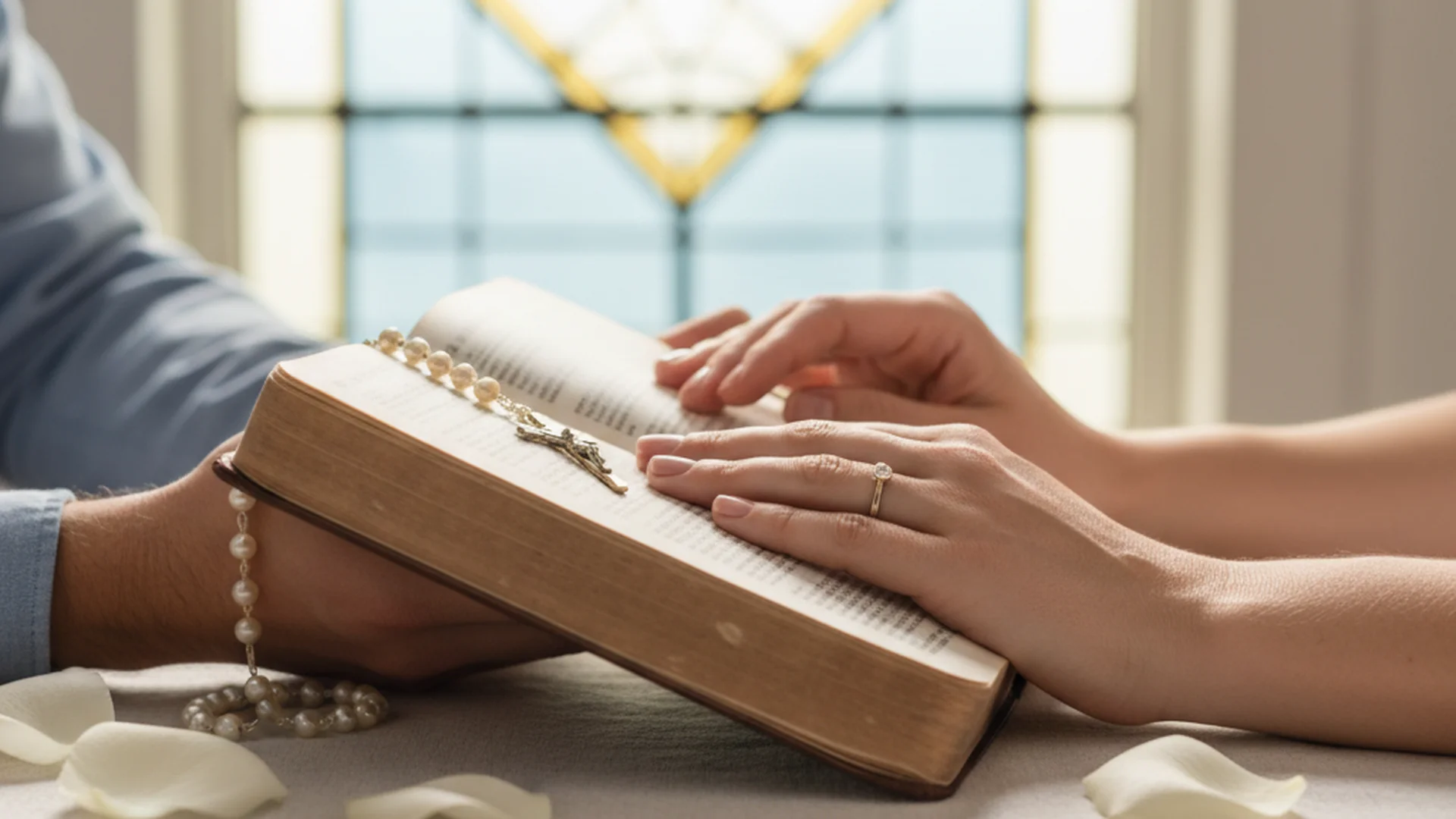
- Catholic wedding vows (Exchange of Consent) are the indispensable element that makes the marriage valid.
- Couples generally cannot write their own vows as they are a liturgical act of the Church.
- Preparation typically requires 6 to 12 months of accompaniment and parish contact.
In the eyes of the Church, Catholic wedding vows are far more than a sentimental promise made before friends and family. They are formally referred to as the Rite of Marriage or the Exchange of Consent, and they represent the moment a couple enters into a sacramental covenant. Unlike a civil ceremony where the vows might be viewed as a contract, the Catholic tradition sees this exchange as a liturgical act of worship—a public declaration that mirrors the love between Christ and the Church.
Whether you are a lifelong parishioner or an interfaith couple preparing for your big day, understanding the weight and beauty of these words is essential. As we look toward the 2025 and 2026 wedding seasons, there is a renewed interest in the "noble simplicity" of the rite, focusing on the spiritual depth of the union rather than the external extravagances.
The Theology of Consent: Why the Vows Matter
According to the Catechism of the Catholic Church (#1626), the exchange of consent between the spouses is the "indispensable element" that makes the marriage. Without this mutual, free, and total agreement, the marriage is not considered valid. In the Western (Latin) Rite, there is a beautiful theological nuance: the priest does not "marry" the couple. Instead, the spouses are the ministers of the sacrament; they marry each other by declaring their consent before God and the Church. The priest or deacon acts as the Church’s official witness and provides the Nuptial Blessing.
This is why the Church is so protective of the wording used during the ceremony. While many couples look for modern wedding vows to express their unique personalities, the Catholic rite utilizes a shared heritage that belongs to the whole Body of Christ.
The Three Questions Before the Consent
Before you reach the actual exchange of vows, the priest or deacon will ask three specific questions. These are designed to ensure that the couple understands the gravity of the commitment they are about to make.
- Freedom of Choice: "Have you come here freely and without reservation to give yourselves to each other in marriage?"
- Fidelity: "Will you love and honor each other as man and wife for the rest of your lives?"
- Openness to Children: "Will you accept children lovingly from God, and bring them up according to the law of Christ and his Church?"
These questions establish the "pillars" of Catholic marriage: it must be free, total, faithful, and fruitful.
Heads up
Traditional Catholic Wedding Vow Examples
While there are slight variations depending on the country and the specific translation of the Roman Missal, the core of the exchange remains consistent. Here are three real-world examples of how the consent is phrased in the Rite of Marriage.
Example 1: The Standard Exchange
"I, (Name), take you, (Name), to be my wife/husband. I promise to be faithful to you, in good times and in bad, in sickness and in health, to love you and to honor you all the days of my life."
Example 2: The Response Format
In some cases, especially if the couple is nervous or wants a simpler delivery, the priest will ask: "(Name), do you take (Name) to be your wife/husband? Do you promise to be faithful to her/him, in good times and in bad, in sickness and in health, to love her/him and to honor her/him all the days of your life?" The spouse responds: "I do."
Example 3: The Alternative Translation
"I, (Name), take you, (Name), for my lawful wife/husband, to have and to hold, from this day forward, for better, for worse, for richer, for poorer, in sickness and in health, until death do us part."
Note
Choosing the Form of the Ceremony
Not every Catholic wedding looks the same. Depending on your background and your partner's faith, the Church offers three distinct forms for the Rite of Marriage:
| Ceremony Type | Best For | Focus |
|---|---|---|
| Within Mass | Two practicing Catholics | Includes the Liturgy of the Eucharist (Communion). |
| Without Mass | Catholic and another Christian | Focuses on the Word and the Rite of Marriage. |
| Interfaith Rite | Catholic and unbaptized person | A modified rite that respects the non-Catholic’s tradition. |
Approximately 25% of Catholic weddings in the United States are interfaith. In these instances, the Church provides a rite that celebrates the union without the full Mass, ensuring all guests feel included in the prayerful atmosphere.
Tip
From the OurVows workspace
Writing your vows?
Get a heartfelt first draft to shape into your own words — then handle every other detail with OurVows.
Modern Trends and Updates (2025–2026)
The landscape of Catholic weddings is shifting toward more intentionality and simplicity. Here are the key trends for the upcoming years:
The Marriage Catechumenate
Prompted by Pope Francis, the Church is moving away from a "one-and-done" Pre-Cana course. The new trend is a "Marriage Catechumenate," which involves a longer process of accompaniment. Couples are often paired with mentor couples in their parish to walk with them through the first few months of their marriage, not just the wedding day.
National Marriage Week 2026
The United States Conference of Catholic Bishops (USCCB) has announced the theme for 2026: "Man and Woman He Created Them: Together with Purpose." This theme encourages couples to see their marriage as a mission to the world, emphasizing how their vows impact society at large.
Noble Simplicity
In 2025-2026, there is a visible move toward "eco-ceremonies" and "noble simplicity." This aligns with the Church’s focus on stewardship. Couples are choosing smaller floral arrangements and focusing the "extravagance" on the sacramental rite itself rather than the decor.
Common Mistakes to Avoid
Even with the best intentions, couples often run into hurdles when planning a Catholic wedding. Here are the most frequent pitfalls:
1. Booking the Venue Before the Church
This is the number one mistake. Many couples book a trendy reception hall and then call the priest, only to find the church is unavailable or that the date falls during a restricted liturgical season (like Lent). Always contact your parish priest 6 to 12 months in advance.
2. Assuming You Can Marry Anywhere
In the Catholic Church, marriage is a sacred rite that normally must take place in a "consecrated place"—a church building. While a beach or garden wedding sounds romantic, they are generally not permitted without a rare dispensation from the Bishop.
3. The "Unity Candle" Confusion
Many couples assume the Unity Candle is a Catholic tradition. It is actually a secular or Protestant innovation. Some parishes prohibit it because it can distract from the primary symbols of the sacrament: the Vows and the Eucharist.
4. Skipping the Nuptial Blessing
The Nuptial Blessing occurs after the Lord's Prayer and is one of the most ancient prayers in the Church. Some couples try to shorten the ceremony by rushing through this, but it is the specific moment the Church asks God to pour His grace upon the new couple.
Do this
Frequently asked questions
Can we write our own Catholic wedding vows?
Do we have to have a full Mass?
What is the "Marriage Catechumenate"?
Is the Unity Candle part of the Catholic rite?
Can we use pop music during the ceremony?
Final Thoughts on Your Catholic Vows
The beauty of Catholic wedding vows lies in their permanence and their connection to a tradition that spans centuries. When you say those words, you aren't just speaking to your partner; you are speaking to God and the community, promising a love that is as enduring as it is divine.
If you are looking for ways to express your love outside of the formal liturgy, you might find inspiration in heartfelt wedding vows for your rehearsal dinner or poetic wedding vows for a private letter exchange. But when you stand at the altar, remember that the simple, traditional words provided by the Church carry a weight and grace that have sustained millions of marriages throughout history.
Ready when you are
Ready to Start?
Begin your sacramental journey by preparing your vows today.
Ready when you are
Plan your wedding without the chaos.
Free forever for couples just getting started. Two minutes to set up. No credit card.
Keep reading

The Modern Guide to Wedding Vows for Her: Trends, Tips, and Examples
Learn how to write meaningful, personalized wedding vows for her with our 2025 guide. Discover trends, timing tips, and common mistakes to avoid.
Writing the Perfect Wedding Vows for Your Soulmate: A 2025 Guide
Discover how to write heartfelt wedding vows for your soulmate. Explore 2025 trends, expert tips, and structures to express your unique bond perfectly.

Mastering the Wedding Vow Structure Template: A 2025 Guide
Struggling with writer's block? Use our expert wedding vow structure template to write personalized, meaningful vows for your 2025 or 2026 ceremony.