The Ultimate Jewish Wedding Timeline: A 2025–2026 Planning Guide
Master your Jewish wedding timeline with our comprehensive guide to rituals, 2025 trends, and expert tips for a seamless, culturally rich celebration.
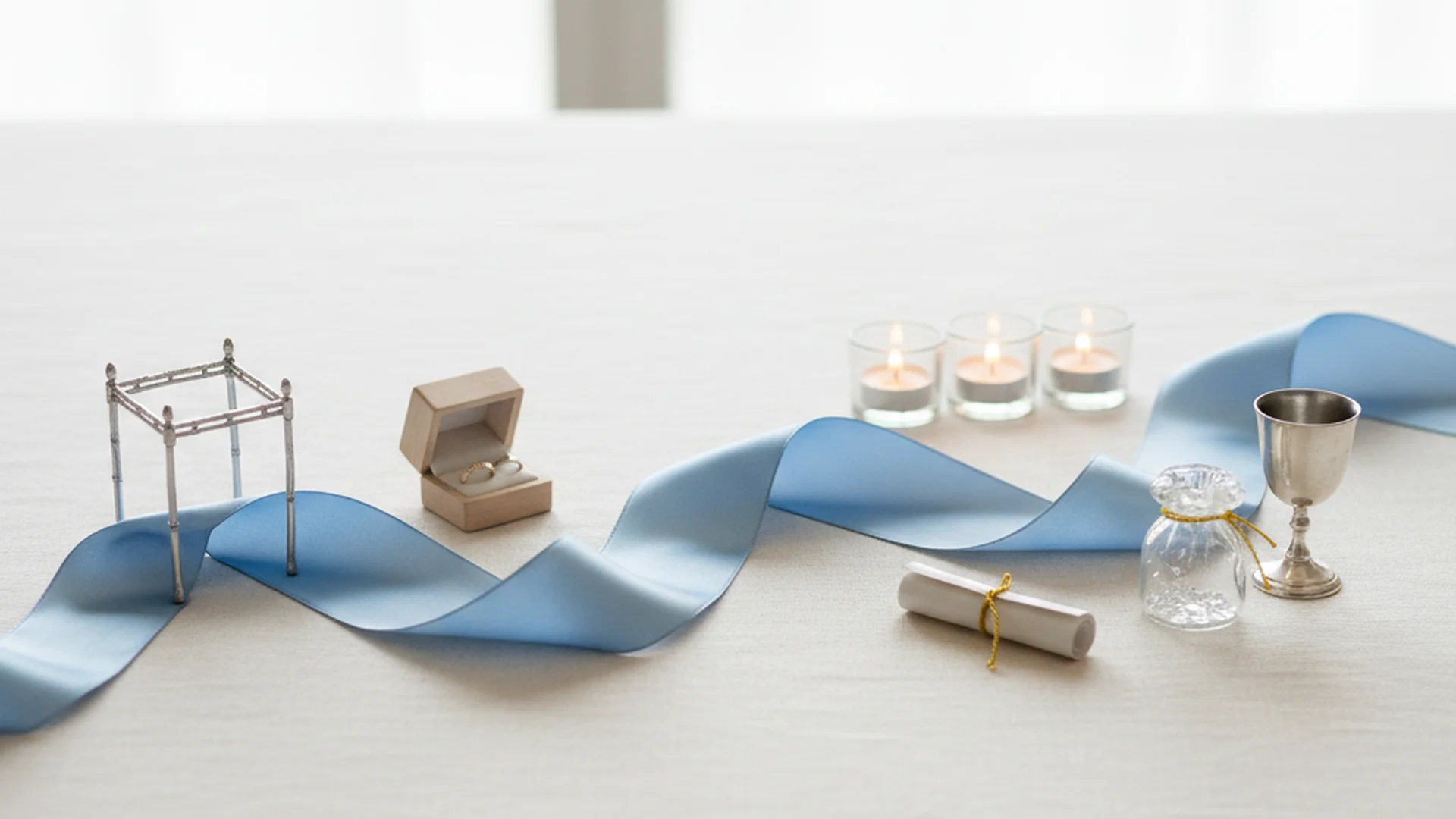
- Traditional Jewish weddings often involve pre-ceremony rituals like the Tisch and Bedeken.
- Plan your timeline backward from the Chuppah start time to ensure a stress-free flow.
- Modern trends for 2025 emphasize egalitarianism through joint rituals and community participation.
Planning a wedding is a monumental task, but when you are coordinating a Jewish wedding timeline, the layers of tradition, ritual, and community expectations add a unique level of complexity. Whether you are planning a traditional Orthodox simcha or a modern Reform celebration, the flow of the day is governed by centuries-old customs that must be balanced with modern logistics.
In 2025 and 2026, we are seeing a beautiful blend of ancient heritage and contemporary values. From the high-energy Hora to the sacred moments under the Chuppah, every minute of your day serves a purpose. This guide will walk you through the essential components of the day, helping you navigate everything from the "Kosher Multiplier" to the latest trends in egalitarian ceremonies.
Navigating the Calendar: Auspicious and Forbidden Dates
Before you can even begin drafting your hourly schedule, you must select a date. In the Jewish tradition, time is not just linear; it is spiritual.
Why Tuesday is the "Luckiest" Day
While Sunday is the most common day for Jewish weddings in the United States, Tuesday is traditionally considered the luckiest. This is because, in the Torah’s account of creation, the phrase "it was good" is mentioned twice on the third day (Tuesday). This "double portion" of goodness makes it a favored choice for couples seeking an extra blessing on their union.
Forbidden and Restricted Dates
A Jewish wedding timeline cannot fall on the Sabbath (from sunset Friday to sunset Saturday) or on major holidays like Rosh Hashanah, Yom Kippur, and Passover. Furthermore, many couples avoid the "Three Weeks" of mourning for the Temple and the "Omer" period (between Passover and Shavuot), with the notable exception of Lag B’Omer.
Heads up
The Financial Reality of Jewish Weddings
When setting your budget, it is vital to understand the "Kosher Multiplier." For couples adhering to strict dietary laws, kosher catering can cost up to 2x more than secular catering. This is due to the necessity of mashgiach (supervision), specialized food sourcing, and the rental of kosher-certified equipment.
In major metropolitan areas like New York City, high-end Orthodox weddings frequently exceed $120,000–$150,000. This is often driven by guest counts that range from 200 to 400 people, as the "community" aspect of the wedding is central to the faith. If you are struggling to balance these costs, using a (Marketing) - Tools - Wedding Budget Calculator can help you allocate funds effectively across categories like the "Shmorg" and the Chuppah decor.
The Pre-Ceremony: Tisch, Kabbalat Panim, and Bedeken
Unlike secular weddings where the couple often stays hidden until the aisle walk, the Jewish wedding timeline officially begins about 90 minutes before the Chuppah with the pre-ceremony rituals.
The Tisch and Kabbalat Panim
Traditionally, the groom hosts a Tisch (table) where he attempts to deliver a Torah discourse while his friends heckle and sing to prevent him from finishing. Simultaneously, the bride hosts a Kabbalat Panim (receiving of faces) in a separate room, sitting on a throne-like chair to greet guests.
Tip
The Bedeken (The Veiling)
This is often cited as the most emotional moment of the day. The groom is led by a procession of music and dancing to the bride. He checks her face and then places the veil over her. This tradition references the biblical story of Jacob, who was tricked into marrying the wrong sister because she was veiled.
2025 Trend: The Joint Tisch
A major shift for 2025–2026 is the Joint Tisch. Instead of separate rooms, many modern couples are greeting their guests together. This emphasizes partnership from the very first moment of the wedding day and allows the couple to share in the excitement of the "Shmorg" (the smorgasbord cocktail hour).
The Chuppah Ceremony
The Chuppah (canopy) represents the home the couple will build together. It is open on all four sides to symbolize hospitality.
The Processional and Circling
In a traditional ceremony, the bride circles the groom seven times, symbolizing the seven days of creation and the protection she provides.
Modern Variation: In 2025, many couples are opting for "Double Circling." The bride circles the groom three times, the groom circles the bride three times, and then they perform one final circle together. This reflects a more egalitarian approach to the marriage contract.
The Seven Blessings (Sheva Brachot)
These blessings are the heart of the ceremony, focusing on joy, companionship, and the restoration of Jerusalem.
Do this
Smashing the Glass
The ceremony concludes with the groom (and sometimes the bride) smashing a glass. While it signals the start of the party, its meaning is somber: it serves as a reminder that even in moments of supreme joy, the world is still broken and the Temple in Jerusalem remains destroyed.
Note
Post-Ceremony Logistics: Yichud and the Shmorg
Immediately after the glass is smashed, the couple enters Yichud (seclusion).
The Yichud Room
This is a mandatory 10–15 minute break where the couple is alone in a private room. Historically, this was when the marriage was "consummated," but today it serves as a vital moment of peace. It is often the only time the couple will eat or speak privately all day.
Heads up
The Cocktail Hour (The Shmorg)
While the couple is in Yichud, guests enjoy the Smorgasbord. In Jewish weddings, this is often the most food-heavy part of the night. It is a common mistake to under-budget for this portion, but in many circles, the quality of the Shmorg is what guests will remember most.
From the OurVows workspace
Build your day-of timeline in minutes.
Generate a minute-by-minute schedule, assign vendors, and share it with everyone who needs it.
The Reception: Dancing, Dining, and Benching
The reception in a Jewish wedding timeline is characterized by high-octane energy and specific religious conclusions.
The Hora
Unlike secular weddings where dancing happens after dinner, the Jewish Hora (chair dance) usually happens immediately after the grand entrance. This can last 20 to 45 minutes and is a legitimate physical workout for everyone involved.
The "Spare Shirt" Rule
Because the Hora is so intense, wedding planners recommend that the groom and his groomsmen bring a spare white dress shirt. Changing into a fresh shirt before the first course ensures the couple looks polished for the speeches and formal photos that follow the dancing.
Benching (Birkat Hamazon)
The night concludes with Benching, the grace after meals. In traditional weddings, the Seven Blessings are recited again over a second cup of wine.
| Phase | Activity | Duration |
|---|---|---|
| Pre-Ceremony | Tisch & Kabbalat Panim | 45–60 min |
| Ritual | Bedeken | 15 min |
| Ceremony | Chuppah | 30–45 min |
| Seclusion | Yichud | 15 min |
| Reception | The Hora | 30–45 min |
Common Mistakes to Avoid
1. Ignoring Chuppah Dimensions
Couples often choose a Chuppah based on aesthetic photos without realizing that it must physically house the couple, both sets of parents, the Rabbi, and sometimes a Cantor. A standard 5x5 foot structure is usually too small for a traditional ceremony where parents stand under the canopy. Aim for at least 8x8 feet if you plan on a "full house."
2. The Rabbi Requirement Myth
A common misconception is that a Rabbi is legally required for a Jewish wedding to be valid. In Jewish law, a wedding only requires two witnesses and the exchange of an object of value (the ring). However, a Rabbi or Cantor is almost always used to ensure civil legalities are met and the rituals are performed correctly.
3. Miscalculating the Timeline Flow
Do not try to fit a Jewish ceremony into a standard Evening Wedding Timeline. The addition of the Tisch, Bedeken, and the high-energy Hora means you need a more flexible schedule. Always Plan your wedding timeline by starting from the Chuppah time and working backward by at least three hours.
Sample Jewish Wedding Day Timeline (Sunday)
- 1:00 PM: Hair & Makeup / Getting Ready
- 3:30 PM: First Look & Formal Portraits
- 5:00 PM: Kabbalat Panim & Tisch (Guests arrive; Groom’s Tisch and Bride’s Greeting)
- 5:45 PM: Bedeken (The Veiling ceremony)
- 6:15 PM: Chuppah Ceremony (Processional, Circling, Seven Blessings, Glass Smash)
- 7:00 PM: Yichud (Couple’s private time) / Cocktail Hour (for guests)
- 7:45 PM: Grand Entrance & The Hora (High-energy dancing before dinner)
- 8:30 PM: First Course & Speeches
- 9:15 PM: Main Course
- 10:00 PM: Dessert & Benching (Grace after meals)
- 11:00 PM: Farewell / Grand Exit
Frequently asked questions
Can we get married on Saturday?
Why do we smash the glass?
What is the dress code for guests?
Do men and women sit separately?
How do we handle the Ketubah signing?
Conclusion
Your Jewish wedding timeline is more than just a schedule of events; it is a choreographed journey through history, community, and personal love. By understanding the "why" behind the rituals—from the auspicious Tuesday start to the final glass smash—you can create a day that feels both deeply traditional and uniquely yours.
Whether you are navigating the complexities of a large-scale Orthodox celebration or an intimate egalitarian ceremony, remember that the most important "event" on the timeline is the home you begin building the moment you step out from under the Chuppah.
Do this
Ready when you are
Ready to Start?
Build your custom wedding schedule and manage your tasks with ease.
Ready when you are
Plan your wedding without the chaos.
Free forever for couples just getting started. Two minutes to set up. No credit card.
Keep reading
Mastering the Micro Wedding Timeline: A Guide to Intentional Celebrations
Planning a wedding with 20-50 guests? Discover the perfect micro wedding timeline to balance intimacy, luxury, and intentionality for your 2025 or 2026 celebration.

Mastering the 4 Hour Wedding Reception Timeline: The Ultimate Guide
Plan a high-energy celebration with our 4 hour wedding reception timeline. Learn expert tips on scheduling, cost savings, and 2025 wedding trends.
The Wedding Timeline Coordinator’s Playbook: Expert Tips for 2025-2026
Master your big day with expert wedding timeline coordinator tips. Learn about the Rule of 15, digital integration, and how to manage modern 2025 wedding trends.