The Ultimate Catholic Wedding Timeline: From Pre-Cana to the Nuptial Mass
Navigate your Catholic wedding timeline with expert ease. Learn about the 'Catholic Gap,' Pre-Cana requirements, and how to structure your 2025-2026 ceremony.
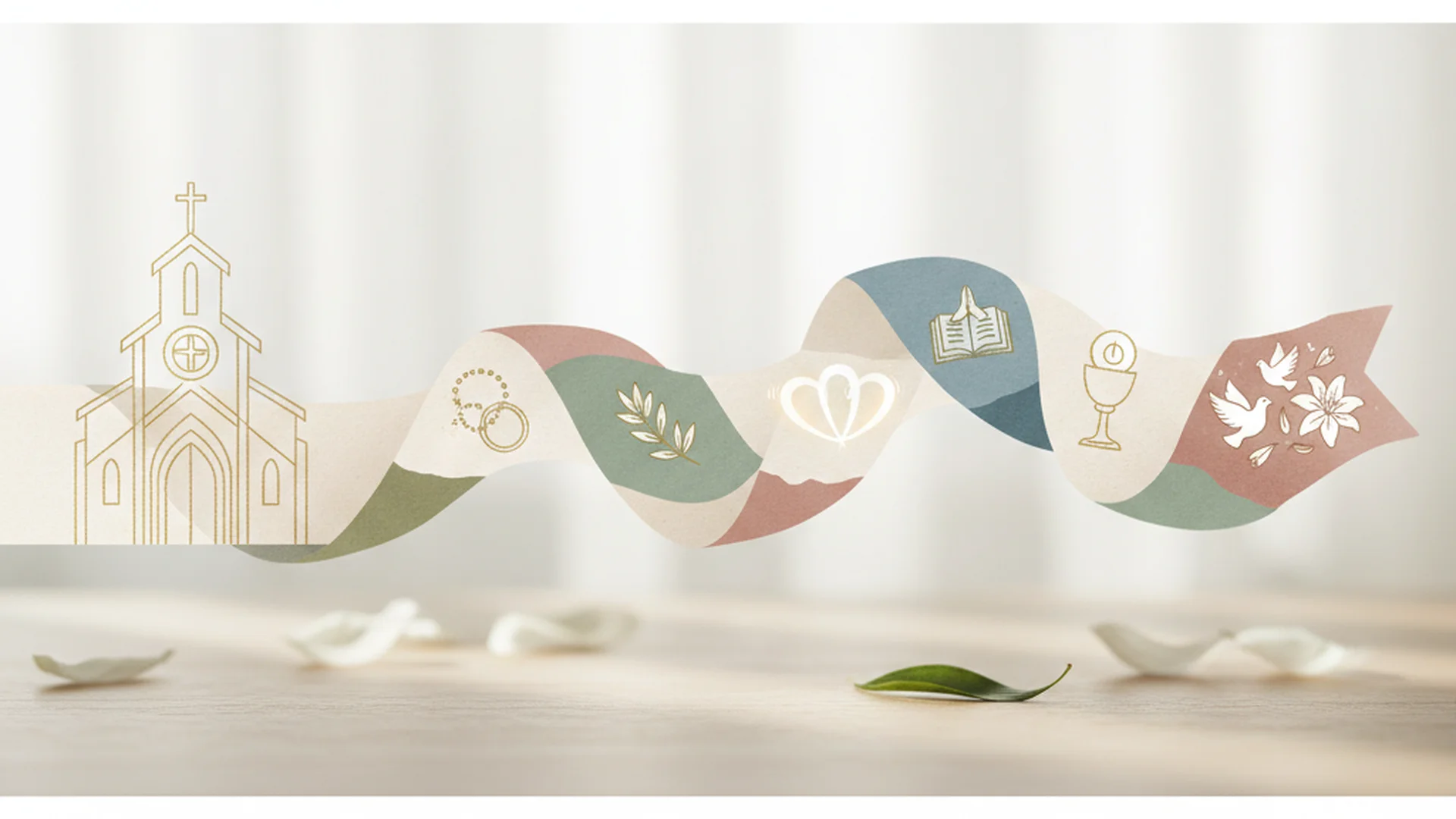
- Understand the difference between a Nuptial Mass and a Rite of Marriage outside of Mass.
- Account for the 'Catholic Gap' between the ceremony and the evening reception.
- Start the sacramental preparation process at least 12 months in advance.
Planning a Catholic wedding timeline is a journey that balances centuries of sacred tradition with the logistical realities of a modern celebration. Unlike a secular ceremony that can be customized to the minute, a Catholic wedding involves navigating specific sacramental requirements, liturgical seasons, and parish schedules. For couples looking toward 2025 and 2026, the Church is placing a renewed emphasis on the "Marriage Catechumenate"—a model of deeper, more intentional preparation that requires couples to think far beyond just the flowers and the dress.
Whether you are planning a full Nuptial Mass or a simpler Rite of Marriage, understanding the flow of the day and the months leading up to it is essential for a stress-free experience. From managing the infamous "Catholic Gap" to meeting the Saturday afternoon deadline, this guide provides a comprehensive roadmap for your sacramental union.
Understanding the Two Primary Formats
The first step in building your Catholic wedding timeline is deciding which format your ceremony will take. This decision drastically affects the length of the service and the flow of the day.
The Nuptial Mass
The Nuptial Mass is the most traditional form of a Catholic wedding. It includes the Liturgy of the Word, the Rite of Marriage (the vows and exchange of rings), and the Liturgy of the Eucharist (Communion).
- Duration: 60 to 90 minutes.
- Best For: Couples who are both practicing Catholics and want the fullest expression of the sacrament.
The Rite of Marriage Outside of Mass
This format includes the Liturgy of the Word and the Rite of Marriage but excludes the Liturgy of the Eucharist.
- Duration: 30 to 45 minutes.
- Best For: Interfaith marriages (a Catholic marrying a non-Catholic) or situations where a significant portion of the guests are not Catholic. This ensures everyone feels included in the liturgy without the "exclusion" some feel during the reception of Communion.
Tip
The Long-Range Timeline: 12 to 18 Months Out
In the Catholic Church, the wedding day is the culmination of a long period of "discernment." You cannot simply "book" a priest two months before the date.
Meet with the Parish Priest
Your first step is an introductory meeting with your priest or deacon. This is where you establish your freedom to marry (ensuring neither party has a prior valid marriage bond) and discuss the Church's requirements.
Secure the Church Date
Before you sign a contract with a ballroom or a country club, you must have your church date confirmed in writing. Many popular cathedrals and historic parishes book up 18 months in advance.
Gather Sacramental Records
You will need a "new" copy of your Baptismal certificate, issued within the last six months. This is a common hurdle for couples; don't wait until the last minute to contact the parish where you were baptized.
Heads up
The Preparation Phase: 6 to 12 Months Out
This is the "Marriage Catechumenate" phase, where the focus shifts from logistics to relationship building.
Register for Pre-Cana
Marriage preparation, commonly called Pre-Cana, is mandatory. Depending on your diocese, this could be a weekend retreat, a series of evening sessions with a mentor couple, or an online course.
The FOCCUS Inventory
Most parishes require you to take a "pre-marital inventory" like FOCCUS (Facilitating Open Couple Communication, Understanding, and Study). This is not a test you pass or fail; it is a tool to highlight areas where you and your partner may need more communication, such as finances, parenting, or faith.
Natural Family Planning (NFP)
Some dioceses require a course in Natural Family Planning. This introduces couples to the Church’s teachings on responsible parenthood and the biological markers of fertility.
Note
Designing the Liturgy: 3 Months Out
Once the "legal" and spiritual paperwork is in motion, you can begin the creative process of designing the ceremony itself.
Selecting Scripture Readings
You will typically choose one reading from the Old Testament, a Responsorial Psalm, one from the New Testament, and a Gospel passage. Your priest will provide a book (like Together for Life) to help you choose passages that resonate with your relationship.
Meeting with the Music Director
Secular music—think songs from The Greatest Showman or Top 40 hits—is generally prohibited during the liturgy. However, 2025 trends show a rise in "Modern Sacred Music." Parishes are increasingly open to contemporary worship songs from artists like Matt Maher, provided the lyrics are prayerful and liturgy-appropriate.
Choosing Your Lectors
Choose friends or family who are confident public speakers. Since the Catholic liturgy is structured, your lectors should be familiar with the "tone" of a Mass.
Do this
Managing the "Catholic Gap"
One of the biggest challenges in a Catholic wedding timeline is the "Gap." Most Catholic parishes require wedding ceremonies to conclude by 3:00 PM on Saturdays. This allows the church to be cleared for afternoon Confessions and the 4:00 PM or 5:00 PM Vigil Mass.
If your reception doesn't start until 6:00 PM, you have a three-hour window to manage. Here are three real-world examples of how to handle it:
- The Hospitality Suite: Host a casual room at the main wedding hotel with light snacks, water, and coffee. This gives guests a "home base" to relax between the ceremony and the party.
- The Local Tour: Provide a "Gap Guide" in your program listing nearby cafes, a local museum, or a scenic park where guests can kill time.
- The Early Cocktail Hour: If your venue allows it, start your cocktail hour at 4:30 PM or 5:00 PM. While this increases your catering costs, it keeps the momentum of the day moving.
Tip
From the OurVows workspace
Build your day-of timeline in minutes.
Generate a minute-by-minute schedule, assign vendors, and share it with everyone who needs it.
The Wedding Day Schedule
To ensure a smooth transition from the "Getting Ready" phase to the "I Do" phase, work backward from your 3:00 PM church exit time.
Morning: Preparation
- 09:00 AM: Hair and Makeup begins.
- 12:00 PM: Lunch and hydration (vital for a long Mass!).
- 01:00 PM: Bridal party gets dressed.
- 01:30 PM: Departure for the church.
Afternoon: The Ceremony
- 02:00 PM: Processional begins.
- 02:10 PM: Liturgy of the Word.
- 02:30 PM: Rite of Marriage (Vows and Rings).
- 02:45 PM: Liturgy of the Eucharist (if holding a Mass).
- 03:15 PM: Recessional and "Grand Exit" from the church steps.
Late Afternoon: Photos and The Gap
- 03:30 PM: Formal family portraits at the altar (must be quick!).
- 04:00 PM: The "Catholic Gap" begins for guests / Couple departs for editorial photos.
- 06:00 PM: Reception begins.
Note
2025–2026 Catholic Wedding Trends
While the Rite remains the same, the aesthetic and approach to Catholic weddings are evolving.
Monochrome Liturgical Decor
Couples are moving away from heavy, colorful floral arrangements on the pews. The trend for 2025 is monochrome elegance. Think all-white lilies or tonal cream roses that complement the existing marble and woodwork of historic churches without distracting from the altar.
Documentary-Style Photography
The era of the "staged altar lineup" is fading. Couples are requesting editorial candids that capture the raw emotion of the Nuptial Blessing or the quiet moment of prayer to the Virgin Mary (the Ave Maria), rather than rigid poses.
The "Marriage Catechumenate" Shift
As mentioned, expect a longer engagement period. The Vatican is encouraging parishes to treat wedding prep more like a "pathway of faith" rather than a "to-do list," which may involve more community involvement and post-wedding follow-ups.
Common Mistakes to Avoid
- Using Secular Music: Your favorite radio hit may be "your song," but it belongs at the reception. Avoid the awkwardness of having the music director veto your song choice the week of the wedding.
- The "Who Gives This Woman?" Misconception: You won't hear this phrase in a Catholic wedding. The Church teaches that the bride and groom give themselves to each other. Many modern Catholic couples choose to walk down the aisle together, or have both parents escort them.
- Forgetting the Program (Missalette): If many of your guests are not Catholic, a detailed program is essential. It should include when to sit, stand, and kneel, as well as the responses (e.g., "And with your spirit").
- Underestimating Transportation: If your church is in a downtown area, parking and traffic can eat into your 60-minute ceremony window. Always factor in a 15-minute buffer.
Frequently asked questions
Can we get married outdoors?
What if my partner isn't Catholic?
Can we write our own vows?
Is the Nuptial Mass too long for non-Catholic guests?
How much should we tip the priest and the church?
Conclusion
Creating a Catholic wedding timeline is about more than just managing the clock; it’s about honoring a sacrament while hosting a celebration. By starting early, respecting the liturgical requirements of your parish, and proactively managing the "Catholic Gap," you can create a day that feels both ancient and authentically yours.
As you move from the sacred "I do" to the celebration of your new life together, remember that the preparation you do now—spiritual and logistical—is the foundation for your marriage. Whether you are working with a tight Morning Wedding Timeline or a grand evening affair, the Church's rituals offer a timeless anchor for your special day.
Do this
Ready when you are
Planning your day?
Use our tools to build your perfect schedule.
Ready when you are
Plan your wedding without the chaos.
Free forever for couples just getting started. Two minutes to set up. No credit card.
Keep reading
Mastering the Micro Wedding Timeline: A Guide to Intentional Celebrations
Planning a wedding with 20-50 guests? Discover the perfect micro wedding timeline to balance intimacy, luxury, and intentionality for your 2025 or 2026 celebration.

Mastering the 4 Hour Wedding Reception Timeline: The Ultimate Guide
Plan a high-energy celebration with our 4 hour wedding reception timeline. Learn expert tips on scheduling, cost savings, and 2025 wedding trends.
The Wedding Timeline Coordinator’s Playbook: Expert Tips for 2025-2026
Master your big day with expert wedding timeline coordinator tips. Learn about the Rule of 15, digital integration, and how to manage modern 2025 wedding trends.