10 Essential Wedding Table Assignment Tips for a Stress-Free Reception
Master your reception layout with these expert wedding table assignment tips. Learn about 2025 trends, social dynamics, and how to avoid seating chart drama.
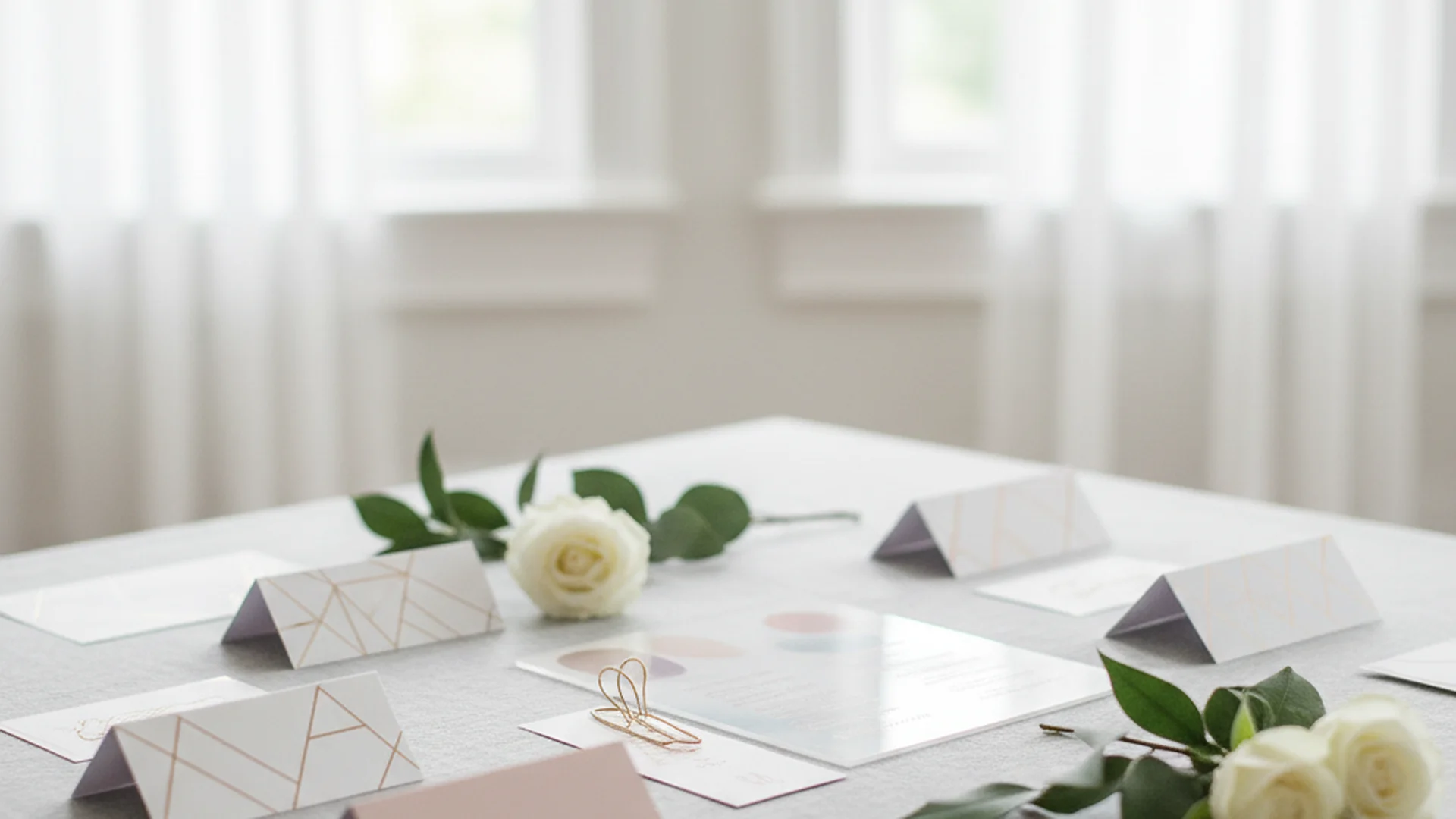
- Use alphabetical charts to significantly reduce guest bottlenecking.
- Follow the "Ally Rule" to ensure every guest knows at least one person at their table.
- Prioritize accessibility for elderly guests and those with mobility needs.
Creating a seating plan is often described as the "social engineering" phase of wedding planning. It is the moment where logistics meet emotion, and for many couples, it can feel like a high-stakes puzzle. In fact, many couples rank creating the seating chart as one of the most stressful parts of the entire wedding process.
However, with the right wedding table assignment tips, this task doesn't have to be a source of anxiety. As a relationship counselor, I often tell my clients that the seating chart is your first opportunity to host a harmonious gathering of your two "tribes." By focusing on guest comfort, clear communication, and modern logistics, you can create an environment where conversations flow as easily as the champagne.
The Golden Rules for a Seamless Flow
Before you dive into the specific names, you need to understand the fundamental "physics" of a wedding reception. A well-organized room isn't just about who sits next to whom; it’s about how people move through the space.
Start with a Digital Floor Plan
The days of sketching circles on a napkin are over. To maintain your sanity, use a Digital Wedding Seating Chart or Wedding Seating Chart Software. These tools allow you to input the exact dimensions of your venue. This is crucial because what looks like a spacious layout on paper can quickly become a cramped "elbow-bumping" nightmare in reality.
Tip
The "Ally" Rule: Bridging Social Gaps
One of the most important wedding table assignment tips is the "Ally Rule." Never seat a guest at a table where they don't know at least one other person. If you have "orphaned" guests—individuals who don't naturally fit into a specific family or friend group—seat them with your most outgoing "social bridge" friends. These are the people who can strike up a conversation with anyone and will make the newcomer feel included rather than isolated.
Prioritize Accessibility and Comfort
When placing your tables, consider the physical needs of your guests. Psychology-based proxemics suggest that North American guests generally prefer 18–24 inches of personal space.
| Guest Type | Ideal Placement | Why? |
|---|---|---|
| Elderly Guests | Away from speakers | Easier conversation and hearing |
| Guests in Wheelchairs | End of long tables / Near exits | Ease of movement and wide aisles |
| Families with Toddlers | Near exits or restrooms | Quick escapes for "meltdown" moments |
| Young Adults | Near the dance floor | High energy and easy access to the action |
Heads up
Navigating Social Dynamics and Drama
As a blended family consultant, I know that the seating chart is often where family tensions surface. Whether it is divorced parents, "ex-friends" within a group, or the dreaded "singles table," how you handle these dynamics defines the atmosphere of the night.
Handling Divorced Parents and Blended Families
If there is lingering tension between divorced parents, do not force them to sit together. Instead, create two "VIP" tables of equal proximity to the couple. This honors both parents without creating an awkward centerpiece for the evening. If they are on friendly terms, they can certainly share a table, but it is often best to seat them on opposite sides of a round table to give them their own "territory."
The "Singles Table" Trap
Many couples think they are doing their single friends a favor by grouping them all at one table. In reality, this can feel forced and "high school-ish." Instead, disperse single guests among established friend groups where they share common interests, such as similar careers, hobbies, or shared history with the couple.
Do this
The "Saturday Morning Puzzle" Method
Professional planners often suggest the "Saturday Morning Puzzle" approach. Print out your guest list, write names on small sticky notes, and place them on a large poster board. Do this during a "low-stress" time, like a Saturday morning brunch. Moving the sticky notes around physically allows you to see the "social landscape" in a way that digital icons sometimes can't.
Modern Trends: 2025–2026 Seating Innovations
The way we direct guests to their seats is evolving. We are moving away from the static, paper-heavy charts of the past toward interactive and experiential designs.
QR Code Seating and Tech Integration
For the modern or minimalist couple, Wedding Seating Chart Rules are being rewritten by technology. Instead of a massive printed board, a single elegant sign with a QR code is placed at the entrance. Guests scan the code, enter their name, and their table number pops up instantly on their phone. This eliminates the "huddle" around the seating chart and is easily updated if there are last-minute RSVP changes.
"Living" Charts and Cocktail Walls
Why not combine the seating assignment with the "welcome drink" experience? A rising trend for 2025 is the "Living Wall." Guests find their name etched on a glass of champagne or a personalized cocktail displayed on a floral or greenery wall. This serves as both a seating assignment and a high-end art installation.
Feasting Tables (The "E-Shape")
We are seeing a significant move away from traditional round tables toward interconnected rectangular tables, often arranged in "E" or "U" shapes. This creates a "communal feast" atmosphere, making the wedding feel more like an intimate dinner party and less like a corporate banquet. If you are using this layout, ensure you are following a Complete Wedding Seating Chart Guide to manage the different flow of service.
From the OurVows workspace
Solving the seating puzzle?
Drag-and-drop tables, relationship warnings, and printable charts — built into your guest list.
Common Mistakes to Avoid
Even with the best intentions, small logistical errors can derail your reception's start.
- The Legibility Crisis: Using gold text on clear acrylic or thin, ornate cursive might look beautiful on Pinterest, but if your guests can’t read it in the dim lighting of a reception hall, you will create a bottleneck. Always prioritize contrast and font size.
- Wait until the Last Minute: Many couples wait until the week of the wedding to start. Correction: Finalize your "rough draft" 3 weeks out. You can use a How to Make Wedding Seating Chart tutorial to get the bulk of the work done early, leaving only minor tweaks for when the final RSVPs arrive (usually 10–14 days before).
- Forgetting the Buffet Path: If you are having a buffet, your seating chart must account for the line. If tables are too close together, guests trying to get to the food will constantly be bumping into seated guests.
Note
Frequently asked questions
Do I really need a seating chart?
What’s the difference between a seating chart and assigned seating?
Should I have a kids' table?
How do I handle "ex-friends" or people who don't get along?
How many people fit at a standard table?
Conclusion
At the end of the day, remember that your guests are there to celebrate you. While the logistics of a seating chart might feel overwhelming, these wedding table assignment tips are designed to help you create a space where your loved ones feel seen, comfortable, and ready to party.
By using a Wedding Seating Chart Maker and starting the process early, you can turn a stressful "to-do" into a thoughtful gesture for your friends and family. A little social engineering goes a long way in ensuring your reception is remembered for the laughter and connection, rather than the seating drama.
Do this
Ready when you are
Plan Your Perfect Layout
Ready to start organizing your guest list? Use our professional tools to design your dream reception today.
Ready when you are
Plan your wedding without the chaos.
Free forever for couples just getting started. Two minutes to set up. No credit card.
Keep reading

The Ultimate Guide to Choosing the Best Wedding Seating Chart App for 2025–2026
Discover how a wedding seating chart app can save you significant planning time. Explore AI-driven tools, 3D floor plans, and expert seating strategies for your big day.
Navigating the Divorced Parents Seating Chart: A Diplomatic Guide for 2025-2026
Learn how to design a divorced parents seating chart that maintains peace and honors family. Expert tips for ceremony and reception layouts in 2025.

The Ultimate Wedding Seating Chart Timeline: A Month-by-Month Guide
Master your wedding seating chart timeline with our expert guide. From early drafts to last-minute changes, learn how to organize your guests stress-free.