German Wedding Traditions: A Complete Guide to Rituals, Trends, and 2025 Legal Updates
Explore authentic German wedding traditions from the Polterabend to log sawing. Stay updated on 2025 legal naming changes and modern trends for your big day.
- The civil ceremony (Standesamt) is the only legally binding wedding in Germany.
- New 2025 naming laws allow both partners to take double-barreled surnames.
- Traditional rituals like log sawing and porcelain smashing remain cultural staples.
Germany is a country where centuries-old folklore meets modern efficiency, creating a celebration landscape that is both deeply sentimental and remarkably structured. If you are planning or attending a ceremony in the heart of Europe, understanding German wedding traditions is essential for navigating the day with grace (and perhaps a bit of stamina). From the loud, plate-smashing chaos of the night before to the intricate legal requirements of the registry office, German weddings are a unique blend of "Ordnung" (order) and unbridled joy.
In 2025 and 2026, we are seeing a fascinating shift. While couples are clinging to beloved rituals like the Baumstamm sägen (log sawing), they are also embracing massive legal reforms regarding naming rights and a digital-first approach to guest experiences. Whether you are curious about why the rings are on the right hand or how to handle the marathon-style party that lasts until sunrise, this guide covers everything you need to know.
The Legal Foundation: Standesamt vs. Kirchliche Trauung
One of the most important things to understand about German wedding traditions is that "I do" happens twice—or at least, it must happen once in a specific place. In Germany, a religious ceremony or a secular "free wedding" (Freie Trauung) has no legal standing.
The Mandatory Civil Ceremony
Every couple must be married at the Standesamt (registry office). For most couples, this is the main event of the weekend. It is often a smaller, more intimate affair involving immediate family and the Trauzeugen (witnesses).
Note
New Naming Laws (Effective May 2025)
For those marrying in mid-2025 or beyond, a major legal milestone has arrived. Historically, German naming laws were quite rigid. However, as of May 2025, both partners can now adopt a double surname (e.g., Müller-Schmidt) and, crucially, pass this double name down to their children. Previously, only one partner could hold the double-barreled name while the other kept their birth name or took the partner’s name. This change reflects a modern move toward absolute equality in the marriage contract.
Tip
Pre-Wedding Rituals: Smashing Porcelain for Luck
Before the first glass of Sekt is poured at the reception, there is the Polterabend. This is perhaps the most famous of all German wedding traditions.
The Polterabend
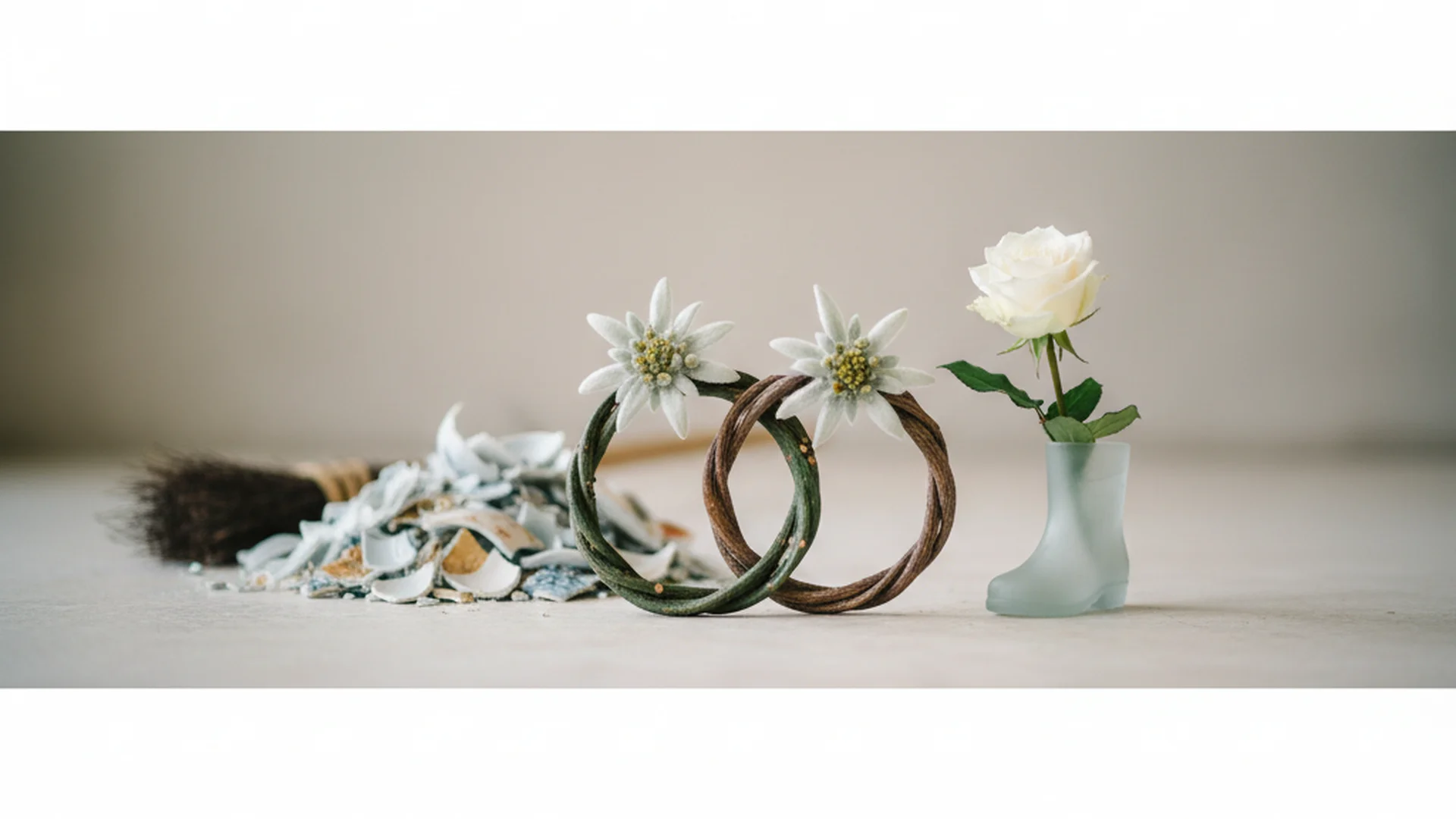
Usually held on the evening before the wedding, the Polterabend is a casual party where guests bring old porcelain, stoneware, or flowerpots and smash them on the ground in front of the couple’s home.
The Rules of Poltern:
- Porcelain Only: You may smash plates, mugs, and toilets (yes, it happens), but never glass. Glass symbolizes luck, and breaking it brings misfortune.
- The Cleanup: The couple must sweep up every single shard together. This symbolizes their ability to work as a team to "clean up" the messes life will inevitably throw at them.
- The Guests: Traditionally, no formal invitations are sent for a Polterabend. It is announced by word of mouth, and anyone who knows the couple is welcome to show up.
Heads up
Day-Of Traditions: Sawing Logs and Right-Hand Rings
Once the ceremony is over, the couple is immediately put to the test. German wedding traditions are designed to prove the couple’s compatibility in public.
Baumstamm Sägen (Sawing the Log)
As the couple exits the church or registry office, they often find a large log placed on a sawbuck blocking their path. They are handed a long, two-person crosscut saw. To pass, they must saw the log in half together. This represents the first obstacle they will overcome as a married unit.
The Right Hand Rule
If you look at a German wedding party, you might think everyone is still just engaged. In Germany, the wedding ring is traditionally worn on the right hand. The engagement ring, if there is one, is worn on the left. This often confuses international guests who are used to the "left hand, closest to the heart" tradition.
The Brautentführung (Bride Kidnapping)
In some regions, particularly in Bavaria, the "kidnapping of the bride" is a common mid-reception event. Friends of the groom "steal" the bride and take her to a nearby pub. The groom must find them and pay the accumulated bar tab to "ransom" his bride back.
Do this
Planning Logistics: Costs and Timelines
Planning a wedding in Germany requires a mix of bureaucratic foresight and financial realism. With the average cost now hovering around €15,450, many couples are looking for ways to balance tradition with a modern budget.
| Expense Category | Average Cost (2025) | Percentage of Budget |
|---|---|---|
| Venue & Catering | €8,500 | 55% |
| Photography/Video | €2,500 | 16% |
| Attire & Rings | €2,000 | 13% |
| Decor & Florals | €1,200 | 8% |
| Miscellaneous | €1,250 | 8% |
The Bureaucracy
If one partner is not a German citizen, the paperwork can be daunting. You will likely need an Ehefähigkeitszeugnis (Certificate of No Impediment), which proves you are legally free to marry.
Tip
For couples looking to manage these costs effectively, using a Wedding Budget Calculator can help track these specific German line items.
From the OurVows workspace
Planning a wedding is a lot. We make it feel like less.
Checklist, budget, guest list, and a wedding website — together in one free workspace built for both of you.
Modern Trends for 2025 and 2026
While the roots of German weddings are traditional, the "look and feel" of the 2025-2026 season is shifting toward high-end personalization and sustainable choices.
The "Silver Renaissance" and New Colors
After years of gold and rose gold dominance, 2026 is ushering in a "Silver Renaissance." Chrome accents, silver-edged glassware, and cool-toned metallic decor are making a massive comeback. This pairs beautifully with the projected color of the year for 2026: Transformative Teal, a deep, sophisticated blue-green that offers a departure from the "Boho" sage greens of previous years.
The Social Media Content Creator
A new vendor is appearing at German weddings: the professional social media content creator. Unlike the traditional photographer, this person captures vertical, "behind-the-scenes" iPhone footage specifically for Reels and TikTok. This allows the guests to put their phones away and stay present, while the couple gets high-quality social content within 24 hours.
Walking Dinners and Serpentine Tables
The rigid three-course sit-down meal is being replaced by "walking dinners" or food trucks, especially in urban centers like Berlin and Hamburg. For those who prefer a seated meal, "serpentine" tables (curved, winding tables) are replacing straight rows to encourage better conversation flow among guests.
Common Mistakes to Avoid
- The "Cocktail Hour" Misconception: In many cultures, a reception starts with an hour of heavy appetizers and cocktails. In Germany, the Empfang usually consists of a glass of Sekt (sparkling wine) and perhaps a small pretzel or biscuit. Don't expect a full meal until the dinner begins.
- Underestimating the Dance Floor: German weddings do not end at midnight. It is culturally expected that the party continues until 4:00 AM or 5:00 AM. If you are a guest, pace your drinking!
- Forgetting the "No See" Rule: It is still a very strong superstition in Germany that the groom must not see the bride's dress before the ceremony. Even the most modern couples rarely break this rule.
- Registry Office Delays: Many people wait too long to book their Standesamt slot. In popular cities, these spots fill up exactly six months to the day in advance. Set an alarm and be ready to call the moment the office opens.
Tip
Frequently asked questions
What is the "Polterabend" and do I have to attend?
How much money should I give as a gift at a German wedding?
Do German weddings have bridesmaids and groomsmen?
Why do Germans wear wedding rings on the right hand?
Is there an open bar at German weddings?
Conclusion
German wedding traditions offer a beautiful balance of the whimsical and the practical. Whether you are sawing a log to prove your partnership or navigating the new 2025 naming laws to establish your family's future, these rituals serve to ground the celebration in community and history.
As you plan your celebration, remember that while the "Ordnung" of the day is important, the "Gemütlichkeit" (coziness and good cheer) is what your guests will remember. If you're looking for more inspiration from around the world, you might enjoy reading about Polish Wedding Traditions, which share some similarities with the German penchant for all-night partying!
Do this
Ready when you are
Ready to Start?
Use our suite of tools to plan your perfect German celebration.
Ready when you are
Plan your wedding without the chaos.
Free forever for couples just getting started. Two minutes to set up. No credit card.
Keep reading
Thai Wedding Traditions: A Complete Guide to Rituals and Modern Trends
Discover the beauty of Thai wedding traditions, from the Khan Maak procession to 2025-2026 trends like sustainable merit-making and earthy terracotta palettes.
Dominican Wedding Traditions: A Guide to Island Heritage and Modern Trends
Explore vibrant Dominican wedding traditions, from the 13 gold coins (Las Arras) to the Hora Loca. Learn about costs, legalities, and 2025-2026 trends.
The Ultimate Guide to Bangladeshi Wedding Traditions: Rituals, Fashion, and 2025 Trends
Explore the vibrant world of Bangladeshi wedding traditions. From Gaye Holud rituals to 2025 pastel fashion trends and modern tech-integrated celebrations.