The Ultimate Guide to Wedding Guest Information Cards (2025-2026)
Master your wedding guest information cards with our expert guide. From etiquette and wording to 2026 trends like QR codes and seed paper.
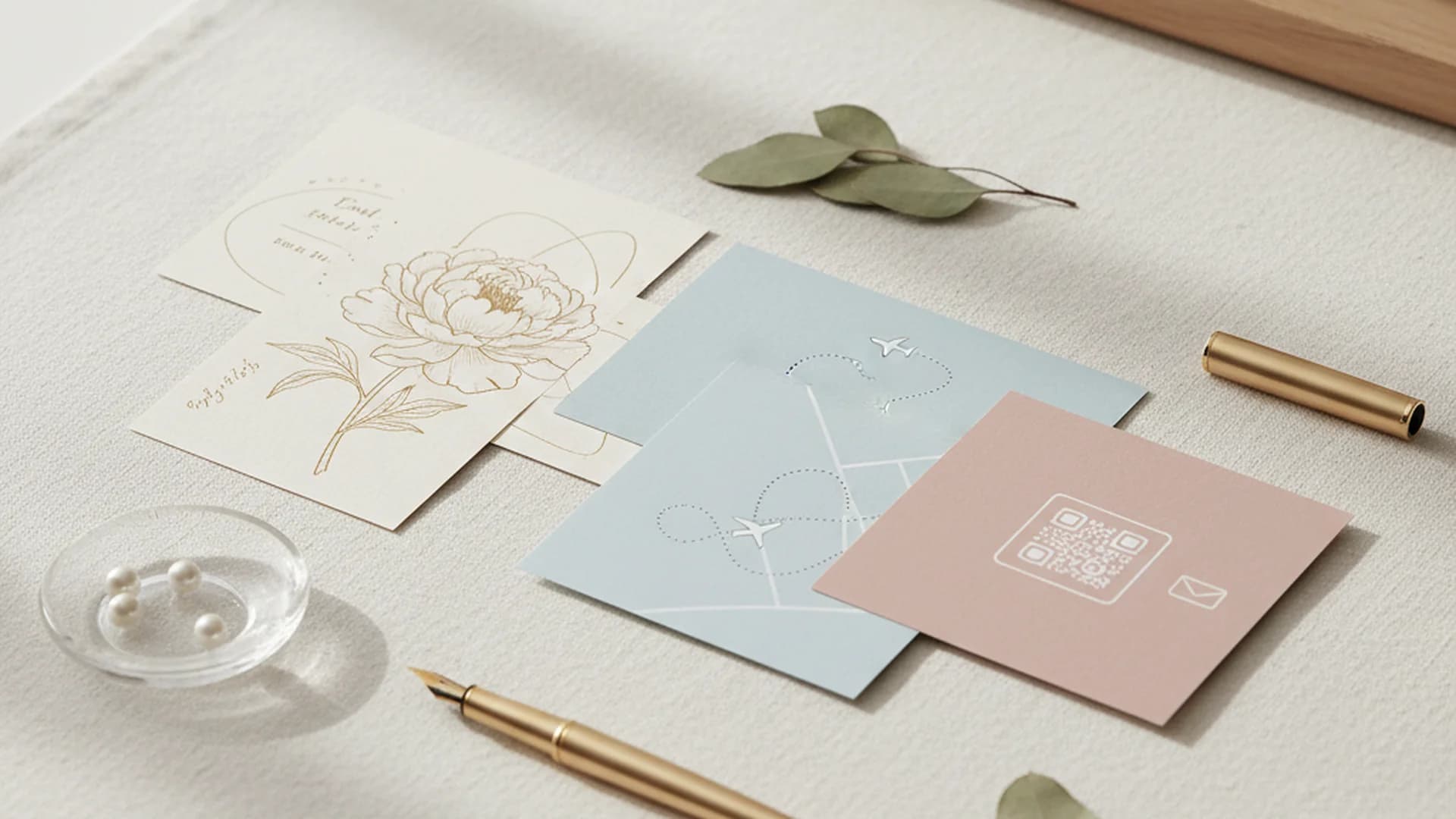
- Information cards act as the vital bridge between formal invitations and digital wedding websites.
- 2025 trends prioritize eco-friendly "Seed Paper" and interactive QR codes for Gen Z couples.
- High-contrast fonts and 10pt minimum sizes are essential for accessibility for elderly guests.
Planning a wedding is a bit like directing a high-stakes theatrical production where half the cast doesn't know their lines and the other half is lost in the parking lot. This is where Wedding Guest Information Cards (also known as detail cards or enclosure cards) become your best friend. These compact pieces of stationery do the heavy lifting, ensuring your Great Aunt Mildred knows exactly which shuttle to board and your college friends understand that "festive attire" does not mean wearing a lampshade.
In the 2025 and 2026 wedding seasons, the role of these cards is evolving. While we live in a digital-first world, the physical information card remains the primary anchor for guest logistics. It’s the second thing your guests see when they open that heavy envelope, and it sets the tone for the entire experience.
What is a Wedding Guest Information Card?
At its core, a wedding guest information card is an enclosure that accompanies your formal invitation. Its purpose is to provide logistical details that would otherwise clutter the beautiful, minimalist design of your main invite. Think of the invitation as the "Who, When, and Where," and the information card as the "How, What Else, and Oh-By-The-Way."
The vast majority of modern couples now utilize a personalized wedding website. However, the physical card remains the "bridge" to that digital portal. For guests who aren't tech-savvy—or for those who simply appreciate a tangible reference on their fridge—the information card is indispensable.
Tip
Essential Details to Include
Knowing what to put on the card—and what to leave off—is an art form. You want to be helpful without overwhelming the reader. Here are the non-negotiables:
1. Transportation and Shuttles
If you are providing a shuttle service from a specific hotel, the info card is the place to announce it. Include pickup times and locations. If the venue has limited parking, provide a brief note on where guests should leave their vehicles.
2. Accommodation and Room Blocks
Provide the name of the hotel(s) where you have reserved rooms and the "cut-off date" for the discounted rate. This is particularly important for destination weddings where local lodging may fill up quickly.
3. The Dress Code
"Black Tie" is straightforward, but "Mountain Chic" or "Coastal Semi-Formal" often leaves guests scratching their heads. Use the info card to provide a sentence of clarification. For example: "The ceremony will be held on a grassy lawn; please choose your footwear accordingly."
4. Children and "Adults Only" Policies
Navigating the guest list can be tricky. If you've decided on a child-free celebration, the info card is a polite place to clarify this. To make it easier, check out our guide on Adults Only Wedding Wording.
Note
Logistics: Size, Timing, and Formatting
Designing a beautiful card is only half the battle; the logistics of printing and mailing are where most mistakes happen.
Sizing and Mailing Timeline
The standard size for a details card is 4.25 x 5.5 inches (A2 size) or slightly smaller. It should be small enough to tuck behind the main invitation but large enough to read easily.
| Category | Local Wedding | Destination Wedding |
|---|---|---|
| Mailing Timeline | 6–8 weeks before | 12 weeks before |
| RSVPs Due | 3–4 weeks before | 6–8 weeks before |
| Key Contact | Maid of Honor/Planner | Travel Agent/On-site Coord. |
Heads up
The "Belly Band" Method
A major trend for 2025 is the use of vellum wraps or ribbon belly bands. This keeps the information card tucked neatly behind the invitation so it’s the second thing guests see. It creates a "layered" experience that feels curated and organized.
Accessibility First
Don't sacrifice function for fashion. Ensure your fonts are at least 10pt and have high contrast. This is especially vital for your elderly guests at the wedding, who may struggle with tiny, light-gray script fonts on cream paper.
2025-2026 Design Trends
The next two years are seeing a shift away from the "minimalist beige" of the early 2020s toward more expressive, tactile, and interactive designs.
1. Interactive QR Codes
For the growing share of engaged couples who are Gen Z, speed and transparency are key. In 2026, we expect to see "Details Cards" that are essentially a piece of art on the front with a custom-branded QR code on the back. This code leads directly to a personalized guest dashboard for RSVPs and real-time updates.
2. Eco-Conscious "Seed Paper"
Sustainability is no longer a niche preference; it's a priority for many couples in 2025. Seed paper information cards allow guests to plant the card in their garden after the wedding, growing wildflowers or herbs instead of contributing to a landfill.
3. Maximalist Colors and Textures
Moving away from "Sad Beige," 2026 trends favor jewel tones like midnight teal and deep plum, often accented with neon calligraphy. Tactile, "touchable" paper with deckled edges remains the gold standard for high-end stationery.
4. "Hospitality-First" Design
Couples are moving away from dry logistics and toward "Experience" tips. Instead of just a map, cards now feature sections like: "Our favorite local coffee shop is only 2 blocks from the hotel!" It makes the guest feel like part of a curated weekend rather than just an attendee at an event.
Do this
From the OurVows workspace
Wrangling the guest list?
Households, plus-ones, dietary needs, and RSVPs — all in one place, importable from a spreadsheet.
Common Mistakes to Avoid
Even the most organized couples can fall into these stationery traps.
- The Registry Faux Pas: It is widely considered a breach of etiquette to list your registry on the main invitation. Instead, place the link on your information card or, better yet, just provide your wedding website URL where the registry lives.
- Vague Directions: Don't just give the name of the estate or farm. Always include the full zip code and a nearby landmark. GPS systems can sometimes lead guests to a service entrance or a back gate of large properties.
- The "Plus-One" Confusion: If the info card doesn't clearly state the guest policy, expect a flurry of awkward texts. It's often better to address this on the RSVP card by writing, "We have reserved ___ seats in your honor." For more on this, see our Complete Wedding Guest Management Guide.
- Typos in URLs: A single misplaced character in your wedding website URL can render the entire card useless. Use a URL shortener or a QR code to minimize guest typing errors.
- Script-Only Fonts: Avoid using heavy script for vital details like the hotel address. If the mailman or the guest can't read the zip code because of a floral "Z," you're going to have guests who don't RSVP on time.
Accommodating All Guests
Your information card is the perfect place to ensure everyone feels welcome and considered. This includes providing specific details for disabled guest accommodations, such as the location of ramps or elevator access at a historic venue.
Tip
Frequently asked questions
Do I need a separate card for every detail?
Can I print my registry on the information card?
What time should I actually tell guests to arrive?
Are QR codes too informal for a black-tie wedding?
How do I handle guests who don't use the internet?
Conclusion
The wedding guest information card is the unsung hero of your stationery suite. It bridges the gap between the formal tradition of a paper invitation and the modern convenience of digital planning. By focusing on clear communication, accessibility, and a touch of your personal style, you can ensure your guests feel informed, comfortable, and excited for your big day.
Whether you choose the sustainable route with seed paper or the high-tech path with interactive QR codes, remember that the goal is simple: make it as easy as possible for your loved ones to celebrate with you.
Do this
Ready when you are
Streamline Your Planning
Organize your guest list and track RSVPs with ease.
Ready when you are
Plan your wedding without the chaos.
Free forever for couples just getting started. Two minutes to set up. No credit card.
Keep reading

Wedding RSVP Deadline Tips: The Ultimate Guide to Guest Management
Master your guest list with our expert wedding RSVP deadline tips. Learn about timelines, digital tracking, and how to handle late responses for 2025-2026.

Wedding Guest List Categories: The Ultimate Strategic Guide for 2025-2026
Master your wedding guest list categories with our expert guide. Learn how to manage A-lists, B-lists, plus-ones, and budget constraints for a stress-free day.

The Ultimate Guide to Hosting International Wedding Guests in 2026
Navigate the complexities of international wedding guests with our expert guide. From etiquette and logistics to 2026 trends, ensure your global loved ones have a seamless experience.