Beyond Compliance: The Complete Guide to Disabled Guest Accommodations for Your Wedding
Learn how to create a truly inclusive celebration with our guide to disabled guest accommodations for weddings. From sensory rooms to universal design, ensure every guest feels like a VIP.
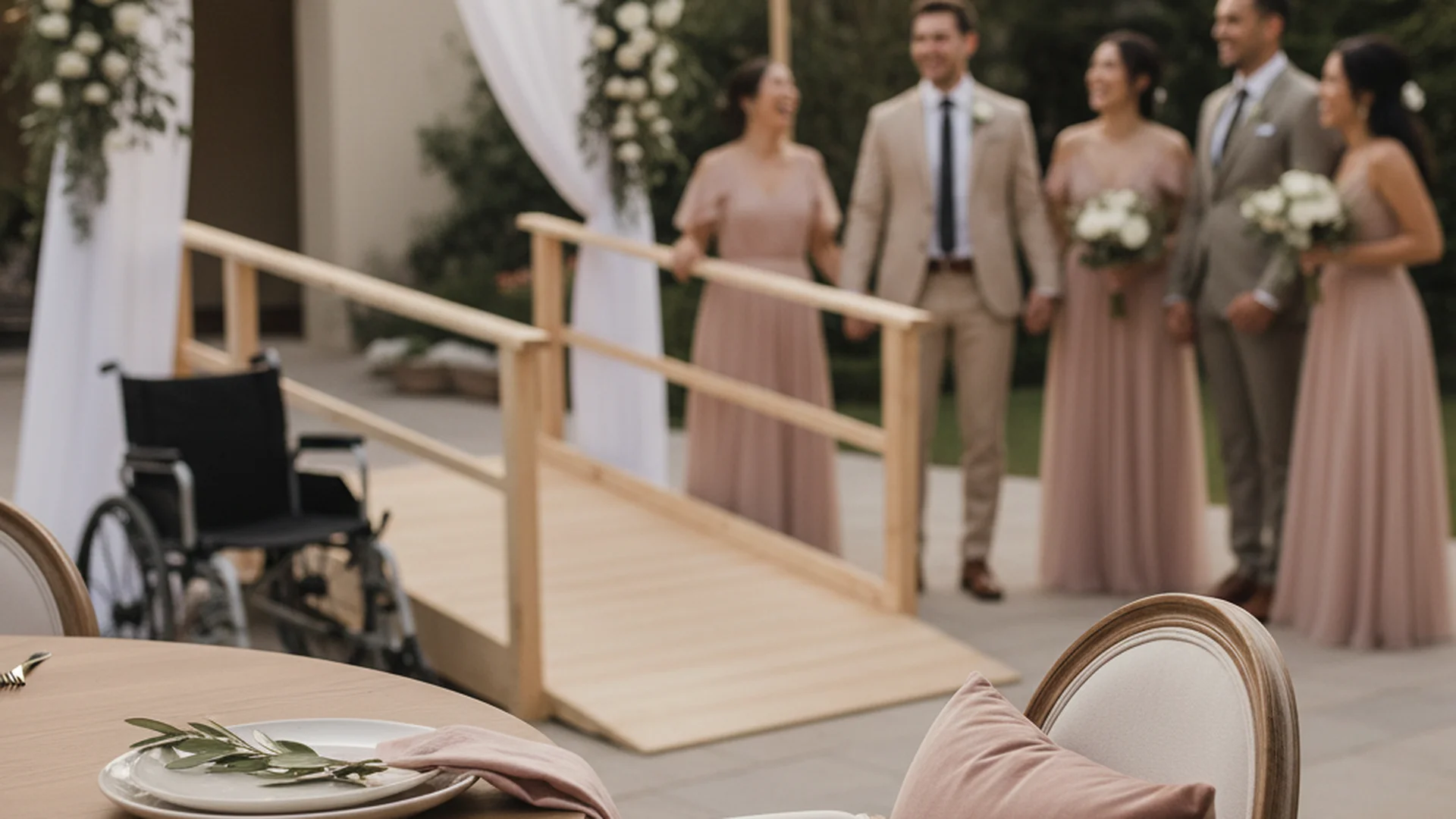
- Move beyond ADA compliance toward universal design principles for true inclusivity.
- Proactive communication on your wedding website is the best way to ensure guest attendance.
- Accessibility includes cognitive, sensory, and invisible disabilities, not just mobility.
Planning a wedding is an exercise in hospitality, but true hospitality means ensuring that every person on your guest list can participate fully and with dignity. When considering disabled guest accommodations for your wedding, it is important to shift your mindset from "meeting requirements" to "universal design." Universal design is the practice of creating environments that are inherently accessible to all people, regardless of their physical or cognitive abilities, without the need for adaptation or specialized design.
As an interfaith officiant, I have seen ceremonies where guests in wheelchairs were relegated to the back row, and others where every transition was seamless. The difference is always in the planning. In 2025 and 2026, couples are moving away from the bare minimum and toward a "VIP experience" for every guest, ensuring that grandmother’s hearing aid, a cousin’s neurodivergence, or a friend’s mobility needs are never an afterthought.
The Landscape of Accessibility in 2025–2026
To understand why these accommodations are vital, we must look at the numbers. According to the CDC, approximately one in four adults in the United States lives with some type of disability. This isn’t a niche concern; it is a significant portion of your How Many Guests to Invite Wedding calculation.
The reality is that many guests will decline an invitation if they aren't sure they can navigate the venue. Data from The Knot shows that a lack of clear accessibility information is a top reason why guests with disabilities RSVP "no" before the Save the Date even arrives. By prioritizing inclusion early in your Complete Wedding Guest Management Guide, you send a clear message: "We want you there, and we have prepared for you."
Tip
Digital-First Accessibility: Starting with the Website
In the 2025–2026 wedding seasons, the guest experience begins long before the ceremony. Your wedding website is the primary source of information, and if it isn't accessible, some guests may never make it to the "Accept" button.
WCAG 2.2 Compliance
Ensure your wedding website follows Web Content Accessibility Guidelines (WCAG) 2.2. This includes:
- High-Contrast Text: Avoid light grey text on white backgrounds; ensure colors are easy to read.
- Alt Text: Every photo of your venue or engagement session should have "Alt Text" descriptions so screen readers can describe the image to guests with vision impairments.
- Keyboard Navigability: Ensure your RSVP form can be filled out using only a keyboard (essential for those with motor impairments who do not use a mouse).
Clear Information Architecture
Create a dedicated "Accessibility" tab on your site. Detail the parking situation, the distance between the ceremony and reception, and the types of surfaces (grass, gravel, or pavement) guests will encounter. This is especially helpful for Elderly Guests at Wedding who may use walkers or canes.
Note
Venue Logistics and the 360-Degree Site Tour
When touring venues, look past the aesthetic "vibe" and focus on the "path of travel." Under the Americans with Disabilities Act (ADA), public venues like hotels and parks must provide reasonable accommodations. However, private clubs and historic buildings often have loopholes.
The Accessibility Checklist
| Feature | Requirement | Why it Matters |
|---|---|---|
| Doorways | Minimum 32 inches wide | Allows manual and power wheelchairs to pass. |
| Restrooms | Same floor as event | Prevents "elevator fatigue" and ensures equal access. |
| Surfaces | Firm and stable | Gravel and deep grass are "keyboard traps" for mobility aids. |
| Ramps | Permanent, 1:12 slope | Temporary plywood ramps are often too steep and unsafe. |
Heads up
Real-World Example: The Garden Transition
A couple recently hosted a wedding in a beautiful botanical garden. While the ceremony was on a paved patio, the reception was across a grass lawn. To accommodate several guests with mobility needs, the couple rented a "Mojo Mat"—a portable, interlocking flooring system—to create a stylish, firm walkway across the grass. This allowed everyone to move between spaces independently without needing to be "pushed" or "carried."
Seating and Sightlines for Sensory Inclusion
Accessibility isn't just about ramps; it’s about sight and sound. How you arrange your seating can determine whether a guest feels like a participant or a spectator.
Ceremony Seating Strategies
- Companion Seating: Do not just "leave a gap" at the very back of the aisle for wheelchairs. Integrated "companion seating" involves leaving open spots in various rows—including the front and middle—so wheelchair users can sit directly next to their partners or families.
- ASL Placement: If you have deaf or hard-of-hearing guests, hire an ASL interpreter. Place them at the front, slightly to the side of the officiant, and ensure the guests who need the service are seated with a clear line of sight to the interpreter’s hands and face.
- Audio Proximity: Avoid placing guests with hearing aids directly next to large subwoofers. The vibration and volume can cause painful feedback in assistive listening devices.
Do this
From the OurVows workspace
Wrangling the guest list?
Households, plus-ones, dietary needs, and RSVPs — all in one place, importable from a spreadsheet.
2025–2026 Trends in Inclusive Design
Technology is making disabled guest accommodations for weddings more seamless and stylish than ever before.
1. Auracast™ Audio
This is a game-changer for 2026. Auracast is a new Bluetooth standard that allows venues to broadcast high-quality audio directly to guests' hearing aids, cochlear implants, or even their smartphones. It replaces the clunky "headset" systems of the past and allows for a discreet, high-fidelity experience.
2. Sensory-Inclusive "Silent Discos"
For guests with sensory processing disorders or autism, a traditional wedding DJ can be overwhelming. A rising trend is the "Silent Disco" hour, where guests wear wireless headphones. This allows those who want to dance to do so at high volume, while those who need a quieter environment can remove their headphones and still socialize in the same room.
3. AI-Powered Guest Management
Tools like the Wedding Checklist Generator are now being used alongside AI to track specific guest needs. AI can help you categorize RSVPs by "Dietary," "Mobility," and "Sensory," ensuring that your caterer and venue coordinator have a precise map of who needs what, where.
4. Tactile and High-Contrast Stationery
The 2026 aesthetic is moving toward bold jewel tones. This is a functional win. High-contrast stationery (e.g., gold raised lettering on a navy background) is much easier for guests with low vision to read than the "blush on white" styles of previous years.
Managing "Hidden" Disabilities
The majority of disabilities are not visible. Chronic pain, neurodivergence, and autoimmune disorders require a different kind of accommodation.
The Sensory "Quiet Room"
One of the most appreciated additions to modern weddings is the "Quiet Room." This is a dedicated, smaller space away from the main music and lights. It should feature:
- Soft, dimmable lighting.
- Comfortable, non-formal seating.
- Fidget tools or noise-canceling earmuffs.
- A "no-phones" policy to encourage true decompression.
This is a vital accommodation for neurodivergent guests and even for Out of Town Wedding Guests who may be struggling with travel-related fatigue or chronic illness.
Common Mistakes to Avoid
Even with the best intentions, it is easy to miss the mark. Here are the most frequent errors couples make when planning for accessibility:
- The "Plus One" Oversight: Some disabled guests require a professional caregiver. Always offer a "plus one" to any guest with a disability, even if you are having a strict "no plus ones" policy elsewhere.
- Tripping Hazard Decor: Low-to-the-ground floral arrangements in the aisle or "floating" candles look beautiful but are major hazards for guests with canes or those with low vision. Keep your "path of travel" 100% clear.
- The "Burden" Misconception: Many couples think, "They’ll tell me if they need something." In reality, many disabled guests fear being a "burden" and will simply choose not to attend rather than ask for help. Proactivity is the key.
- Temporary Ramps: Plywood ramps are often slippery and lack handrails. If a venue requires a ramp, ensure it is a professional, code-compliant rental.
Tip
Frequently asked questions
How do I ask about disabilities without being intrusive?
Does "ADA Compliant" mean my venue is fully accessible?
Who pays for accommodations like ASL interpreters?
How do I handle a "hidden" disability like chronic pain?
Conclusion
Creating a wedding that prioritizes disabled guest accommodations is one of the most profound ways to show your loved ones how much they mean to you. When you design for the most vulnerable person in the room, you end up designing a better experience for everyone. A ramp helps the guest in a wheelchair, but it also helps the flower girl who is prone to tripping and the caterer carrying heavy trays.
By following the principles of universal design and staying ahead of the 2025–2026 trends, you ensure that your wedding is remembered not for the barriers it presented, but for the inclusive, joyful atmosphere it created.
Do this
Ready when you are
Ready to Organize?
Build your custom guest list and manage accommodations effortlessly.
Ready when you are
Plan your wedding without the chaos.
Free forever for couples just getting started. Two minutes to set up. No credit card.
Keep reading
The Ultimate Guide to Hosting International Wedding Guests in 2026
Navigate the complexities of international wedding guests with our expert guide. From etiquette and logistics to 2026 trends, ensure your global loved ones have a seamless experience.
How to Trim Your Wedding Guest List Without the Guilt: A 2025-2026 Guide
Learn expert strategies for trimming your wedding guest list. From the 1-year rule to the "Dinner Test," manage your budget and family expectations with ease.
The Ultimate Guide to a Wedding RSVP Tracking System: 2025-2026 Edition
Master your guest list with an automated Wedding RSVP Tracking System. Learn about AI tools, QR codes, and expert tips for managing your 2025 wedding.