The Ultimate Guide to Stacking Wedding Bands: Trends for 2025 and 2026
Master the art of stacking wedding bands with our expert guide. Explore 2025 trends, the "odd number" rule, and tips for creating a curated, meaningful ring story.
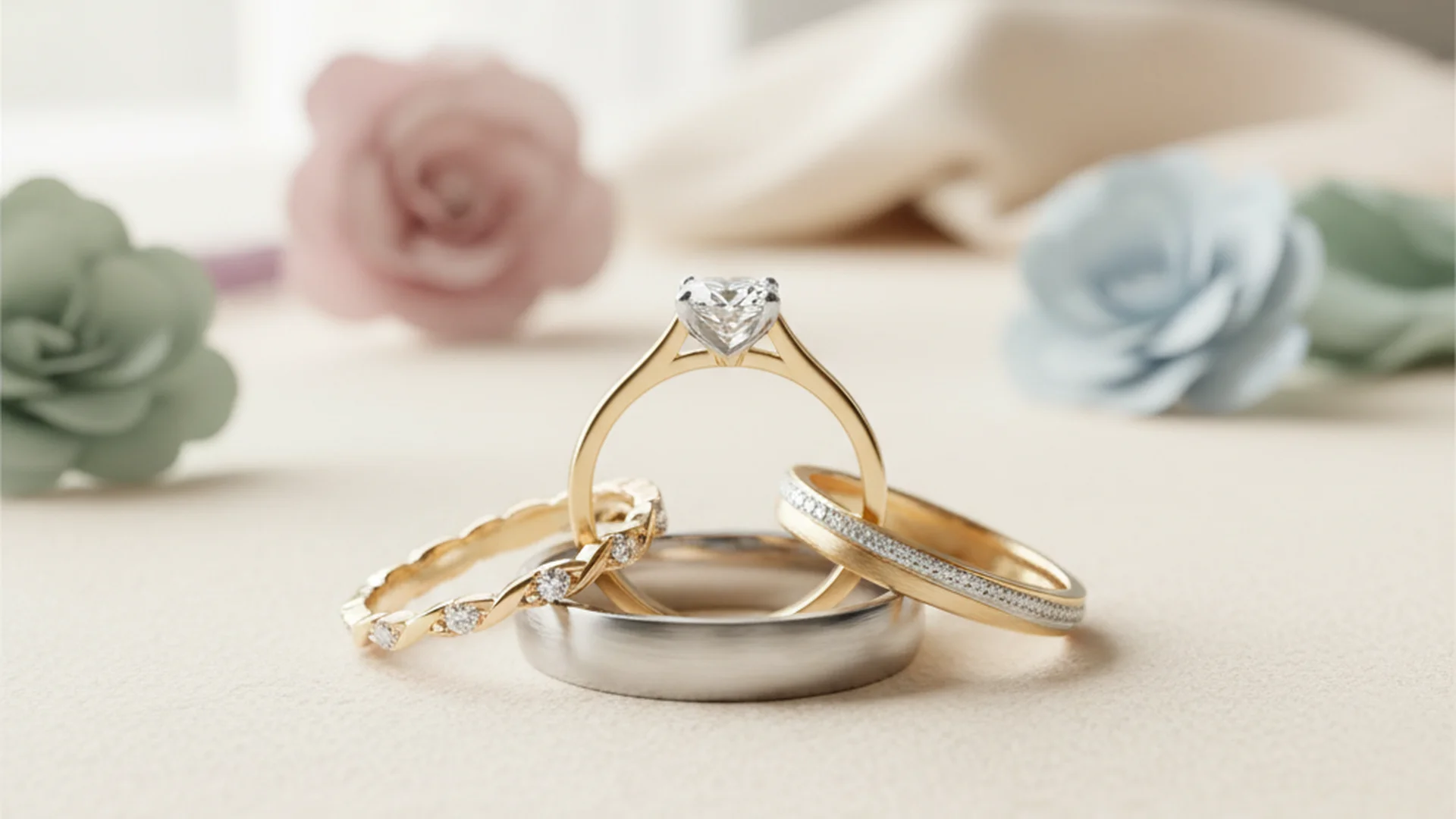
- Aim for odd numbers (3 or 5) to create a visually balanced and artistic stack.
- The 2025-2026 trend prioritizes "curated stories" over perfectly matching sets.
- Mix metals and textures carefully to prevent friction and ensure long-term durability.
Stacking wedding bands has evolved from a simple jewelry trend into a cornerstone of modern bridal style, allowing individuals to express their unique journey through a collection of meaningful pieces. Gone are the days when a wedding set was strictly limited to a single matching band and engagement ring. For 2025 and 2026, the focus has shifted toward "curated stories," where each additional ring represents a milestone, a personality trait, or a specific artistic choice. Whether you are looking to commemorate an anniversary, celebrate the birth of a child, or simply upgrade your daily aesthetic, mastering the art of the stack is the ultimate way to personalize your jewelry.
The Evolution of the Wedding Stack
Traditionally, the wedding set was a binary pair: the engagement ring and the wedding band. However, as we move into the 2025–2026 wedding seasons, couples are viewing their rings as a modular canvas. This shift is driven by a desire for personalization. A growing number of couples now opt for specially crafted or custom-designed rings, moving away from mass-market "big box" designs.
This evolution is particularly prominent among those who choose custom engagement ring guides to start their journey. Instead of a static set, the stack is a living collection. It reflects the "Main Character" approach to jewelry, where the wearer is the curator of their own wearable history.
Note
Essential Rules for a Balanced Stack
While creativity is encouraged, professional stylists suggest a few "golden rules" to ensure your stack looks intentional rather than cluttered.
The "Odd Number" Rule
One of the most effective ways to ensure a balanced visual appeal is to stack in groups of three or five. An odd number creates a clear focal point—usually the engagement ring—and prevents the stack from looking like a solid block of metal on the finger. By using three rings, you can "sandwich" your engagement ring, providing symmetry and protection.
Using Spacer Bands
One technical challenge of stacking wedding bands is the friction between rings. To prevent the prongs of one ring from "eating" into the metal of another, experts recommend using 1mm spacer bands. These thin, plain metal bands act as buffers.
Tip
Metal Hardness and Pairings
A common misconception is that all gold is created equal. In reality, 14k gold is significantly harder and more durable than 18k gold. If you stack a 14k band against an 18k band, the harder 14k metal will eventually scratch and wear down the softer 18k piece. If you are mixing metals, try to pair Platinum with 14k Gold, as they share similar durability profiles.
Heads up
Trending Styles for 2025 and 2026
The coming years are ushering in a wave of sculptural and organic designs that break away from the rigid lines of the past decade. If you are exploring alternative engagement rings, these trends will be particularly relevant.
Sculptural and Fluid Forms
Moving away from straight, clinical lines, 2026 is seeing a rise in "melted gold" looks. These rings feature twisted metal and organic, hand-sculpted silhouettes that seem to "embrace" the engagement ring rather than just sit beside it. This "fluid" aesthetic works beautifully for those who want their jewelry to feel like a piece of art.
Bezel-Set Bands
For the active bride, bezel-set bands are becoming the gold standard. In a bezel setting, each stone is wrapped in a protective metal frame. This provides a sleek, graphic look that is much more "snag-free" for daily wear. It also offers a distinct contrast to the traditional prong settings found in most diamond engagement ring guides.
Mixed Metal Maximalism
The old rule of staying within one "color family" (only white gold or only yellow gold) is officially dead. Combining rose, yellow, and white metals in a single stack is a top trend for 2025. This creates depth and allows you to tie in other pieces of jewelry you might wear, such as heirloom watches or necklaces.
Cluster and Constellation Bands
Instead of a single row of uniform diamonds, "cluster" bands use stones of varying sizes to mimic stars or floral patterns. These add a whimsical, ethereal touch to a classic set and are excellent for filling in "negative space" around a uniquely shaped center stone.
From the OurVows workspace
Ring sorted — now the wedding.
Set a realistic budget and a checklist that knows what's next, all in one free workspace.
Real-World Stacking Examples
To visualize how these rules and trends come together, consider these three popular "recipes" for stacking wedding bands.
1. The "Storyteller" Stack
This stack is designed to be built over a decade. It begins with a 14k yellow gold engagement ring. For the wedding, a contoured "chevron" band is added to sit flush. On the first anniversary, a mixed-metal rose gold cluster band is added to the top, creating an "odd number" set that tells the story of the first three years of marriage.
2. The "Modern Architect"
This look utilizes the "Negative Space" trend. It features a high-set engagement ring paired with two thick, flat-edge bezel bands. Instead of trying to close the gap between the rings, the gaps are left open, highlighting the geometric silhouette of the center stone.
3. The "Vintage Heirloom" Mix
This involves taking a modern engagement ring and pairing it with an antique-style engraved band and a delicate milgrain spacer. By mixing textures (polished metal vs. engraved metal), the stack gains a "collected over time" feel that looks sophisticated and timeless.
Do this
Common Mistakes to Avoid
Even with the best intentions, it is easy to make mistakes that can lead to discomfort or even damage to your jewelry.
- The "Uniformity" Trap: Do not feel like every band must be the same width or style. Varying the heights and widths of your rings makes the stack look more intentional and high-end.
- Neglecting Maintenance: Stacking creates more "nooks and crannies" where lotion, soap, and dirt can hide. Refer to an engagement ring cleaning guide to keep your stack sparkling.
- Thinking Gaps are "Bad": Many people obsess over having a "flush" fit. However, the 2025-2026 trend suggests that a small gap can actually highlight the unique shape of an engagement ring.
- Sleeping in the Stack: Because a stack involves more metal and stones, the risk of snagging on hair or bedsheets is significantly higher than with a single ring. Furthermore, engagement ring insurance providers often note that many "lost stone" claims occur because of snagging during sleep.
| Stacking Component | Recommended Metal | Recommended Width | Purpose |
|---|---|---|---|
| Engagement Ring | 14k Gold/Platinum | 1.8mm - 2.5mm | The "Main Character" |
| Wedding Band | Matches Engagement | 2.0mm - 3.0mm | The Foundation |
| Spacer Band | Platinum | 1.0mm | Protection/Friction |
| Anniversary Band | Mixed Metal | 1.5mm - 4.0mm | Personality/Milestone |
Frequently asked questions
What is the "correct" order for a wedding stack?
How many rings can I stack?
Should I solder my rings together?
Can I mix different gold karats?
How do I handle a low-set engagement ring?
Conclusion
Stacking wedding bands is a beautiful way to ensure your bridal jewelry grows with you. By following the "odd number" rule, choosing durable metal pairings, and embracing the sculptural trends of 2025, you can create a look that is both timeless and trend-forward. Remember that your stack is a reflection of your personal narrative—there are no wrong answers as long as the pieces bring you joy and are cared for properly.
Do this
Ready when you are
Ready to Design Your Story?
Explore our tools to help plan your perfect ceremony and beyond.
Ready when you are
Plan your wedding without the chaos.
Free forever for couples just getting started. Two minutes to set up. No credit card.
Keep reading
The Ultimate Guide to Engagement Ring Insurance: Protecting Your Symbol of Love
Protect your investment with our comprehensive guide to engagement ring insurance. Learn about costs, 2025 trends, coverage types, and how to avoid common pitfalls.
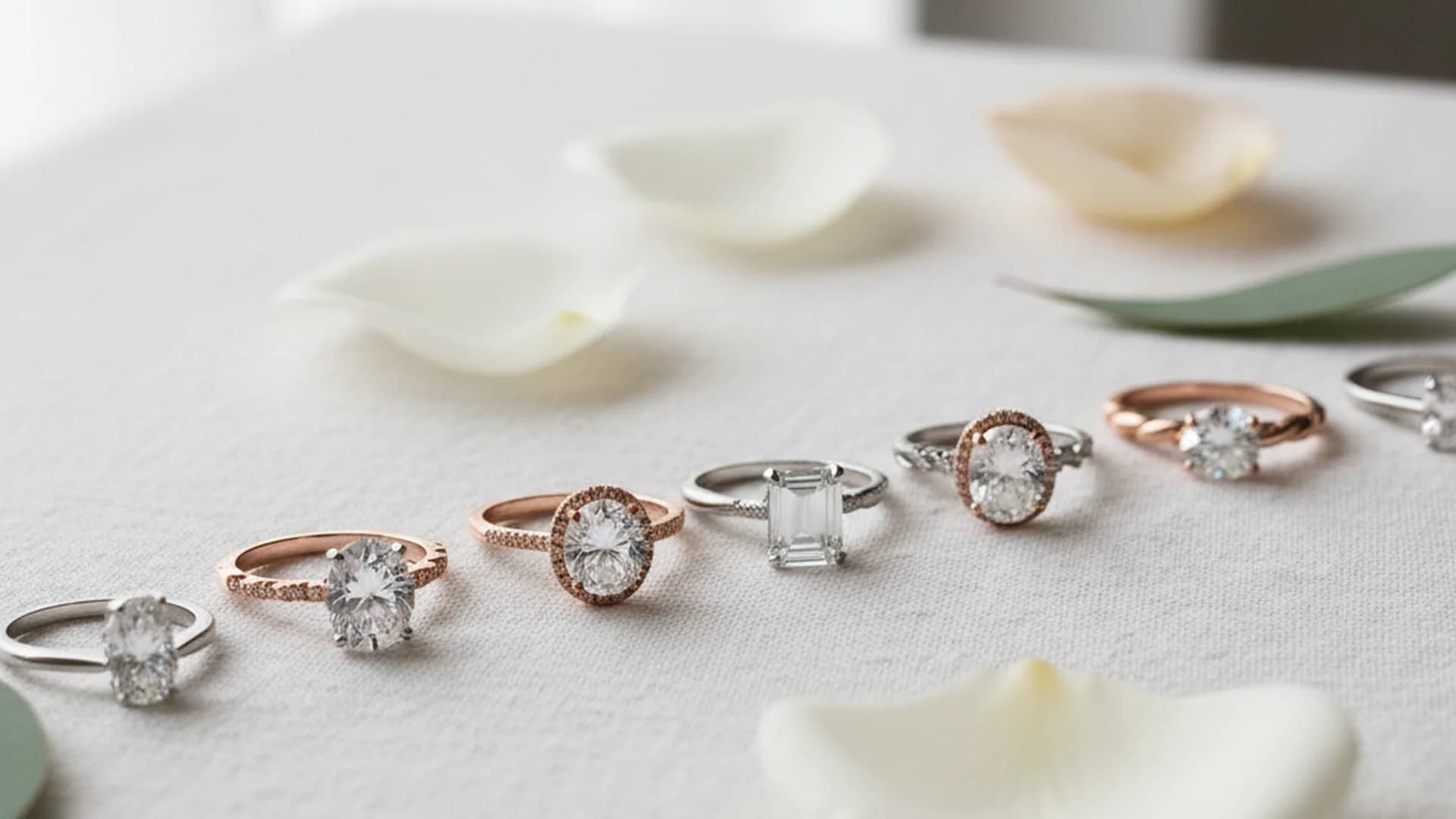
2025-2026 Guide to Engagement Ring Styles: Trends, Costs, and Expert Tips
Explore the top engagement ring styles for 2025-2026. From lab-grown diamond trends to vintage revivals and yellow gold's comeback, find your perfect ring.
The Ultimate Mens Wedding Band Guide: Metals, Styles, and 2025 Trends
Discover the perfect ring with our comprehensive Mens Wedding Band Guide. Explore top metals, 2025 trends like meteorite inlays, and expert tips on fit and sizing.