The Ultimate Diamond Engagement Ring Guide for 2025–2026
Navigate the 2025 diamond market with our comprehensive guide. Learn about lab-grown vs. natural diamonds, top trends, and how to maximize your jewelry budget.
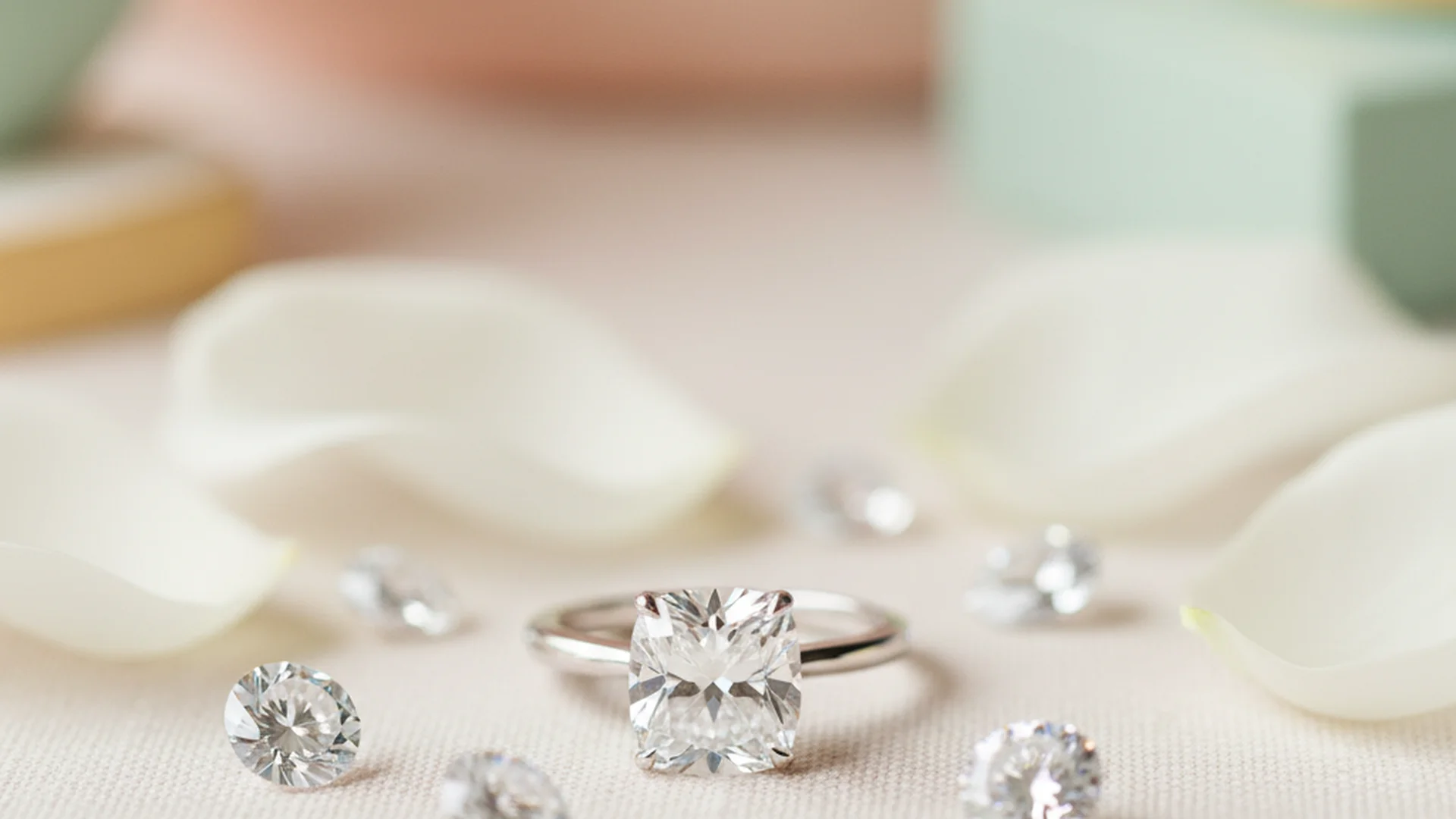
- Lab-grown diamonds now account for over 50% of the market due to exceptional value.
- Cut quality is the single most important factor for a diamond's "sparkle."
- Yellow gold and bezel settings are the dominant design trends for 2025–2026.
Choosing a ring is often the first significant step in a couple’s journey toward the altar. As a ceremony designer, I’ve witnessed thousands of "I do's," and the ring always sits at the heart of that symbolic moment. This diamond engagement ring guide is designed to help you navigate the complex, rapidly shifting jewelry market of 2025 and 2026, ensuring you find a piece that balances emotional resonance with financial wisdom.
The New Diamond Landscape: Natural vs. Lab-Grown
The jewelry industry is currently experiencing a "bifurcation." We are seeing a clear divide between those who view diamonds as legacy-mined treasures and those who prioritize visual impact and sustainability. For the first time, lab-grown diamonds represent more than half of all center stone sales.
This shift is largely driven by the massive price disparity. In 2025, a high-quality 1-carat natural diamond costs approximately $4,200. In contrast, a lab-grown diamond of the exact same chemical and optical quality can be found for $1,000 or less. This has led to a change in "carat expectations." While 1.0 carat remains the standard for natural stones, couples choosing lab-grown diamonds are frequently opting for the 2.0 to 3.0-carat range.
Note
Master the 4Cs: Where to Save and Where to Splurge
The "4Cs"—Cut, Color, Clarity, and Carat—remain the foundation of diamond grading. However, modern buyers are getting smarter about which "Cs" actually matter to the naked eye.
Prioritize the Cut Above All
The cut grade is the most critical factor in this diamond engagement ring guide. A diamond’s sparkle is entirely dependent on its ability to reflect light. A smaller diamond with an "Excellent" or "Ideal" cut will always outshine a larger diamond with a "Fair" or "Poor" cut.
Tip
The "Eye-Clean" Clarity Strategy
Don't pay a premium for "Flawless" (FL) or "Internally Flawless" (IF) grades. These distinctions are only visible under 10x magnification. Instead, aim for VS1 or VS2 (Very Slightly Included). These stones are "eye-clean," meaning you cannot see the imperfections without a jeweler's loupe, yet they cost significantly less than the top-tier clarity grades.
Color and Metal Pairing
You don't always need a "D" (colorless) grade diamond. If you choose a yellow gold band—which is the top trend for 2026—you can comfortably drop to a G, H, or even I color grade. The warmth of the yellow gold hides the slight tint of the diamond, allowing you to reallocate those savings into a higher cut grade or a larger carat size.
The "Buy Shy" Carat Hack
To save between 15% and 20% on your stone, buy just under the "magic numbers." Diamond prices jump significantly at round numbers like 1.0, 1.5, and 2.0 carats. By searching for a 1.90 or 1.95-carat diamond instead of a full 2.0, you get a stone that looks identical to the naked eye but costs thousands of dollars less.
Top Engagement Ring Trends for 2025–2026
Fashion is cyclical, and we are currently seeing a move away from the "minimalist" trends of the last decade toward more sculptural and vintage-inspired designs.
1. The "Toi et Moi" (Two-Stone) Style
Popularized by high-profile celebrities, this style features two contrasting diamond shapes nestled together on one band. Common pairings include a Pear cut and an Emerald cut. It symbolizes two distinct personalities coming together as one—a sentiment I often highlight in ceremony design.
2. Elongated Shapes and Visual Spread
Shapes like Ovals, Emerald cuts, and Marquise are trending because they provide a larger "visual spread" per carat. Because these shapes are elongated, they take up more vertical space on the finger, making the diamond look larger than a Round Brilliant of the same weight. You can learn more about these variations in our guide to engagement ring cuts.
3. The Return of Yellow Gold and "Cigar Bands"
The "whisper-thin" bands of 2015 have been replaced by bold, chunky gold. "Cigar bands" (wide gold bands) are making a major comeback. Yellow gold now accounts for 41% of all sales, surpassing the previous dominance of platinum and white gold.
4. Bezel Settings and Practicality
Modern couples are leading active lifestyles, leading to a surge in bezel settings. In a bezel setting, a thin rim of metal surrounds the diamond entirely. This provides maximum security and prevents the stone from snagging on clothing, offering a sleek, modern aesthetic that feels both architectural and secure.
5. Vintage and "Old Mine" Cuts
Influenced by the "Taylor Swift effect" and a general nostalgia for heirloom quality, "Old Mine" and "Old European" cuts are back. These diamonds have larger facets and a softer, "glowy" light performance, contrasting with the "splintery" brilliance of modern cuts.
Do this
From the OurVows workspace
Ring sorted — now the wedding.
Set a realistic budget and a checklist that knows what's next, all in one free workspace.
Real-World Examples: Budgeting and Selection
To illustrate how these principles apply, let's look at three common scenarios for 2025 buyers.
Example 1: The Value-Conscious Couple (Sarah and Leo)
Sarah and Leo wanted a "wow" factor without going into debt. They opted for a 2.5-carat lab-grown Oval diamond with an Excellent cut and VS1 clarity. By choosing a lab-grown stone, they spent approximately $2,800 on the center stone. They paired it with a simple yellow gold band, bringing their total to $4,000—well below the national average while achieving a high-end look.
Example 2: The Legacy Purist (Marcus and Chloe)
Marcus wanted a natural diamond that would hold its status as a "legacy piece." Following this diamond engagement ring guide, he focused on a 1.01-carat natural Round Brilliant with an Ideal cut. He utilized the "eye-clean" strategy, selecting a VS2 clarity and H color stone. By avoiding the D-Flawless premium, he secured a stunning, high-sparkle natural diamond for $4,500.
Example 3: The Custom Trendsetter (Elena)
Elena wanted something unique and sculptural. She worked with a jeweler on a custom engagement ring guide process to create a "Toi et Moi" ring featuring a lab-grown Pear and a natural Emerald cut diamond. This "hybrid" approach allowed her to get the exact look she wanted while blending the value of lab-grown with the tradition of natural stones.
Common Mistakes to Avoid
Buying an engagement ring is an emotional experience, which makes it easy to overlook technical details.
- Overspending on "Invisible" Specs: Many buyers insist on a "D" color or "Flawless" grade, paying a 40% premium for features that only a professional grader can see.
- Guessing the Ring Size: Resizing a ring—especially those with pavé diamonds or bezel settings—can be difficult. Always use a professional sizer or "borrow" a ring for an accurate measurement.
- Ignoring Wedding Band Compatibility: Some engagement rings are set so low that a wedding band cannot sit flush against them. Consider how diamond wedding bands will fit with your choice before finalizing the setting.
- Skipping the Certification: Never buy a diamond without a report from a reputable lab like GIA (for natural) or IGI (for lab-grown). Without this, you are simply taking the jeweler's word for the stone's quality.
- Forgetting Insurance: With the average ring costing over $6,500, it is essential to look into engagement ring insurance immediately. Standard homeowners' insurance often has low limits for jewelry.
Heads up
Frequently asked questions
Is a lab-grown diamond "real"?
How much should I actually spend on a ring?
What is the most "sparkly" diamond shape?
Are natural diamonds a better investment?
Which certification lab is the best?
Conclusion
Finding the perfect ring is about more than just the 4Cs; it’s about finding a symbol that reflects your unique relationship and your values. Whether you choose a classic natural round brilliant or a trendy lab-grown "Toi et Moi" in yellow gold, prioritizing cut quality and being "smart" about clarity and color will ensure you get the most beautiful stone for your budget. Once you have your dream ring, remember to keep it shining by following a regular engagement ring cleaning guide.
Do this
Ready when you are
Ready to Design?
Start your custom ring journey today.
Ready when you are
Plan your wedding without the chaos.
Free forever for couples just getting started. Two minutes to set up. No credit card.
Keep reading
The Ultimate Guide to Engagement Ring Insurance: Protecting Your Symbol of Love
Protect your investment with our comprehensive guide to engagement ring insurance. Learn about costs, 2025 trends, coverage types, and how to avoid common pitfalls.
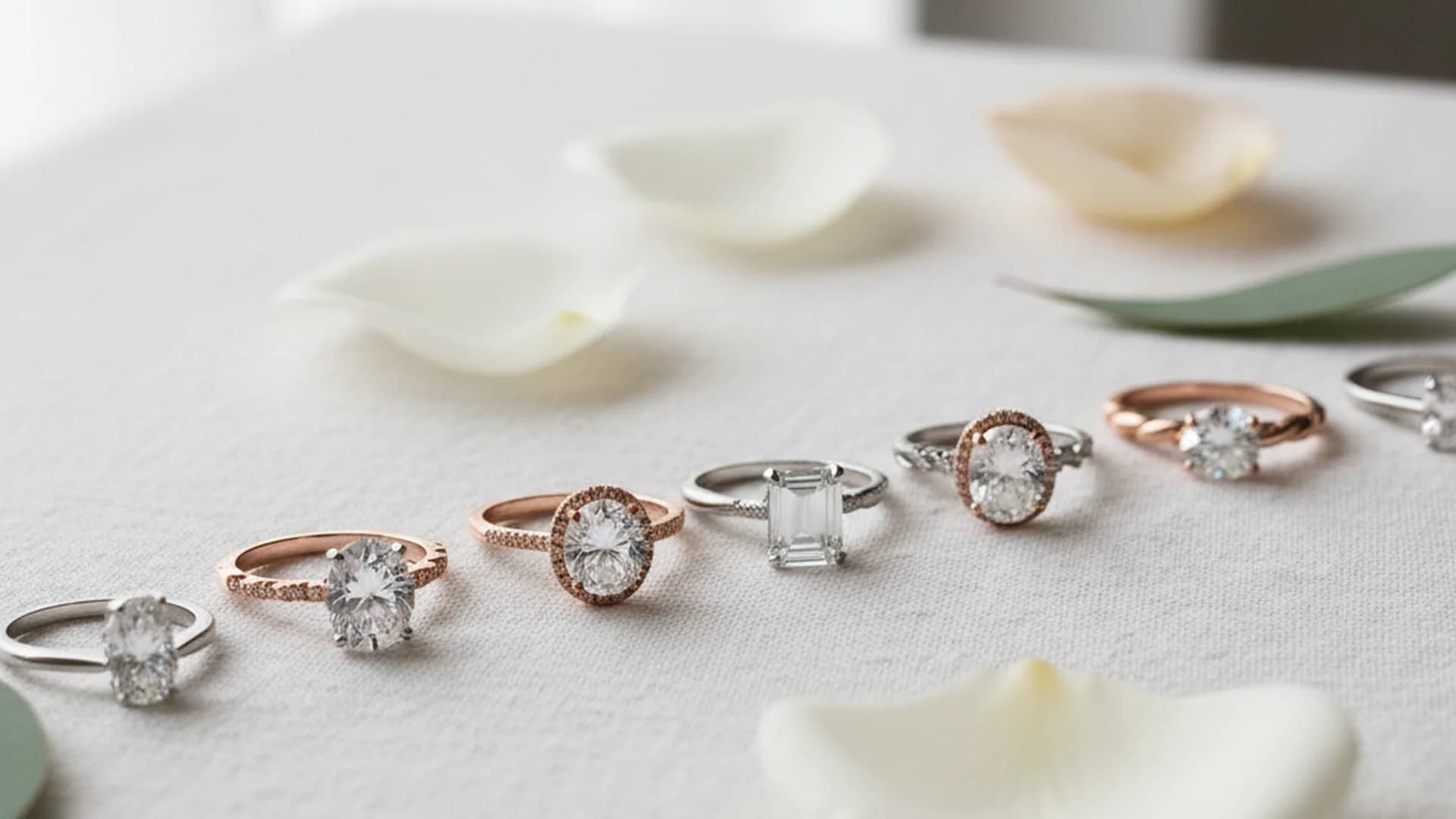
2025-2026 Guide to Engagement Ring Styles: Trends, Costs, and Expert Tips
Explore the top engagement ring styles for 2025-2026. From lab-grown diamond trends to vintage revivals and yellow gold's comeback, find your perfect ring.
The Ultimate Mens Wedding Band Guide: Metals, Styles, and 2025 Trends
Discover the perfect ring with our comprehensive Mens Wedding Band Guide. Explore top metals, 2025 trends like meteorite inlays, and expert tips on fit and sizing.