Sand Ceremony Script and Ideas: The Ultimate Guide for 2025–2026
Discover the perfect sand ceremony script and creative ideas for your 2025 wedding. Learn about color meanings, blended family rituals, and modern vessel trends.
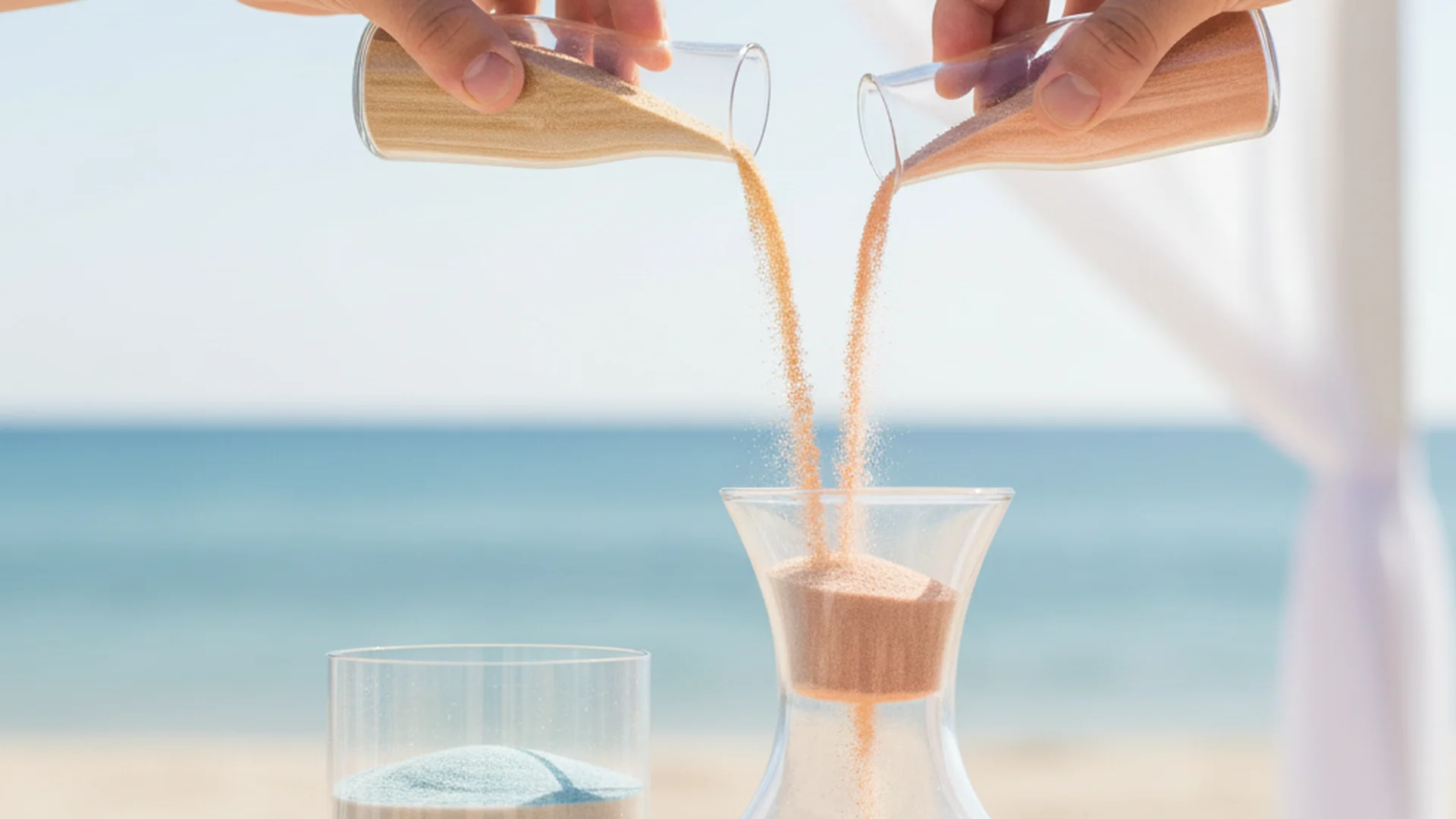
- The sand ceremony is the
- Personalization is key, with trends moving toward crystal sand and functional hourglasses.
- Using a funnel and a "practice pour" are essential logistics for a smooth ceremony.
The search for the perfect sand ceremony script often begins when a couple realizes that the traditional unity candle—while lovely—is no match for a breezy outdoor venue. Whether you are standing on a sun-drenched beach or in a modern industrial loft, the unity sand ceremony offers a visually stunning and deeply symbolic way to represent two lives becoming one. In 2025, this ritual has evolved far beyond simple colored sand; it is now a cornerstone of personalized wedding experiences that celebrate blended families, cultural roots, and artistic expression.
As couples increasingly prioritize personalization over rigid convention, the sand ceremony has seen a massive resurgence. It’s not just about the "forever" nature of the blended grains; it’s about creating a tangible piece of art that you can display in your home long after the "I dos" have been spoken.
The History and Symbolism of Sand Blending
While often viewed as a modern trend born out of practical necessity for beach weddings, the concept of blending materials to seal a pact is ancient. Historians point toward the Hebrew "Salt Covenant," where individuals would mix salt from their respective pouches to symbolize an unbreakable agreement. Once mixed, it was impossible to separate one person's salt from the other's, representing a lifelong commitment.
In later years, Native American and Hawaiian traditions utilized sand from different geographic locations to bless a union. By the late 1980s, the modern sand ceremony as we know it today gained traction in the mainstream wedding industry. It solved the "wind problem" that plagued outdoor unity candle lightings and provided a more durable keepsake.
Why It Is Trending for 2025–2026
While some couples still use the unity candle, sand ceremonies have become a top choice for secular and destination weddings. As secular weddings become increasingly common, couples are looking for rituals that carry weight without necessarily carrying religious dogma.
Choosing Your Sand Ceremony Script
The words spoken during the pour are just as important as the sand itself. A well-crafted sand ceremony script sets the tone—be it romantic, modern, or family-focused. Here are three distinct options for your big day.
1. The Traditional Unity Script
This version focuses on the classic symbolism of two individuals merging their lives.
"[Partner 1] and [Partner 2], today you join your lives together. These two separate bottles of sand represent your individual lives, your separate friends, and your separate families. They represent all that you were before this day. As you pour these grains into the central vessel, your lives will blend together. Just as these grains of sand can never be separated and poured back into their individual containers, so will your marriage be a permanent union of two souls."
2. The Blended Family Script
One of the greatest strengths of the sand ceremony is how easily it incorporates children. It gives them a physical role in the "creation" of the new family unit.
"Today, we recognize that this marriage is not just the joining of two people, but the founding of a family. [Partner 1] and [Partner 2], as you pour your sand, you represent the foundation of this home. As [Child's Name] and [Child's Name] add their colors, we see that a family is a tapestry of many individual lives. Each color is distinct, but together they form a beautiful, inseparable whole. This family is now joined in an unbreakable bond of love."
3. The Modern and Minimalist Script
For couples who want a shorter, punchier ritual that gets straight to the point.
"[Partner 1] and [Partner 2], you come here from different backgrounds and different paths. Today, those paths meet. As you blend these sands, you are choosing to share your time, your dreams, and your future. May your love be as constant as the tides and as enduring as the earth."
Note
2025 Trends: Beyond Colored Sand
If you want your ceremony to feel current, consider moving away from the standard craft-store dyed sand. The 2025–2026 wedding seasons are all about "elevated materials."
Crystal Sand and Crushed Minerals
Instead of traditional sand, many high-end weddings are utilizing crushed minerals. Not only do they sparkle more under ceremony lights, but they also carry their own metaphysical meanings:
- Rose Quartz: Represents unconditional love and healing.
- Amethyst: Symbolizes protection and intuition.
- Citrine: Represents joy, abundance, and energy.
Functional Hourglasses
A major trend is the use of a vintage-style, functional hourglass as the central vessel. Instead of a static vase that sits on a shelf, the hourglass symbolizes that the couple’s "time" is now shared. Every time you flip the hourglass in your home, you are reminded of the moment you blended your lives.
Glassblowing Art
For a truly luxury experience, some couples are using specialized "glass crystals" during the ceremony. After the wedding, the blended crystals are sent to a professional glassblower who melts them down to create a custom glass sculpture, vase, or ornament. This turns your ceremony ritual into a permanent piece of fine art.
| Vessel Type | Best For | 2025 Trend Status |
|---|---|---|
| Standard Vase | Budget-friendly / Classic | Steady |
| Hourglass | Symbolism / Decor | Rising |
| Shadow Box | Photo integration | Popular |
| 3D Printed Frame | Modern / Industrial | Emerging |
Best Practices for a Seamless Pour
Nothing kills the romantic momentum of a wedding like a technical glitch. To ensure your sand ceremony goes off without a hitch, follow these expert recommendations.
Tip
The "Funnel" Rule
If your central vessel has a narrow opening (like many decorative wine bottles or vintage vases), do not skip the funnel. Using a small, clear funnel prevents sand from spilling onto the table or your wedding attire.
Visual Layering
To get that beautiful "layered" look seen on Pinterest, don't just dump all your sand at once. Take turns pouring small amounts to create distinct stripes of color. At the very end, pour simultaneously to create a "blended" top layer that symbolizes your shared life.
The "Stopper" Essential
This is the most common mistake couples make. Ensure your central vessel has a secure cork, glass stopper, or lid. I have seen many "sand tragedies" where a beautiful vessel tipped over in the back of a car on the way to the hotel, leaving the couple with a floorboard full of sand and an empty vase.
Heads up
From the OurVows workspace
Shaping your ceremony?
Draft your vows and ceremony, then keep the whole day organized in one place.
Common Mistakes to Avoid
Even the simplest rituals can go wrong if you aren't prepared. Here are the most frequent pitfalls Alistair Thorne (our Wedding Humor Consultant) has observed over the years:
- The "Forever" Pour: Some couples buy massive 2-gallon vessels. Filling a vessel that large can take 5 to 10 minutes. This creates a long, awkward silence that kills the energy of the ceremony. Use smaller pouring jars or only fill the vessel 1/2 way during the actual ceremony.
- Using Wet Sand: If you are using sand from "your" favorite beach, it must be completely dry and sifted. Damp sand will not pour; it will simply plop into the vase in a muddy mess.
- Poor Lighting: If your ceremony is indoors or in a dimly lit evening setting, your guests won't be able to see the colors blending. Ensure the sand table is positioned under a spotlight or near a natural light source.
- Neglecting the Kids: If you are involving children, make sure the jars are small enough for their hands to hold comfortably. A heavy glass jar is a recipe for a dropped-vessel disaster.
Do this
Related Ceremony Styles
The sand ceremony is highly versatile and fits into many different wedding themes. If you're still deciding on your overall ceremony structure, you might find these related guides helpful:
Frequently asked questions
When does the sand ceremony happen in the wedding?
How many colors of sand should we use?
Can we use sand from our favorite vacation spot?
What do the different colors of sand mean?
- White: Purity, devotion, and new beginnings.
- Blue: Patience, tranquility, and loyalty.
- Pink/Red: Passion, romance, and courage.
- Gold/Yellow: Harmony, friendship, and intellectual energy.
- Green: Growth, health, and prosperity.
Does the officiant have to say something the whole time?
Not necessarily. Some couples prefer to have a piece of music play while they pour the sand in silence, while others prefer the officiant to read a poem or a dedicated sand ceremony script. Both are perfectly acceptable.
Conclusion
The unity sand ceremony is more than just a trend; it is a lasting testament to the complexity and beauty of two lives merging. By choosing a script that resonates with your personal story and selecting a vessel that reflects your style, you create a moment—and a keepsake—that will stand the test of time.
Whether you choose the luxury of crystal sand or the sentimental value of earth from your childhood homes, the goal is the same: to show that while you remain individuals, you are now part of something much greater and inseparable.
Do this
Ready when you are
Planning your ceremony?
Use our free tools to stay organized and inspired.
Ready when you are
Plan your wedding without the chaos.
Free forever for couples just getting started. Two minutes to set up. No credit card.
Keep reading
Crafting the Perfect Second Marriage Ceremony Script: A Guide to New Beginnings
Planning a remarriage? Discover how to write a Second Marriage Ceremony Script that honors your past while celebrating a beautiful, mature future.
Pew Decorations Wedding: 15 Inspiring Ideas and Trends for 2025-2026
Transform your ceremony aisle with stunning pew decorations wedding ideas. From sustainable florals to 2026 trends, learn how to frame your walk to the altar.
The Ultimate Wedding Processional Order Guide: Traditions and Modern Trends
Master your wedding processional order with our comprehensive guide. From traditional Christian and Jewish lineups to modern LGBTQ+ and 2025 trends.