Mastering Your Realistic Wedding Timeline: A Stress-Free Guide for 2025–2026
Planning your big day? Learn how to create a realistic wedding timeline that balances modern trends with practical logistics to ensure a stress-free celebration.
- Start planning 12-15 months out to secure high-demand vendors.
- Incorporate 15-20 minute "padding" gaps between every major transition.
- Prioritize guest experience by limiting toasts and using a "deconstructed" flow.
Creating a realistic wedding timeline is arguably the most effective way to reduce stress during the planning process and on the big day itself. As a relationship counselor, I often see couples overwhelmed not by the commitment of marriage, but by the logistical weight of the wedding day. For the 2025–2026 wedding seasons, we are seeing a beautiful shift: timelines are moving away from rigid, "performance-based" traditions toward "deconstructed" flows that prioritize intimacy, guest experience, and personalization.
In this guide, we will break down exactly how to structure your time, from the moment you get engaged to the final "grand exit" of your reception. By understanding the true duration of tasks—rather than the idealized versions we see on social media—you can protect your emotional well-being and actually enjoy your own party.
The Foundation: Your 12-Month Planning Roadmap
A realistic wedding timeline doesn’t start on the morning of your ceremony; it begins the moment you decide on a date. With popular venues and photographers currently booking 12 to 18 months in advance, a "proactive" approach is your best defense against stress.
Many couples begin active planning roughly one year before their date. Here is how you should pace yourself:
12 Months Out: The Core Decisions
This is the "structural" phase. You need to set a firm budget and draft your guest list. Most importantly, you must secure your venue. This "locks" your date and allows every other piece of the puzzle to fall into place.
9–10 Months Out: The Creative Team
Once the venue is set, hire your high-priority vendors. This includes your photographer, planner, and caterer. This is also the ideal time to start dress or suit shopping, as many bridal gowns require six to nine months for production and alterations.
6 Months Out: The Logistics Phase
Send your Save-the-Dates to ensure your guests can clear their calendars. This is also the best time to book your honeymoon, ensuring better pricing and availability.
3 Months Out: The Final Details
Send your formal invitations and begin finalizing the ceremony flow. If you are using a Wedding Checklist Generator, this is when you’ll start checking off the "small but vital" tasks like marriage license requirements and song selections.
1 Month Out: The Home Stretch
Schedule your final dress fitting, follow up with any RSVP laggards, and finalize your seating chart.
Tip
Modern Trends Shaping 2025–2026 Timelines
We are entering an era of the "deconstructed" wedding. This trend moves away from the traditional "Ceremony -> Cocktail -> Dinner" conveyor belt. Instead, couples are opting for fluid timelines where music, food stations, and dancing are interspersed throughout the evening.
The "Non-Wedding" Vibe
Many modern couples are requesting an "effortless" celebration. While these feel like spontaneous dinner parties, they actually require a very precise realistic wedding timeline to succeed. The goal is to remove the "stiffness" of traditional transitions.
Wedding Content Creators
A new addition to the vendor list for 2026 is the Wedding Content Creator. Unlike traditional videographers, these professionals capture raw, candid moments specifically for TikTok or Reels. If you hire one, you need to account for "content beats" in your timeline—brief moments where you might perform a specific trend or capture a "behind-the-scenes" look.
Multi-Day Experiences
We are seeing a massive rise in "weekend-long" celebrations. This usually includes a "Welcome Party" on Friday and a "Farewell Brunch" on Sunday. By spreading the events over three days, the pressure on the Saturday timeline is significantly reduced, allowing for more genuine connection with guests.
Note
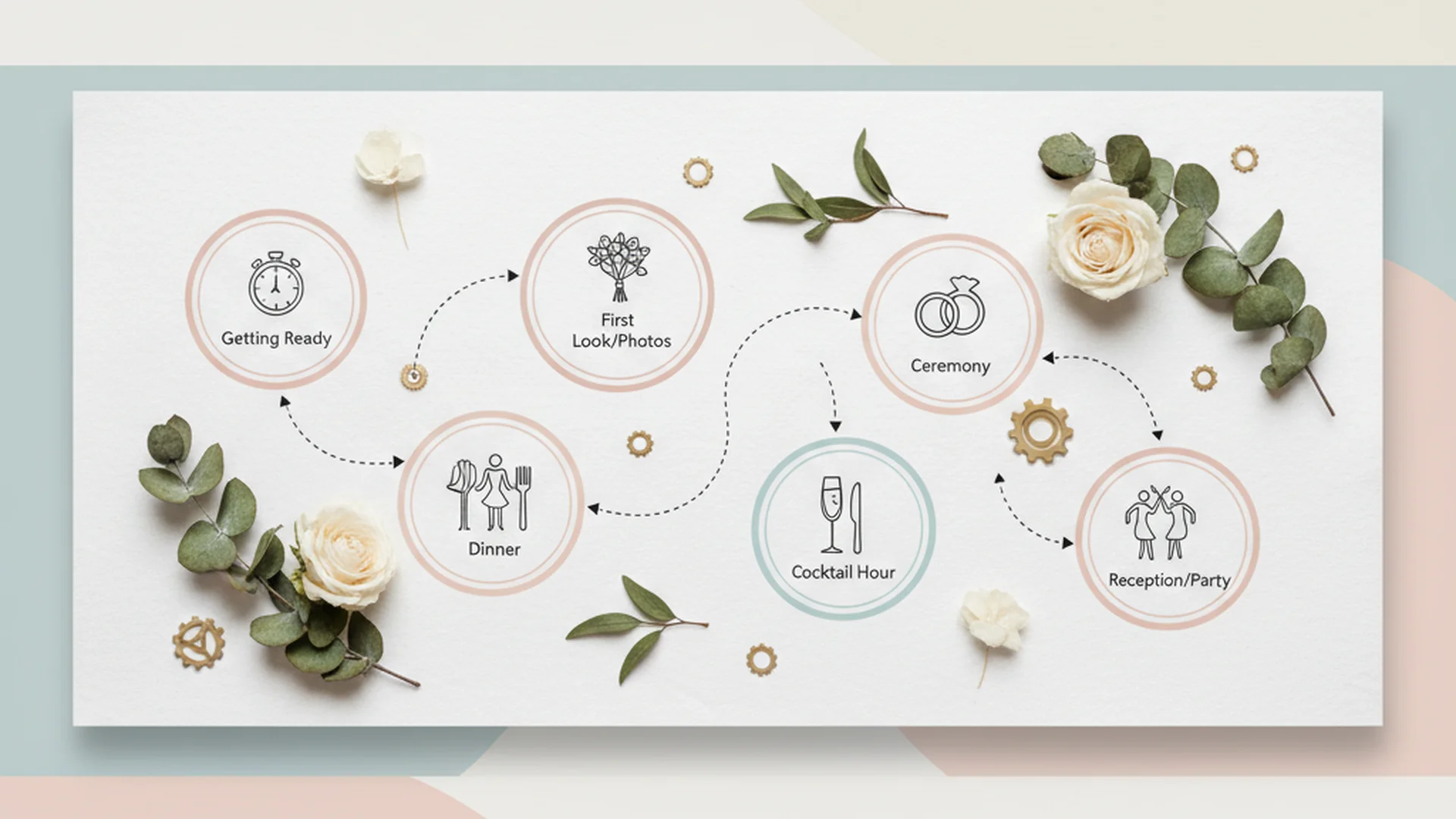
The Ideal Day-Of Schedule (4:30 PM Ceremony)
To give you a concrete starting point, let’s look at a standard timeline for a wedding with a 4:30 PM ceremony. This schedule assumes a "First Look," which is highly recommended for maximizing your time with guests later.
| Time | Event | Key Note |
|---|---|---|
| 10:00 AM | Hair and Makeup Begins | Usually requires 4–5 hours for a full bridal party. |
| 1:00 PM | Photographer Arrives | Focuses on "detail" shots (rings, dress, invites). |
| 2:00 PM | Getting Dressed | Allow 30–45 minutes for the bride/groom. |
| 2:30 PM | First Look & Portraits | A private moment before the chaos begins. |
| 3:30 PM | Wedding Party & Family Photos | Get these done early so you can enjoy cocktail hour. |
| 4:15 PM | Pre-Ceremony Music | Guests begin to arrive. |
| 4:30 PM | Ceremony Start | The actual start is often 4:45 PM to account for late-comers. |
| 5:15 PM | Cocktail Hour | Transitions into the social portion of the evening. |
| 6:15 PM | Grand Entrance & Dinner | The "deconstructed" flow often starts here. |
| 8:00 PM | Dancing & Traditions | Cake cutting, first dance, and open floor. |
| 10:00 PM | Grand Exit | The formal conclusion of the event. |
Heads up
From the OurVows workspace
Build your day-of timeline in minutes.
Generate a minute-by-minute schedule, assign vendors, and share it with everyone who needs it.
Real-World Examples of Timeline Flexibility
To understand how a realistic wedding timeline functions in practice, let’s look at three common scenarios:
Example 1: The Micro-Wedding (30 Guests)
Because the guest count is low, this couple skipped the "Grand Entrance" and "Receiving Line." They opted for a 90-minute cocktail "soiree" with heavy hors d'oeuvres instead of a formal seated dinner. Their timeline was incredibly relaxed, allowing them to spend at least 10 minutes talking to every single guest.
Example 2: The Catholic Wedding (Gap included)
Catholic ceremonies often happen early in the afternoon (e.g., 1:00 PM), creating a "gap" before the 6:00 PM reception. In this scenario, the couple used a Catholic Wedding Timeline to manage guest expectations, providing a list of local cafes and sights for guests to visit during the intermission.
Example 3: The Late-Night "Second Look"
A trend for 2026 is the wardrobe change. This couple scheduled a 15-minute gap at 8:30 PM. They slipped away, changed into party outfits (a short dress and sneakers for her, a relaxed jacket for him), and did a "second grand entrance" to a high-energy song to kick off the dance party.
Do this
Common Mistakes and Misconceptions
When building your realistic wedding timeline, it is easy to fall into traps of "best-case scenario" thinking. Here are the most common pitfalls:
1. The "5-Minute Outfit" Myth
Many grooms and brides assume putting on their wedding attire takes five minutes. In reality, between intricate buttons, zippers, jewelry, cufflinks, and shoes, it often takes 30 to 45 minutes. If you are doing a "reveal" with your parents or bridesmaids, add another 15 minutes.
2. Underestimating Travel Time
Couples often look at Google Maps and see a 10-minute drive between the hotel and the venue. However, they forget to account for the time it takes to "load the bus," gather the wedding party, and navigate Saturday afternoon traffic. Always add 15 minutes to any travel estimate.
3. Over-Scheduling Toasts
Toasts are a notorious timeline killer. When five people speak for 10 minutes each, you’ve lost nearly an hour of your reception.
- The Fix: Limit toasts to 3 minutes per person.
- The Strategy: Schedule them during dinner service so guests can eat while listening, rather than standing around waiting for the buffet to open.
4. Forgetting the "Receiving Line" Logistics
If you have over 100 guests, a traditional receiving line can take 45–60 minutes. If you want to maximize dancing time, consider visiting tables during dinner instead, or keep your guest list intimate.
Frequently asked questions
When should the ceremony actually start?
Do we really need a "First Look"?
How much "buffer time" do I really need?
How long does hair and makeup actually take?
Should we do a receiving line?
Conclusion: Flexibility is Key
At the end of the day, a realistic wedding timeline is a guide, not a prison. Things will run late. A button might pop. A toast might go long. The goal of a well-planned schedule is to provide enough "padding" so that these minor hiccups don't derail your entire celebration.
By prioritizing the "deconstructed" flow and focusing on the guest experience, you create an environment where everyone—including you—can breathe and celebrate. If you're still in the early stages of planning, I highly recommend using a Complete Wedding Timeline Planning Guide to map out your specific needs.
Do this
Ready when you are
Ready to Plan?
Start building your perfect day with our interactive tools.
Ready when you are
Plan your wedding without the chaos.
Free forever for couples just getting started. Two minutes to set up. No credit card.
Keep reading

Mastering Wedding Timeline Adjustments: A Guide for 2025-2026 Couples
Learn how to manage wedding timeline adjustments effectively. From hair and makeup delays to lighting buffers, ensure your big day stays on track without the stress.
Mastering Your Destination Wedding Day Timeline: The Ultimate Guide for 2025 and 2026
Plan the perfect destination wedding day timeline with our expert guide. From sunset-timed ceremonies to 3-day itineraries, learn how to balance luxury and logistics.

The Ultimate 5 Hour Wedding Reception Timeline: 2025-2026 Guide
Plan the perfect 5 hour wedding reception timeline with our expert guide. Learn about the Supper Club trend, timing stats, and how to maximize your dance floor.