The Ultimate Guide to Pakistani Wedding Traditions: Trends for 2025-2026
Explore the vibrant world of Pakistani wedding traditions. From Mehndi rituals to 2026 fashion trends and AI tech, discover what makes these celebrations iconic.
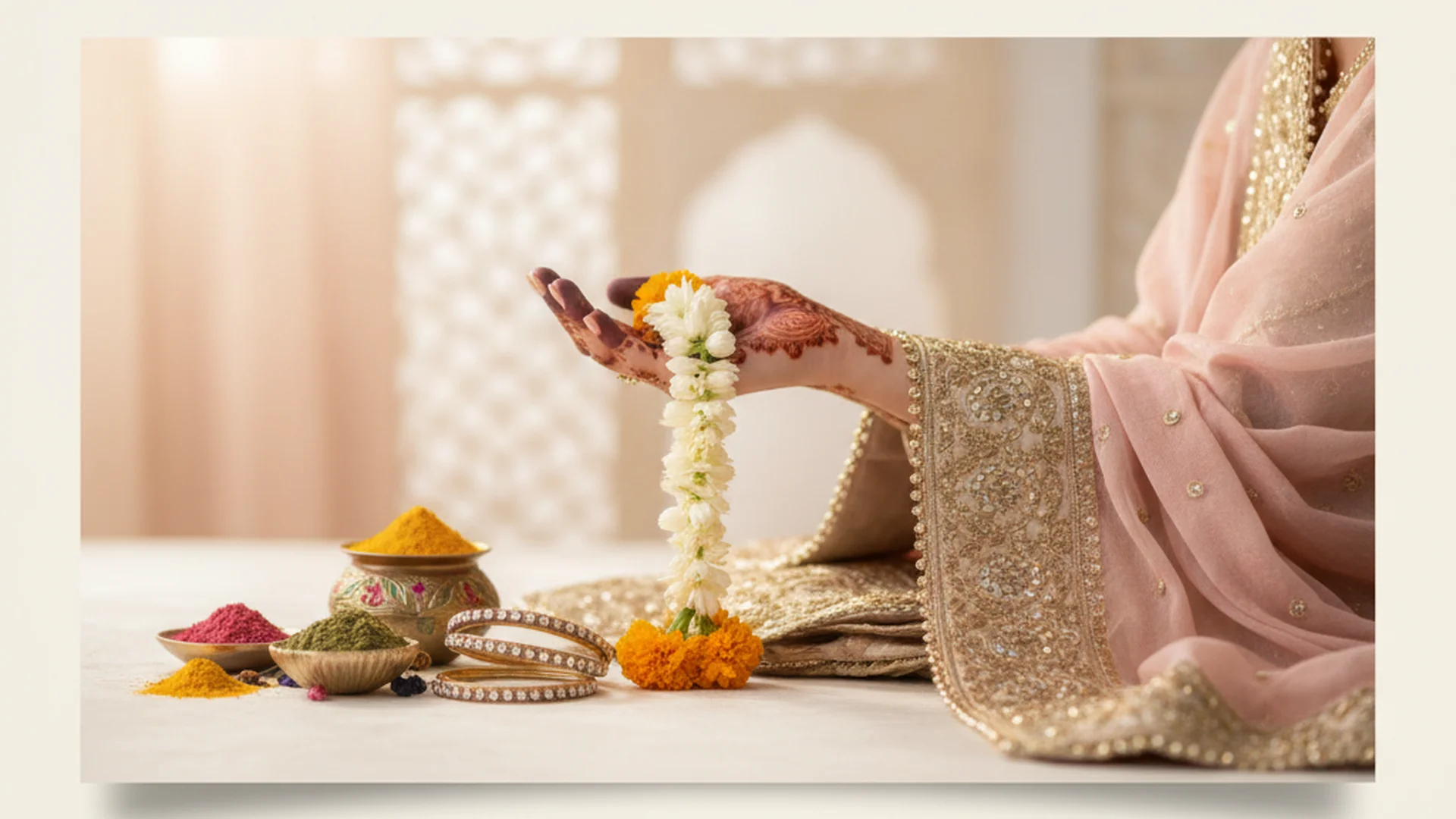
- Pakistani weddings are a massive $5 billion industry with a focus on multi-day celebrations.
- The 2025-2026 season is shifting toward "Mughal Minimalism" and pastel bridal palettes.
- Rituals like Joota Chupai and Doodh Pilai add a playful, interactive element to the ceremony.
Step into the world of Pakistani wedding traditions, and you aren’t just attending a ceremony—you are entering a multi-sensory marathon of color, percussion, and enough food to feed a small nation. Often described as a "recession-proof" industry, Pakistani weddings are grand, emotional, and deeply rooted in cultural heritage. Whether you are a first-time guest or a couple planning your big day, understanding the intricate layers of these celebrations is essential to navigating the $5 billion industry that defines modern Pakistani social life.
The Multi-Day Journey: From Dholki to Walima
A Pakistani wedding is rarely a single-day event. While Western celebrations might focus on a ceremony and a reception, Pakistani wedding traditions stretch across a week (or more), involving specific rituals that build anticipation for the union.
The Warm-up: Dholki and Mayun
The festivities usually begin with Dholki nights. These are informal gatherings where the bride’s and groom’s families gather separately to sing traditional folk songs accompanied by a dholak (drum). This is followed by the Mayun, a beautification ritual where the bride is "sequestered" from the public, and a paste of turmeric, sandalwood, and oil (Ubtan) is applied to her skin to give her a "wedding glow."
The Mehndi (Henna Night)
The Mehndi is arguably the most vibrant night of the entire process. Traditionally, the bride has intricate henna designs applied to her hands and feet. In 2025, we are seeing a shift toward the "Joint Mehndi" strategy. To manage costs and maximize energy, many families now host one large event for both sides of the family.
Tip
The Baraat and Nikah
The Baraat is the groom's grand procession. He arrives at the venue accompanied by a band, dancing family members, and sometimes even a horse or a vintage car. The Nikah is the official Islamic marriage contract signing. This is the most solemn and legally significant part of the wedding.
The Walima (The Grand Finale)
The Walima is the reception hosted by the groom’s family. It is a celebratory dinner that signifies the official public announcement of the marriage. While the Baraat is often high-energy and traditional, the Walima in 2026 is trending toward a more sophisticated, "black-tie" aesthetic.
2025-2026 Trends: Tech, Fashion, and Decor
The landscape of Pakistani wedding traditions is evolving. While the core rituals remain, the execution is becoming increasingly high-tech and stylistically diverse.
Fashion: The "Pastel Shift"
For decades, a Pakistani bride was synonymous with deep "merlot" or "chilli red" lehengas. However, 2026 trends indicate a major shift. "Dusty Rose," "Sage Green," and "Icy Blue" are dominating the bridal runways. Designers are also introducing "Cape Dupattas"—a modern twist on the traditional veil that allows for more movement on the dance floor.
The Rise of AI and Digital Innovation
The $5 billion industry is embracing the digital age. Couples are now moving away from static paper invites in favor of:
- Cinematic Video Invites: 60-second "movie trailer" style invites sent via WhatsApp.
- AI Photo Sharing: Using QR codes on tables, guests can upload photos to a central AI-powered gallery. The system uses facial recognition to instantly send guests the photos they appear in, eliminating the months-long wait for professional galleries.
Decor: Mughal Minimalism
The era of cluttered, over-the-top stages is fading. In its place is "Mughal Minimalism"—a fusion of grand architectural arches and clean floral arrangements. Instead of heavy drapes, think white lilies, orchids, and strategic lighting that highlights the couple without overwhelming the space.
| Trend Category | 2024 Style | 2025-2026 Trend |
|---|---|---|
| Bridal Color | Deep Reds | Pastels & Champagne |
| Photography | Traditional Poses | Cinematic Documentary |
| Catering | Standard Buffet | Interactive Food Stations |
| Invitations | Heavy Paper Cards | AI-Generated Video Invites |
Note
Rituals That Define the Fun
Beyond the religious and legal aspects, Pakistani wedding traditions include several "Rasams" (customs) that involve playful extortion and family bonding.
Joota Chupai (Shoe Stealing)
When the groom enters the venue, the bride’s sisters and cousins sneakily steal his shoes. He cannot leave without them, and the only way to get them back is to pay a "ransom." This involves a hilarious negotiation where the sisters demand a large sum of cash, and the groom tries to bargain his way out.
Doodh Pilai (Milk Drinking)
The bride’s sisters offer the groom a glass of milk, often elaborately decorated with nuts and saffron. Like the shoe-stealing ritual, the groom must pay the sisters before he is allowed to take a sip.
Salami (The Gift of Cash)
In many cultures, physical gifts are common. In Pakistan, the most appreciated gift is Salami—cash given in decorated envelopes. This tradition helps the couple offset the high costs of the wedding and start their new life with a financial cushion.
Do this
Planning and Economics: The $5 Billion Industry
Marriage is one of the top four savings goals for Pakistani households. Because a middle-class wedding can cost between PKR 2,000,000 to 4,000,000 ($7,000–$14,000), planning is a long-term financial commitment.
Vendor Booking Timeline
Because the "Shadi season" (October to March) is so condensed, the best vendors are booked far in advance.
- Photographers & Makeup Artists: 6–8 months in advance.
- Venues/Marquees: 8–10 months in advance.
- Catering: 4–6 months in advance.
Heads up
The Legal Aspect: The Nikah Nama
It is highly recommended that both the bride and groom read the Nikah Nama (marriage contract) weeks before the ceremony. This document outlines rights such as Haq Mehr (a mandatory gift from the groom to the bride) and the right to divorce. Understanding these terms ensures a transparent and respectful start to the marriage.
From the OurVows workspace
Planning a wedding is a lot. We make it feel like less.
Checklist, budget, guest list, and a wedding website — together in one free workspace built for both of you.
Guest Etiquette: Dos and Don’ts
If you’ve been invited to a celebration of Pakistani wedding traditions, you are in for a treat. However, there are a few rules to follow to ensure you are a respectful guest.
What to Wear
Traditional attire is encouraged. Men usually wear a Sherwani or a Shalwar Kameez with a vest. Women wear vibrant Lehengas, Shararas, or Shalwar Kameez.
Heads up
Punctuality (or Lack Thereof)
"Standard time" rarely applies to Pakistani weddings. If the invite says 8:00 PM, dinner will likely not be served until 10:30 PM or later. Plan your snacks accordingly!
Gift Giving
As mentioned, cash in an envelope (Salami) is the standard. If you are close to the family, a physical gift is acceptable, but cash remains the most practical choice. For more on international customs, you might compare this to Lebanese Wedding Traditions where gold is often a primary gift.
Common Mistakes to Avoid
- Underestimating "Hidden Costs": Families often budget for the venue and food but forget the Rasams. Joota Chupai and Doodh Pilai can add tens of thousands of rupees in unplanned expenses.
- Ignoring Guest List Segmentation: Trying to invite everyone to every event will blow your budget. Use an "A-list" for the Mehndi and Baraat, and a "B-list" for the Walima to manage per-head catering costs.
- Booking Too Late: The best venues in Karachi and Lahore sell out nearly a year in advance. Using a Wedding Checklist Generator can help keep your timeline on track.
- Misunderstanding "Arranged" Marriages: Many outsiders assume arranged marriages are forced. In modern Pakistan, "Semi-arranged" is the norm—families introduce the couple, but both individuals have the final say and often date for months before committing.
Frequently asked questions
How long does a Pakistani wedding last?
What is the average cost of a wedding in Pakistan?
Can non-Muslims attend a Nikah?
What should I do if I am invited but can't attend all the days?
Is the food always spicy?
Conclusion
Pakistani wedding traditions are a beautiful blend of ancient customs and modern flair. Whether it’s the high-energy dance performances of the Mehndi or the solemn beauty of the Nikah, these events are designed to unite families and create lasting memories. As we move into the 2025-2026 season, the industry continues to innovate with AI technology and sustainable practices, proving that while the "look" of the wedding may change, the spirit of celebration remains as strong as ever.
Do this
Ready when you are
Planning your own celebration?
Stay organized and on schedule with our professional planning tools.
Ready when you are
Plan your wedding without the chaos.
Free forever for couples just getting started. Two minutes to set up. No credit card.
Keep reading
Brazilian Wedding Traditions: A Guide to High-Energy Cultural Celebrations
Explore the vibrant world of Brazilian wedding traditions, from late-night parties and gold bands to unique rituals like cutting the groom’s tie and names on the hem.
The Ultimate Guide to Jamaican Wedding Traditions: A Blend of Heritage and Island Elegance
Explore the vibrant world of Jamaican wedding traditions. From the legendary Black Rum Cake to 2025 trends, discover how to plan a meaningful island celebration.
Thai Wedding Traditions: A Complete Guide to Rituals and Modern Trends
Discover the beauty of Thai wedding traditions, from the Khan Maak procession to 2025-2026 trends like sustainable merit-making and earthy terracotta palettes.