Open Bar vs Cash Bar Wedding: How to Choose
By OurVows Editorial Team6 min readPublished
On this page
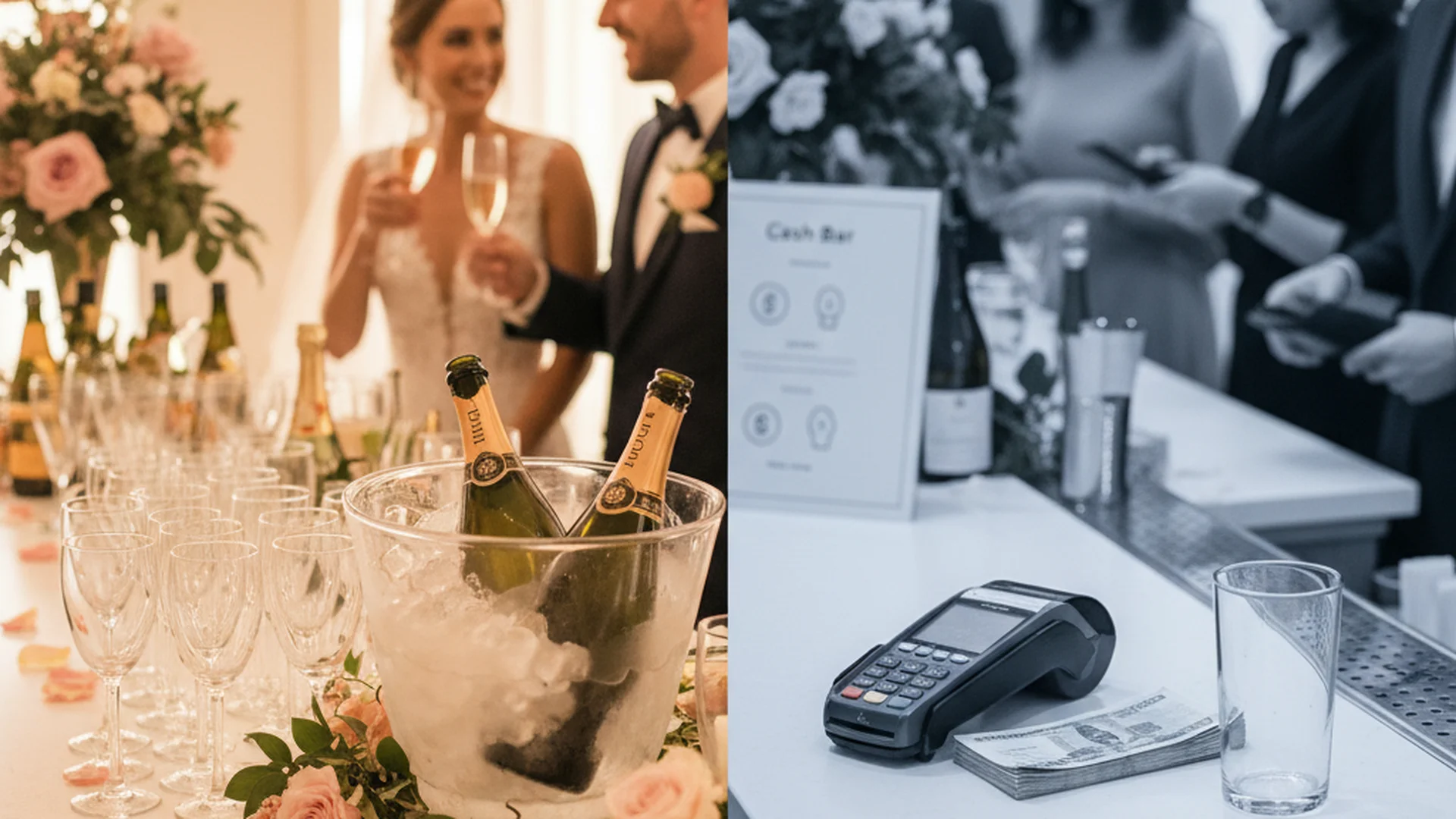
An open bar means guests never pay for drinks, a cash bar means they pay for their own, and a limited bar sits in between: you host beer, wine and perhaps a signature cocktail or two. Which is right depends on your budget, your guests and the style of your event.
This guide compares the three, explains what drives the cost and covers the etiquette. For the rest of the evening, see our guide to planning your wedding reception.
What drives the cost of a wedding bar
We have deliberately not quoted per-person prices, because bar costs vary widely by location, venue and supplier. The main factors are:
- Guest count and length of service: More guests and more hours mean a bigger bill.
- What you serve: Beer and wine only usually costs less than a full range of spirits and mixers.
- Who supplies it: Some venues and caterers require you to use their bar service, while others let you bring your own alcohol, sometimes for a fee.
- How it is priced: A flat price per guest is predictable. Paying for what is actually poured can cost less or more, depending on how your guests drink.
- Extras on top: Service charges, gratuity, taxes, bartender fees, glassware, ice and mixers can all be added to the quoted price.
| Bar type | Relative cost to you | What guests get |
|---|---|---|
| Beer and wine only | Lower | A few beers, house wines and soft drinks |
| Limited open bar | Moderate | Beer, wine and one or two signature cocktails |
| Full open bar | Higher | A full range of spirits, beer, wine and mixers |
| Cash bar | Lowest | Guests pay for their own drinks; ask about any setup or bartender fees |
See it in OurVows · 0:24
Track your wedding budget and payments in OurVows
A tour of the OurVows wedding budget: the total, what's booked and paid, a budget for every category, and a list of payments due. Marking a deposit paid updates every total straight away.
Open bar vs cash bar: the pros and cons
The case for an open bar
An open bar is the most generous option. Guests never need to reach for a wallet, and the evening feels like hosted hospitality rather than a transaction.
- Pros: Guests feel looked after, there are no payments to process at the bar, and nobody has to think about the cost of a round.
- Cons: It is usually the most expensive option, and you pay for every drink guests choose, including the ones left half-finished when everyone heads to the dance floor.
The case for a cash bar
A cash bar can make sense for couples on a strict budget, or when many guests are light drinkers. Traditional etiquette says hosts provide drinks for their guests, so some guests may expect it, but practice varies by region and culture.
- Pros: It costs you far less, and guests naturally moderate what they drink.
- Cons: Some guests may see it as ungracious, guests need a way to pay, and lines can move more slowly while payments are taken.
Hybrid options
If a full open bar feels like too much but a cash bar feels too stingy, these middle-ground options keep the sense of hospitality while controlling the cost.
The limited open bar
You host beer, wine and one or two signature cocktails, along with soft drinks and water. A short menu keeps the bar moving quickly and lets you control the cost of expensive spirits while guests still feel hosted.
A consumption bar
With a consumption bar you pay for what is actually poured instead of a flat price per guest. If your guests are light drinkers, for example at an afternoon wedding, this can cost less than a flat package. If they drink heavily, the bill can run higher than you expected, so ask your caterer about a spending cap.
A time-limited bar
Some couples host drinks through the cocktail hour and dinner, then close the bar or switch to beer and wine only. Moving to a cash bar partway through the evening can catch guests off guard, so if you plan to, say so in advance.
The time of day helps too. Afternoon and brunch receptions often need less alcohol than evening ones.
Do not forget non-drinkers
Plenty of guests will not be drinking alcohol, whether by choice, for health reasons or because they are driving. Offer more than a can of cola: sparkling water, a non-alcoholic cocktail, and good coffee or tea. It costs little and makes those guests feel included.
Practical tips and common mistakes
- Understaffing the bar: A common rule of thumb is roughly one bartender for every 50 guests, and more if you are serving cocktails. Ask your caterer or bar service what they recommend for your numbers, because long lines can drain the energy from a reception.
- Skipping the fine print: Check what is included, what is added on top, and who is responsible for glassware, ice, mixers, garnishes and clean-up.
- Overcomplicating the cocktails: Fewer, simpler drinks mean faster service.
- Forgetting water: Keep water visible and easy to reach, especially at summer or outdoor weddings.
- Not checking the venue's rules: Alcohol policies vary by venue and location, and some venues require you to use their bar or a licensed bartender. Check before you plan the menu.
Bar timing and the speeches
If drinks have been flowing for a couple of hours before the toasts, the room may be livelier and speeches harder to hear. If you want an attentive audience, you could serve beer and wine only until after the speeches, or schedule the toasts during dinner. Our guide to speech order and who speaks can help you plan the timing.
Frequently Asked Questions
Is a cash bar considered tacky?
Traditional etiquette says hosts provide drinks for their guests, so some guests may expect it, though norms vary by region, culture and type of event. If you are worried about how a cash bar will land, a limited bar with free beer and wine is a common compromise. Whichever you choose, tell guests in advance.
Do we still pay anything if it is a cash bar?
Possibly. Some venues and caterers charge setup or bartender fees even when guests pay for their own drinks. Ask for every fee in writing before you decide.
What is the difference between an open bar and a consumption bar?
An open bar simply means guests do not pay. It can be priced as a flat fee per guest, or on consumption, which means you pay for what is actually poured. Ask your venue or caterer which pricing they are quoting.
Do we need liquor liability insurance?
Some venues and bar services require event liquor liability cover, and some wedding insurance policies offer it as an add-on. Ask your venue and your insurer what applies to you. Our wedding insurance guide explains the basics.
Should we tip the bartenders?
Check your contract first, because a service charge may or may not go to the bartenders themselves. If gratuity is not included, you may want to tip separately. Our wedding tipping guide and tipping calculator can help you decide.
How much alcohol do we need if we supply it ourselves?
It depends on your guest count, how long the bar is open and what you serve. Our alcohol calculator can help you estimate quantities, and your caterer or bar service can advise too.
Know what's paid, what's due and what's left
Track every vendor payment against your budget, with reminders before each due date. Plus is one payment for your whole wedding: one line in the budget, never a monthly bill.