Designing the Perfect Wedding Reception Floor Plan: A Master Guide
Master your wedding reception floor plan with expert tips on layout, spacing, and guest flow. Learn how to balance logistics with aesthetics for a flawless night.
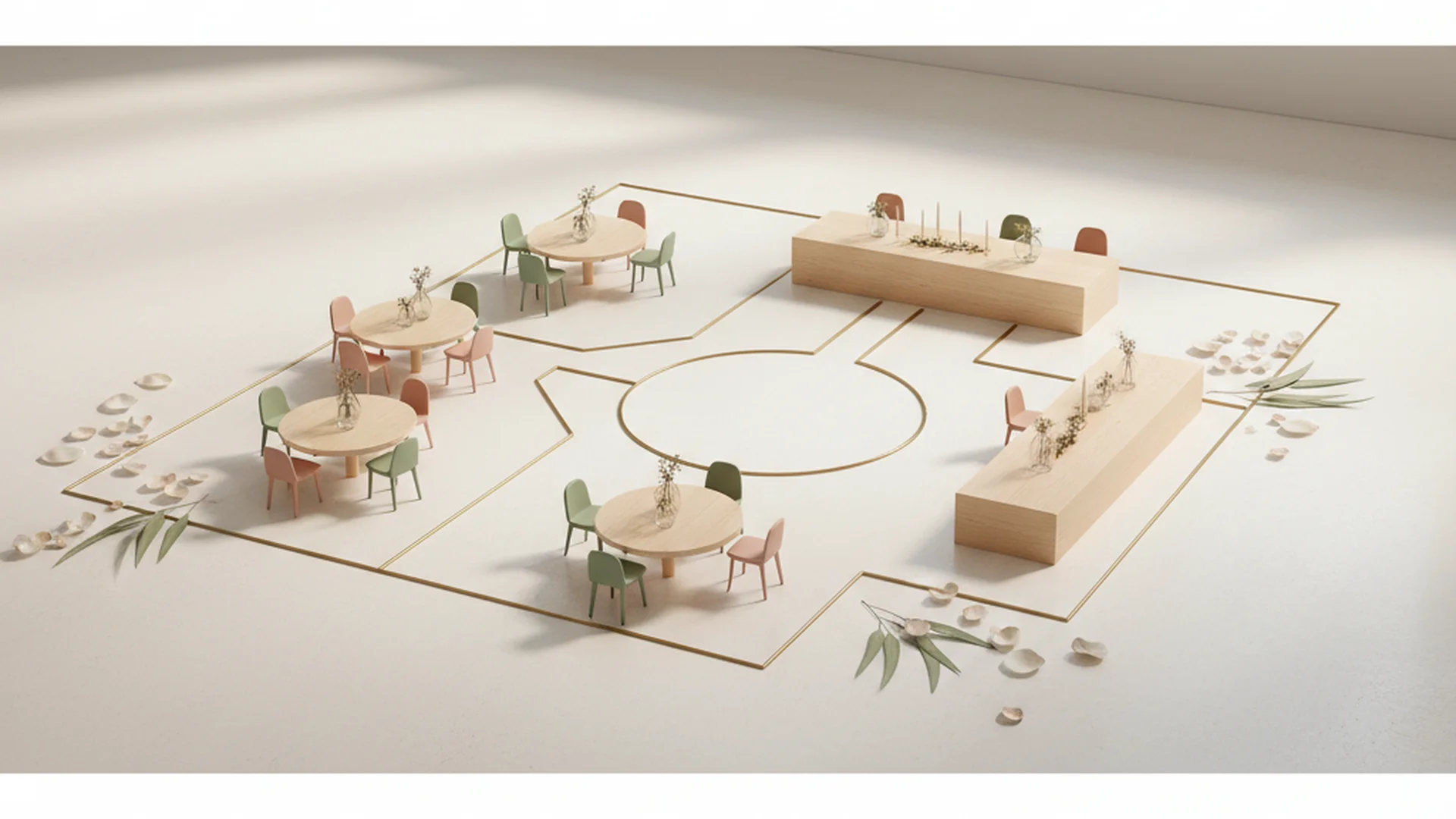
- Allocate 12–15 square feet per guest for total reception space.
- Position the DJ and dance floor away from elderly guests to ensure comfort.
- Use a mix of table shapes to create visual interest and improve flow.
Designing a Wedding Reception Floor Plan is often the point where a couple’s aesthetic vision meets the hard reality of logistics. As an interfaith wedding officiant, I have stood at the front of hundreds of rooms, watching how guests move, interact, and celebrate. I can tell you that a well-thought-out layout is the difference between a night of seamless joy and a night of "bottleneck" frustrations.
The floor plan is more than just a map of where people sit; it is the blueprint for the energy of your evening. It dictates how quickly guests get their drinks, how easily they can see your first dance, and how loud the music feels to your grandparents. Whether you are hosting a grand ballroom affair or an intimate garden dinner, understanding the math and the psychology behind the layout is essential.
The Fundamentals of Space and Flow
Before you pick out linens or centerpieces, you must understand the physical constraints of your venue. A room can look vast when it is empty, but once you add tables, chairs, a buffet, a bar, and a dance floor, that space shrinks rapidly.
The Math of the Dance Floor
The "heartbeat" of your reception is the dance floor. If it is too small, guests will feel cramped and leave; if it is too large, it will look empty even if twenty people are dancing. The industry standard is that 50% of your guests will be on the floor at any given time. Each of those guests needs approximately 4.5 to 5 square feet of space.
For example, if you are hosting a 150-guest wedding, you should plan for a dance floor of roughly 340–375 square feet. This usually translates to a 20'x20' or an 18'x21' area.
Table Spacing and Capacity
To ensure professional service and guest comfort, the spacing between tables is non-negotiable. You must leave 60 inches (5 feet) between round tables. This allows enough space for chairs to be pulled out while still leaving a "lane" for catering staff to walk through with heavy trays.
| Table Type | Dimensions | Comfortable Capacity | Maximum Capacity |
|---|---|---|---|
| Small Round | 60-inch | 8 Guests | 10 Guests |
| Large Round | 72-inch | 10 Guests | 12 Guests |
| Long Banquet | 8-foot Rec | 8 Guests | 10 Guests (Ends) |
Note
Strategic Placement: The "Zone" Method
When I design a ceremony or consult on a wedding reception floor plan, I encourage couples to think in "zones." You want to create a natural progression that guides guests through the experience.
The Bar and Social Zone
The bar is the highest-traffic area in the room. A common mistake is placing the bar right next to the entrance or the DJ. This creates a bottleneck where people entering the room collide with people waiting for a gin and tonic.
Ideally, place the bar in an accessible area with plenty of "buffer space" around it. If you have more than 150 guests, I highly recommend having two bar stations. This prevents a single line from stretching across the dance floor and interrupting the flow of the party.
The Party Zone (DJ and Dance Floor)
The DJ should be the focal point of the party zone, with a clear line of sight to the couple’s table. However, do not put the DJ in a corner. If the music source is tucked away, the energy of the room often feels lopsided.
Tip
The Quiet Zone
Not everyone wants to be in the "splash zone" of the speakers. Your elderly relatives, such as grandparents, should be seated at the tables furthest from the DJ or band. Place them near the entrance or windows where they can talk comfortably without the bass vibrating their water glasses.
Heads up
Real-World Examples of Floor Plan Success
To help you visualize how these rules apply, let’s look at three different scenarios I’ve encountered in my work.
Example 1: The 150-Guest Classic Ballroom
In this scenario, the couple used 60-inch rounds distributed evenly around a central 20'x20' dance floor. They opted for a Sweetheart Table at the head of the room, framed by a beautiful architectural window. By using a sweetheart table instead of a full head table, they saved roughly 100 square feet of floor space, which they used to create two small lounge "pods" near the bar.
Example 2: The 75-Guest Intimate Loft
For a smaller, industrial loft wedding, the couple chose a "U-shaped" banquet layout. This allowed everyone to see each other and fostered a "family dinner" vibe. The dance floor was placed at the open end of the "U," and the DJ was positioned to face the entire group. This layout works beautifully for smaller guest counts but requires careful coordination with catering to ensure they can access the "inside" of the U.
Example 3: The Outdoor Garden Marquee
Outdoor weddings face the unique challenge of uneven ground and "invisible" boundaries. This couple used serpentine tables that wound through the tent like a river. This non-traditional shape allowed them to navigate around the tent poles while creating a unique visual flow. They placed the buffet in a separate, smaller "service tent" connected by a walkway to keep the main area clear of lines.
Do this
Common Mistakes to Avoid
Even with the best intentions, certain "layout traps" can dampen the mood of your reception.
- The "Singles Table": Grouping all single guests together often makes them feel isolated or "on display." Instead, mix them into tables with people they know or share interests with.
- The Buffet Bottleneck: A buffet line for 150 people needs roughly 20–30 feet of clearance. If you tuck it into a corner, the line will eventually wrap around guest tables, making those seated guests feel like they are in a cafeteria.
- Ignoring Sightlines: If your venue has large pillars, do not place a guest table directly behind one. Use those pillars for floral decor or lighting instead. Ensure the couple is visible from every seat during speeches.
- Skipping the Seating Chart: For any wedding over 75 guests, a seating chart is mandatory. Without one, you end up with "musical chairs," where the last few guests (often your cousins who were slightly late) have to split up to find single open seats.
From the OurVows workspace
Turn this guide into a plan.
A checklist that knows what's next, a shared budget, and a guest list that actually works — free to start.
2025–2026 Trends in Floor Planning
As we look toward the future of wedding design, the "standard" layout is being replaced by more architectural and immersive choices.
Tech-Integrated Seating
The rise of the QR Code Seating Chart is transforming the entryway. Instead of a massive printed board that becomes obsolete the moment one guest cancels, digital maps allow for real-time updates and an artistic, minimalist aesthetic.
Immersive Lounge Pods
Couples are increasingly opting for "Lounge Within a Reception" designs. These are small "pods" featuring velvet sofas, coffee tables, and rugs placed right at the edge of the dance floor. It allows guests who aren't dancing to still feel "in the mix" rather than sequestered at a formal dining table.
Maximalist Textures and Verticality
2026 is trending toward stainless steel accents and avant-garde sculptural florals. These designs often take up significant vertical space but have small "footprints" on the floor. This allows the floor plan to feel open at eye level while still feeling lush and decorated.
Note
The Planning Timeline
When should you finalize your wedding reception floor plan? It’s a multi-stage process:
- At Booking: Get a scaled CAD drawing or floor plan from your venue.
- 6 Months Out: Decide on your table shapes (rounds vs. long banquets) so you can order linens and rentals.
- 2 Months Out: Create a "draft" layout based on your expected guest count.
- 3 Weeks Out: Finalize the layout once your RSVPs are in. This is when you can delete or add tables as needed. For more help with this stage, check out our 1 Month Before Wedding Checklist.
If you are still in the early stages of planning your budget and layout, you might find our 12 Month Wedding Planning Checklist helpful to keep you on track.
Frequently asked questions
When should I start the floor plan?
Where is the best place for the bar?
Should I have a sweetheart table or a head table?
How do I handle a venue with pillars or obstructions?
How much space do I need for a buffet?
Conclusion
A successful wedding reception floor plan is a gift to your guests. It tells them that you have considered their comfort, their sightlines, and their experience. By balancing the "math" of square footage with the "magic" of your aesthetic vision, you create an environment where the celebration can truly flourish.
Remember that your floor plan should serve the "flow" of the night. From the first cocktail to the final dance, every movement should feel natural. If you are feeling overwhelmed, use tools like our (Marketing) - Tools - Guest Count Calculator to get a better handle on your numbers before you start drawing.
Do this
Ready when you are
Ready to Plan?
Start organizing your guest list and floor plan today with our expert tools.
Ready when you are
Plan your wedding without the chaos.
Free forever for couples just getting started. Two minutes to set up. No credit card.
Keep reading
How to Create Wedding Seating Chart: The Ultimate 2026 Guide
Learn how to create wedding seating chart layouts without the stress. Expert tips on etiquette, logistics, and 2025-2026 trends for a perfect reception.

The Anti-Anxiety Wedding Guide: How to Actually Enjoy Your "I Dos"
Learn expert strategies for dealing with wedding day anxiety. Discover 2025 trends, grounding techniques, and mental health tips to stay present on your big day.
25+ Creative Wedding Seating Chart Ideas & Etiquette Guide (2025-2026)
Discover the best wedding seating chart ideas for your 2025-2026 celebration. From interactive displays to high-tech QR codes, plan your reception layout with ease.