How to Officiate a Wedding for a Friend: The Ultimate 2025 Guide
Learn how to officiate a wedding for a friend with our comprehensive guide. From legal requirements to script writing, master the art of the ceremony.
- Check local legal requirements at least 60 days in advance
- Use the Interview Method to gather unique stories
- Always remember the Step-Aside rule for the first kiss photo
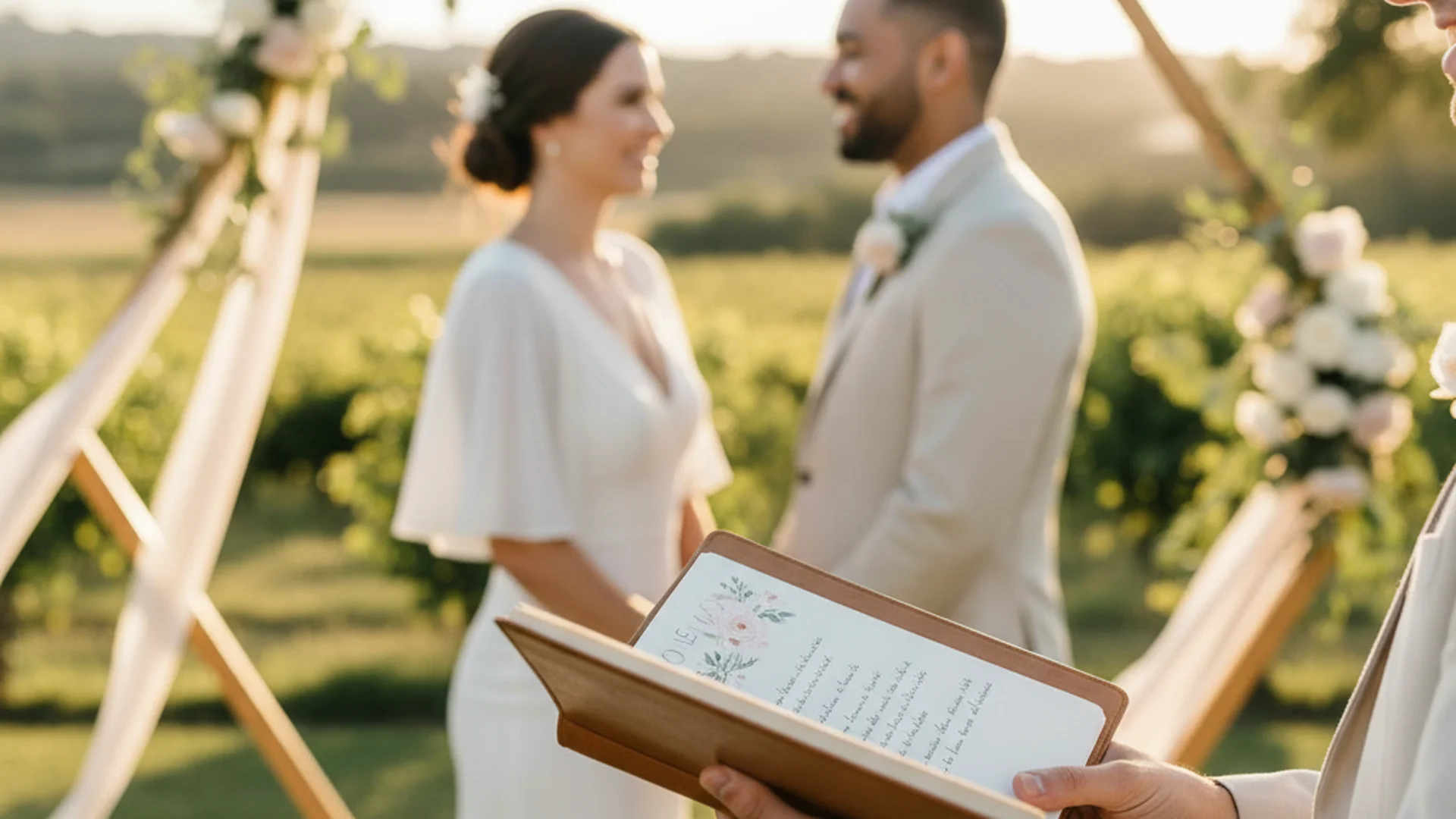
Standing at the altar while your two best friends exchange vows is an incredible honor, but let’s be honest: it’s also a high-stakes performance that requires the legal precision of a judge and the comedic timing of a late-night host. In 2025, the trend of having a loved one lead the ceremony has reached an all-time high. It has become increasingly common for couples to choose a friend or family member to guide them through their "I dos." If you are wondering how to officiate a wedding for a friend without accidentally making the marriage legally void or putting the guests to sleep, you’ve come to the right place.
The Legal Landscape: Getting Ordained and Registered
Before you start writing heartwarming anecdotes, you must ensure you actually have the power to marry people. The legal requirements vary wildly depending on your geography, and 2025 has seen stricter enforcement in certain jurisdictions.
The United States: Online Ordination
In most U.S. states, getting ordained is a two-minute process through organizations like the Universal Life Church or American Marriage Ministries. However, don't let the ease of the "Apply" button fool you.
- County Filing: Many counties require you to file your credentials with the County Clerk at least 30 days before the wedding.
- Restrictive States: Be cautious in states like Virginia or specific parts of Pennsylvania, where "online" ministers are sometimes challenged. Always call the local marriage license bureau to confirm your status.
The United Kingdom: Symbolic vs. Legal
If you are officiating in England or Wales, the rules are different. A friend cannot legally officiate a binding marriage. In these cases, the couple usually visits a registry office a few days prior for a "paperwork only" legal signing. Your role on the wedding day is to perform a symbolic ceremony that carries the emotional weight, even if the legal heavy lifting happened elsewhere. Scotland offers more flexibility, particularly for registered Humanist celebrants.
Heads up
The Preparation: The "Interview" Method
The best ceremonies aren't just read from a template; they are crafted from the couple’s history. As a friend, you have "insider access," but you shouldn't rely solely on your own memories.
Separate Interviews
To create a truly emotional script, interview each partner separately. Ask them questions like:
- "When was the exact moment you knew they were 'the one'?"
- "What is one quirk they have that you’ve grown to love?"
- "What is a challenge you’ve overcome together?"
The Secret Anecdote
By interviewing them separately, you can weave "secret" answers into the ceremony. For example, if the groom says he knew he loved her when she fixed his car, and she says she knew she loved him when he stayed up all night helping her study, revealing these parallel memories during the ceremony creates a powerful, tear-jerking moment for both the couple and the guests.
Tip
Writing the Script: Tone and Structure
A common mistake for first-time officiants is treating the ceremony like a roast. While humor is great, the ceremony is a sacred ritual; the reception is for the jokes. Aim for a 70/30 split—70% sentimental and 30% lighthearted.
Essential Components of the Script
- The Processional: Guests are seated, and the wedding party enters.
- The Opening Words: Welcome the guests and acknowledge the significance of the day.
- The Address: This is where you tell the couple's story and share your observations on love.
- The Declaration of Intent: This is the legal "I do" part. It is mandatory in almost every jurisdiction to make the marriage binding.
- The Vows: Whether they write their own or use a Civil Wedding Ceremony Script, this is the heart of the event.
- The Ring Exchange: A symbolic gesture of their commitment.
- The Pronouncement: "I now pronounce you..."
- The First Kiss: The big finale.
Do this
Logistics and Tech: The 2025 Standards
The technical side of officiating is where most friends stumble. You are not just a speaker; you are the stage manager of the most important 20 minutes of your friends' lives.
Microphone Logistics
Never use a handheld microphone. It blocks your face in photos, makes it impossible to hold your script, and prevents you from assisting with rings. Insist on a lapel (lavalier) microphone. If the venue only has handhelds, use a mic stand.
The PA System
Don't assume the venue's sound system is foolproof. Do a sound check exactly one hour before the ceremony. Check for "wind noise" if you are outdoors and ensure the batteries in the wireless transmitter are fresh.
The "Step-Aside" Rule
This is the most important piece of advice for wedding photos: Step to the side immediately before you announce the first kiss. If you stay in the center, you will be "the third wheel" in the couple's most iconic wedding photo. Practice this during the rehearsal so it becomes muscle memory.
| Item | Requirement | Responsibility |
|---|---|---|
| Marriage License | Physical copy present | The Couple |
| Script | Printed or Tablet (offline mode) | The Officiant |
| Rings | Handled during ceremony | Best Man/Officiant |
| Pen | For signing the license | The Officiant |
From the OurVows workspace
Shaping your ceremony?
Draft your vows and ceremony, then keep the whole day organized in one place.
Recent Trends for 2025 and 2026
The way we celebrate is changing. As a modern officiant, you should be aware of these emerging trends to help the couple stay ahead of the curve.
In-the-Round Ceremonies
More couples are opting for circular seating arrangements. This means you will have guests behind you. You must practice projecting your voice in all directions and moving slightly so you aren't blocking anyone's view for the entire duration.
Sustainability and Digital Scripts
The "Green Wedding" trend is huge. Many officiants are ditching the traditional leather binder for a high-quality tablet. If you do this, ensure "Do Not Disturb" is on, the brightness is at 100%, and the script is downloaded for offline use.
Coordination with Content Creators
In 2025, many couples hire a "Wedding Content Creator" specifically for social media. As the officiant, you may need to pause for a second after the "I do" to ensure they catch the perfect vertical clip for a Reel or TikTok.
Common Mistakes to Avoid
Even the most well-meaning friend can fall into these traps. Avoid them to ensure a smooth ceremony.
- The "Standing Guest" Blunder: This is the #1 mistake. After the bride or couple enters, the guests remain standing. If you don't say, "Please be seated," they might stand for the entire 30-minute ceremony out of politeness.
- The Name Error: It sounds impossible, but in the heat of the moment, people trip over names. Write the couple’s names phonetically in BOLD CAPS at the top of every single page of your script.
- The "Legal Validity" Trap: Failing to sign the marriage license immediately after the ceremony. In the excitement of the cocktail hour, it’s easy to forget. Do it right after the recessional while the witnesses are still present.
- Being the Comedian: Remember, you are the supporting character. If you find yourself telling a five-minute story about a college frat party, you’ve gone too far. For inspiration on balancing humor, see our guide on Best Man Speech Roast Ideas.
Note
Frequently asked questions
How do I actually get ordained?
Who writes the script: the couple or the officiant?
What are the mandatory legal phrases?
Do I need to register with the local government?
What should I wear as the officiant?
Conclusion
Officiating a wedding for a friend is a journey that starts months before the big day. By navigating the legal requirements early, using the interview method to personalize the script, and mastering the technical logistics like the "step-aside rule," you can deliver a ceremony that the couple will cherish forever. Remember: stay focused on the couple, keep the "roast" comments for the reception, and don't forget to tell the guests to sit down!
Do this
Ready when you are
Ready to Start?
Use our tools to help your friends plan their perfect day.
Ready when you are
Plan your wedding without the chaos.
Free forever for couples just getting started. Two minutes to set up. No credit card.
Keep reading

The Ultimate Beach Wedding Ceremony Script Guide for 2025–2026
Craft a breathtaking beach wedding ceremony script with nautical metaphors, eco-chic rituals, and expert tips for a flawless seaside wedding in 2025–2026.

The Ultimate Guide to a Simple Wedding Ceremony Script for 2025–2026
Planning a minimalist wedding? Discover the perfect simple wedding ceremony script, modern trends for 2025, and expert tips for an intimate, meaningful celebration.

The Ultimate Guide to Wedding Officiant Duties: From Legalities to 2026 Trends
Master the essential wedding officiant duties for 2025-2026. Learn legal requirements, ceremony best practices, and how to avoid common officiant mistakes.