How to Address Wedding Invitations: The Ultimate 2025 Etiquette Guide
Master the art of addressing wedding invitations with our complete guide. Learn etiquette for formal titles, modern social scenarios, and 2025 mailing trends.
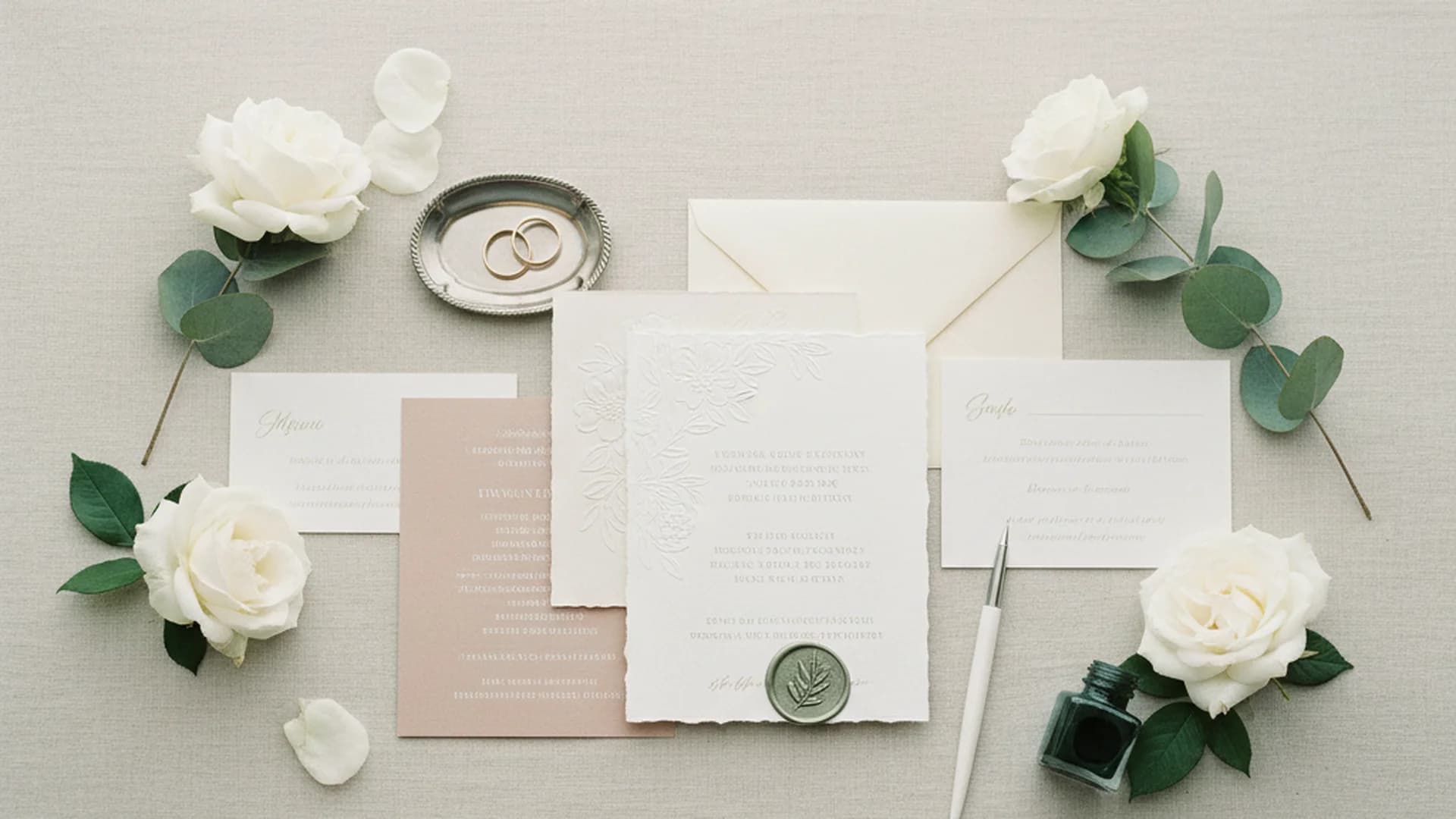
- Address invitations by household, not by individual guest, to save costs.
- Use "Ms." as the modern standard for adult women and "Mx." for non-binary guests.
- Always spell out street names and states to maintain formal etiquette.
Your wedding invitation is more than just a piece of stationery; it is the first formal "hello" your guests receive and the primary indicator of the tone for your big day. Learning how to address wedding invitations correctly is a tradition rooted in etiquette, but as we move into the 2025 and 2026 wedding seasons, those rules are evolving to embrace inclusivity, technology, and modern social dynamics.
Whether you are hosting a black-tie gala or a barefoot beach ceremony, the way you write a guest’s name on an envelope signals who is invited (and who isn't) while showing respect for their identity and relationship status. As a vow writer and public speaking coach, I often tell my clients that the words you choose—even the ones on the envelope—set the stage for the emotional journey of your wedding.
The Golden Rule: Household vs. Guest Count
One of the most frequent mistakes couples make occurs before they even pick up a pen. Couples often over-order their invitations because they mistakenly order one invitation per guest rather than per household.
Note
Before you begin addressing, verify your guest list and group people living at the same address together. This simple step can save you hundreds of dollars in printing and postage costs. For a broader look at managing your stationery, check out our Complete Guide to Wedding Invitations.
Navigating Titles and Honorifics
In 2025, the use of titles is shifting. While many couples still prefer a formal approach, others are opting for a "No Title" minimalist style. However, if you are following traditional etiquette, understanding the nuances of honorifics is essential.
The "Ms." vs. "Miss" Debate
"Miss" is traditionally reserved for unmarried women under the age of 18. "Ms." is the modern, professional standard for all adult women, regardless of their marital status. If you are unsure of a woman's preference, "Ms." is always the safest and most respectful choice.
Professional and Distinguished Titles
When one or both guests have professional titles, such as "Doctor," "Judge," or a military rank, these should always be listed first.
- One Doctor: "Dr. Jane Smith and Mr. John Smith"
- Two Doctors: "The Doctors Smith" or "Dr. Jane Smith and Dr. John Smith"
- Military Personnel: Always spell out the rank (e.g., "Captain Sarah Williams, US Army").
Non-Binary and Gender-Neutral Options
Inclusivity is a hallmark of modern weddings. The gender-neutral honorific "Mx." (pronounced mix) is now widely accepted for non-binary or gender-nonconforming guests. If you are unsure how a guest prefers to be addressed, it is perfectly acceptable—and often appreciated—to ask them directly.
Tip
Addressing Different Social Scenarios
Social dynamics can make envelope addressing feel like a puzzle. Here is how to handle the most common scenarios you will encounter.
Unmarried Couples Living Together
For couples who live together but are not married, etiquette dictates that their names should be listed on separate lines.
Example: Ms. Elena Rodriguez Mr. Julian Vance
Use the "Closest Person" rule: list the person you are closer to first. If you are equally close to both, list them alphabetically by last name.
Same-Sex Couples
For married same-sex couples, you can list names on one line or two. Traditional etiquette suggests listing them alphabetically by last name. To learn more about specific wording for these invites, see our guide on Same Sex Wedding Invitation Wording.
The "And Guest" Rule
If you are giving a guest a "plus-one," only use "and Guest" if you truly do not know who they might bring. However, if your guest is in a long-term relationship, it is considered best practice to find the partner's full name and include it. This small gesture of effort goes a long way in making your guests feel truly welcome.
| Guest Scenario | Formal Addressing Example |
|---|---|
| Married Couple | Mr. and Mrs. Marcus Thorne |
| Unmarried Couple | Ms. Maya Angelou & Mr. Langston Hughes |
| Families with Children | Mr. and Mrs. Thorne and Family |
| Single Guest with Plus-One | Ms. Chloe Bennett and Guest |
Addressing Logistics: The Anatomy of the Envelope
How you write the physical address is just as important as the names themselves. To maintain a polished, formal appearance, you should avoid abbreviations.
- Spell out "Street," "Avenue," and "Boulevard."
- Spell out the State name (e.g., "California" instead of "CA").
- Spell out "Apartment" or "Suite."
Heads up
Postage Realities for 2025
As of early 2025, a standard USPS Forever Stamp is $0.73. However, wedding invitations are rarely "standard." Square envelopes, heavy cardstock, ribbons, or wax seals often make an invitation "non-machinable." This requires a surcharge of roughly $0.46 extra per envelope.
Do this
From the OurVows workspace
Sorting out invitations?
Track who's invited, who's replied, and what they need — with digital invites and RSVPs built in.
2025–2026 Wedding Invitation Trends
The upcoming wedding seasons are leaning into a mix of high-tech convenience and "maximalist" aesthetics.
- Maximalist Reveal: Envelope liners are having a major moment. Expect to see watercolor venue illustrations or bold patterns hidden inside the envelope for a "wow" factor.
- QR Code Integration: A growing number of couples now use QR codes for RSVPs. Rather than cluttering the main invitation, place these on a small insert card or the back of the RSVP card.
- Eco-Conscious Materials: Seed paper that can be planted after use and recycled handmade paper with "deckled" (torn) edges are dominating the market for 2025.
- AI Assistance: Increasingly, couples are using AI tools to help draft guest lists and ensure their Formal Wedding Invitation Wording is perfectly balanced.
Common Mistakes to Avoid
Even with the best intentions, it is easy to slip up. Avoid these common etiquette faux pas:
1. Including Registry Information
A major misconception is that registry links belong on the invitation. Etiquette experts still consider this a "huge faux pas" as it implies a gift is required for attendance. Instead, house this information on your wedding website and let word of mouth or your Digital Save the Date Ideas point people there.
2. Ambiguous Child-Free Wording
If you are hosting a child-free wedding, do not write "No Children" on the invite. Instead, address the envelope only to the parents (e.g., "Mr. and Mrs. John Smith"). If they RSVP for their children anyway, a polite phone call will be necessary to clarify.
3. Mailing Too Late
Invitations should be sent 6–8 weeks before the wedding. For destination weddings, increase this to 12 weeks. Sending them too late causes stress for your guests and your caterers. Ensure you have followed proper Save the Date Etiquette 6–8 months in advance so guests can clear their schedules.
Frequently asked questions
Do I have to use inner and outer envelopes?
Should I spell out "Doctor" or other titles?
How do I indicate a child-free wedding?
What is the difference between Miss and Ms.?
How do I address an invitation to a non-binary guest?
Conclusion
Addressing your wedding invitations may feel like a daunting task, but it is a beautiful opportunity to show your guests that you value their presence. By balancing traditional etiquette with modern sensitivity—and double-checking your postage—you’ll ensure your invitations arrive safely and set the perfect tone for your celebration.
Remember, the words on the outside of the envelope are just the beginning. Once your invites are out, it's time to start thinking about the words you'll say at the altar.
Do this
Ready when you are
Ready to Start?
Use our AI-powered tool to craft the perfect words for your ceremony.
Ready when you are
Plan your wedding without the chaos.
Free forever for couples just getting started. Two minutes to set up. No credit card.
Keep reading

The Essential Guide to Save the Date Etiquette: 2025–2026 Edition
Master Save the Date etiquette for your wedding. Learn when to send them, what to include, and 2025 trends for digital and physical stationery.

Modern Digital Save the Date Ideas: The Complete 2025/2026 Guide
Explore the best digital save the date ideas for 2025. Learn about Meadowcore trends, AR technology, and eco-friendly wedding planning tips from Nia Amari.
Mastering Wedding RSVP Card Etiquette: The 2025-2026 Guide
Navigate wedding RSVP card etiquette with ease. Learn about deadlines, modern wording trends, QR codes, and how to handle guest follow-ups for 2025 and 2026.