Creative Wedding Table Number Ideas for 2025 and 2026
Explore functional and stylish wedding table number ideas to guide your guests. From eco-elegant materials to 3D designs, find the perfect fit for your big day.
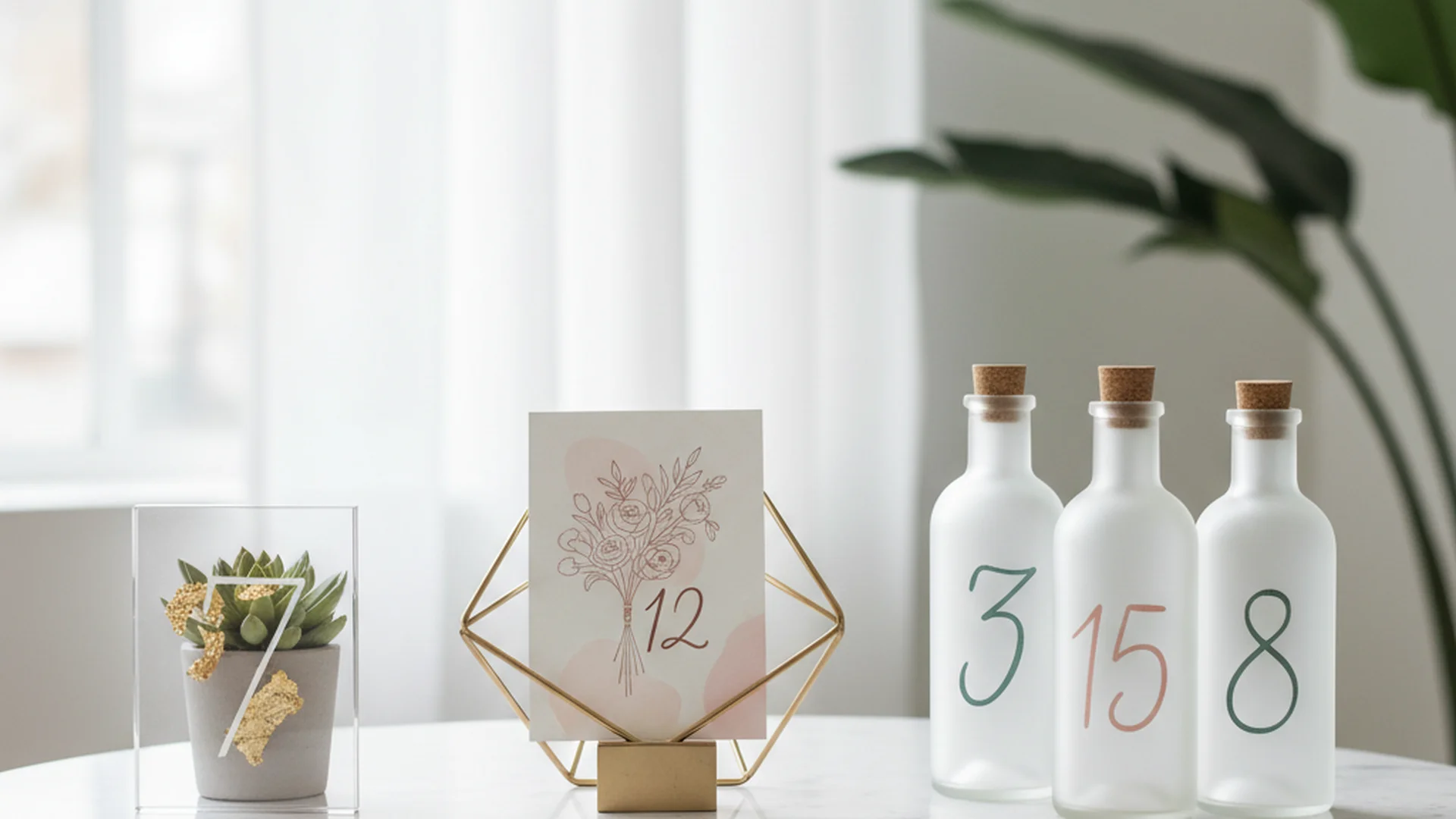
- Table numbers are essential for catering efficiency and guest navigation.
- Standard sizing (4x6 or 5x7) ensures visibility without obstructing views.
- Trends for 2025–2026 include eco-friendly seed paper and 3D sculptural elements.
When planning your reception, it is easy to get swept up in the grand floral arches and the multi-tier cake. However, the unsung hero of a well-organized celebration is the table number. Far from being a mere logistical necessity, your choice of wedding table number ideas serves as the GPS for your guests, ensuring they don't wander the ballroom like lost tourists in a foreign city. In this guide, we will explore how to balance high-end aesthetics with the practical requirements of your venue and catering team.
Whether you are aiming for a maximalist "fruit and veggie" centerpiece or a minimalist monochromatic look, your table signage is a prime opportunity to showcase your personality. Let's dive into the data, the trends, and the common pitfalls to avoid as you finalize your seating strategy for 2025 and 2026.
The Logistics of Guest Navigation
Before we discuss the "pretty" side of design, we must address the "practical" side of physics. A table number’s primary job is to be seen. According to industry standards, the sweet spot for visibility is a sign sized at 4x6 inches or 5x7 inches. Anything smaller risks being hidden behind a wine glass, while anything significantly larger can act as a literal wall between guests trying to hold a conversation across the table.
For weddings with a guest list exceeding 100 people, the logistics become even more critical. Many couples find wedding decisions overwhelming, so you can simplify at least one aspect of your day by adhering to a sequential numbering system. While it might be tempting to use "random" numbers that have sentimental value, an ascending or descending flow is the single most effective way to prevent the dreaded guest bottleneck at the entrance of the reception hall.
Cultural Sensitivity and Unlucky Numbers
In our increasingly multicultural wedding landscape, being mindful of numerical symbolism is a sign of a truly considerate host. Certain numbers carry heavy baggage in different cultures:
- Number 4: Often avoided in Chinese culture as the word sounds similar to "death."
- Number 9: Considered unlucky in Japan.
- Number 13: The classic Western omen of bad luck.
- Number 17: Frequently avoided in Italy.
If you are hosting an international crowd, skipping these numbers entirely is a subtle but impactful way to ensure everyone feels comfortable.
Note
Designing for Visibility and Contrast
A common mistake in wedding design is choosing "form over function." If you have spent months perfecting a "Cloud Dancer" (soft white) and ivory color palette, a clear acrylic sign with white calligraphy might look stunning in a close-up photo, but it will be invisible from ten feet away.
To pass the "Entrance Test," stand at the doorway of your reception space. Can you spot at least three table numbers immediately? If not, your signs are either too low, too small, or lacking contrast.
The Power of High Contrast
For 2025, we are seeing a shift toward bold, legible pairings:
- Gold on Navy: Perfect for formal or "Old Money" aesthetic weddings.
- Black on Frosted Acrylic: Offers a modern, clean look that stays visible against various backgrounds.
- Monochromatic Layering: While difficult to pull off, using "Earth Luxe" tones with embossed (raised) lettering can provide the necessary shadow and depth to make the number pop without breaking the color scheme.
Tip
Top Wedding Table Number Trends for 2025–2026
As we look toward the 2025 and 2026 seasons, the trends are moving away from flat, "Pinterest-perfect" cardstock and toward tactile, sustainable, and tech-integrated options.
Eco-Elegant Materials
Sustainability is no longer a niche choice; it is a primary driver for 2026 couples. Seed paper table numbers are a rising favorite. These are made from biodegradable paper embedded with wildflower seeds. After the wedding, the couple (or the guests) can plant the numbers and watch a garden grow. This aligns perfectly with a Complete Guide to Wedding Invitations that prioritizes environmental impact.
3D and Sculptural Shapes
Moving away from the standard rectangle, new designs favor architectural shapes. Think arches, wavy "scalloped" edges, and 3D acrylic lettering. These signs don't just sit on the table; they act as a piece of sculpture. By adding depth, you ensure the number is visible from multiple angles, solving the issue of guests circling tables like "lost tourists."
The "Fruit & Veggie" Centerpiece
One of the most exciting trends for 2026 is the "maximalist abundance" centerpiece. Instead of traditional flowers, tables are being adorned with sculptural artichokes, bunches of grapes, and even hollowed-out citrus fruits. In this setup, the wedding table number ideas involve propping the card against a pomegranate or tucking it into a cluster of dark cherries.
Tech-Integrated Signage
For the tech-savvy couple, QR codes are being integrated directly into the table number design. A small, tastefully placed QR code allows guests to scan for the dinner menu, access a shared photo folder, or even view the 12 Month Wedding Planning Checklist if they are currently planning their own nuptials!
Do this
From the OurVows workspace
Sorting out invitations?
Track who's invited, who's replied, and what they need — with digital invites and RSVPs built in.
Common Mistakes to Avoid
Even the most beautiful wedding table number ideas can fail if they aren't executed with the guest experience in mind. Here are the most frequent errors Alistair Thorne (that's me!) sees in the field:
1. The "Curly Calligraphy" Trap
We all love a beautiful script, but if your guests can't tell the difference between a "7" and a "1," you have a problem. Always prioritize legibility. If you must use a decorative font, keep it for the table names and use a clean, serif or sans-serif font for the actual digit.
2. The Single-Sided Sign
Guests rarely approach a table from just one direction. A single-sided sign often results in guests walking all the way around a table just to see if they are in the right spot. Always opt for double-sided numbers or "tent" folds that are visible from at least two sides.
3. Forgetting the Wind
For outdoor weddings, light cardstock is your enemy. A slight breeze can turn your beautiful seating plan into a game of "pick up the cards."
Heads up
| Material Type | Stability Level | Best For |
|---|---|---|
| Cardstock | Low | Indoor, Framed |
| Acrylic | Medium | Modern, Minimalist |
| Wood Slices | High | Rustic, Outdoor |
| Stone/Marble | Very High | High-Wind, Luxury |
Strategic Numbering vs. Table Names
A frequent question from couples is: "Do I need numbers if I have table names?"
The answer, from a logistics perspective, is almost always yes. While naming tables after "Places We’ve Lived" or "Favorite Movies" is charming, it provides no logical path for a guest to follow. If a guest sees "Table: Paris," they have no way of knowing if "Paris" is next to "London" or on the other side of the ballroom.
The Hybrid Solution: Use both! Label your table "Table 12 - Paris." This maintains the personality of your theme while providing the functional sequence required for efficient seating. This is particularly helpful when you are working with a 6 Month Wedding Planning Checklist and realize you need to finalize the floor plan quickly.
Managing the "Importance" Hierarchy
Some couples worry that Table 20 feels less important than Table 2. To combat this, you can use a randomized numbering system or give the "Head Table" a non-numerical name like "The Sweetheart Table." However, remember that most guests understand that numbering is purely for organization, not a ranking of affection!
Frequently asked questions
Do I need numbers if I have table names?
Should table numbers be double-sided?
At what stage of planning should I order my table numbers?
Where should the "Head Table" be in the sequence?
How can I make sure my table numbers don't blow away?
Conclusion: Function Meets Fashion
Your wedding table numbers are a small detail that makes a massive impact on the flow of your evening. By choosing a design that offers high contrast, appropriate sizing, and stable materials, you ensure that your guests spend less time searching for their seats and more time celebrating your union.
Whether you opt for the 2026 "Fruit & Veggie" trend or stick with timeless gold-on-navy elegance, remember the "Entrance Test." If you can see where you're going, your guests will too. For more help with your reception logistics, check out our 1 Month Before Wedding Checklist to ensure every detail is in place.
Do this
Ready when you are
Ready to Organize Your Seating?
Start planning your perfect reception layout today.
Ready when you are
Plan your wedding without the chaos.
Free forever for couples just getting started. Two minutes to set up. No credit card.
Keep reading

The Essential Guide to Save the Date Etiquette: 2025–2026 Edition
Master Save the Date etiquette for your wedding. Learn when to send them, what to include, and 2025 trends for digital and physical stationery.

Modern Digital Save the Date Ideas: The Complete 2025/2026 Guide
Explore the best digital save the date ideas for 2025. Learn about Meadowcore trends, AR technology, and eco-friendly wedding planning tips from Nia Amari.
Mastering Wedding RSVP Card Etiquette: The 2025-2026 Guide
Navigate wedding RSVP card etiquette with ease. Learn about deadlines, modern wording trends, QR codes, and how to handle guest follow-ups for 2025 and 2026.