Wedding Invitations: Timeline, Wording, Etiquette
By OurVows Editorial Team4 min readPublished
On this page
Wedding invitations tell guests who, when and where, so the key decisions are timing, wording and what to include. As a guide, send save the dates several months ahead, mail invitations about six to eight weeks before a local wedding, and set your RSVP deadline a few weeks before your caterer needs numbers. This guide covers the timeline, etiquette and the mistakes to avoid.
Whether you are planning a black-tie evening or a barefoot beach ceremony, the invitation sets the tone and gives guests the logistics they need. It also makes a lasting keepsake.
Budgeting for Stationery
Costs vary widely by paper, printing method (digital, flat printing, letterpress or foil), the number of pieces in the suite and postage. A few things keep it manageable:
- Count one invitation per household rather than one per guest.
- Get a full quote that includes envelopes, any extra cards and postage.
- Track it alongside the rest of your costs. Our wedding budget calculator and guide to creating a wedding budget can help you decide how much to set aside.
See it in OurVows · 0:28
Manage your wedding guest list and RSVPs in OurVows
The OurVows guest list: every household in one place, filters for who's coming, waiting or can't make it, and a reply changed in one click. Guests can also RSVP on the couple's wedding website.
The Wedding Invitation Timeline
Timing is the most important part of the invitation process. Sending too early can mean guests forget to reply, while sending too late can leave empty seats.
About Six to Eight Months Out: Save the Dates
This is when you announce your date and location. It matters most for holiday weekends, peak wedding seasons and weddings where guests need to travel. Our save the date etiquette guide covers who to send them to.
About Three to Four Months Out: Finalize the Guest List
Before you order the final prints, you need a firm guest list. Remember the difference between your guest count and your invitation count: you need one invitation per household, not per person.
About Six to Eight Weeks Out: The Mail-Out
For a standard local wedding, this is a common sweet spot. For a destination wedding, send invitations three to four months ahead so guests can book travel. Our destination wedding checklist covers the rest of that timeline.
About Three to Four Weeks Out: The RSVP Deadline
Set your reply-by date at least a week before your caterer requires the final headcount. That gives you a buffer week to chase the last few guests who haven't responded.
Etiquette and Wording
Etiquette isn't about stuffy rules. It is about making guests feel comfortable and informed.
Addressing Sensitive Topics
- Adults-only requests: The traditional way to handle this is through addressing: if only "Mr. and Mrs. Smith" are on the envelope, the children aren't invited. Being explicit helps too. A line such as "We have reserved two seats in your honor" on the reply card, or a note on your details card, is a gentle way to be clear. See our guide to adults-only wedding wording.
- The registry: Traditional etiquette is to keep registry information off the wedding invitation, because it can look like a request for gifts. Point guests toward your wedding website instead.
- RSVP postage: If you ask guests to mail back a card, provide the stamp. It is considered courteous not to make guests pay to tell you they are coming.
Wording Style
The wording should match the formality of the event. Our guide to wedding invitation wording examples has options for formal, semi-formal and casual celebrations.
Common Mistakes to Avoid
Even organized couples can fall into these stationery traps.
- Proofreading only once: Mistakes in the date, time or address are a common cause of expensive reprints. Have a few people who weren't involved in the design check the final proof.
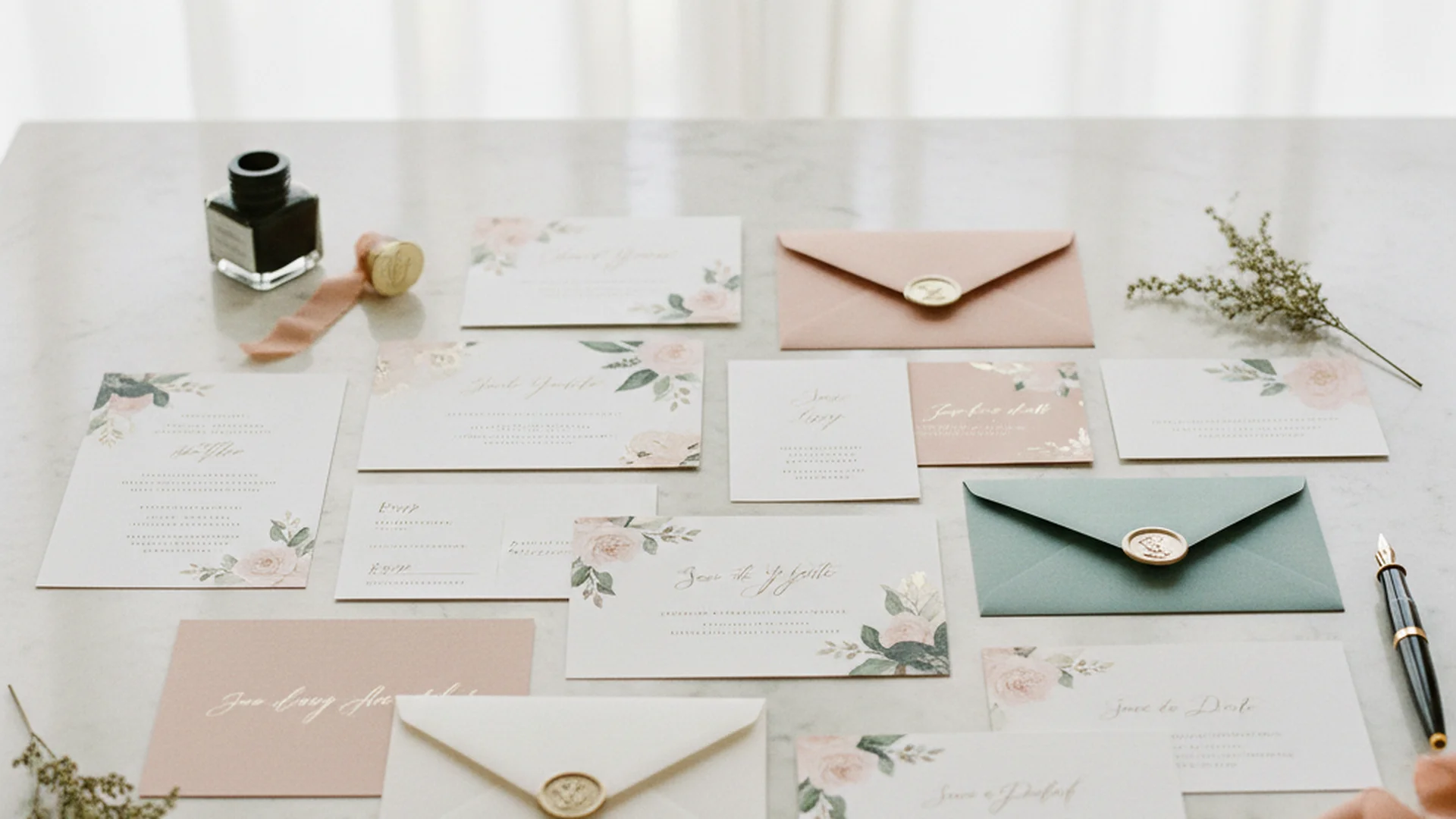
- Not ordering extras: Order a few more invitations than your list requires, for mailing mistakes, last-minute additions and your photographer's flat-lay detail shots.
- Ignoring postage weight: Before you buy stamps for every invitation, take a fully assembled one to the post office. Heavy cardstock, wax seals and ribbons can push an invitation over the standard letter weight and need extra postage.
- Cluttering the main card: Don't try to fit the hotel address, the brunch schedule and driving directions on the main card. Use a details card or your wedding website to keep the invitation clean. The free OurVows plan includes a published wedding website you can use for this.
Frequently Asked Questions
When should I send my invitations?
A common guideline is six to eight weeks before the wedding. For destination weddings, aim for three to four months ahead so guests can plan travel.
Should I include the dress code on the invitation?
Yes, usually in the lower corner of the invitation or on the details card. Use clear terms like "Black Tie," "Cocktail Attire" or "Festive," and avoid vague ones like "Dress to Impress," which can confuse guests.
Do I need to send an invitation to my officiant or photographer?
Vendors don't need invitations. It is a courtesy to invite your officiant and their spouse, but there is no obligation. Some couples give their photographer a spare invitation suite to use in detail photos on the day.
How do I handle plus-ones on the invitation?
If a guest has a plus-one, address the envelope to them "and Guest." If you know their partner's name, use it instead.
What is the most common mistake with RSVP dates?
Setting the deadline too close to your caterer's final headcount date. Give yourself at least a week to chase late responders before your numbers are due.
Replies that file themselves
Guests find their invitation by name and answer for each event. Plus emails everyone from OurVows and chases only the ones who haven't answered.