Mastering the Details: The Ultimate Groom Accessories Guide for 2025 & 2026
Elevate your wedding style with our Groom Accessories Guide. Discover 2025 trends, metal matching rules, and how to coordinate perfectly with the bride.
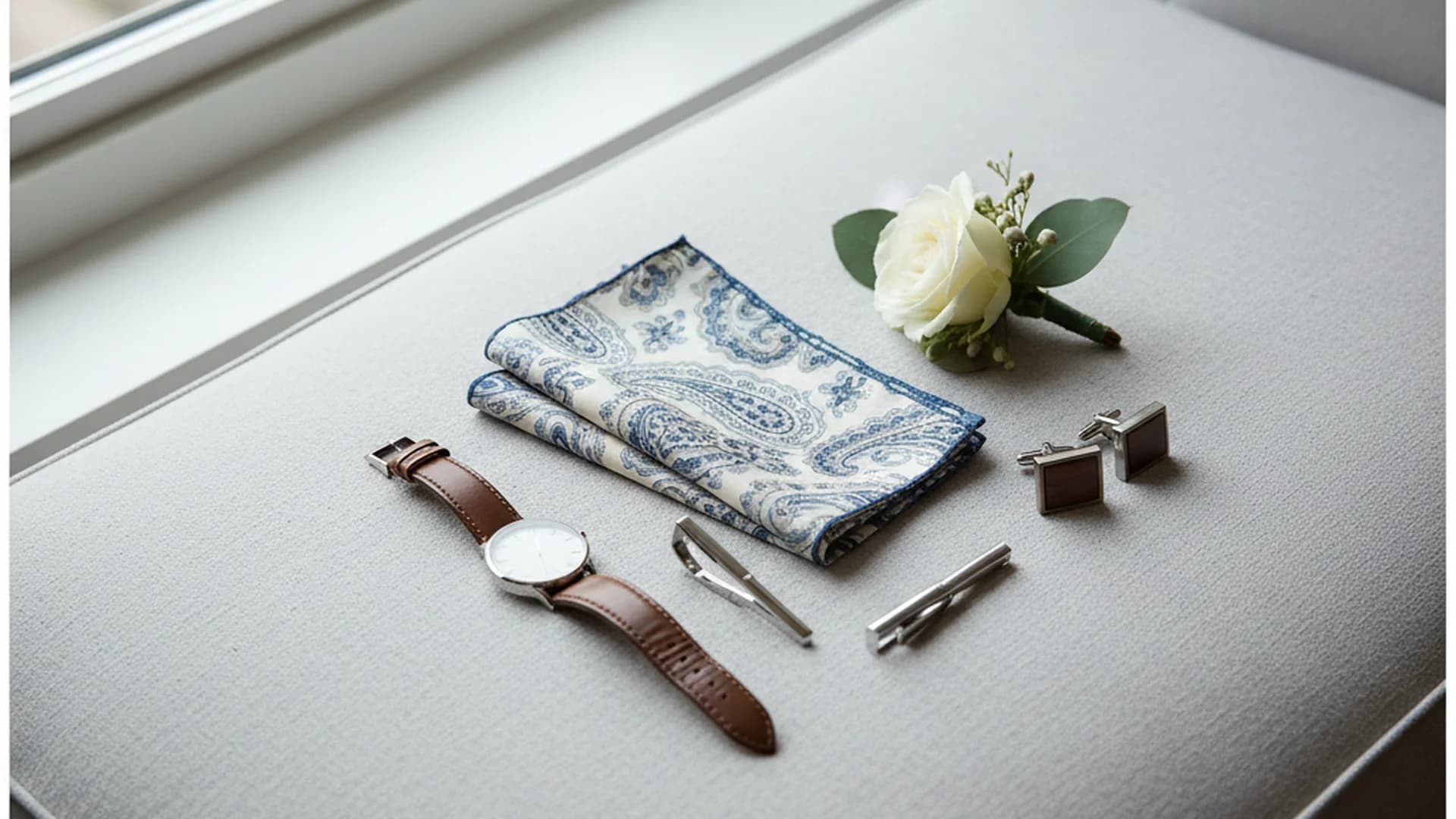
- Coordination is about complementing, not matching perfectly.
- The 'Rule of Two' prevents accessory clutter.
- Custom accessories require a 4-6 week lead time.
For decades, the groom was essentially the high-fashion equivalent of a background extra—a human prop in a generic black box, standing slightly to the left of the main event. But the times, they are a-changin'. As we move into the 2025 and 2026 wedding seasons, the spotlight is shifting. This Groom Accessories Guide is designed to help you navigate a world where men’s wedding attire is no longer an afterthought, but a statement of personality, heritage, and sharp sartorial wit.
Whether you are aiming for a classic black-tie look or a whimsical garden party vibe, the difference between "guy in a suit" and "man of the hour" lies entirely in the details. Accessories are the punctuation marks of your outfit; without them, your style is just a long, run-on sentence.
The Philosophy of Personalization
The global wedding attire market is projected to reach over $64 billion by 2025, and a significant portion of that growth is driven by grooms who are finally investing in their own "wow" factor. We are seeing a marked rise in demand for premium accessories like custom turbans, embroidered footwear, and bespoke pocket squares.
Modern couples are moving away from the "copy-paste" wedding aesthetic. Instead, a growing number of grooms now opt for color-coordinated attire that intentionally complements the bride’s outfit rather than just wearing a standard navy or black suit. To get your foundation right before diving into the small details, check out our Complete Guide to Wedding Attire.
Fit Over Brand: The Golden Rule
Before you spend a dime on a designer silk tie, remember this: A $500 suit with $200 of expert tailoring will always look better than a $3,000 designer suit that doesn't fit perfectly. Accessories can enhance a look, but they cannot hide a poor fit. Ensure your sleeves hit just above the wrist bone to show off your cufflinks, and your trousers have a clean "break" over your shoes.
Tip
Neckwear: The Bow Tie vs. The Necktie
One of the most frequent questions we receive is whether a groom should opt for a bow tie or a standard necktie. The answer almost always boils down to the dress code and the "vibe" of the venue.
When to Choose a Bow Tie
If your invitation says "Black Tie" or "Formal," the bow tie is non-negotiable. For a tuxedo, a black silk or satin bow tie is the gold standard. However, for 2025, we are seeing a surge in velvet bow ties for winter weddings, adding a layer of rich texture that looks incredible in photography.
When to Choose a Necktie
Semi-formal, "cocktail attire," or outdoor weddings allow for more flexibility. A necktie offers a canvas for patterns and textures. For a summer wedding, a knit or linen tie in a pastel shade is a sophisticated choice. If you're looking for color inspiration, our guide on the Best Groom Suit Colors can help you pair your tie perfectly.
Note
The "Rule of Two" and Metal Matching
Celebrity stylists often live by the "Rule of Two" when it comes to the lapel area. This means choosing between a boutonniere or a pocket square. While you can wear both, doing so risks looking cluttered, especially if both are highly decorative.
If you are committed to wearing both, follow this expert recommendation: keep the pocket square a solid, neutral color (like white or cream) to let the floral piece shine. This prevents the "busy" look that often ruins wedding portraits.
Consistency in Metals
One of the easiest ways to spot a well-dressed man is by his metals. Your watch, cufflinks, tie bar, and belt buckle should all share the same metal tone.
- Silver/Platinum: Best for cool-toned suits (Navy, Grey, Black).
- Gold/Rose Gold: Best for warm-toned suits (Tan, Emerald, Terracotta).
Do this
Footwear and the Foundation
Shoes are the literal foundation of your wedding day. While rubber-soled shoes are comfortable for the office, they are often avoided for formal weddings because they can squeak on dance floors and lack the sleek profile of leather soles.
| Feature | Formal Leather Sole | Modern Vegan/Rubber |
|---|---|---|
| Aesthetics | High-shine, slim profile | Matte or textured |
| Durability | Can be resoled for life | Generally shorter lifespan |
| Occasion | Black Tie, Traditional | Beach, Casual, Boho |
| Comfort | Requires break-in period | Instant comfort |
Heads up
From the OurVows workspace
Planning a wedding is a lot. We make it feel like less.
Checklist, budget, guest list, and a wedding website — together in one free workspace built for both of you.
Trends for the 2025–2026 Seasons
If you want your wedding photos to look "timeless yet trendy," pay attention to these shifts in the market. The next two years are all about texture and bold personality.
1. The Floral Lapel
In 2026, many grooms are ditching the traditional small boutonniere for a full-lapel floral arrangement. This mimics a mini-bouquet that trails down the lapel, adding a romantic and whimsical touch. It is particularly popular for "Boho" or garden-themed weddings.
2. Bold Color Palettes
The era of "any color as long as it's navy" is over. Grooms are increasingly opting for:
- Emerald Green: Perfect for forest weddings.
- Deep Terracotta: Ideal for desert or autumn settings.
- Dusted Lavender: A breakout star for 2026 spring weddings.
3. Sustainability and Eco-Conscious Choices
The "Green Wedding" is no longer a niche. Grooms are choosing accessories made from organic silk, bamboo, or recycled fabrics. Vegan leather shoes—made from pineapple or apple leather—are seeing a massive surge in popularity as quality improves.
4. Vintage Revival
The "Old Money" aesthetic is bringing back the pocket watch, high-waisted trousers with cummerbund sashes, and classic collar pins. These items add a sense of heritage and gravity to the groom's attire.
Common Mistakes to Avoid
Even the most expensive suit can be undermined by simple errors. As you follow this Groom Accessories Guide, keep these pitfalls in mind.
The "Belt + Suspenders" Blunder
This is perhaps the biggest fashion faux pas in men’s formalwear. Both belts and suspenders serve the same purpose: keeping your pants up. Wearing both is redundant and visually distracting.
- Tuxedos: Never wear a belt. Tuxedo trousers are designed without belt loops; use side adjusters or suspenders.
- Suits: Choose one or the other based on the formalness of the event.
Procrastination on Custom Items
Many grooms wait until the final month to think about accessories. However, custom cufflinks, engraved watches, or bespoke shoes can take 4–6 weeks to order. If you're on a tight timeline, make sure to check your 1 Month Before Wedding Checklist to see what else needs to be finalized.
The "One Day" Myth
Many grooms believe renting is the most logical choice because they "only need it for one day." However, experts argue that a wedding is the best time to invest in a high-quality, tailored suit. By simply changing the accessories—switching a silk tie for a knit one, or leather oxfords for loafers—you can wear that suit to other events for years to come.
Frequently asked questions
Should I wear a necktie or a bow tie?
Do I have to match my groomsmen exactly?
How do I coordinate with the bride without clashing?
Can I wear a belt with a tuxedo?
Conclusion
Your wedding day is one of the few times in life where you are encouraged to be the most polished version of yourself. By following this Groom Accessories Guide, you aren't just "getting dressed"—you are curate a look that reflects your style and respects the occasion. Remember, the best accessory you can wear is confidence (and a properly folded pocket square).
Do this
Ready when you are
Planning your timeline?
Stay on track with our expert planning tools.
Ready when you are
Plan your wedding without the chaos.
Free forever for couples just getting started. Two minutes to set up. No credit card.
Keep reading
The Best Groom Suit Colors for 2025 & 2026: A Complete Guide
Explore the best groom suit colors for 2025-2026. From classic navy to trendy earth tones, find the perfect look for your wedding style and venue.
Flower Girl Dress Ideas: The Ultimate Guide for 2025 and 2026
Discover the top flower girl dress ideas for 2025–2026. From vintage revivals to 3D florals, find the perfect, comfortable look for your littlest bridal party members.
The Ultimate Bridesmaid Dress Guide: Trends and Tips for 2025–2026
Navigate the world of bridesmaid fashion with our 2025–2026 Bridesmaid Dress Guide. Learn about top trends, sizing secrets, and etiquette to keep your party happy.