DIY Wedding Place Cards: The Ultimate Guide to Personalized Table Decor
Discover how to create stunning DIY wedding place cards for 2025-2026. Learn about cost-saving tips, the latest trends like 'Cloud Dancer,' and expert design rules.
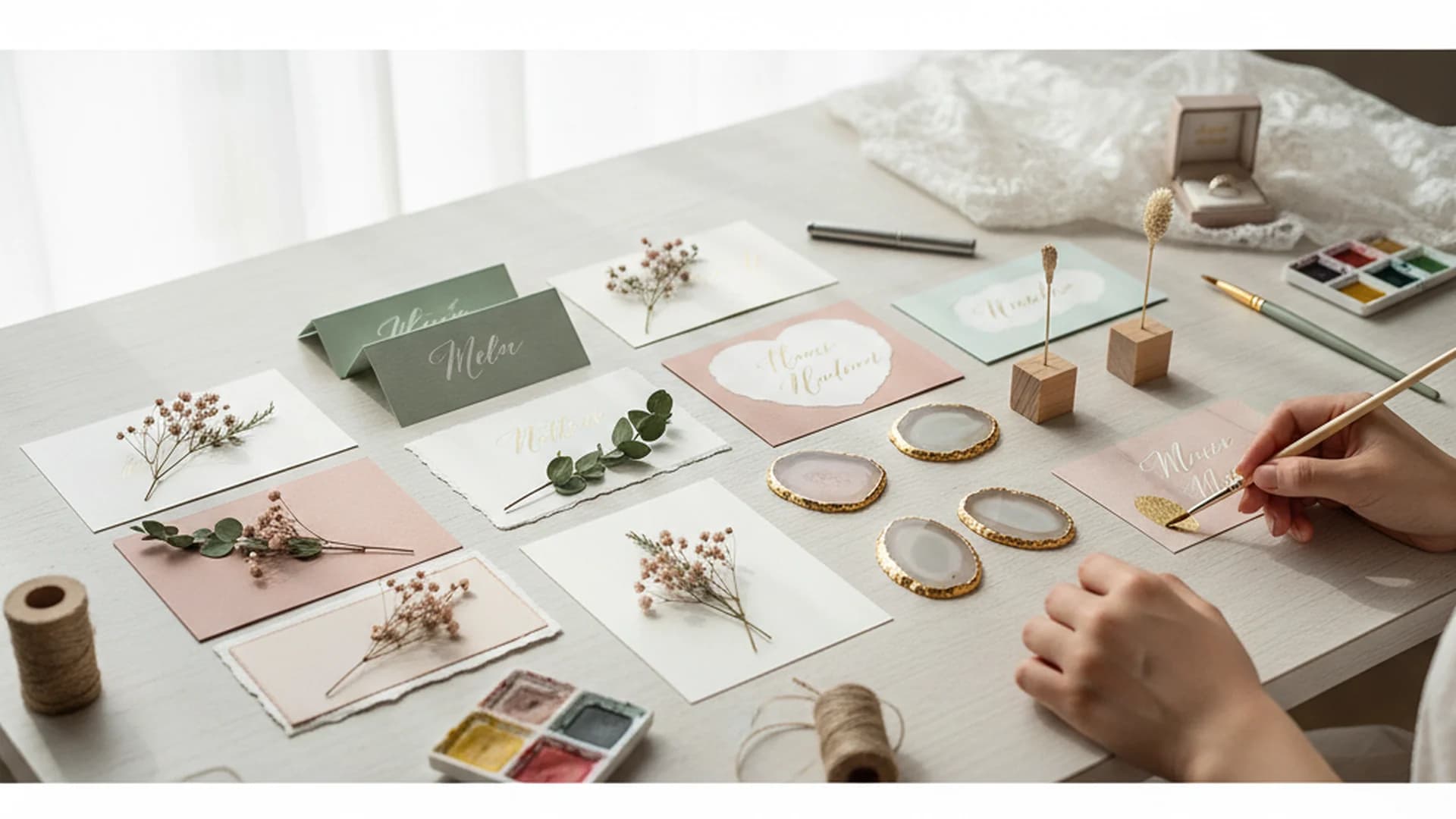
- DIY place cards can save couples up to 90% compared to professional calligraphy services.
- Follow the 'Longest Name Rule' and '20% Rule' to ensure a smooth production process.
- Trending aesthetics for 2025 focus on 'Cloud Dancer' neutrals and 'Coquette' bow motifs.
In the world of modern wedding planning, the small details often speak the loudest. As couples navigate the "Digital Paradox"—opting for electronic invitations to save on postage while reallocating those funds into high-end, tactile "day-of" stationery—the humble place card has seen a massive resurgence. Creating DIY wedding place cards is no longer just a way to save money; it is a way to infuse your reception with your unique personality and provide guests with a tangible keepsake of your union.
Whether you are hosting an intimate garden gathering or a grand ballroom affair, the way you guide your guests to their seats sets the tone for the entire evening. This guide will walk you through everything you need to know to create professional-looking place cards that balance elegance with budget-friendly practicality.
Why DIY Wedding Place Cards are Trending for 2025
The global wedding stationery market is projected to reach nearly $1 billion by 2025. While digital tools have simplified many aspects of planning, there is a growing craving for physical, handmade elements. Many couples now use place cards as a vital part of their reception decor.
The financial incentive is also significant. Professional calligraphy can cost anywhere from $1.50 to $7.00 per card. For a wedding of 150 guests, that is an investment of over $1,000 just for seating. By opting for a DIY approach, you can lower that cost to under $0.70 per card, allowing you to spend more on other areas like your DIY Wedding Centerpieces or a DIY Wedding Photo Booth.
Place Cards vs. Escort Cards: Knowing the Difference
Before you begin your crafting journey, it is essential to understand the logistics of wedding seating. Many couples use these terms interchangeably, but they serve two distinct functions.
The Escort Card
An escort card is typically found at the entrance of the reception. It tells the guest which table they have been assigned to. These are usually arranged alphabetically to prevent a bottleneck at the door.
The Place Card
A place card is found at the specific table. It tells the guest exactly which seat is theirs. Place cards are highly recommended for any event with more than 20 guests or any wedding serving a plated meal. They help waitstaff identify where to place the vegetarian, fish, or beef options without interrupting the conversation.
Tip
Essential Best Practices for DIY Success
Creating 100+ individual items can be daunting. To avoid late-night crafting "emergencies" the week of your wedding, follow these expert recommendations.
The "Longest Name" Rule
Before you settle on a font size or card width, find the guest with the longest name on your list (e.g., "Christopher Montgomery-Smith"). Test your design with this name first. If it fits comfortably, the rest of your list will look great. If you design around a short name like "Ava Lee," you will find yourself frantically shrinking fonts later on.
The 20% Rule
Human error is inevitable, and last-minute RSVP changes are a wedding tradition. Always prepare 20% more blank cards than your final guest count. This allows for ink smudges, spelling mistakes, or "plus-one" additions that happen just days before the ceremony.
Paper Weight Matters
If you are creating traditional "tent" cards that stand on their own, paper weight is your best friend.
- Ideal Weight: 80lb (216gsm) cardstock.
- The Risk: Anything heavier than 100lb may crack at the fold without a professional scoring tool. Anything lighter than 65lb may collapse or blow away if a guest walks by.
Legibility over Artistry
While loopy, intricate scripts look beautiful on Pinterest, they can be a nightmare for guests—especially older relatives—to read in a dimly lit reception hall. Ensure the guest's name is readable from 2 to 3 feet away. Save the complex calligraphy for decorative headers like "Table Number" or your wedding monogram.
Heads up
Upcoming Trends for 2025–2026
If you want your DIY Wedding Decorations to feel modern, keep an eye on these emerging trends for the 2025 and 2026 seasons.
The "Cloud Dancer" Palette
Moving away from stark "stark white," 2025 is the year of Cloud Dancer—a soft, grey-toned white that feels more organic and high-end. Other trending colors for 2026 include rich cocoa, electric tangerine, and deep cerulean.
The "Coquette" Influence
The "Coquette" aesthetic is bringing bows back in a big way. We are seeing place cards tied to linen napkins with long, trailing velvet ribbons or cards featuring delicate hand-drawn bow motifs. This adds a romantic, vintage feel to the table setting.
Tactile Textures and Organic Shapes
Flat cardstock is being replaced by materials that offer a sensory experience. Consider:
- Handmade Cotton Rag Paper: Features a soft, "deckled" (torn) edge.
- Translucent Vellum: Layered over a colored card and secured with a wax seal.
- Organic Shapes: Scalloped edges, seashells for coastal weddings, and crescent moons for celestial themes are replacing the standard rectangle.
From the OurVows workspace
Planning a wedding is a lot. We make it feel like less.
Checklist, budget, guest list, and a wedding website — together in one free workspace built for both of you.
3 Real-World DIY Examples
To help you get started, here are three popular DIY approaches that range in style and complexity.
1. The Classic Deckled Edge (Minimalist Elegance)
This style uses high-quality paper to do the heavy lifting. Purchase handmade cotton rag paper. Instead of cutting it with a paper trimmer, use a "hand-tearing" technique against a metal ruler to create a feathered, deckled edge. Use a simple, elegant serif font printed via a home printer or hand-written with a fine-tip black pen.
2. The Interactive Keepsake (Agate or Stone)
For a wedding that doubles as a favor, use small agate slices or smooth river stones. Use a white or gold paint pen to write names directly on the surface. This is perfect for outdoor weddings where paper cards might blow away.
3. The Vellum & Ribbon Layer (Modern Romantic)
Print guest names on translucent vellum paper. Cut the vellum into strips and layer them over a piece of cardstock in your wedding's primary color. Punch a small hole in the corner and tie them together with a thin velvet ribbon or a piece of twine.
| Material Type | Estimated Cost | Best For |
|---|---|---|
| Standard Cardstock | $0.05/card | Traditional/Formal |
| Vellum & Wax Seal | $0.35/card | Romantic/Modern |
| Agate/Stone | $0.75/card | Boho/Outdoor |
| Acrylic | $1.20/card | Glamorous/Minimalist |
Note
Common Mistakes to Avoid
Even the most prepared DIY-er can run into trouble. Here are the most frequent pitfalls I see as a ceremony designer.
- Ignoring the Venue Environment: I once saw a beautiful beach wedding where the couple used lightweight paper cards. Within ten minutes of the reception starting, half the cards were in the ocean. Always match your material to your environment.
- Over-Complicating the Design: A "busy" card with a large logo, floral borders, and calligraphy can be hard to read. Remember: the guest's name should be the focal point.
- Starting Too Late: Many couples wait until the week of the wedding. However, you should start as soon as your RSVP deadline passes—usually 4–6 weeks before the big day. This gives you time to manage the "20% Rule" and fix errors.
- Skipping the Seating Chart: Having place cards at the table does not replace the need for an escort card or seating chart at the entrance. Without a guide at the door, guests will wander from table to table searching for their name, causing chaos.
Frequently asked questions
Are place cards actually necessary?
Should I use full names or just first names?
Do I need a Cricut to make nice cards?
How do I indicate meal choices?
Conclusion
DIY wedding place cards are a beautiful way to marry tradition with personal creativity. By focusing on legibility, choosing the right materials, and staying ahead of your timeline, you can create a seating experience that feels intentional and welcoming. Remember, these cards are more than just paper; they are a guest’s first "hello" when they sit down to celebrate your new life together.
As you finalize your table settings, don't forget to check your overall progress with our 1 Month Before Wedding Checklist to ensure every detail is in place.
Do this
Ready when you are
Ready to Start?
Organize your guest list and calculate your final needs today.
Ready when you are
Plan your wedding without the chaos.
Free forever for couples just getting started. Two minutes to set up. No credit card.
Keep reading

Complete Guide to DIY Wedding Aisle Decorations: Trends, Costs, and Logistics
Learn how to design stunning DIY wedding aisle decorations. From flower math to 2026 trends, our expert guide covers costs, safety, and sustainable styling.
What to DIY for Wedding: The Savvy Couple’s Guide to 2025/2026 Trends
Wondering what to DIY for wedding celebrations this year? Discover the best projects, cost-saving stats, and 2026 trends to personalize your big day without the stress.
Creative DIY Wedding Reception Ideas for 2025-2026
Explore the top DIY wedding reception ideas for 2025 and 2026. From meadowcore centerpieces to sustainable decor, learn how to style your big day on a budget.