The Ultimate Guide to Wedding Flowers by Season: Trends for 2025-2026
Maximize your budget and style with our guide to wedding flowers by season. Discover 2025-2026 trends, seasonal availability, and expert cost-saving tips.
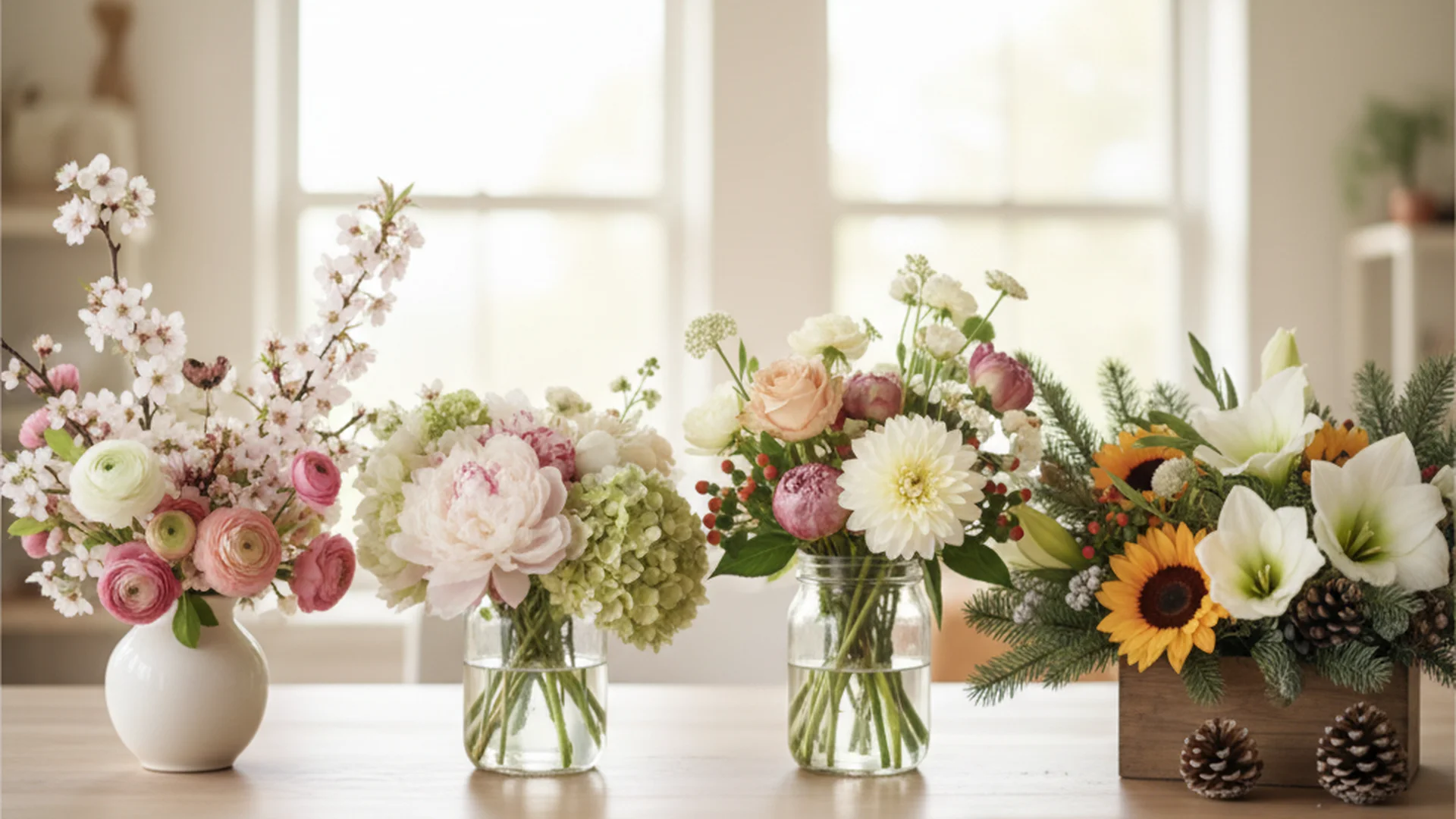
- Choosing seasonal blooms can reduce your floral carbon footprint by up to 90%.
- Allocate 8-10% of your total budget to flowers for a balanced aesthetic.
- The 2026 "edible aesthetic" trend integrates fruits and vegetables into floral designs.
Let’s be honest: choosing your wedding flowers is essentially the most expensive game of "Keep Away" you will ever play. You’re trying to keep the blooms alive, keep the budget from exploding, and keep your mother-in-law from suggesting you use "just a few silk carnations" from her craft bin. When it comes to planning your aesthetic, understanding wedding flowers by season is the single most important factor in whether you end up with a lush garden paradise or a collection of wilted stems that look like they’ve just run a marathon in a desert.
As we look toward the 2025 and 2026 wedding seasons, the shift is moving away from the "import everything at any cost" mentality. Modern couples are embracing "hyperseasonal" sourcing—a fancy way of saying we’re actually paying attention to what the earth is naturally producing at the time of your "I dos."
The Financials of Floral Design
Before we dive into the petals and pollen, we need to talk about the "B-word": Budget. According to recent data for 2025, the average couple spends roughly $2,200 on their floral arrangements. However, this is a broad spectrum. If you are following a $20000 Wedding Budget, your floral spend might sit closer to $2,000, whereas a luxury affair will see that number skyrocket.
Expert florists generally recommend allocating 8% to 10% of your total wedding budget to floral design. This ensures you cover the essentials—bouquets, boutonnieres, and centerpieces—without sacrificing the quality of the blooms.
Tip
Spring: The Season of Modern Romance
Spring is the undisputed heavyweight champion of the floral world. This is the era of the Peony, the Sweet Pea, and the Ranunculus. If your "vibe" is soft, citrusy, or pastel, this is your time to shine.
Key Spring Blooms
- Peonies: The "Prom Queen" of wedding flowers. They are lush, fragrant, and notoriously expensive outside of their May-June peak.
- Sweet Peas: Perfect for adding a delicate, ruffling texture and an incredible scent to bouquets.
- Tulips: Specifically "Parrot" or "Double" tulips, which look more like peonies than the standard grocery store variety.
- Lilacs: These offer a fleeting but high-impact visual and olfactory experience.
Heads up
Real-World Example: The Monofloral Spring Look
In 2025, we are seeing a rise in "Monofloral Magic." Imagine a reception where every single table features only white tulips, but in massive, varying heights. It creates a sculptural, modern look that is often more cost-effective than a mixed bouquet because your florist can buy in bulk from a single local grower.
Summer: Vibrant Hues and Heat Resistance
Summer weddings are gorgeous, but they are also a biological battlefield for flowers. The primary challenge is hydration. If you’re planning a July outdoor ceremony, your flowers need to be tougher than a piece of overcooked steak.
Key Summer Blooms
- Dahlias: The stars of the late summer. They come in every color imaginable, from "Cafe au Lait" (a creamy peach) to deep burgundies.
- Zinnias: Extremely heat-resistant and available in vibrant, "sunset" hues.
- Sunflowers: Not just for rustic weddings anymore; mini-sunflowers are being used in sophisticated, modern ways.
- Tropicals: Anthuriums and Orchids are the ultimate heat-warriors. They can sit in the sun for hours without drooping.
Note
Autumn: Jewel Tones and Edible Aesthetics
Autumn is no longer just about orange pumpkins and hay bales. The 2025-2026 trend for fall is "Moody Elegance." We are seeing deep jewel tones—emerald, plum, and navy—paired with earthy rusts.
Key Autumn Blooms
- Chrysanthemums: Forget the "cheap" grocery store associations; "Heirloom" mums are large, multi-petaled, and stunning.
- Marigolds: Perfect for adding a pop of saturated gold.
- Amaranthus: These "dripping" flowers add drama and movement to large installations.
- Dried Grasses: Pampas grass is taking a backseat to more delicate dried textures like bleached ferns.
The "Edible Aesthetic" Trend
One of the most exciting trends for 2026 is the integration of fruits and vegetables into floral scapes. Think clusters of dark grapes spilling out of a centerpiece, sliced pomegranates revealing their seeds, or even ornamental kale. It adds a "Dutch Still Life" painting vibe to your tables. For more on this style, check out our Fall Wedding Flowers guide.
From the OurVows workspace
Planning a wedding is a lot. We make it feel like less.
Checklist, budget, guest list, and a wedding website — together in one free workspace built for both of you.
Winter: Velvet Textures and Architectural White
Winter weddings offer a unique opportunity to play with contrast. While the local flower fields might be dormant, the "Winter Wonderland" aesthetic relies on evergreen textures, berries, and high-end imports like Amaryllis.
Key Winter Blooms
- Amaryllis: Massive, trumpet-shaped flowers that command attention.
- Hellebores: Also known as "Lenten Roses," these have a beautiful, "dusty" color palette.
- Anemones: Specifically the white variety with dark black centers—perfect for a "Black Tie" aesthetic.
- Evergreens & Berries: Pine, cedar, and ilex berries provide the structural backbone of winter designs.
Do this
2025-2026 Floral Trend Report
The floral industry is evolving rapidly. If you want your wedding to feel current, consider these emerging concepts:
| Trend | Description | Impact |
|---|---|---|
| Sunken Meadows | Grounded arrangements that look like they are growing out of the floor. | Immersive, Garden-like |
| Airy Bouquets | Asymmetrical shapes with "negative space" between blooms. | Organic, Modern |
| Fruit Fusion | Integrating grapes, citrus, and artichokes into centerpieces. | Textural, Edible |
| Monofloral | Using only one type of flower for the entire event. | Bold, Sculptural |
The "Color-First" Approach
Expert florists are increasingly asking couples for a "color palette" rather than a "flower list." This is a game-changer for your budget. By giving your florist the freedom to choose what looks best at the market that morning within your color range, you often get higher-quality blooms for a lower price.
Common Mistakes to Avoid
Even with a perfect plan for your wedding flowers by season, things can go sideways. Here are the pitfalls most couples fall into:
1. The "Greenery is Cheaper" Myth
Many couples think they can save money by doing "all greenery" garlands. In reality, a high-quality Eucalyptus garland requires a massive amount of labor and a surprising number of stems. Sometimes, a simple floral arrangement is actually more budget-friendly. Refer to our Eucalyptus Wedding Greenery guide to see how to use it effectively.
2. DIY-ing the Morning Of
Unless you are a trained florist, do not try to assemble your centerpieces on the morning of your wedding. Flowers require "processing"—stripping thorns, cutting stems at 45-degree angles, and proper hydration. The stress of a wilting bouquet is not what you want while you're getting your hair done. If you must go the DIY route, consult our DIY Wedding Flowers Guide for a realistic timeline.
3. Ignoring the Scent
Some flowers, like Paperwhites or certain Lilies, have an incredibly polarizing scent. In a confined reception space, a "fragrant" centerpiece can quickly become an "overpowering" one, potentially bothering guests with allergies or sensitivities. Use scented flowers for your personal bouquet and keep the dinner tables neutral.
4. Forgetting to Repurpose
One of the best ways to maximize your floral investment is to "repurpose with intent." Don't just move a flower arrangement; design it to be moved. A "meadow" used at the base of your ceremony altar can be easily relocated to the front of your sweetheart table or the base of the cake display.
Frequently asked questions
Can I get peonies in the fall?
Is $5,000 enough for a "Pinterest-style" wedding?
What flowers last longest in summer heat?
Are silk flowers cheaper than real flowers?
Conclusion
Choosing your wedding flowers by season is the most effective way to ensure your celebration looks spectacular without draining your bank account or harming the environment. Whether you’re leaning into the "Sunken Meadow" trend of 2025 or the "Edible Aesthetic" of 2026, the key is to trust your florist and the natural rhythm of the year.
By prioritizing local, in-season blooms, you aren't just getting flowers that are fresher and more fragrant—you're telling a story of the specific time and place where you chose to start your lives together. For a deeper dive into overall floral planning, explore our Complete Guide to Wedding Flowers and Decor.
Do this
Ready when you are
Plan Your Dream Wedding
Ready to align your budget with your floral dreams? Use our Wedding Budget Calculator to get started.
Ready when you are
Plan your wedding without the chaos.
Free forever for couples just getting started. Two minutes to set up. No credit card.
Keep reading
25+ Creative Wedding Sign Ideas for a Seamless 2025-2026 Celebration
Elevate your big day with these trending wedding sign ideas. From QR codes and 3D acrylic to budget-friendly DIY tips, ensure your guests have a perfect experience.
2025-2026 Winter Wedding Flowers Guide: Trends, Hardiness, and Sophisticated Palettes
Master the art of choosing winter wedding flowers. Explore 2026 trends like Amaranthus and "Subzero Sophistication" while learning how to protect blooms from frost.
Stunning Wedding Arch Flower Ideas for 2025 and 2026
Explore the latest wedding arch flower ideas, from grounded meadow arches to sustainable foam-free designs. Learn about costs, trends, and expert tips for 2025-2026.