Modern Wedding Ceremony Script Examples: A Guide for 2025-2026
Explore modern wedding ceremony script examples, from secular to traditional. Learn about 2025-2026 trends like introverted I do's and non-linear timelines.
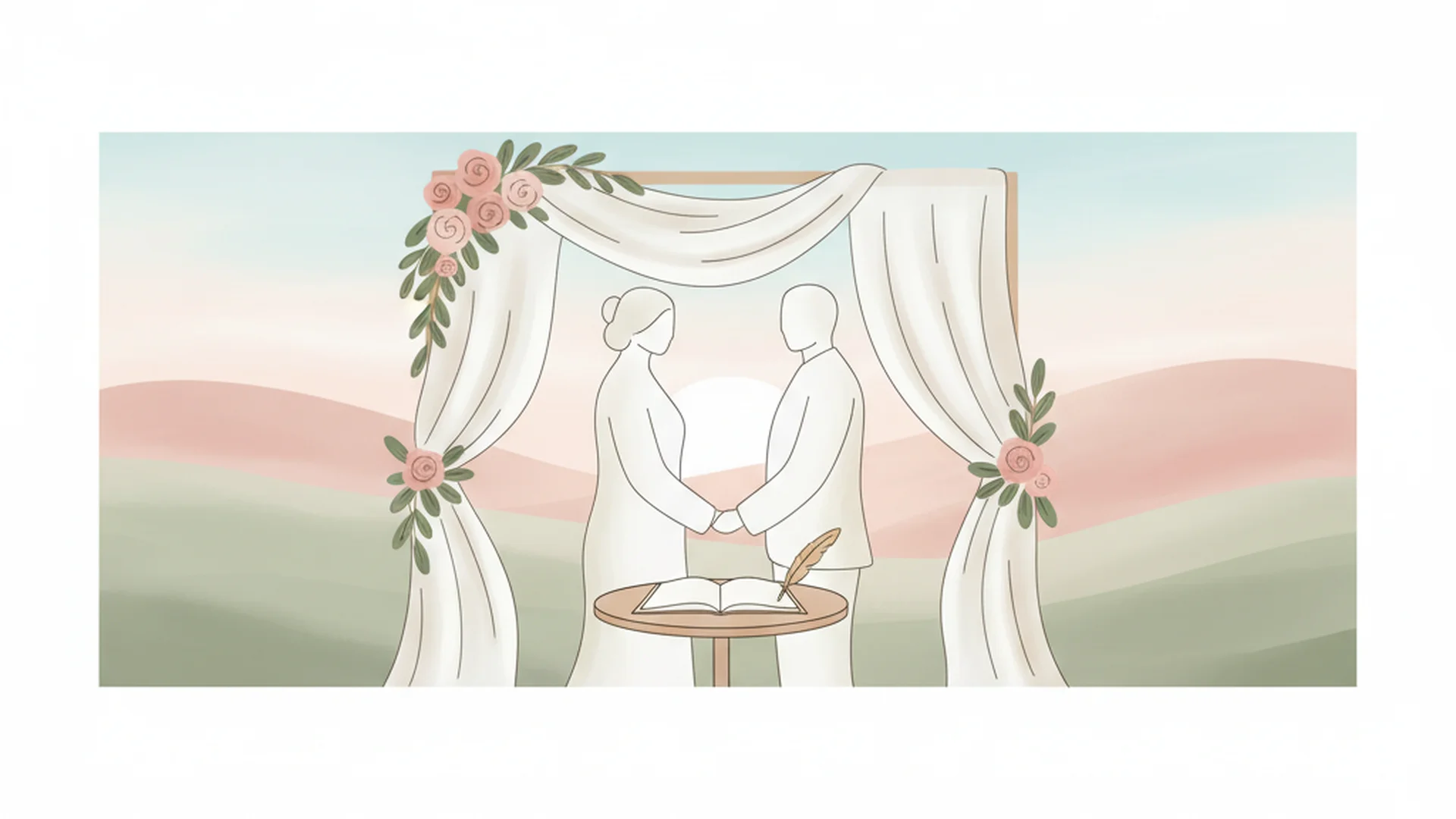
- Secular weddings now account for a large share of modern ceremonies.
- The ideal ceremony length is 20–30 minutes to maintain guest engagement.
- Trends for 2025 include private vow exchanges and "Meadowcore" aisle designs.
Your wedding ceremony is the heartbeat of your big day. While the reception is where the party happens, the ceremony is where the actual transformation occurs—the moment you transition from "me" to "we." Finding the perfect wedding ceremony script examples is the first step in ensuring this moment feels authentic, personal, and reflective of your unique relationship.
In my work as a relationship counselor, I’ve seen how the words spoken at the altar set the tone for the marriage to follow. Today, couples are moving away from rigid, cookie-cutter templates in favor of ceremonies that celebrate their specific narrative. Whether you are planning a secular celebration, a cultural fusion, or a short and sweet civil union, this guide provides the structure and inspiration you need for the 2025–2026 wedding seasons.
The Anatomy of a Modern Wedding Ceremony Script
A standard wedding ceremony usually follows a specific flow. While you can certainly "remix" these elements, understanding the basic structure helps ensure the event feels cohesive and legally sound.
- The Processional: The entrance of the wedding party and the couple.
- The Welcome/Opening Remarks: The officiant greets the guests and sets the tone.
- The Readings: A selection of poetry, literature, or religious texts.
- The Officiant’s Address: A short reflection on love and the couple's journey.
- The Declaration of Intent: The legal "I Do's."
- The Vows: The personal promises made between the couple.
- The Ring Exchange: The symbolic sealing of the vows.
- The Pronouncement: The officiant officially declares the couple married.
- The Recessional: The exit of the newly married couple.
Tip
Wedding Ceremony Script Trends for 2025–2026
As we look toward the upcoming wedding seasons, several distinct shifts are changing how ceremonies are written and performed.
Introverted "I Do's"
For many couples, the idea of pouring their heart out in front of 150 guests is more terrifying than romantic. A rising trend for 2025 is the "Introverted I Do." Couples read their deeply personal, long-form vows to each other privately during a "First Look" or a quiet moment before the ceremony. During the public ceremony, they exchange shorter, more traditional vows or simply the legal declaration of intent.
Non-Linear Timelines
Gen Z is increasingly "flipping the script" on the traditional wedding day order. We are seeing more ceremonies that break the rules, such as:
- The Champagne Toast Opening: Guests are greeted with a glass of bubbly, and the officiant leads a "Unity Toast" to start the ceremony.
- The Cocktail Hour First: Hosting the social hour before the ceremony allows guests to settle in and reduces the pressure on the couple to rush through photos.
Sustainable and Natural Rituals
"Meadowcore" is the aesthetic of the moment. This involves circular seating arrangements and "serpentine" aisles lined with floral installations that look like they grew directly out of the venue floor. Alongside this, "Sustainable Rituals" are replacing old traditions. Instead of a unity candle (which produces wax waste), couples are opting to plant a tree together using soil from their respective childhood homes.
Note
Example 1: The Modern Secular Script
This script is ideal for the many couples choosing a non-religious ceremony. It focuses on the human connection and the couple’s personal story.
Opening Remarks: "Welcome, family and friends. We are gathered here today to celebrate the love between [Name] and [Name]. Love is not just a feeling; it is a choice you make every single day. Today, we witness the moment that choice becomes a lifelong commitment."
The Vows: "[Name], I take you as you are. I promise to grow with you, to laugh with you, and to be your safe harbor when the world feels loud. I choose you today, and I will choose you every day for the rest of our lives."
The Pronouncement: "By the power vested in me, and more importantly, by the love you have shared here today, I now pronounce you partners for life. You may seal this promise with a kiss!"
Do this
Example 2: The Tradition-Infused Script (Religious or Cultural)
Even within traditional frameworks, there is room for personalization. This example blends classic elements with modern sentiment.
The Reading: Include a selection from a text that resonates with your heritage. For many, this includes Bible Readings for Weddings that focus on the endurance of love.
The Unity Ritual: "As [Name] and [Name] join their lives, they also join their histories. Today they perform a [Handfasting/Breaking of the Glass/Tea Ceremony], a tradition that honors those who came before them and the future they build together."
The Blessing: "May your home be a place of peace. May your hearts stay open to one another. May you find strength in your faith and joy in your union."
From the OurVows workspace
Shaping your ceremony?
Draft your vows and ceremony, then keep the whole day organized in one place.
Example 3: The Short & Sweet "Minimony" Script
Perfect for elopements or couples who want to get straight to the party. This script clocks in at about 10–12 minutes.
| Section | Content | Estimated Time |
|---|---|---|
| Welcome | Brief greeting and "unplugged" reminder. | 2 min |
| Intent | The "Do you take..." legal requirements. | 2 min |
| Vows | Short, 3-sentence personal promises. | 3 min |
| Rings | Simple exchange of rings. | 2 min |
| Exit | Pronouncement and joyous recessional. | 1 min |
Heads up
Pro-Tips for a Flawless Ceremony
Whether you are the couple or the officiant, these expert recommendations from the field will ensure the ceremony goes off without a hitch.
The "Photobomb" Rule
This is a crucial tip for officiants: Step out of the frame! Immediately after you say, "You may kiss," step to the side. This ensures the couple’s "First Kiss" photo features only them, not the officiant’s head hovering between them.
Mic Check Choreography
Outdoor weddings are notorious for wind interference. A lapel mic (clip-on) often picks up the rustle of clothes or wind gusts. Experts recommend a high-quality handheld microphone. The officiant should hold it for the couple during their vows to ensure every guest can hear those precious words.
Inclusive Language
Modern ceremonies should be welcoming to all. Replace gendered or ableist language:
- Instead of "Who gives this woman away?", use "Who supports this couple in their marriage?"
- Instead of "Please stand," use "Please rise as you are able."
Tip
Common Mistakes to Avoid
- The "Lecture" Trap: Officiants often feel the need to give a 15-minute sermon on the meaning of marriage. Guests aren't there for a lecture; they are there for a story. Keep the address focused on the couple’s unique journey.
- The Name Fumble: This is the most common (and embarrassing) mistake. Officiants should write names phonetically in their scripts. Even if you've known the couple for years, nerves can cause a slip-up.
- Underestimating the Transition: Make sure your script includes "stage directions" (e.g., [Wait for music to stop], [Direct guests to be seated]). Without these, there can be awkward silences.
- Ignoring the "Vibe Setting": Before the processional starts, the officiant should make a housekeeping announcement. Remind guests to silence phones and, if it's an "unplugged" wedding, to put away cameras.
Frequently asked questions
What are the legal requirements for a wedding script?
Can a friend officiate our wedding?
How long should each section of the script be?
- Welcome: 3–5 minutes
- Readings: 2–3 minutes each
- Officiant Address: 5 minutes
- Vows/Rings: 5 minutes total
Do we have to write our own vows?
Absolutely not. While many couples now prefer personalized vows, "repeat-after-me" or traditional vows are still perfectly acceptable. If you are stuck, you can blend the two: use traditional vows for the public ceremony and write each other a letter for the morning of the wedding.
How do we incorporate our children into the script?
As a blended family consultant, I recommend "Family Vows." After the couple exchanges rings, they can invite the children forward to share a promise of support and love as a new family unit. This makes the children feel like active participants rather than just observers.
Conclusion: Authenticity is Key
Your wedding ceremony script is the blueprint for one of the most significant moments of your life. Whether you follow a Complete Guide to Wedding Ceremonies or create something entirely new, the most important factor is authenticity. Don't say words because you feel you "have" to; say them because they ring true to your partnership.
By blending tradition with modern trends like introverted I do's or sustainable rituals, you create an experience that resonates not just with you, but with every guest in attendance.
Ready when you are
Ready to Start?
Use our professional tools to plan your perfect day.
Ready when you are
Plan your wedding without the chaos.
Free forever for couples just getting started. Two minutes to set up. No credit card.
Keep reading

Crafting the Perfect Second Marriage Ceremony Script: A Guide to New Beginnings
Planning a remarriage? Discover how to write a Second Marriage Ceremony Script that honors your past while celebrating a beautiful, mature future.
Pew Decorations Wedding: 15 Inspiring Ideas and Trends for 2025-2026
Transform your ceremony aisle with stunning pew decorations wedding ideas. From sustainable florals to 2026 trends, learn how to frame your walk to the altar.
The Ultimate Wedding Processional Order Guide: Traditions and Modern Trends
Master your wedding processional order with our comprehensive guide. From traditional Christian and Jewish lineups to modern LGBTQ+ and 2025 trends.