The Ultimate Guide to Wedding Aisle Runner Ideas for 2025-2026
Discover the top wedding aisle runner ideas for your ceremony. From luxury velvet to eco-friendly jute, learn how to design a safe, stunning walk to the altar.
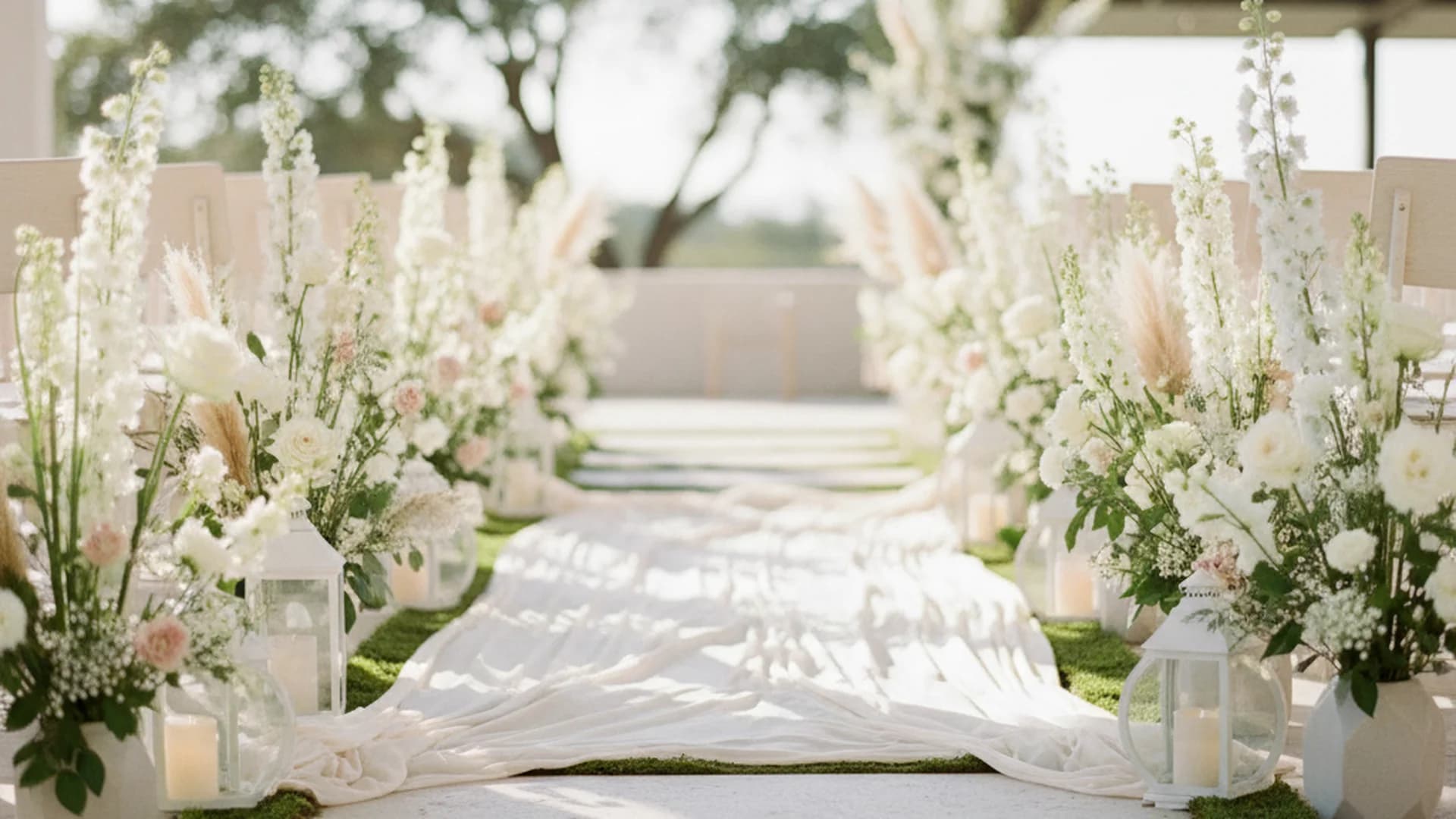
- Prioritize material weight (200-245 GSM) to prevent tripping and tearing.
- 2025 trends favor eco-conscious materials like jute and "quiet luxury" velvet.
- Always measure for an extra 10-15 feet of "transitional" length for the best photos.
Let’s be honest: the walk down the aisle is the only time in your life when it is socially acceptable to make everyone stand up and stare at you while you walk very, very slowly toward a life-altering commitment. It is the runway show of your personal history. Naturally, you want the "runway" to look spectacular. Finding the right wedding aisle runner ideas isn't just about choosing a piece of fabric; it’s about setting the stage for the most photographed moment of your life.
Whether you’re dreaming of a classic white linen path or a bold, emerald green velvet statement, the logistics are just as important as the aesthetics. After all, nobody wants their "grand entrance" to be remembered as the "grand trip" because of a flimsy paper runner.
Understanding the Logistics: Length, Width, and Weight
Before we dive into the creative wedding aisle runner ideas that will make your Pinterest board weep with joy, we have to talk about the "boring" stuff. If you don't get the measurements right, even the most expensive hand-painted silk runner will look like a stray piece of laundry.
Getting the Measurements Right
Most couples make the mistake of measuring only the space between the chairs. To achieve a professional, "finished" look, you need a transitional buffer. Experts suggest measuring from the very last row of seats to the altar and then adding 3–5 meters (approx. 10–15 feet) extra. This allows the runner to begin slightly before the guests' seating area and end comfortably behind the officiant, providing a seamless visual flow.
Choosing the Correct Width
Standard aisle runners generally come in two sizes:
- 3 Feet (36 inches): Ideal for narrow indoor spaces, chapel aisles, or intimate restaurant weddings.
- 4 Feet (48 inches): The "gold standard" for larger venues. This width allows two people (like a bride and her father) to walk side-by-side without feeling like they are on a tightrope.
The Secret of GSM
In the world of textiles, GSM stands for "grams per square meter." It’s a measure of how thick the fabric is. Most "budget" runners found on discount sites are around 50 GSM. In my professional opinion as a Creative Director, 50 GSM is effectively a wet napkin. To ensure your runner doesn't bunch up, tear under a stiletto heel, or fly away in a light breeze, look for professional-grade runners with at least 200–245 GSM.
Note
Top Wedding Aisle Runner Ideas for 2025 and 2026
The next two years are seeing a shift away from "cookie-cutter" weddings. Couples are leaning into personalization and high-texture materials. Here are the trends dominating the high-end ceremony scene.
1. The "Quiet Luxury" Velvet Runner
"Quiet luxury" is the buzzword of the decade, and it has finally hit the wedding aisle. Instead of standard white polyester, couples are opting for heavy velvet runners in deep jewel tones like emerald green, navy, or terracotta. Velvet provides a weight that stays flat on the floor naturally and offers a rich, matte finish that looks incredible in high-definition photography.
2. Storytelling and Narrative Paths
One of the most touching wedding aisle runner ideas involves printing your relationship's timeline directly onto the fabric. Imagine walking past milestones: "Met at a coffee shop, 2018," "First trip to Italy, 2020," "Moved in together, 2022." By the time you reach the altar, your guests have literally walked through your history with you.
3. Eco-Conscious Nature Runners
With 2025 seeing a massive surge in "nature-first" weddings, materials like jute, hemp, and organic cotton are trending. These are perfect for outdoor settings. They are biodegradable, sturdy, and provide a rustic-yet-refined texture.
Tip
4. 3D and Sculptural Florals
Moving into 2026, we are seeing aisles that aren't just flat paths but "meadows." This involves using "grounded" floral arrangements that flank a simple runner or, in some luxury cases, a runner made entirely of layered, 3D faux petals that create a plush, cloud-like effect.
| Style | Best For | Vibe |
|---|---|---|
| Velvet | Indoor Ballrooms | Opulent & Moody |
| Jute/Hemp | Barns & Beaches | Organic & Relaxed |
| Custom Print | Any Venue | Personal & Sentimental |
| 3D Petals | Garden Weddings | Whimsical & Romantic |
Budgeting for Your Aisle Decor
The cost of wedding aisle runner ideas can vary wildly. Knowing where you fall on the spectrum can help you manage your Wedding Budget Calculator expectations.
- Budget ($10–$100): You’ll mostly find thin plastic or non-woven fabric. Use these only on perfectly flat, non-slip indoor surfaces.
- Mid-Range ($100–$400): This covers custom-printed monograms on decent-weight canvas or personalized quotes.
- Luxury ($500–$2,200+): This is the realm of heavy-duty aisle carpets, hand-decorated runners featuring Swarovski crystals, or bespoke velvet commissions.
Heads up
Practical Advice: How to Handle the "Aisle Logistics"
You’ve picked the perfect design, but how do you actually use it? The "execution" phase is where most wedding aisle runner ideas go sideways—literally.
The "Three-Person Rule"
Don't let a single usher struggle with the roll. Use three people: two to hold the edges and unroll, and one to follow behind with a soft broom or their hands to smooth out air bubbles and wrinkles. This ensures the runner lies perfectly flat for the photos.
Securing the Edges
The biggest fear for any bride is a runner that moves.
- Indoor (Hard Floors): Use professional-grade double-sided "floor tape." However, always check with your venue first—some historical venues forbid any adhesive on their floors.
- Outdoor (Grass/Sand): Standard tape won't work here. Use tent pegs or decorative garden stakes. Alternatively, use heavy objects like large lanterns, potted plants, or heavy floral "meadows" to weight the sides down.
Do this
The "Grass Factor"
Can you use an aisle runner on grass? Yes, but proceed with caution. Thin fabric will allow stiletto heels to puncture straight through into the dirt, causing the bride to "peg" into the ground like a tent.
If you must have a fabric runner on grass, I recommend placing a layer of thin plywood or "sub-flooring" beneath it. This creates a hard, level surface that makes the walk much easier and prevents the "sinking heel" disaster.
From the OurVows workspace
Shaping your ceremony?
Draft your vows and ceremony, then keep the whole day organized in one place.
Common Mistakes to Avoid
Even the best wedding aisle runner ideas can fail if you fall into these common traps:
- Buying "Paper" Runners: In the industry, we call these "trip magnets." They are too light, they tear at the slightest snag, and they look cheap in high-resolution photos. Avoid them at all costs.
- The "Slippery Tile" Trap: Placing a polyester runner on a polished tile or hardwood floor without a non-slip backing is incredibly dangerous. If your runner doesn't have a rubberized back, you must use non-slip rug pads or tape.
- The "Disappearing Dress": A white dress on a white runner can sometimes "disappear" in photos, losing the detail of the train. Consider ivory, blush, or a subtle pattern to provide contrast.
- Forcing the Runner: Believe it or not, 73% of modern couples are now rejecting the traditional runner. If your venue has stunning original hardwood or beautiful mosaic tiles, don't hide them! Sometimes the best aisle runner is no runner at all.
Tip
Real-World Examples
Example 1: The Coastal Minimalist
For a wedding at a coastal resort, the couple used a 60-foot jute runner weighted down by driftwood and hurricane lanterns filled with sand. It stayed perfectly in place despite the sea breeze and complemented the Beach Wedding Ceremony Script they had chosen.
Example 2: The Gothic Romance
In a historic cathedral, the couple opted for a deep navy velvet runner. Because the floor was 200-year-old stone, they couldn't use tape. Instead, they used heavy, "grounded" floral installations every five feet to keep the heavy fabric anchored. The contrast between the navy runner and the white lace dress was breathtaking.
Example 3: The Botanical Modernist
A 2025 trend favorite: a simple white canvas runner flanked by a "living aisle" of potted ferns and grasses. This gave the illusion of a garden path even though the ceremony was held in an industrial warehouse.
Frequently asked questions
How long should my aisle runner be?
Who is responsible for unrolling the runner?
How do I stop my aisle runner from bunching up?
Is an aisle runner necessary for an outdoor wedding?
Conclusion
Your wedding aisle is more than just a path; it’s the physical representation of the journey you’ve taken to get to the altar. Whether you choose a storytelling runner that maps out your history or a lush velvet path that screams "quiet luxury," the best wedding aisle runner ideas are the ones that combine your personal style with practical safety.
Remember to measure twice, check your material weights, and always have a plan for securing those edges. With a little bit of planning (and perhaps a Wedding Checklist Generator to keep you on track), your walk to the altar will be as smooth and stunning as you’ve always imagined.
Do this
Ready when you are
Ready to Plan Your Big Day?
Use our suite of professional tools to organize every detail of your ceremony.
Ready when you are
Plan your wedding without the chaos.
Free forever for couples just getting started. Two minutes to set up. No credit card.
Keep reading

Crafting the Perfect Second Marriage Ceremony Script: A Guide to New Beginnings
Planning a remarriage? Discover how to write a Second Marriage Ceremony Script that honors your past while celebrating a beautiful, mature future.
Pew Decorations Wedding: 15 Inspiring Ideas and Trends for 2025-2026
Transform your ceremony aisle with stunning pew decorations wedding ideas. From sustainable florals to 2026 trends, learn how to frame your walk to the altar.
The Ultimate Wedding Processional Order Guide: Traditions and Modern Trends
Master your wedding processional order with our comprehensive guide. From traditional Christian and Jewish lineups to modern LGBTQ+ and 2025 trends.