Where to Seat Divorced Parents at Your Wedding: The Ultimate 2025 Guide
Learn where to seat divorced parents at your wedding ceremony and reception. Explore modern etiquette, 2025 trends, and drama-free seating chart strategies.
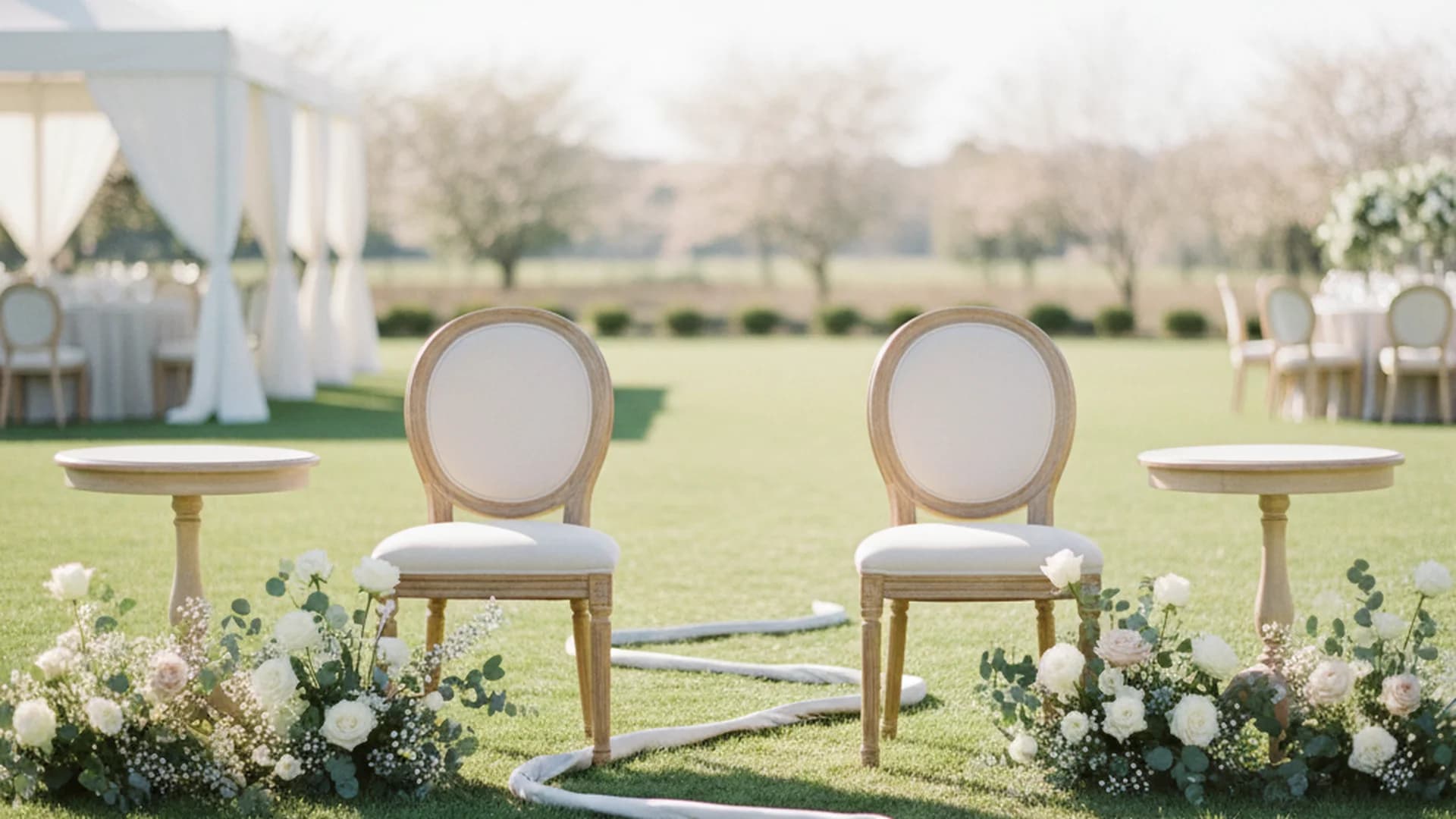
- Focus on emotional comfort rather than rigid traditional rules.
- Use the "buffer strategy" to create physical distance between high-conflict parents.
- Choose a Sweetheart Table for the reception to avoid "ranking" your family members.
Planning a wedding is a beautiful milestone, but for couples with divorced parents, the seating chart can feel more like a high-stakes diplomatic mission than a party planning exercise. Deciding where to seat divorced parents at a wedding is a delicate balance of honoring tradition and maintaining peace. With divorce so common today, you are far from alone in navigating this "family puzzle."
As we look toward 2025 and 2026, wedding etiquette is shifting away from rigid, one-size-fits-all rules toward a focus on emotional comfort and the overall guest experience. Your wedding day should be about celebration, not managing old wounds. This guide will walk you through every scenario to ensure your seating plan is as stress-free as possible.
Understanding the New Normal of Wedding Seating
A large share of modern weddings now involve at least one set of divorced parents. This is no longer a "taboo" situation; it is a standard part of modern event planning. However, just because it is common doesn't mean it isn't stressful. Many couples rank the seating chart as the most stressful part of wedding planning, primarily due to complex family dynamics.
Before you start dragging names across a digital floor plan, you need to assess the current climate of your parents' relationship. In our experience, some divorced couples are "amicable" enough to sit together, while many others require physical distance or "buffers."
Tip
Ceremony Seating: Front Rows and Row Logic
The wedding ceremony is the most formal part of the day, and where your parents sit sends a strong message. Traditionally, the front row is the place of highest honor. But when parents are divorced, "the front row" becomes a point of contention.
The Amicable Approach
If your parents are friendly and can sit in the same space without tension, they may sit together in the front row. Usually, the mother sits in the seat furthest to the left (on the bride's side) or right (on the groom's side), with the father next to her. If step-parents are involved and everyone gets along, they can fill out the remainder of that first row.
The Buffer Strategy
If there is slight tension, use a "neutral party" as a buffer. This could be a sibling who isn't in the wedding party, a grandparent, or a close family friend. By placing a person between the divorced parents, you provide an emotional cushion that prevents forced small talk during the ceremony.
The Multi-Row Approach (High Conflict)
For high-conflict situations where parents cannot be near each other, the multi-row approach is the gold standard for 2025.
- Row 1: Mother of the Bride/Groom, her partner, and her immediate family members (siblings, parents).
- Row 2: The "Buffer Zone." This row can be filled with cousins, close family friends, or kept partially empty to ensure physical distance.
- Row 3: Father of the Bride/Groom, his partner, and his side of the family.
Note
Reception Seating: Navigating the Table Layout
The reception is where the most time is spent, making the seating chart here even more vital. Unlike the ceremony, where everyone faces forward, the reception involves face-to-face interaction and long periods of sitting.
Separate Host Tables
Instead of one "Parents’ Table," modern etiquette suggests having each parent host their own table. This allows each parent to feel like the "head" of their own family group.
- Placement: Place the Mother’s table and the Father’s table on opposite sides of the dance floor. This gives them "line-of-sight" balance—meaning both tables are equally close to the action—without requiring them to cross paths throughout the night.
The "V" Formation
Arrange your VIP tables in a chevron or V-shape pointing toward the couple. This allows both parents to have a front-row seat to the speeches and the first dance without being forced to sit at the same table or directly next to each other.
Using a Sweetheart Table
One of the best ways to avoid seating drama is to opt for a Sweetheart Table (just the couple). This removes the pressure of deciding which parent gets the "honor" of sitting next to you. It also gives you a much-needed emotional break during the festivities.
Do this
Modern Trends for 2025 and 2026
Wedding layouts are evolving to accommodate non-traditional family structures. Here are the latest trends helping couples manage divorced parent dynamics:
- "Family Pods": A rising 2025 trend is the use of smaller, 6-person "pods" instead of large 10-person rounds. Smaller tables make it much easier to keep "warring factions" entirely separate without it looking obvious to the rest of the guests.
- Lounge-Style Receptions: Many 2026 couples are ditching assigned seated dinners for "flow-style" receptions featuring high-tops and lounge furniture. This allows guests to move freely, naturally diffusing tension because no one is "trapped" next to an ex-spouse for a three-course meal.
- The "Introverted I Do": More couples are opting for private family-only "micro-ceremonies" before the main event. In these intimate settings, seating is less performative, allowing for a more relaxed environment before the larger reception starts.
Tip
From the OurVows workspace
Turn this guide into a plan.
A checklist that knows what's next, a shared budget, and a guest list that actually works — free to start.
The Role of Step-Parents
Handling step-parents requires a mix of respect for the biological parent and acknowledgement of the step-parent’s role in your life.
| Relationship Length | Recommended Seating | Etiquette Note |
|---|---|---|
| Long-term / Raised You | Front Row / VIP Table | Should be treated as an honored parent figure. |
| 1–5 Years | First or Second Row | Seat them with their spouse (your parent). |
| New (< 6 months) | 3rd Row or "Honored Guest" Table | Keep them slightly back to avoid friction with the other biological parent. |
Heads up
Real-World Examples of Seating Success
Example 1: The High-Conflict Solution
"Sarah's parents hadn't spoken in ten years and the divorce was messy. For the ceremony, Sarah sat her mother in the first row and her father in the third row. At the reception, she skipped the head table entirely and used a Sweetheart Table. Her mother hosted Table 1 on the left side of the room, and her father hosted Table 2 on the far right. They never had to speak once, and both felt they had the 'best' seat."
Example 2: The Step-Parent Balance
"Mark was very close to his step-mother but wanted to respect his biological mother. He used a 'Buffer Strategy' for the ceremony, seating his biological mother, then his sister, then his father and step-mother all in the first row. The sister acted as a physical and emotional barrier, and the arrangement worked perfectly."
Example 3: The Amicable Pod
"Jessica's parents were divorced but amicable. She used the 'Family Pod' trend, seating her parents together with her maternal grandparents at one small table. This kept the group intimate and focused on the grandparents, which gave the parents something neutral to talk about."
Common Mistakes to Avoid
- Forcing "Closure": Your wedding is a celebration, not a therapy session. Do not force divorced parents to sit together in hopes they will "make up." This almost always leads to visible tension in photos and awkwardness for the other guests at the table.
- Not Briefing the Photographer: If your parents shouldn't be in the same "posed" photo, you must communicate this. Modern "shot lists" now often include a section for "Sensitive Dynamics." Make sure your photographer knows to call for "Mother and Daughter" and "Father and Daughter" shots separately rather than a "Parents" shot.
- The "Mother Priority" Misconception: While tradition often gives the Mother of the Bride the front row, this isn't a law. If your father was your primary caregiver and your relationship with your mother is strained, the seating should reflect the relationship, not just gender-based tradition.
- Waiting Too Late to Discuss: Don't wait until you're printing the place cards. Have "The Talk" with each parent individually around the 6 Month Wedding Planning Checklist or 3 Month Wedding Planning Checklist marks. Ask them where they would feel most comfortable and be firm about your final decision.
Heads up
Frequently asked questions
Does the biological father always sit in the front row?
What do I do with new step-parents?
Should I have a 'head table' if my parents can't stand each other?
How do I tell my parents they aren't sitting together?
Can I put divorced parents at the same table if they are "amicable"?
Summary Checklist for a Drama-Free Seating Plan
- Survey your parents early: Determine if they are Amicable, Cordial, or High-conflict.
- Assign specific seats: For the ceremony, use "Reserved for [Name]" cards to prevent accidental "musical chairs" drama.
- Choose a reception layout with balance: Ensure both parents feel equally important by giving them symmetric table placements.
- Brief your peacekeepers: Tell your ushers and wedding coordinator exactly where people should go so they can redirect guests if needed.
- Set a firm deadline: Use a Wedding Countdown to ensure your seating chart is finalized at least one month before the big day.
- Prioritize your peace: It is your day; your parents are there to support you, not the other way around.
Ready when you are
Ready to Plan?
Organize your guest list and seating chart with ease today.
Ready when you are
Plan your wedding without the chaos.
Free forever for couples just getting started. Two minutes to set up. No credit card.
Keep reading
How to Create Wedding Seating Chart: The Ultimate 2026 Guide
Learn how to create wedding seating chart layouts without the stress. Expert tips on etiquette, logistics, and 2025-2026 trends for a perfect reception.

The Anti-Anxiety Wedding Guide: How to Actually Enjoy Your "I Dos"
Learn expert strategies for dealing with wedding day anxiety. Discover 2025 trends, grounding techniques, and mental health tips to stay present on your big day.
25+ Creative Wedding Seating Chart Ideas & Etiquette Guide (2025-2026)
Discover the best wedding seating chart ideas for your 2025-2026 celebration. From interactive displays to high-tech QR codes, plan your reception layout with ease.