The Heart of Heritage: A Deep Dive into Mexican Wedding Traditions
Explore the vibrant world of Mexican wedding traditions. From the Lazo and Arras to the Tornaboda, learn how to plan a meaningful, culturally rich celebration.
- Mexican weddings are community-centric events supported by the Padrinos system.
- Rituals like the Lazo and Arras symbolize spiritual unity and financial trust.
- Modern trends for 2025-2026 emphasize sustainability and bold, maximalist aesthetics.
Mexican wedding traditions represent one of the most vibrant, soulful, and community-oriented celebrations in the world. As a relationship counselor, I often tell my clients that a wedding is not just the union of two individuals, but the weaving together of two family legacies. In Mexican culture, this sentiment is taken to heart, blending deep-rooted Catholic faith, indigenous customs, and an unparalleled energy for celebration.
Whether you are planning a destination wedding in Tulum, honoring your heritage in a local chapel, or attending as a guest, understanding these customs is essential. From the symbolic exchange of gold coins to the high-energy "Sea Snake" dance that lasts until dawn, every element of a Mexican wedding serves a specific purpose: to fortify the couple’s bond through faith and family support.
The Spiritual Foundation: The Ceremony
The majority of Mexican weddings are anchored by a full Catholic Mass. This is not a brief 20-minute exchange of vows; it is a profound religious event that often lasts over an hour. Because faith is the cornerstone of the household, the ceremony is treated with the utmost reverence.
Las Arras Matrimoniales (The Wedding Coins)
One of the most distinctive Mexican wedding traditions is the exchange of Las Arras. The groom presents the bride with 13 gold coins, which are often blessed by the priest.
The Symbolism: The number 13 represents Jesus and his 12 apostles. This ritual signifies the groom’s commitment to providing for the household and the bride’s trust in managing those resources. It is a beautiful display of mutual responsibility and stewardship.
El Lazo (The Lasso)
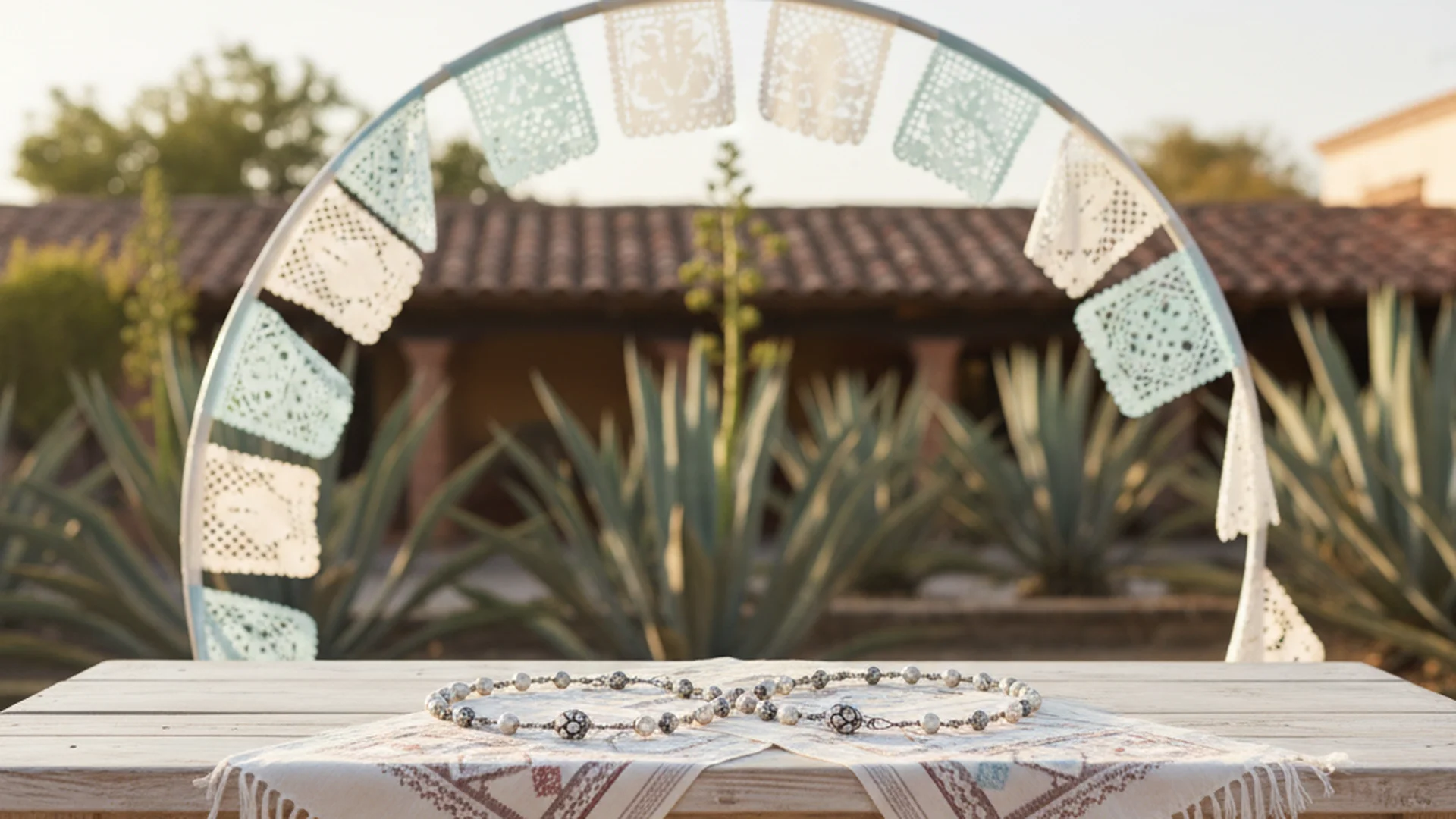
After the vows are exchanged, the Padrinos (godparents) place a Lazo—a large rosary or a decorative floral cord—around the couple’s shoulders in a figure-eight shape.
The Symbolism: The figure-eight represents infinity and the eternal nature of the marriage. It literally "ties the knot," symbolizing that the couple is now one in the eyes of God and the community. This tradition is often paired with specific Bible Readings for Weddings that emphasize unity and enduring love.
The Offering to the Virgin Mary
In many ceremonies, the couple will take a moment away from the altar to present a bouquet of flowers to the statue of the Virgin Mary (La Virgen de Guadalupe). They kneel in prayer, asking for her intercession and guidance in their new life together. This quiet, reflective moment is a stark contrast to the lively celebration that follows.
Note
The Pillars of Support: Padrinos and Madrinas
In Western weddings, we have bridesmaids and groomsmen. In Mexican culture, we have Padrinos and Madrinas. These are not just "wedding party" members; they are mentors, spiritual guides, and often financial sponsors.
The Padrinos system is a way for the couple to honor the people who have influenced their lives. It is common for specific Padrinos to be assigned to "sponsor" certain elements of the wedding, such as:
- The Lazo and Arras
- The wedding Bible and rosary
- The alcohol or the Mariachi band
- The venue or the flowers
This communal approach ensures that the wedding is a collective investment in the couple’s future. It also lightens the financial burden on the families, though it comes with the expectation that the couple will seek advice and guidance from these mentors throughout their marriage.
Tip
The Reception: Music, Movement, and Money
If the ceremony is about the soul, the reception is about the spirit. Mexican wedding receptions are legendary for their longevity and energy.
La Víbora de la Mar (The Sea Snake Dance)
One of the most entertaining Mexican wedding traditions is La Víbora de la Mar. The bride and groom stand on chairs, holding the bride’s veil or a sash to form an arch. Guests then form a long line, holding onto each other’s waists, and run through the arch as the music speeds up.
The Meaning: This "snake" of people represents the obstacles and challenges the couple will face. The couple’s goal is to remain standing and hold the arch firm, symbolizing their strength and unity against the "chaos" of life.
El Baile del Billete (The Money Dance)
The Baile del Billete is a popular tradition where guests "pin" money onto the couple's clothing in exchange for a dance.
Why it happens: This isn't just about the money; it’s one of the few times during a 300-person wedding where guests get a few moments of one-on-one time to offer their personal congratulations to the bride or groom. The funds collected are traditionally used for the honeymoon or to help the couple start their new home.
The Music: Mariachi vs. Banda
Music is the lifeblood of the event. A traditional wedding will often feature a Mariachi band during the cocktail hour or dinner, providing a romantic and nostalgic atmosphere. As the night progresses, a Banda or a high-energy DJ takes over to keep the dance floor packed until the early hours of the morning (often 4 or 5 AM).
Heads up
The Flavor Profile: Essential Food and Drink
Food in Mexican wedding traditions is an art form. It is meant to be abundant, spicy, and celebratory.
| Tradition | Description | Timing |
|---|---|---|
| Mole Poblano | A complex sauce made with chili and chocolate, often served over chicken. | Main Dinner |
| Churros & Tamales | Late-night snacks to keep guests energized. | Midnight |
| Chilaquiles | A spicy breakfast dish made of fried tortillas. | The Tornaboda |
| Aguas Frescas | Refreshing fruit waters (Jamaica, Horchata, Tamarindo). | Cocktail Hour |
For 2025 and 2026, we are seeing a shift toward "Mercado-style" dining. Instead of a formal sit-down meal, couples are opting for interactive stations with live taco grilling, ceviche bars, and even tequila tasting stations where guests can learn about different agave regions.
From the OurVows workspace
Shaping your ceremony?
Draft your vows and ceremony, then keep the whole day organized in one place.
Trends for 2025 and 2026: The Modern Mexican Wedding
While traditions remain the heart of the celebration, modern couples are adding contemporary twists that reflect current global trends.
1. Eco-Conscious Cenote Ceremonies
In the Riviera Maya and Yucatán regions, couples are moving away from standard beach resorts in favor of cenotes (natural limestone sinkholes). These ceremonies focus on the "mystical" and spiritual connection to the earth, often incorporating Mayan blessing rituals alongside Catholic elements.
2. Maximalist Color Palettes
The "all-white" minimalist wedding is being replaced by bold, vibrant colors inspired by Alebrijes (Mexican folk art). Expect to see deep terracotta, cobalt blues, and fiery oranges in floral arrangements and table settings for the 2025-2026 season.
3. Tech-Integrated Traditions
Fireworks are being replaced by synchronized drone light shows, which are more eco-friendly and offer a "wow" factor that can be seen for miles. Additionally, many couples are hiring "Wedding Content Creators" specifically to capture vertical, behind-the-scenes video for social media in real-time.
Do this
Planning Logistics: Making it Official
One of the most common points of confusion for those planning a wedding in Mexico is the distinction between a civil and religious ceremony.
Civil vs. Religious
In Mexico, only a civil ceremony is legally binding. The religious ceremony is considered a social and spiritual event but carries no legal weight.
Expert Recommendation: Most experts recommend performing the civil ceremony (the "legal" part) a few days before the big celebration. This involves blood tests and specific paperwork in front of a judge. By getting this out of the way early, you can focus entirely on the emotional and spiritual weight of your religious ceremony. If you aren't doing a religious Mass, you might look into a Civil Wedding Ceremony Script to personalize your legal vows.
The Tornaboda (The Day After)
Never underestimate the Tornaboda. This is the "after-party" held the following day, usually for close family and friends. It is a more relaxed gathering where guests recover from the previous night’s festivities. Serving "recovery foods" like Birria or Menudo is standard practice here.
Common Mistakes to Avoid
- Ignoring the "Gringo Guide": If you have international guests who aren't familiar with Mexican wedding traditions, provide a program that explains the meaning of the Lazo and Arras. It helps them feel included in the spiritual significance.
- Underestimating the Guest List: Mexican weddings are inclusive. Expect cousins of cousins and lifelong neighbors to attend. Planning for a "small" Mexican wedding is a challenge; usually, the guest count starts at 200 and goes up.
- Strict Timing: While the Catholic Mass starts strictly on time, the reception often follows "Mexican Time," where guests arrive 30–60 minutes after the stated "cocktail hour."
- Skipping the Local Coordinator: Especially for destination weddings, a local planner is essential for navigating usos y costumbres (local customs) and ensuring your vendors understand the cultural nuances of a 12-hour event.
Frequently asked questions
Why do Mexican weddings last so long?
Who traditionally pays for a Mexican wedding?
What is the "Money Dance"?
Can we have a Mexican wedding if we aren't Catholic?
What is a Tornaboda?
Conclusion
At its core, a Mexican wedding is a testament to the power of community. It is a celebration that refuses to be rushed, a ceremony that honors the divine, and a party that welcomes every generation to the dance floor. By embracing these Mexican wedding traditions, you aren't just throwing a party; you are building a foundation of support, faith, and joy that will sustain your marriage for decades to come.
Whether you are "tying the knot" with a Lazo or dancing through the Víbora de la Mar, remember that these rituals are a gift from your ancestors—a way to say that you never have to walk the path of marriage alone.
Ready when you are
Ready to Start?
Plan your perfect ceremony with our custom tools.
Ready when you are
Plan your wedding without the chaos.
Free forever for couples just getting started. Two minutes to set up. No credit card.
Keep reading
Crafting the Perfect Second Marriage Ceremony Script: A Guide to New Beginnings
Planning a remarriage? Discover how to write a Second Marriage Ceremony Script that honors your past while celebrating a beautiful, mature future.
Pew Decorations Wedding: 15 Inspiring Ideas and Trends for 2025-2026
Transform your ceremony aisle with stunning pew decorations wedding ideas. From sustainable florals to 2026 trends, learn how to frame your walk to the altar.
The Ultimate Wedding Processional Order Guide: Traditions and Modern Trends
Master your wedding processional order with our comprehensive guide. From traditional Christian and Jewish lineups to modern LGBTQ+ and 2025 trends.