The Ultimate Jewish Wedding Ceremony Script Guide for 2025-2026
Discover the perfect Jewish wedding ceremony script. Explore traditional rituals, modern 2025 trends, egalitarian circling, and interfaith-friendly wording options.
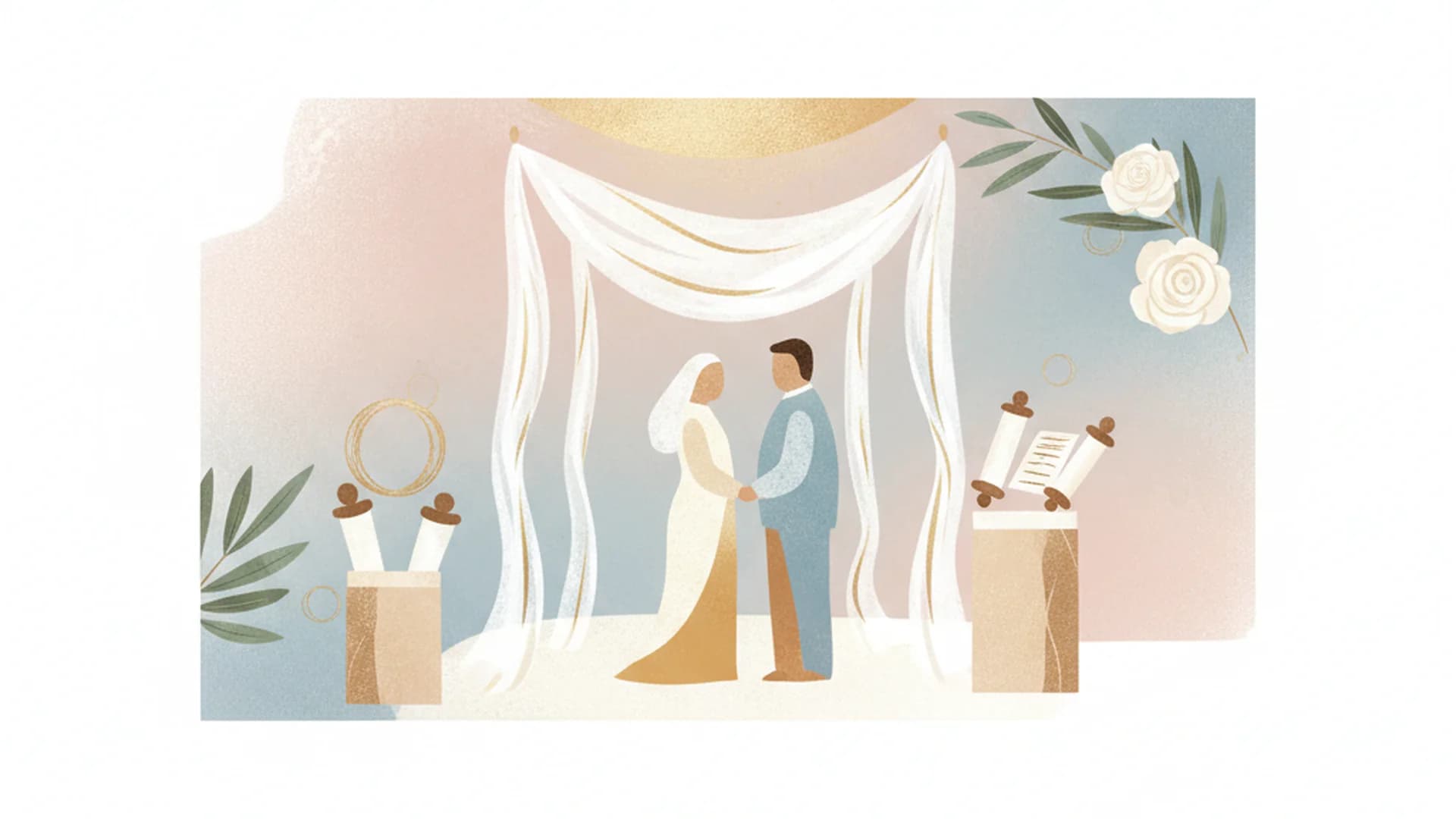
- Learn the structure of a Jewish wedding ceremony script from Betrothal to the Seven Blessings.
- Discover 2025–2026 trends like "God-neutral" translations and deconstructed timelines.
- Understand the importance of the plain gold ring and the Yichud (seclusion).
The Jewish wedding ceremony is a beautiful tapestry of ancient legalism and soulful spirituality. Whether you are planning a strictly Orthodox service or looking for a modern Jewish wedding ceremony script that reflects an interfaith partnership, the structure of the day is designed to transform two individuals into a single, sacred unit. In today’s evolving landscape, where approximately 72% of non-Orthodox Jews marry non-Jewish partners, the "script" has become more flexible than ever, allowing couples to honor their heritage while embracing their contemporary identities.
As an interfaith wedding officiant, I have seen how the 2025–2026 wedding seasons are prioritizing inclusivity and sustainability. This guide will walk you through every step of the ceremony, providing the historical context you need and the modern updates your guests will appreciate.
The Evolution of the Jewish Wedding Script
Historically, the Jewish wedding was less of a "religious service" and more of a legal transaction. It was the public execution of a contract (Ketubah) and the physical sanctification of the couple. However, modern couples increasingly view the ceremony as a spiritual journey.
In 2025, we are seeing a shift toward "God-neutral" language. Instead of traditional references to "Lord" or "King," many scripts now use phrases like "Source of Life" or "Infinite Spirit." This allows the ceremony to remain rooted in tradition while being accessible to secular guests or partners from different faith backgrounds.
Note
Pre-Ceremony Traditions: Setting the Stage
A Jewish wedding actually begins before the couple ever reaches the Chuppah (wedding canopy). These pre-ceremony rituals are often the most emotional parts of the day.
The Ketubah Signing
The Ketubah is the Jewish marriage contract. Traditionally, it was a legal document outlining the groom's obligations to the bride. Today, it is a stunning piece of art that reflects the couple's shared values.
A significant trend for 2026 is the "Deconstructed Timeline." Rather than signing the Ketubah in a private room with only witnesses, many couples are now bringing the table under the Chuppah during the main ceremony. This allows all guests to witness the "legal" heart of the union, turning a private moment into a communal one.
The Badeken (Veiling)
In this ritual, the groom places the veil over the bride. This stems from the biblical story of Jacob, who was tricked into marrying the wrong sister because she was heavily veiled. The Badeken ensures the groom knows exactly whom he is marrying. In egalitarian ceremonies, the partners may "veil" each other or exchange a meaningful item like a Kippah or a piece of jewelry.
Tip
Under the Chuppah: The Ceremony Script Walkthrough
The Chuppah represents the home the couple will build together. It is open on all four sides to symbolize hospitality, much like the tent of Abraham and Sarah.
1. The Processional and Circling
Once the couple reaches the Chuppah, the ritual of "Circling" begins. Traditionally, the bride circles the groom seven times to create an invisible wall of protection.
2025 Trend: The 3-3-1 Method To maintain an egalitarian feel, many modern couples use the "3-3-1" circling pattern:
- The first partner circles the other 3 times.
- The second partner circles the first 3 times.
- They perform one final circle together.
2. The Betrothal Blessings (Erusin)
The officiant recites a blessing over a cup of wine. In Jewish tradition, wine is a symbol of joy and the sanctification of time.
Heads up
3. The Exchange of Rings
In a traditional Jewish wedding ceremony script, the ring must be a solid, plain metal band (usually gold) with no stones or piercings. This symbolizes an "unbroken" and simple marriage that is not based on material wealth.
The groom (and often the bride in modern scripts) places the ring on the index finger of the partner’s right hand and says: "Harey at m'kudeshet lee b'tabaat zo k'dat Moshe v'Yisrael." (Behold, you are consecrated to me with this ring according to the laws of Moses and Israel.)
4. Personalized Vows
While traditional scripts don't include "vows" (the ring exchange is the vow), 50% of modern couples now add personalized English vows. If you choose to do this, try to use a Wedding Vow Writer to keep your thoughts organized.
Tip
The Heart of the Ritual: Sheva Brachot (Seven Blessings)
The Sheva Brachot are the soul of the Jewish wedding ceremony script. These seven blessings celebrate everything from the creation of the world to the joy of the couple.
| Blessing Number | Theme | Modern Interpretation |
|---|---|---|
| 1 | Wine | The joy of the occasion |
| 2 & 3 | Creation | Wonder of the natural world |
| 4 | Humanity | The wisdom of the human spirit |
| 5 | Zion | Community and heritage |
| 6 | Companionship | The love between the couple |
| 7 | Celebration | Ultimate joy and peace |
In many 2025 ceremonies, couples invite seven different friends or family members to read these blessings in English, while the Rabbi or Cantor recites the Hebrew. This increases guest engagement and makes the ceremony feel more communal.
From the OurVows workspace
Shaping your ceremony?
Draft your vows and ceremony, then keep the whole day organized in one place.
The Finale: Breaking the Glass
The most famous part of any Jewish wedding is the breaking of the glass.
Why do we do it?
- Traditional: To remember the destruction of the Temple in Jerusalem even in our moments of highest joy.
- Modern: To symbolize the fragility of relationships and the permanence of marriage (once the glass is broken, it can never be exactly the same again).
In egalitarian or same-sex ceremonies, it is now common for both partners to break a glass simultaneously. After the "crunch," guests shout "Mazel Tov!" and the celebration begins.
Do this
2025–2026 Trends and Considerations
As we look toward the 2026 wedding season, several specific trends are emerging:
- Sustainability: Scripts are being printed on seeded paper that guests can plant later. Digital Ketubot are also on the rise to reduce physical waste.
- The "Tallit Wrap": Also known as the "Tallit Burrito," this is a growing trend where the couple is wrapped together in a single prayer shawl during the final blessings. It’s a powerful visual of two becoming one.
- Unplugged Announcements: With Gen Z leading the charge, many scripts now include a firm "Unplugged" announcement at the start. This ensures guests are present in the moment rather than viewing the ceremony through a screen.
Dates to Avoid
When planning your ceremony, remember that Jewish weddings cannot take place on the Sabbath (Friday night to Saturday night) or on major holy days.
- 2025: Avoid April 12–20 (Passover), Sept 22–24 (Rosh Hashanah), and Oct 1 (Yom Kippur).
- 2026: Avoid April 1–9 (Passover), Sept 11–13 (Rosh Hashanah), and Sept 20 (Yom Kippur).
Tip
Common Mistakes to Avoid
- Treating the Ketubah like a Poem: While modern Ketubot are poetic, in Conservative or Orthodox circles, they are legal documents. Always have your Rabbi verify the text before you commission an expensive artist.
- Poor Chuppah Positioning: Don't place the Chuppah so far back that the last row of guests can't hear. If you have a large guest count, use a Guest Count Calculator to determine the best seating layout for acoustics.
- Ignoring the Yichud: The Yichud is a 10–15 minute period of seclusion for the couple immediately after the ceremony. Many couples skip this to get to the party, but experts highly recommend it for mental health and connection before the chaos of the reception.
Frequently asked questions
Is a Jewish wedding legal without a Rabbi?
Can we have a Jewish wedding if only one of us is Jewish?
Do we have to use Hebrew in our script?
Why do some witnesses have to be non-relatives?
Conclusion
Creating a Jewish wedding ceremony script is an opportunity to honor thousands of years of history while making a statement about your future together. Whether you stick to the strict "3-3-1" circling or opt for a "God-neutral" Sheva Brachot, the most important element is that the ceremony reflects your unique bond.
Remember to consult your officiant early, pay attention to the small details like the "second cup," and don't forget to breathe during your Yichud. Your wedding is the start of a new family tradition—make it your own.
Do this
Ready when you are
Ready to Design Your Ceremony?
Start crafting your perfect script and managing your guest list with our expert tools.
Ready when you are
Plan your wedding without the chaos.
Free forever for couples just getting started. Two minutes to set up. No credit card.
Keep reading
Crafting the Perfect Second Marriage Ceremony Script: A Guide to New Beginnings
Planning a remarriage? Discover how to write a Second Marriage Ceremony Script that honors your past while celebrating a beautiful, mature future.
Pew Decorations Wedding: 15 Inspiring Ideas and Trends for 2025-2026
Transform your ceremony aisle with stunning pew decorations wedding ideas. From sustainable florals to 2026 trends, learn how to frame your walk to the altar.
The Ultimate Wedding Processional Order Guide: Traditions and Modern Trends
Master your wedding processional order with our comprehensive guide. From traditional Christian and Jewish lineups to modern LGBTQ+ and 2025 trends.