A Unified Voice: The Ultimate Guide to Giving a Couple Wedding Speech Together
Discover how to master a couple wedding speech together. Learn about the 'Sandwich Method,' the 2-to-6 rule, and modern 2025 trends for a perfect joint address.
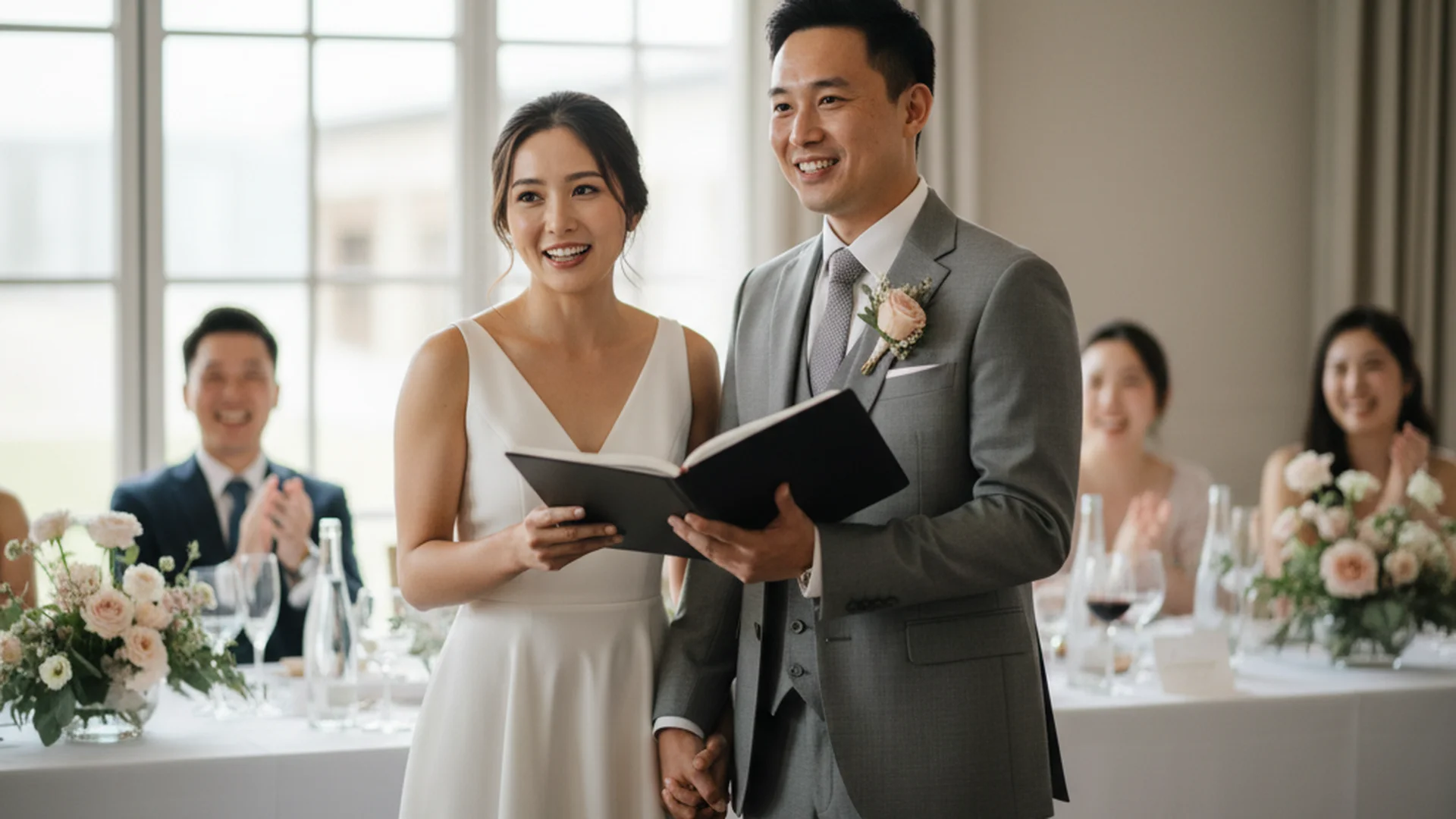
- Joint speeches emphasize partnership and equality from day one.
- Using the 80/20 rule helps manage different public speaking comfort levels.
- The "Goldilocks Zone" for a joint speech is between 5 and 8 minutes.
Giving a couple wedding speech together is a powerful way to signal the start of your life as a team. For decades, the wedding reception followed a rigid, gender-coded script where the groom spoke on behalf of the couple, often leaving the bride’s voice unheard. However, as we look toward 2025 and 2026, the "Joint Newlywed Speech" has evolved from a niche alternative into a major trend. It emphasizes partnership, equality, and a shared narrative that reflects the modern marriage.
Whether you are looking to reduce public speaking jitters or simply want to show your guests that you are a unified front, delivering a joint address is a sophisticated choice. In this guide, we will explore the logistics, etiquette, and creative strategies to make your joint speech the highlight of the night.
Why the Joint Newlywed Speech is the New Standard
The shift toward a couple wedding speech together isn't just about modernizing traditions; it’s about efficiency and emotional impact. In our experience, guests overwhelmingly prefer one cohesive 7-minute joint speech over two separate 5-minute speeches. Separate speeches often lead to redundant "thank yous," where both partners feel obligated to mention the same sets of parents and bridal party members, inadvertently lengthening the evening and delaying the party.
Beyond logistics, there is the "Double Act Advantage." Sharing the stage reduces public speaking anxiety for most people. Having your partner by your side provides immediate emotional support and someone to rely on for cues if you lose your place.
Do this
The "Sandwich Method" and Other Structural Strategies
One of the biggest hurdles in writing a speech together is deciding who says what. To avoid a "ping-pong" effect—where you switch speakers every sentence—experts recommend specific structural rules.
The Sandwich Method
This is the gold standard for joint delivery.
- The Intro (Together): You both stand at the mic. One partner welcomes the guests, and the other sets the tone for the speech.
- The Middle (Separate): You divide the "meat" of the speech. While one partner speaks for 2–3 minutes, the other listens attentively, smiles, and reacts. Then, you switch. This allows each person to have a dedicated moment of individual expression without the audience's eyes jumping back and forth.
- The Conclusion (Together): You reunite for the final "thank yous" and the toast.
The 2-to-6 Rule
When you are alternating within a section, follow the 2-to-6 rule: each person should speak for a minimum of two and a maximum of six sentences before the other takes over. This keeps the energy moving and prevents the speech from feeling like a series of disjointed interruptions.
Tip
Planning and Preparation Logistics
A successful joint speech requires more coordination than a solo one. You aren't just writing a script; you are choreographing a performance.
When to Start
You should begin drafting your speech 8–12 weeks before the wedding. This gives you time to refine the tone, align your "thank you" list, and, most importantly, rehearse the hand-offs.
The "Secret Segment" Trend
A high-impact trend for 2025 is the "Secret Segment." Each partner writes one private paragraph—about 4 or 5 sentences—that they do not share with the other until the actual delivery. When you reach this part of the speech, you read it to your partner for the first time. The genuine, unscripted emotional reaction is something guests love and photographers live for.
AI Integration for Polish
A growing number of couples are now using AI tools like ChatGPT or a Wedding Vow Writer to help structure their address. While you should never let AI write the whole thing, it is incredibly useful for "sentiment analysis." You can paste your draft into an AI tool and ask, "Does this include too many inside jokes?" or "Is the tone too formal for a casual barn wedding?"
Heads up
Real-World Examples of Joint Speeches
To help you visualize how a couple wedding speech together looks in practice, here are three common frameworks used by modern couples.
Example 1: The Narrative Hook (The "Travelers")
Instead of a list of facts, this couple used their shared love of travel as a theme.
- Partner A: "We've learned that marriage is a lot like our trip to Rome—mostly beautiful, but occasionally we get very lost."
- Partner B: "And usually because I refuse to use the GPS."
- Together: They then told stories of compromise and adventure, alternating using the 2-to-6 rule, before thanking their "co-pilots" (their parents).
Example 2: The "Experience" Speech
This couple used their speech to launch a surprise.
- Partner A: Focused on the emotional journey of the day.
- Partner B: Handled the logistical "thank yous" to the vendors and bridal party.
- Together: They ended the speech by saying, "And because we know you're all hungry from all that dancing... we are officially opening the late-night taco bar!"
Example 3: The Shy & Outgoing Dynamic
- Partner A (Outgoing): Handled the introduction and the funny stories about how they met.
- Partner B (Shy): Took the mic for a heartfelt, 30-second tribute to their late grandparents and the final toast.
- Result: Both felt represented without the shy partner feeling overwhelmed.
From the OurVows workspace
Writing the speech?
Get a structured first draft you can make your own — then plan the rest of the day in one place.
Common Mistakes to Avoid
Even the most well-intentioned couples can fall into traps that make the speech feel long or awkward.
| Mistake | Why it Fails | The Fix |
|---|---|---|
| The "Registry" List | Naming every single vendor and guest becomes boring. | Group thanks ("To our amazing vendor team") and save specific praise for private notes. |
| The Inside Joke Trap | If "you had to be there," the audience feels excluded. | If a story requires more than 30 seconds of context, cut it. |
| The Mic "Wrestling" | Fumbling the microphone during transitions. | Practice the physical "hand-off" or use two microphones if available. |
| Over-Rehearsing | If you try to finish each other's sentences, it feels "cringy." | Focus on bullet points and natural transitions rather than a memorized script. |
Note
2025-2026 Trends: Interactive Multimedia
As we move into 2026, the couple wedding speech together is becoming more interactive. Many couples are now placing QR codes on the tables. During the speech, they might say, "If you look at the card in front of you, you'll see a link to the photos of the 'disastrous' kitchen renovation we mentioned."
This allows the speech to become a multi-sensory experience. Other couples are using the speech to narrate a live slideshow or a short "recap video" of their journey together.
Do this
Frequently asked questions
Who should we thank in a joint speech?
How long should a joint wedding speech be?
Do we have to stand together the whole time?
What if we have different speaking styles?
Should we mention our budget or planning stress?
Conclusion
A couple wedding speech together is more than just a logistical shortcut; it is a beautiful metaphor for the life you are building. By coordinating your message, sharing the spotlight, and supporting each other at the microphone, you are demonstrating the very partnership you just celebrated in your vows.
Remember to keep it under 8 minutes, avoid the "registry" mistake of listing every guest, and don't be afraid to use a little modern help from AI for that final polish. With 8 to 12 weeks of preparation and a clear structure like the "Sandwich Method," your joint address will be a seamless, memorable part of your wedding day.
Ready when you are
Planning your big day?
Check out our suite of tools to stay organized.
Do this
Ready when you are
Plan your wedding without the chaos.
Free forever for couples just getting started. Two minutes to set up. No credit card.
Keep reading
The Ultimate Guide to Writing an Emotional Maid of Honor Speech in 2025-2026
Learn how to craft a tear-jerking, heartfelt Maid of Honor speech. Expert tips on structure, 2025 trends, and how to balance emotion with modern delivery.

Rehearsal Dinner Toast Ideas: The Ultimate Guide for 2025-2026
Master your rehearsal dinner toast with our expert guide. From modern trends to storytelling tips, learn how to deliver a memorable speech that honors the couple.

How to Write the Perfect Best Man Speech for Your Best Friend: A Pro’s Guide
Struggling with your Best Man speech? Learn the 5-part structure, expert delivery tips, and common mistakes to avoid for a memorable wedding toast.