Ancient Roots, Modern Vows: The Ultimate Guide to Chinese Wedding Traditions
Explore the evolution of Chinese wedding traditions in 2025. From the tea ceremony to AI-driven planning, learn how to honor heritage while embracing modern trends.
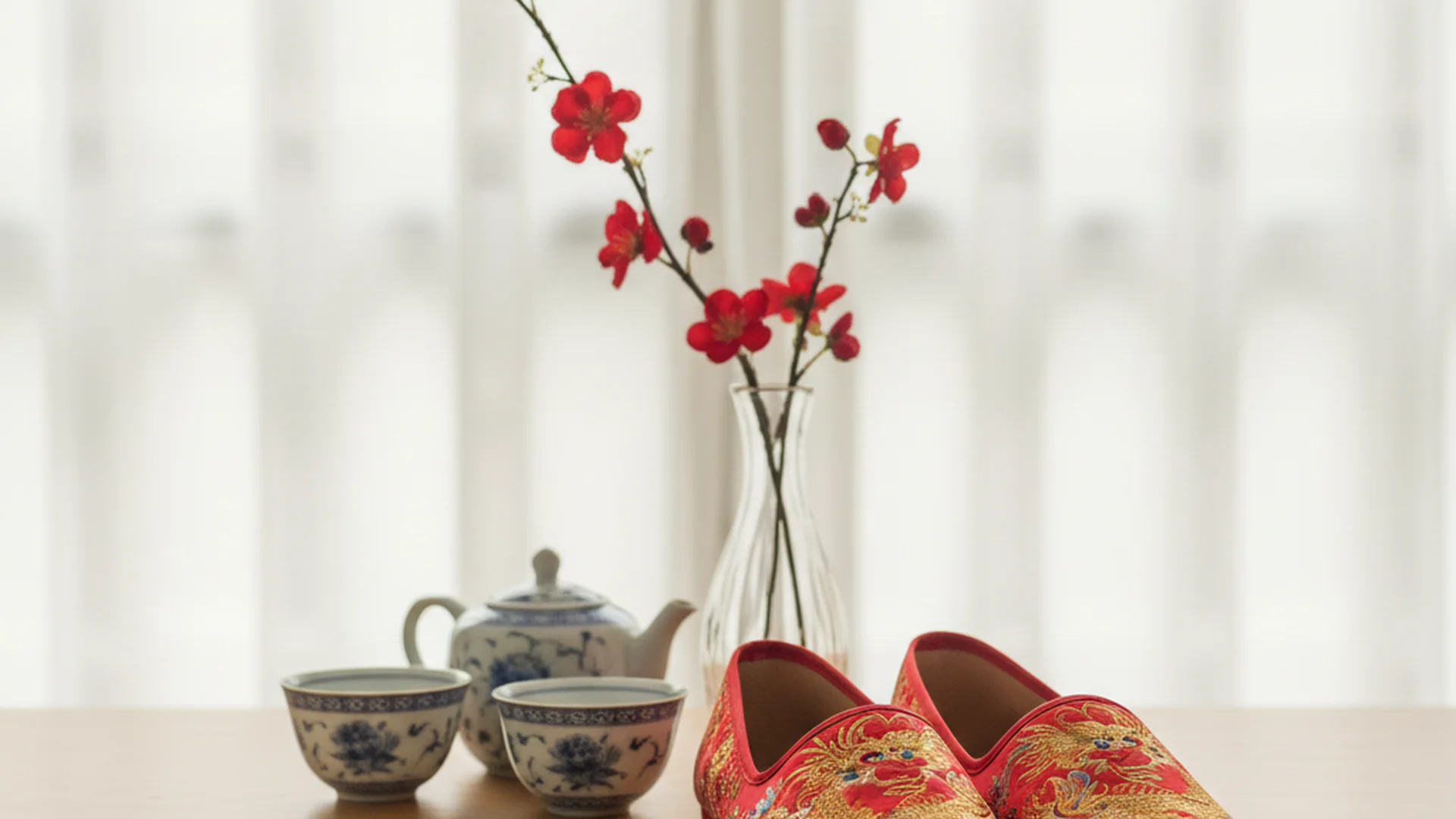
- Understand the "Three Letters and Six Etiquettes" that form the historical foundation.
- Learn the modern etiquette for red envelopes (Hongbao) and guest attire.
- Discover 2025-2026 trends including AI integration and sustainable celebrations.
For thousands of years, weddings in Chinese culture have been viewed as much more than the union of two people; they are the formal merging of two families and lineages. Today, Chinese wedding traditions are undergoing a fascinating transformation. As we look toward 2025 and 2026, we see a beautiful blend of ancient Zhou Dynasty philosophy and cutting-edge technology. Whether you are a bride-to-be honoring your heritage, a groom-to-be navigating a fusion ceremony, or a guest attending your first traditional banquet, understanding these customs is essential for navigating the day with grace and respect.
The Historical Foundation: Three Letters and Six Etiquettes
To understand a modern Chinese wedding, one must look back to the Three Letters and Six Etiquettes (三书六礼). Dating back over 2,000 years to the Zhou Dynasty, these customs formalized the marriage as a contract. While few modern couples follow every minute detail, the spirit of these rituals remains the backbone of the celebration.
The Three Letters (San Shu)
These letters served as the legal and formal documentation of the marriage in ancient times:
- Betrothal Letter: The formal contract between the two families.
- Gift Letter: An inventory of the gifts provided by the groom’s family, symbolizing wealth and the ability to care for the bride.
- Wedding Letter: The final document presented on the wedding day to welcome the bride into the groom’s family.
The Six Etiquettes (Liu Li)
The Six Etiquettes represent the journey from the first proposal to the wedding day itself.
| Etiquette | Description | Modern Equivalent |
|---|---|---|
| Proposal (Na Cai) | Formal request for marriage. | The Engagement. |
| Birthday Matching (Ba Zi) | Consulting a fortuneteller to ensure zodiac compatibility. | Checking astrological charts. |
| Betrothal Gifts (Guo Da Li) | The groom's family sends gifts to the bride's family. | The formal gift exchange. |
| Wedding Gifts (Na Zheng) | Presenting more elaborate gifts to finalize the union. | Finalizing the dowry. |
| Selecting the Date (Qing Qi) | Choosing an auspicious day using the Tong Shu. | Setting the wedding date. |
| The Ceremony (Qin Ying) | The groom fetching the bride and the final banquet. | The Wedding Day. |
Note
Essential Pre-Wedding Rituals
Months before the first guest arrives, several rituals take place to ensure the couple’s future is filled with luck, fertility, and prosperity.
Guo Da Li: The Grand Betrothal
The Guo Da Li is the most significant pre-wedding event. The groom and a senior relative (usually a "matchmaker" or an elder with a "lucky" life) deliver gifts to the bride's house. These gifts often include gold jewelry (the "Four Pieces of Gold"), dragon and phoenix candles, tea, and various auspicious foods.
Tip
An Chuang: The Bed-Setting Ritual
The An Chuang ritual takes place a few days before the ceremony. A "lucky" person—someone with a living spouse, children, and grandchildren—is invited to set up the matrimonial bed with new red linens. They then scatter dried fruits like red dates, peanuts, longans, and lotus seeds on the bed.
Do this
The Hair Combing Ceremony
On the night before the wedding, the bride and groom undergo separate hair-combing rituals at their respective homes. As their hair is combed four times, an elder recites blessings for a long-lasting marriage and a house full of children. This symbolizes the transition into adulthood.
The Wedding Day: From Door Games to Tea Ceremonies
On the morning of the wedding, the atmosphere shifts from solemn ritual to high-energy celebration.
Chuangmen: The Door Games
Before the groom can see his bride, he must "prove" his love through door games. The bridesmaids (the "sisters") bar the entrance and demand the groom and his groomsmen complete various challenges—from singing love songs to eating spicy or bitter foods.
Heads up
The Tea Ceremony: A Sacred Offering
The tea ceremony is arguably the most important part of any Chinese wedding. This is where the couple shows formal gratitude to their parents and elders. The couple kneels and serves tea to their parents first, then to grandparents, and finally to older aunts and uncles.
In return, the elders offer words of wisdom and gifts, typically in the form of gold jewelry or red envelopes. For those writing their own vows to accompany these moments, using a tool like a Wedding Vow Writer can help capture the right balance of tradition and personal sentiment.
Note
The Modern Banquet and Symbolism
The wedding banquet is a multi-course feast (often 8 to 12 courses) designed to showcase the families' hospitality and wealth.
The Power of Red and Gold
Red is the color of luck, success, and loyalty, while gold represents wealth. You will see the "Double Happiness" (囍) symbol everywhere—from the invitations to the backdrop of the stage. This symbol is a mandatory decorative element believed to bring luck and fertility to the new union.
Symbolic Foods
Every dish served at a Chinese wedding banquet is chosen for its symbolic meaning:
- Whole Fish: Represents abundance from beginning to end.
- Abalone or Sea Cucumber: Represents wealth.
- Noodles: Represent longevity (they should never be cut!).
- Roast Suckling Pig: Symbolizes the bride's purity.
Heads up
From the OurVows workspace
Shaping your ceremony?
Draft your vows and ceremony, then keep the whole day organized in one place.
2025 and 2026 Trends: The Evolution of Tradition
As we move into 2025, Chinese wedding traditions are being reimagined by a tech-savvy, eco-conscious generation.
AI Integration and "Magic Mirrors"
The year 2025 has seen a massive rise in AI-powered wedding assistants. These tools help with complex guest management across multiple continents. Additionally, "Magic Mirrors" are becoming a staple at luxury banquets in cities like Shanghai and Hong Kong. These mirrors allow guests to take instant photos, apply AI-driven filters that place them in traditional dynasty-era clothing, and share the images immediately to social media.
Sustainable and Minimalist Luxury
Moving into 2026, there is a distinct shift toward "natural minimalism." While traditional banquets were often characterized by excess, younger couples are opting for smaller guest lists and sustainable catering. There has been a 30% increase in outdoor wedding bookings, reflecting a desire to move away from windowless hotel ballrooms toward more natural settings. For those planning a hybrid event, checking a Complete Guide to Wedding Ceremonies can help integrate these outdoor elements.
The Year of the Horse (2026)
2026 is the Year of the Horse in the Chinese zodiac. Traditionally associated with energy, success, and forward momentum, it is considered a very auspicious year for marriage. Industry experts predict that October and November of 2026 will be the most popular months for weddings, with venues booking up to 18 months in advance.
Tip
Guest Etiquette: What You Need to Know
If you are a guest attending a Chinese wedding, there are several cultural nuances to keep in mind to ensure you are respectful.
The Red Envelope (Hongbao)
In Chinese culture, physical gifts from a registry are rare. The standard gift is cash in a red envelope (Hongbao).
- The Amount: The amount should always end in an even number (except for the number 4). Incorporating the number 8 (which sounds like "wealth") is highly encouraged.
- The Taboo: Avoid any total that starts or ends with the number 4 (e.g., $40, $140, $400), as the word for "four" sounds like "death" in Chinese.
- The Presentation: Use a crisp, new red envelope and present it with both hands to the couple or the reception desk.
Dress Code
- Avoid Red: This is the bride's color (often for her Qipao or second dress).
- Avoid Black and White: These are traditionally associated with funerals and mourning.
- Opt for: Warm tones, pinks, purples, or gold.
Banquet Behavior
It is considered a sign of respect to stay until the very end of the banquet, which usually concludes with a fruit or dessert course. Leaving before the final course is seen as "cutting the luck" of the couple.
Common Mistakes to Avoid
- Using a Borrowed Red Umbrella: During the wedding procession, a red umbrella is held over the bride to ward off evil spirits. This umbrella must be brand new; using a borrowed or old one is believed to "give away" the bride's luck.
- Scheduling During "Ghost Month": The 7th month of the lunar calendar is when spirits are said to roam the earth. Hosting a wedding during this time is considered very unlucky.
- Wearing the Wrong Colors: As mentioned, black and white are for funerals. Even if you are a modern couple, wearing an all-white tuxedo or dress might upset traditional elders.
- Leaving the Fish Head Facing Away: At the banquet table, the head of the whole fish should be pointed toward the most honored guest (usually the groom's father or an elder).
Frequently asked questions
What should I wear as a guest to a Chinese wedding?
How much money should I put in a red envelope?
Why is there a tea ceremony?
Can I give a physical gift instead of a red envelope?
Is it okay to leave the wedding banquet early?
Conclusion
Chinese wedding traditions are a beautiful testament to the power of family, heritage, and the hope for a prosperous future. While the industry is evolving with AI-driven planning and minimalist trends, the core values of respect and gratitude remain unchanged. By honoring rituals like the tea ceremony and being mindful of cultural taboos, you contribute to a celebration that is both meaningful and lucky.
If you're currently in the middle of planning your own celebration, managing the logistics can be a challenge. Tools like a Wedding Budget Calculator or a Wedding Checklist Generator can help you stay organized while you focus on the cultural aspects of your big day. For those who need to formalize their union legally before the traditional festivities, you might also find a Civil Wedding Ceremony Script helpful to bridge the gap between the legal and the traditional.
Do this
Ready when you are
Plan Your Dream Wedding
Use our suite of tools to organize every detail of your traditional or modern ceremony.
Ready when you are
Plan your wedding without the chaos.
Free forever for couples just getting started. Two minutes to set up. No credit card.
Keep reading
Crafting the Perfect Second Marriage Ceremony Script: A Guide to New Beginnings
Planning a remarriage? Discover how to write a Second Marriage Ceremony Script that honors your past while celebrating a beautiful, mature future.
Pew Decorations Wedding: 15 Inspiring Ideas and Trends for 2025-2026
Transform your ceremony aisle with stunning pew decorations wedding ideas. From sustainable florals to 2026 trends, learn how to frame your walk to the altar.
The Ultimate Wedding Processional Order Guide: Traditions and Modern Trends
Master your wedding processional order with our comprehensive guide. From traditional Christian and Jewish lineups to modern LGBTQ+ and 2025 trends.