Mastering the Wedding Seating Ceremony: A Guide to Etiquette, Trends, and Design
Learn everything about planning a wedding seating ceremony, from traditional etiquette and reserved seating to 2025-2026 trends like runway and spiral layouts.
- The seating of the bride’s mother is the official signal that the ceremony is beginning.
- Reserve the first 4 to 5 rows for immediate family and VIPs to avoid "third-cousin creep."
- Modern trends for 2025–2026 favor "intentional intimacy" with runway and circular layouts.
The wedding seating ceremony is far more than just a logistical necessity; it is the opening movement of your wedding day’s symphony. As an interfaith wedding officiant, I have seen how the atmosphere of a ceremony is established long before the first vow is spoken. The way your guests are positioned, the order in which your family is honored, and the physical layout of the space communicate your values and set the emotional stage for the union to follow.
In 2025, we are seeing a shift away from rigid, cold formalities toward "intentional intimacy." Whether you are planning a traditional chapel service or a modern outdoor "meadowcore" event, understanding the nuances of seating ensures that every guest feels seen, comfortable, and ready to witness your commitment.
The Foundations of Wedding Seating Etiquette
Before diving into modern aesthetics, it is essential to understand the traditional "rules" that have governed the wedding seating ceremony for decades. These traditions provide a helpful framework, even if you ultimately choose to break them.
Traditional Family Alignment
Historically, seating has been divided by the "side" of the couple. In Christian and secular Western traditions, the bride’s family and friends sit on the left side of the aisle (when facing the altar), while the groom’s guests sit on the right. In Jewish traditions, this is typically reversed: the bride’s family sits on the right and the groom’s on the left.
However, as we move into 2026, many couples are adopting the "Pick a seat, not a side" philosophy. While this encourages mingling, it is still vital to maintain a Complete Guide to Wedding Ceremonies structure for the first few rows to ensure those closest to you have the best view.
The "Mother’s Honor"
One of the most significant moments in the seating process is the seating of the parents. Traditionally, the seating of the bride’s mother is the official signal that the ceremony is beginning. She is the final person to be escorted to her seat before the processional of the bridal party begins. Once she is seated, the music typically shifts, and the "energy" of the room focuses on the entrance of the wedding party.
Reserved Capacity and VIPs
Experts recommend reserving the first 4 to 5 rows for immediate and extended family. This includes parents, step-parents, grandparents, siblings, and often aunts, uncles, and first cousins. For larger families, you may need to expand this.
Tip
Designing Your Layout for 2025–2026
The physical arrangement of your chairs can drastically change how your wedding seating ceremony feels. While traditional rows are a classic choice, new trends are emerging that prioritize sightlines and intimacy.
The "Six-Foot Rule"
Regardless of your layout, always follow the "Six-Foot Rule." Ensure that the first row of seats is at least six feet away from where you and your partner will stand. This provides "breathing room" for your photographer and videographer to capture wide-angle shots without guests feeling like they are "in" the wedding party. It also prevents your front-row VIPs from feeling overwhelmed by the proximity of the action.
Modern Seating Configurations
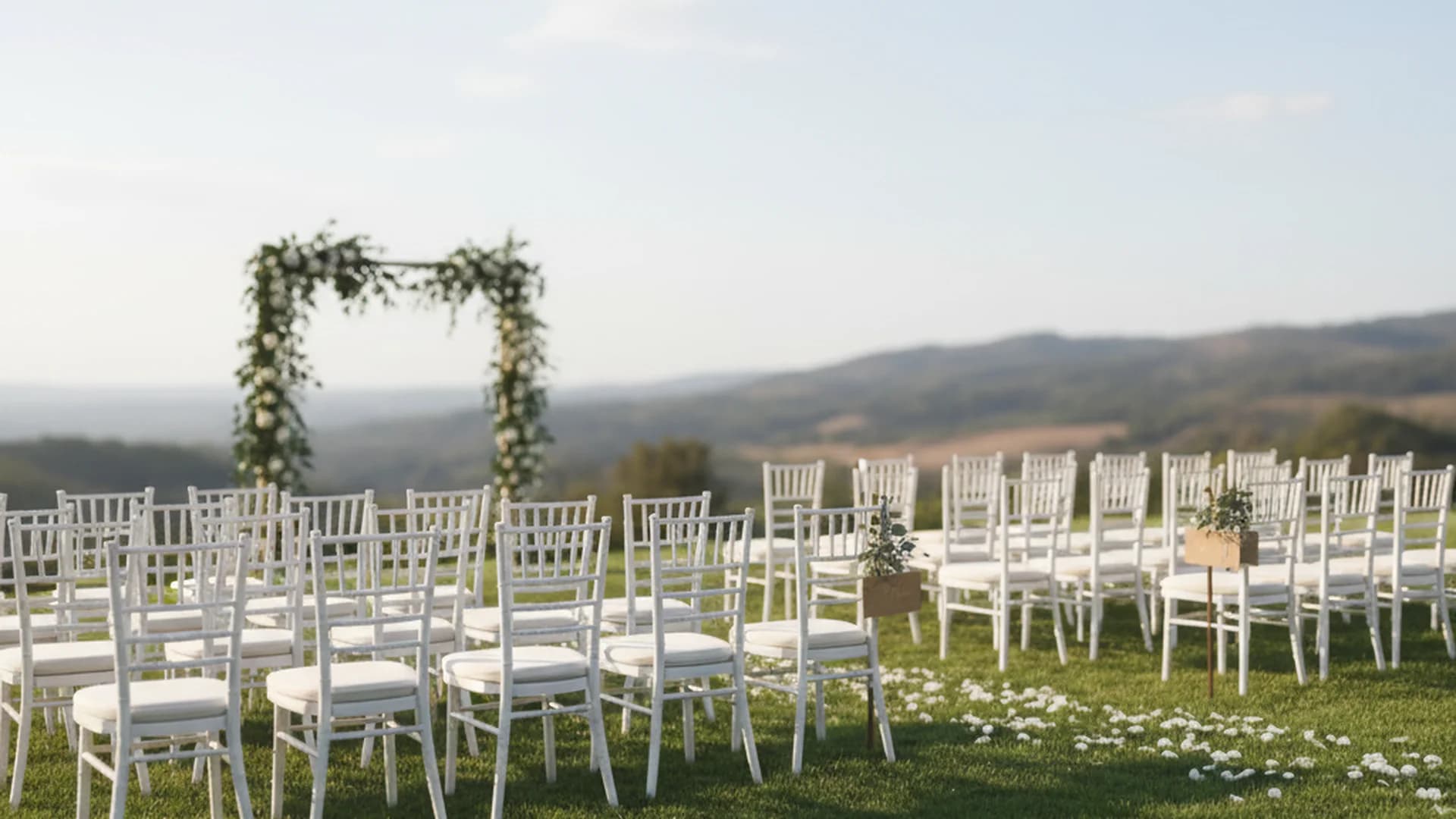
- Runway-Style Seating: Inspired by high-fashion runways in Milan and Paris, this layout features a long, narrow aisle with only two rows of chairs on either side. This gives almost every guest a "front-row" view of the processional and creates a high-energy, intimate environment.
- Ceremony in the Round: For an intimate and egalitarian feel, circular layouts place the couple in the center with seats radiating outward in concentric circles. This signifies that the couple is surrounded and supported by their community.
- Spiral Seating: In this 2026 trend, guests are seated in a winding, spiral path. The couple walks through the entire "spiral" of guests to reach the center, allowing every attendee to see the couple up close during the entrance.
Note
Handling Complex Family Dynamics
The wedding seating ceremony can often be a source of stress when dealing with divorced parents or family members who do not get along. As a ceremony designer, I recommend a proactive approach to prevent discomfort.
Strategic Buffering
If parents are divorced and on strained terms, the best practice is to seat the mother (and her partner) in the first row. The father (and his partner) should then be seated in the second or third row. This provides a physical and emotional "buffer" while still keeping both parents in the designated VIP section.
| Guest Category | Recommended Row | Notes |
|---|---|---|
| Parents (Married) | Row 1 | Front and center |
| Divorced Parent A | Row 1 | Typically the mother or primary caregiver |
| Divorced Parent B | Row 2 or 3 | Provides a respectful buffer |
| Grandparents | Row 1 or 2 | Ensure easy access for mobility issues |
| Wedding Party | Row 1 or 2 | If the ceremony is longer than 20 minutes |
The Role of Ushers
One of the most common mistakes is underestimating the need for ushers. The gold standard is one usher for every 50 guests. Ushers do more than just hand out programs; they prevent "back-row huddling" and ensure that guests fill the front and middle rows first, which looks much better in photography.
Heads up
Accessibility and Guest Comfort
With a meaningful share of wedding guests requiring some form of seating accommodation, accessibility should never be an afterthought. This is a core component of a modern, inclusive wedding seating ceremony.
Essential Accommodations
- Aisle-End Strategy: Reserve seats at the ends of aisles for elderly guests or those with young children. This allows for a quick and discreet exit if a guest needs a break or if a child becomes restless.
- Wheelchair Space: Don't just place a chair in a spot; remove the chair entirely to create a dedicated space for guests using wheelchairs.
- Proximity to Audio: Seat guests with hearing impairments near the front or closer to the speakers, but avoid placing them directly next to high-decibel subwoofers.
The Rise of the Unplugged Ceremony
A growing majority of couples now prefer "unplugged" ceremonies. This means asking guests to remain seated and keep their phones away. Not only does this ensure your professional photographer (or social media content creator) gets clean shots, but it also encourages guests to be mentally present.
Do this
From the OurVows workspace
Shaping your ceremony?
Draft your vows and ceremony, then keep the whole day organized in one place.
Common Mistakes to Avoid
Even with the best intentions, certain pitfalls can disrupt the flow of your wedding seating ceremony.
- The "No-Seating-Plan" Nightmare: "Pick a seat, not a side" does not mean "no plan at all." You still need reserved signs for your VIPs and ushers to guide the flow.
- Ignoring the Wedding Party: If your ceremony includes a Christian Wedding Ceremony Script or other detailed readings that exceed 20 minutes, your bridesmaids and groomsmen should have reserved seats. Expecting them to stand perfectly still for 45 minutes often leads to fainting or visible discomfort.
- The "Singles Table" Mentality: Do not group single people at the back or in a "singles row." Guests should be seated based on their relationship to the couple, not their marital status.
- Staggering Issues: Ensure chairs are slightly staggered so that guests aren't looking directly at the back of the head of the person in front of them. This is especially important in flat-ground outdoor settings.
Trends for 2026: The Aesthetic Shift
As we look toward 2026, the wedding seating ceremony is becoming a canvas for artistic expression.
Meadowcore Aisles
Moving away from traditional ribbon or floral bunches tied to chairs, "grounded" florals are the new standard. These are low-lying arrangements that appear to grow directly out of the floor, lining the entire length of the aisle. This creates a lush, organic feel that doesn't obstruct the view of the guests.
Statement Seating Installations
Couples are increasingly replacing standard folding chairs or pews with "installation" seating. This might include:
- Mismatched vintage velvet chairs for a bohemian vibe.
- Stadium-style sloped seating for large outdoor weddings to ensure perfect sightlines.
- Velvet lounges for the first two rows to give immediate family a luxurious experience.
Frequently asked questions
Who sits in the first row?
How many ushers do I actually need?
Should bridesmaids and groomsmen sit down?
How do we handle seating for an outdoor ceremony with sun?
Do we need a seating chart for the ceremony?
Conclusion
The wedding seating ceremony is the foundation upon which the rest of your wedding day is built. By balancing traditional etiquette with modern trends like runway layouts and "meadowcore" aesthetics, you can create an environment that is both beautiful and functional. Remember that the goal is to make your guests feel like honored witnesses rather than mere spectators.
Whether you are using our Tools - Guest Count Calculator to finalize your numbers or writing your own vows with a Tools - Wedding Vow Writer, keep the comfort and sightlines of your guests at the forefront of your planning. With a clear plan, a few strategic ushers, and a touch of 2026 style, your ceremony will be a seamless and unforgettable experience.
Do this
Ready when you are
Plan Your Perfect Ceremony
Use our tools to manage your guest list and seating strategy today.
Ready when you are
Plan your wedding without the chaos.
Free forever for couples just getting started. Two minutes to set up. No credit card.
Keep reading
Crafting the Perfect Second Marriage Ceremony Script: A Guide to New Beginnings
Planning a remarriage? Discover how to write a Second Marriage Ceremony Script that honors your past while celebrating a beautiful, mature future.
Pew Decorations Wedding: 15 Inspiring Ideas and Trends for 2025-2026
Transform your ceremony aisle with stunning pew decorations wedding ideas. From sustainable florals to 2026 trends, learn how to frame your walk to the altar.
The Ultimate Wedding Processional Order Guide: Traditions and Modern Trends
Master your wedding processional order with our comprehensive guide. From traditional Christian and Jewish lineups to modern LGBTQ+ and 2025 trends.