Mastering Wedding Photo Thank You Cards: Etiquette, Trends, and Wording for 2025-2026
Learn the essential etiquette and modern trends for wedding photo thank you cards. From wording formulas to 2026 design trends, ensure your gratitude is perfect.
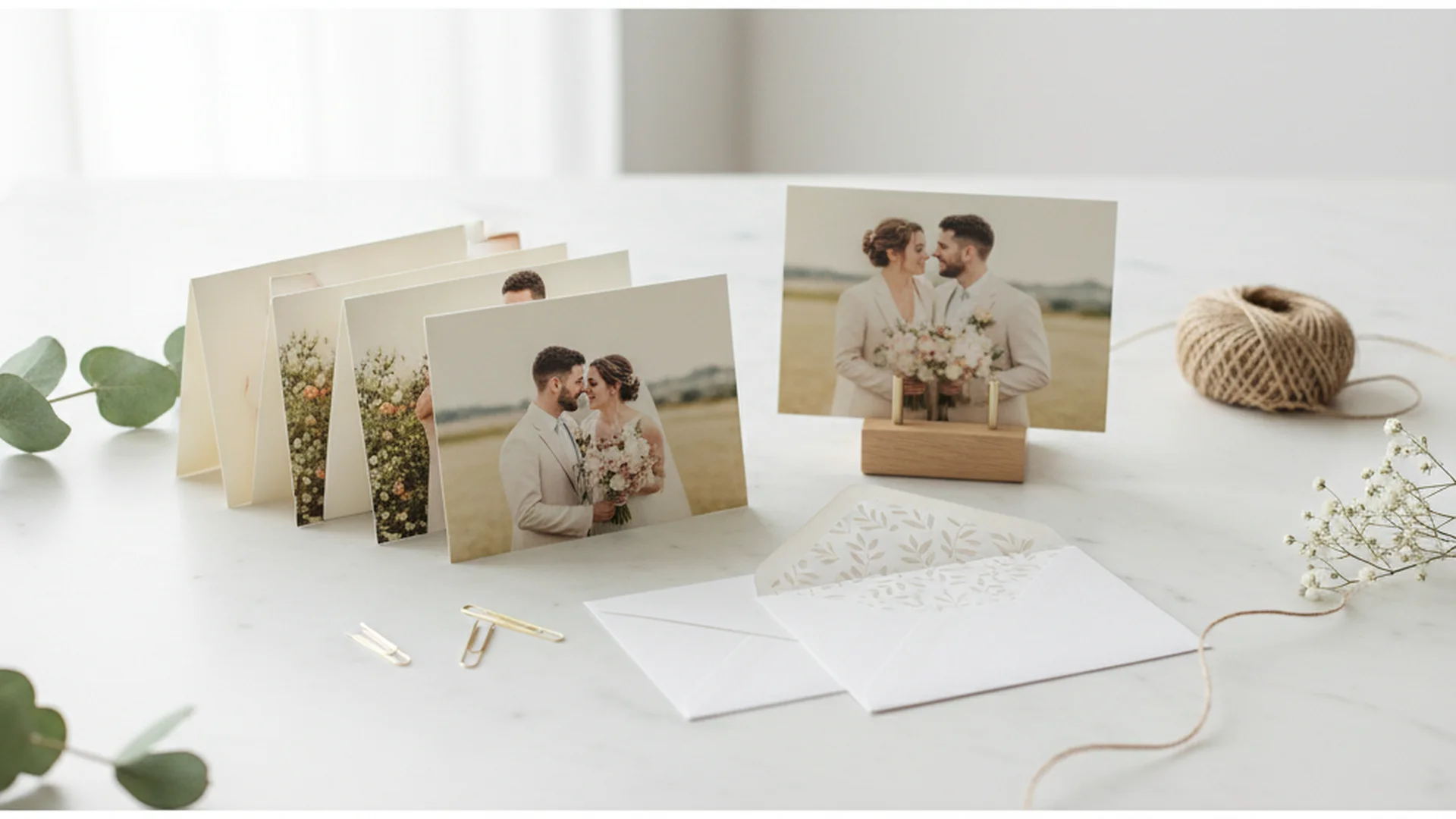
- The "3-month rule" is the modern standard for sending wedding thank you cards.
- Most couples now prefer single-photo designs over complex collages.
- A 3-step wording formula ensures every note is personal and sincere.
The confetti has settled, the honeymoon tan is starting to fade, and your professional gallery has finally landed in your inbox. Now comes the final, most meaningful task of your wedding journey: sending out wedding photo thank you cards. While it may feel like a daunting administrative hurdle, these cards are more than just stationery—they are a tactile keepsake of your gratitude and the first official "branding" of your new life as a married couple.
In the digital age, receiving a physical card in the mail has become a rare luxury. For the 2025 and 2026 wedding seasons, couples are leaning into this "final luxury" by pairing stunning professional photography with high-end, textured materials. Whether you are navigating the nuances of cash gift etiquette or looking for the latest "Rococo Revival" design trends, this guide will ensure your thank you process is as seamless as your walk down the aisle.
The Modern Etiquette of Wedding Gratitude
One of the most persistent myths in the wedding industry is that couples have a full year to send out their thank you notes. In reality, waiting twelve months is now considered significantly rude. In our fast-paced, hyper-connected world, guests expect acknowledgment much sooner.
The 3-Month Rule vs. The 2-Week Rule
The current "gold standard" for wedding thank you cards is three months post-wedding. This window allows you enough time to receive your professional photos, design your cards, and write thoughtful messages without the task hanging over your head for half a year.
However, there is a different timeline for gifts received before the big day. If a guest sends a gift to your home a month before the ceremony, etiquette dictates a two-week turnaround. Sending a prompt note confirms that the gift arrived safely and allows you to clear a small portion of your list before the wedding chaos begins.
Heads up
Who Receives a Card?
A common question arises: do you need to send a card to a guest who didn't provide a gift? The answer is a resounding yes. Your guests invested time, travel expenses, and emotional energy to celebrate with you. A card featuring a beautiful photo of the day serves as a thank you for their presence and a memento of the event.
Furthermore, don't forget the vendors who made the magic happen. Sending a personalized note to your photographer, florist, or planner—perhaps featuring a photo of their specific work—is a gesture that is highly valued in the industry and often leads to long-lasting professional relationships.
2025–2026 Design Trends: Beyond the Standard Card
As we look toward the 2026 season, wedding photo thank you cards are evolving from simple cards into interactive experiences and high-fashion statements.
The Rise of Tactile Textures
Couples are moving away from basic, flat cardstock in favor of "touchable" materials. We are seeing a surge in:
- Seed Paper: Eco-conscious couples are choosing cards that guests can actually plant in their gardens to grow wildflowers.
- Velvet-Pressed Accents: Adding a touch of luxury with soft, velvet textures on borders or typography.
- Hand-Torn Deckled Edges: For a romantic, "old-world" aesthetic that feels artisanal and bespoke.
Statement Shapes and Bold Palettes
While classic white and cream will never go out of style, the upcoming seasons are embracing "Statement Shapes." Expect to see asymmetrical cuts, scalloped edges, and ovals instead of the traditional rectangle.
Color palettes are also shifting. Influenced by pop culture and high fashion, "Taylor Swift Orange," deep cerulean, and rich plum are replacing muted pastels. These bold colors provide a striking frame for a high-contrast wedding portrait.
The "Rococo Revival" and AR Technology
We are currently witnessing a "Rococo Revival"—a shift toward flamboyant, ornate designs. This includes custom watercolor crests and "old money" serif typography. On the flip side of this traditionalism is the rise of Augmented Reality (AR) Cards. By 2026, many couples will include a small QR code on the back of their physical card. When scanned, the photo on the front "comes to life" as a 15-second highlight reel of the wedding.
| Trend Feature | 2024 Style | 2025-2026 Evolution |
|---|---|---|
| Layout | Multi-photo collage | Single, vertical portrait |
| Edges | Straight/Clean | Hand-torn/Scalloped |
| Colors | Neutral/Blush | Bold Orange/Cerulean |
| Tech | Standard Print | AR-Integrated Video |
Note
The 3-Step Wording Formula
As a professional vow ghostwriter, I often see couples freeze when they sit down to write their notes. To combat "thank you fatigue," use this simple, foolproof formula for every card.
1. The Greet
Address your guests by their preferred names. This seems obvious, but double-check spellings, especially for plus-ones you may not know well.
- Example: "Dear Aunt Susan and Uncle Mike,"
2. The Thank You
Explicitly mention the gift or their presence. If they gave a cash gift, do not mention the dollar amount. Instead, mention how you intend to use it.
- Example: "Thank you so much for the beautiful stoneware set. It looks perfect on our new kitchen shelves!"
- Cash Example: "Thank you for your incredible generosity. We are putting it toward our down payment for our first home."
3. The Connection
Share a specific memory from the wedding night or look forward to a future meeting. This is what makes the card personal rather than generic.
- Example: "We were so happy you could make the trip from Chicago. Seeing you dominate the dance floor during the 80s medley was a highlight of our night!"
Tip
From the OurVows workspace
Organizing your wedding photos?
Collect, store, and share every photo — and keep the day's timeline tight so nothing's missed.
Real-World Wording Examples
Example 1: To a Close Family Member (Gift Given)
"Dear Grandma, thank you so much for the heirloom quilt. It is a treasure we will keep in our family forever. We were so happy you could be there to see us exchange our vows—having you in the front row meant the world to us. We can't wait to visit you next month and show you the wedding album!"
Example 3: To a Friend (Attendance Only, No Gift)
"Hi Mark, we are so glad you could celebrate with us! Your energy on the dance floor was exactly what the party needed. Thank you for making the trip and for being part of such a special day in our lives. Let’s grab dinner soon to catch up properly!"
Example 3: To a Vendor (Photographer)
"Dear [Photographer Name], thank you for capturing our day so perfectly. This photo on the front of the card is our absolute favorite! Your professionalism and eye for detail made us feel so at ease. We will treasure these images for a lifetime."
Do this
Common Mistakes to Avoid
Even with the best intentions, it is easy to stumble during the thank you card process. Avoid these common pitfalls:
- Pre-printed Generic Messages: Never send a card that only has a printed "Thank you for coming" and a signature. It feels impersonal and transactional. Always include at least one handwritten sentence.
- Skipping the Return Address: Your thank you card is often the first piece of mail your guests will receive with your new "married" name or updated address. Ensure the return address is clear on the envelope.
- Postage Errors: Modern "statement shape" cards or those printed on extra-thick cotton cardstock often weigh more than a standard letter. Always take one finished envelope to the post office to be weighed before you buy your stamps.
- The One-Size-Fits-All Photo: While a single photo is popular, consider printing a small batch of different photos. Send the "party vibe" photo to your college friends and the "traditional ceremony" photo to your older relatives.
- Waiting for the "Perfect" Moment: Don't wait for a rainy Sunday to write all 150 cards. Use "batch writing" to tackle 5 cards a night over a few weeks. This keeps your handwriting neat and your thoughts fresh.
If you are looking for more ways to manage your wedding imagery, check out our Complete Wedding Photo Management Guide for expert tips on organizing your gallery.
Frequently asked questions
Do I have to send a card to someone who didn’t give a gift?
Can I send digital thank you cards?
Is it "too late" if it’s been six months?
Should I mention the amount of a cash gift?
How do I handle cards for people who were invited but couldn't attend?
Conclusion
Your wedding photo thank you cards are the final chapter of your wedding story. By combining the timeless etiquette of the "3-month rule" with modern 2025 trends like tactile textures and bold palettes, you create a lasting impression on your guests. Remember, the goal isn't just to check a task off your list—it's to sincerely thank the people who supported you as you began your new life together.
If you're still in the process of organizing your images before designing your cards, you might find our guide on Collecting Guest Wedding Photos helpful to ensure you have every angle covered.
Do this
Ready when you are
Ready to Design Your Cards?
Start organizing your wedding gallery and select your favorite shots today.
Ready when you are
Plan your wedding without the chaos.
Free forever for couples just getting started. Two minutes to set up. No credit card.
Keep reading

Wedding Photo Organization Tips: From Professional Galleries to Guest Captures
Master your wedding gallery with these pro wedding photo organization tips. Learn about the 3-2-1 backup rule, folder structures, and 2025 digital trends.
Must Have Wedding Photo Moments: A Guide for 2025 and 2026 Couples
Discover the essential must-have wedding photo moments for the 2025-2026 season. From documentary-style candids to editorial trends, capture every memory perfectly.

The Ultimate Guide to Choosing a Wedding Photo Collection Tool for 2025
Discover why a wedding photo collection tool is essential for capturing every guest's perspective. Learn about QR systems, AI features, and 2025 trends.