The Ultimate Wedding Makeup Timeline: A Guide for 2025 and 2026
Master your wedding morning with our comprehensive wedding makeup timeline. Learn expert tips on scheduling, costs, and 2026 beauty trends for a stress-free day.
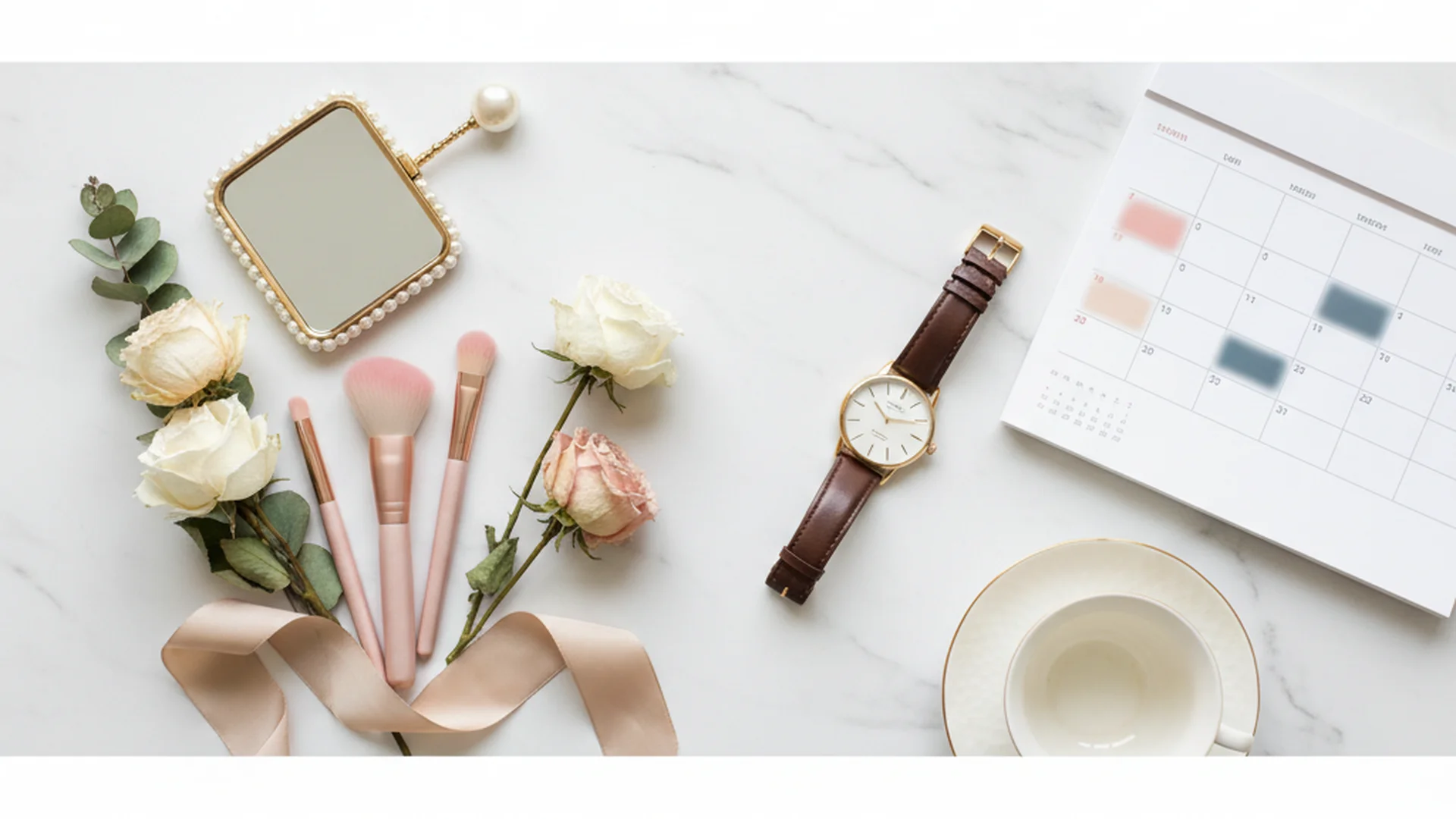
- Book your makeup artist 9-12 months in advance for peak season.
- The bride should ideally be scheduled second-to-last for the best results.
- Incorporate a 30-minute buffer to account for unexpected morning delays.
The morning of your wedding is a whirlwind of emotions, champagne toasts, and anticipation. Amidst the joy, the logistics of getting everyone ready can quickly become a source of stress if not managed properly. This is where a meticulously planned wedding makeup timeline becomes your greatest asset. As a relationship counselor, I often tell my clients that a peaceful start to your wedding day sets the tone for the entire celebration. By removing the "rush" from your beauty routine, you create space for meaningful connection with your bridesmaids and family.
For the upcoming 2025 and 2026 seasons, bridal beauty is shifting toward "elevated naturalism." This trend emphasizes healthy, tech-prepped skin and precision timing to ensure that your look remains flawless from the first photo to the final dance. In this guide, we will break down everything you need to know about structuring your beauty schedule to ensure your morning is as beautiful as your final look.
The Foundation of Your Beauty Schedule
Planning your wedding makeup timeline isn't just about the day itself; it is a year-long process. In the current market, professional makeup artists (MUAs) are in high demand. If you are eyeing "lucky" or symmetrical dates in 2026—such as June 6th (06/06/26) or October 10th (10/10/26)—the competition is even more fierce. Many luxury artists are now seeing bookings up to 18 months in advance.
When you begin your search, consider how your beauty budget fits into your overall plan. While the average mid-range professional in the U.S. charges between $150 and $350, luxury services can range significantly higher. To help you navigate these costs, you might find our Wedding Budget Calculator useful for balancing your beauty aspirations with your floral and venue expenses.
The Trial: Your Stress Test
Most brides now opt for a makeup trial, and for good reason. A trial, typically scheduled 3–6 months before the big day, is more than just a practice run for your look; it is a "stress test" for the products. You need to see how the foundation interacts with your skin over 12 hours and how the colors translate in different lighting.
Tip
Mastering the "Ready Time" Formula
The most common mistake couples make is working forward from their wake-up time. Instead, you must work backward from your "Ready Time."
Your Ready Time should be exactly one hour before you need to leave for the ceremony, or 30 minutes before your photographer is scheduled to arrive for "getting ready" shots. This hour serves as your final insurance policy against late floral deliveries, lost shoes, or extra-long hugs from emotional relatives.
The Sequencing Strategy
Who goes first? Who goes last? Industry experts recommend the "Bride Second-to-Last" rule.
- Why not last? If the morning runs behind (and it often does), the bride is the one who ends up rushed. You want your artist to have ample time for your application without glancing at the clock.
- Why not first? You want your makeup to be as fresh as possible for the ceremony.
- The solution: By going second-to-last, you are finished just as the final bridesmaid is starting. This leaves you time to step into your dress while the artist performs final lip touch-ups on everyone.
Heads up
Sample Wedding Makeup Timeline
To help you visualize your morning, let’s look at a standard schedule for a 4:00 PM ceremony with no "First Look" photo session.
| Time | Action | Party Member |
|---|---|---|
| 09:00 AM | Artist Arrival | Setup & Coffee |
| 09:30 AM | Session 1 | Bridesmaid #1 (Reliable) |
| 10:15 AM | Session 2 | Bridesmaid #2 |
| 11:00 AM | Session 3 | Mother of the Bride |
| 11:45 AM | The Main Event | The Bride (60-90 mins) |
| 01:15 PM | Session 4 | Bridesmaid #3 |
| 01:45 PM | Touch-ups | Entire Party |
| 02:00 PM | Service Complete | Bride Dresses |
| 03:00 PM | Photos | Pre-ceremony shots |
Note
Emerging Trends for 2025 and 2026
The world of bridal beauty is evolving rapidly. For the 2025–2026 seasons, we are seeing a move away from the "heavy glam" of the past decade toward a more sophisticated, tech-forward approach.
1. Satin Skin and High-Tech Prep
The "Clean Girl" aesthetic of 2024 is evolving into "Satin Skin" for 2026. This look is luminous but controlled—achieved not through heavy shimmer, but through advanced skincare. Many brides are now incorporating LED light therapy masks and microcurrent devices (like the NuFace) into their routine three months before the wedding to improve skin elasticity.
2. Monochromatic Harmony
The 2026 trend is all about a harmonious, "Old Money" aesthetic. This involves using the same rosy, peach, or terracotta tones across the eyes, lips, and cheeks. It creates a seamless look that translates beautifully in film photography. If you are looking for inspiration on how to pair these tones with your hairstyle, check out our guide on Bridal Makeup Ideas.
3. Neurocosmetics
This is perhaps the most interesting shift in the industry. MUAs are increasingly using "mood-boosting" skincare. Products containing CBD or specific aromatherapy oils are used during the makeup application to help calm the bride's nervous system. It transforms the makeup chair into a sanctuary of peace amidst the morning chaos.
From the OurVows workspace
Planning a wedding is a lot. We make it feel like less.
Checklist, budget, guest list, and a wedding website — together in one free workspace built for both of you.
Real-World Examples
Example 1: The High-Fashion Destination
Sarah, a 2025 bride, wanted a "liquid chrome" accent for her evening wedding in Italy. Because her ceremony wasn't until 6:00 PM, her wedding makeup timeline started at 1:00 PM. By using a tech-driven primer, her MUA ensured her "Satin Skin" look survived the Mediterranean heat.
Example 2: The Large Bridal Party
Jessica had eight bridesmaids and two mothers. Instead of one artist, she hired a team of three. They utilized a "station" approach: one artist focused on skin, another on eyes, and a third on Wedding Hair Ideas. This allowed everyone to be ready in just four hours.
Example 3: The Elopement
For a sunrise elopement, the bride opted to go first. While this breaks the "second-to-last" rule, it was necessary for a 5:00 AM departure. She used a professional-grade setting spray to ensure her look lasted through her post-ceremony brunch.
Common Mistakes to Avoid
Even the best-laid plans can go awry. Here are the most common pitfalls brides face when building their beauty schedule:
- The "Last-Minute Facial" Mistake: Never schedule a professional facial or a chemical peel within 14 days of your wedding. Your skin needs time to move past any "purging" or redness.
- Underestimating Packing Time: If you are getting ready in a hotel but moving to a venue, you need at least 20 minutes to pack up your "getting ready" kits. Don't let this eat into your photo time.
- Ignoring the Neck and Chest: A common fail is a perfectly matched face with a differently-toned chest. Ensure your MUA blends your foundation down to the neckline of your dress.
- Heavy Daytime Contouring: TikTok trends often look like bruising in natural sunlight. For 2025, stick to "soft sculpting."
- Forgetting the Hair Sequence: Generally, you should do hair first. The heat from curling irons and blow dryers can cause sweating, which can melt fresh makeup. To see how to coordinate these, view our Wedding Hair Ideas article.
Heads up
Frequently asked questions
Should I do hair or makeup first?
When should I wash my face and hair?
Do I need to provide a touch-up kit for my bridesmaids?
How do I fit my makeup timeline into my overall planning?
Conclusion
A well-structured wedding makeup timeline is the secret ingredient to a joyful, relaxed wedding morning. By understanding the "Ready Time" formula, embracing modern 2026 trends like "Satin Skin," and avoiding common skincare pitfalls, you can ensure you look and feel your absolute best. Remember, the goal isn't just to look beautiful for the photos—it's to enjoy every second of the journey toward your "I do."
Do this
Ready when you are
Plan Your Perfect Day
Start organizing your wedding journey with our expert tools.
Ready when you are
Plan your wedding without the chaos.
Free forever for couples just getting started. Two minutes to set up. No credit card.
Keep reading
The Ultimate Guide to Romantic Wedding Hair for 2025–2026
Discover the top romantic wedding hair trends for 2025, including Old Money waves and modern updos. Learn expert tips for healthy, sophisticated bridal hair.
The Ultimate Guide to Wedding Day Hair Tips: 2025-2026 Edition
Discover professional wedding day hair tips for 2025-2026. From "quiet luxury" trends to scheduling and trial advice, get the flawless bridal look you deserve.
The Ultimate Bridal Manicure Guide: 2025 Trends, Timelines, and Expert Tips
Discover the essential bridal manicure guide for 2025. Learn about the latest trends, the perfect prep timeline, and expert tips for picture-perfect wedding hands.