The Ultimate Wedding Catering Guide for 2025 and 2026
Planning your wedding menu? Our comprehensive wedding catering guide covers 2025 trends, costs, service styles, and expert tips to ensure a delicious reception.
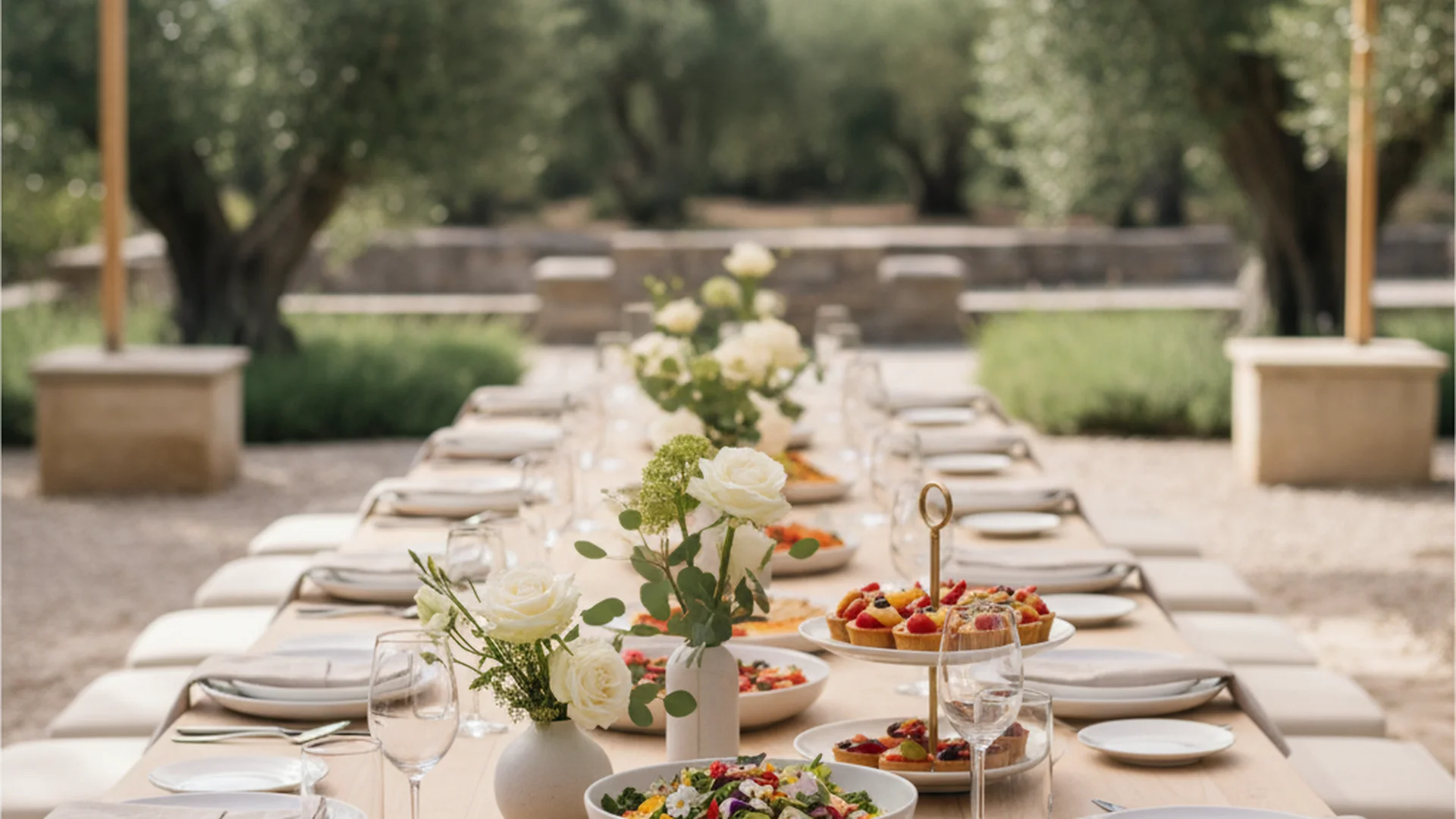
- Budget 30% to 40% of your total wedding funds for catering and beverages.
- Interactive food stations and "story-driven" menus are the top trends for 2025.
- Secure your caterer 9 to 12 months in advance to ensure availability.
Planning a wedding is a feat of storytelling. From the vows you exchange to the music that fills the dance floor, every detail reflects your journey as a couple. However, if there is one element that guests will remember long after the final sparkler exit, it is the food. This Wedding Catering Guide is designed to help you navigate the complex world of event dining, ensuring your reception is not just a meal, but a culinary experience that resonates with your personal style.
In 2025 and 2026, wedding catering is shifting away from the "standardized" three-course meal toward immersive, interactive, and deeply personal dining experiences. Whether you are dreaming of a formal black-tie gala or a relaxed garden party, understanding the logistics, costs, and current trends is essential for a stress-free planning process.
Understanding the Financial Landscape
Before you fall in love with a five-course tasting menu, it is vital to understand the market reality of catering costs. The national average for wedding catering ranges from $85 to $135 per guest. If you are getting married in high-demand metropolitan areas like New York City, San Francisco, or Los Angeles, expect those figures to climb between $150 and $200 per guest.
When using a wedding budget calculator, you should typically allocate approximately 30% to 40% of your total budget to food and beverages. For a mid-sized wedding of 120 guests, this translates to a total catering bill of roughly $10,000 to $16,000.
Note
Top Wedding Catering Trends for 2025–2026
The upcoming wedding seasons are all about breaking the mold. Couples are prioritizing guest interaction and "Instagrammable" moments over traditional formality.
Interactive Food Stations
Moving beyond the standard buffet, 2025 weddings feature "action stations." Imagine a chef hand-rolling sushi to order, a live-fire pizza oven on the patio, or a DIY poke bowl bar. These stations act as entertainment and dinner combined, encouraging guests to mingle rather than stay seated for hours.
Story-Driven & Nostalgic Menus
As a vow ghostwriter, I always tell my clients that the best stories are in the details. Catering is no different. Couples are now choosing "nostalgic favorites" that reflect their relationship.
- The "First Date" Course: Serving a gourmet version of the pasta dish you shared on your first date.
- Hometown Flavors: Mini chicken and waffles with hot honey for a Southern groom, paired with lobster rolls for a New England bride.
"High-Low" Pairings
One of the most fun trends for 2026 is upscale nostalgia. This involves taking "comfort food" and giving it a Michelin-star makeover. Think truffle mac-and-cheese served in petite porcelain ramekins or high-end champagne served alongside gold-leaf-garnished chicken nuggets.
Plant-Forward & Zero-Waste
Sustainability has moved from a "nice-to-have" to a "non-negotiable." Many couples now prioritize locally sourced food. This includes zero-waste menus—where chefs creatively repurpose scraps into stocks or garnishes—and gourmet vegan mains like mushroom Wellington that appeal to carnivores and herbivores alike.
Tip
Choosing Your Service Style
The style of service you choose dictates the "vibe" of your entire evening. Use the table below to compare the most popular options:
| Service Style | Pros | Cons | Best For |
|---|---|---|---|
| Plated (Sit-down) | Elegant, formal, highly organized | More expensive labor, less variety | Black-tie weddings |
| Buffet | High variety, guests get exactly what they want | Can feel "crowded," requires more food volume | Casual or large weddings |
| Family Style | Encourages conversation, intimate feel | Requires large tables, can be messy | Small wedding receptions |
| Interactive Stations | Engaging, modern, personalized | Requires more floor space, can be slower | Unique wedding receptions |
Heads up
Logistics and Expert Recommendations
Success in wedding catering is 50% about the food and 50% about the logistics. A beautiful steak means nothing if it is served cold because the kitchen was too far from the tables.
The 9–12 Month Rule
Top-tier caterers are often the second or third vendor booked after the venue. You should secure your caterer as soon as your date is locked in. If you are still in the early stages, check out our 12-month wedding planning checklist to stay on track.
The Site Visit
Never hire a caterer who hasn't seen your venue or at least reviewed the floor plan. Issues like limited electrical power (especially for coffee machines and ovens), a lack of running water, or steep stairs can lead to "day-of" disasters.
Coordination with the Program
Ensure your caterer is in sync with your DJ or planner. There is nothing worse than a kitchen ready to serve hot entrées just as a 15-minute unplanned toast begins. Cold food is the number one guest complaint at weddings.
Do this
From the OurVows workspace
Planning the reception?
Build the timeline, work out the bar, and seat every guest — without the spreadsheet chaos.
Common Mistakes to Avoid
Even the most organized couples can fall into these catering traps:
- Overcomplicating the Menu: Trying to offer too many "adventurous" dishes can backfire. Expert Tip: Offer one "safe" crowd-pleaser (like a high-quality roasted chicken or steak) and one "signature" adventurous dish (like a spicy Thai fusion plate).
- Underestimating "Hidden" Costs: Many couples forget to budget for "vendor meals." You are responsible for feeding your photographer, DJ, and coordinator. Also, don't forget the cost of rentals—linens, glassware, and ice can add thousands to the bill.
- Padding the Guest Count Too Much: Caterers are experts at planning for unexpected plus-ones. Don't pay for 20 extra "just in case" plates. Use a guest count calculator to get an accurate number and trust your professional to handle the margin.
- Ignoring Dietary Restrictions: In 2025, providing a gluten-free or vegan option isn't an "extra"—it's an expectation. Ensure your caterer treats these dishes with the same culinary respect as the main entrée.
Real-World Examples of Modern Catering
To help you visualize your menu, here are three real-world examples of how couples are applying these tips:
- The "Traveler's" Reception: A couple who loved traveling featured three stations: a street taco bar (representing their engagement in Mexico), a dim sum station (their favorite late-night food), and a gelato cart (from their first vacation together).
- The "Elevated Picnic": For an outdoor wedding reception, the couple served family-style platters of herb-roasted chicken, seasonal stone fruit salads, and artisanal sourdough, creating a "dinner party" atmosphere.
- The Late-Night Hero: A couple served a formal plated dinner but surprised guests at 11:00 PM with a "Savory Cake"—a tiered tower made of different artisanal cheeses, served with crackers and wood-fired mini pizzas.
Frequently asked questions
Should I choose a venue or a caterer first?
How do I handle dietary restrictions?
What exactly is a "service charge"?
How do I ensure we don't run out of food?
Is a "tasting" necessary?
Conclusion
Your wedding catering is the fuel for your celebration. By focusing on personalization, understanding the logistical "heavy lifting," and staying mindful of your budget, you can create a menu that is as memorable as your vows. Whether you are serving a five-course Michelin-style meal or gourmet sliders under the stars, the goal is the same: to bring your loved ones together over a shared, delicious experience.
For more help planning your big day, check out our complete guide to wedding reception planning or use our tools to stay organized.
Do this
Ready when you are
Ready to Plan Your Menu?
Start organizing your reception details with our interactive tools.
Ready when you are
Plan your wedding without the chaos.
Free forever for couples just getting started. Two minutes to set up. No credit card.
Keep reading
The Ultimate Guide to Wedding Processional Songs for 2025 & 2026
Discover the perfect wedding processional songs for your big day. From classical masterpieces to modern Taylor Swift hits, learn how to time your walk perfectly.

The Ultimate Guide to Wedding Reception Songs (2025-2026 Trends)
From classic floor-fillers to 2026's viral hits, discover the ultimate guide to wedding reception songs. Master your playlist with expert tips and trends.
25+ Fun Wedding Games for Guests: The Ultimate 2025 Entertainment Guide
Discover the best wedding games for guests to boost engagement. From lawn games to AI trivia, learn how to keep your reception lively and memorable.