Mastering Your Wedding Budget Priorities: A Guide for 2025–2026
Navigate 2025–2026 wedding costs with expert advice on wedding budget priorities, hidden fees, and modern trends like AI and experiential spending.

- Focus on the 'Rule of Three' to allocate 50% of your budget to your top non-negotiables.
- Anticipate a 2025–2026 average cost of $33,000–$42,000 depending on location and guest count.
- Watch for hidden fees like service charges (20-25%) which are separate from gratuity.
Planning a wedding in the current economic climate requires more than just a spreadsheet; it requires a philosophy. As we look toward the 2025 and 2026 seasons, the landscape of "I do" has shifted significantly. Couples are moving away from traditional expectations and toward hyper-personalized, high-impact celebrations. However, with inflation and rising labor costs, understanding your wedding budget priorities is the only way to ensure your vision doesn't outpace your bank account. Whether you are dreaming of a minimalist luxury event or a high-energy bash, setting clear boundaries early is the secret to a stress-free engagement.
The Reality of 2025–2026 Wedding Costs
The days of a "standard" $20,000 wedding are becoming increasingly rare in major metropolitan areas. Current forecasts for 2025 suggest an average total cost between $33,000 and $36,000. Looking further ahead to 2026, projections indicate that standard weddings will hover between $36,000 and $42,000.
Why the jump? It isn’t just about the price of chicken or champagne. It is the cost of labor and the desire for premium, "one-of-a-kind" experiences. While most couples admit inflation has altered their plans, the vast majority still believe the investment in their big day is worth it. To make that investment count, you must start with a how to create wedding budget strategy that accounts for the $284 average cost per guest.
Note
The Professional’s Budget Breakdown
When you look at your total "pot" of money, it can be overwhelming to decide who gets what. Most expert wedding planners recommend a percentage-based approach to keep things proportional.
| Category | Recommended Percentage | What it Covers |
|---|---|---|
| Venue & Catering | 35% – 45% | Space rental, food, and alcohol |
| Photography & Video | 10% – 12% | Full day coverage and albums |
| Wedding Planner | 10% – 15% | Full service or month-of coordination |
| Flowers & Decor | 8% – 10% | Bouquets, centerpieces, and lighting |
| Attire & Beauty | 5% – 8% | Dress, suit, alterations, hair, and makeup |
| Entertainment | 5% – 10% | DJ, live band, or specialty performers |
| Stationery & Misc | 2% – 5% | Digital invites, signage, and favors |
This breakdown is a starting point, but your specific wedding budget priorities might shift these numbers. For example, if you are using our wedding budget calculator, you might choose to slash the floral budget to afford a world-class videographer.
The "Rule of Three" for Prioritization
If you try to make everything a priority, nothing is a priority. One of the most effective strategies used by luxury planners is the "Rule of Three."
Choosing Your Non-Negotiables
Sit down with your partner and choose three elements that are absolutely vital to your happiness. For one couple, it might be an open bar with premium spirits, a high-end photographer, and a specific historic venue. For another, it might be a five-course tasting menu, a live 10-piece band, and a professional vow writer to ensure the ceremony is perfect.
Once you have your three, allocate 50% of your total budget to these items. The remaining 50% must cover everything else. This "ruthless" prioritization ensures that the things you care about most are executed perfectly, rather than having twenty different elements that are all "just okay."
Tip
Modern Trends Shifting the Budget
The 2025–2026 seasons are introducing new line items that didn't exist five years ago. Staying ahead of these trends will help you decide if they deserve a spot in your budget.
Experiential Spending and Content Creators
Couples are moving away from massive, wasteful floral displays and toward "moments." We are seeing a rise in "Social Media Content Creators"—professionals who specifically film behind-the-scenes content for Reels and TikToks so the couple can post the next day. Other experiential spends include:
- Interactive Food Stations: Custom dessert flambé or oyster shucking stations.
- Live Art: On-site painters or even guest tattoo artists.
- Quiet Luxury: Investing in premium linens and "intentional" details over flashiness.
The AI Revolution in Planning
By 2026, a growing number of couples are expected to use AI tools for their wedding. This isn't just for writing vows; AI is being used for budget tracking, itinerary planning, and even floor plan design. Utilizing these tools can sometimes save you money on entry-level planning services.
Sustainability and Digital Shifts
Sustainability is no longer a niche "bonus"—it’s a priority for a majority of modern couples. This includes zero-waste catering and locally sourced flowers. One of the easiest ways to save money while being eco-friendly is the adoption of digital-only invitations, which drastically reduces paper and postage costs.
From the OurVows workspace
Mapping out your budget?
Set category targets, log every payment, and see exactly where you stand — no spreadsheet required.
Real-World Examples of Priority Spending
To visualize how wedding budget priorities work in practice, let’s look at three different approaches for 2025:
- The Foodie Focused Wedding: This couple spent 50% of their budget on a Michelin-starred chef and a custom wine pairing. To afford this, they chose a public park venue with a low permit fee and used digital invitations.
- The Party-First Wedding: This couple prioritized a high-energy atmosphere. They spent 20% of their budget on a live band and a professional lighting crew. They saved money by hosting a "cocktail style" reception with heavy hors d'oeuvres instead of a seated three-course dinner.
- The Intimate Luxury Wedding: With only 30 guests, this couple spent $1,000 per head. Their priorities were high-end photography, a weekend-long villa rental, and personalized gifts for every guest. For more on this, see our guide on 10 guest wedding ideas.
Heads up
Common Mistakes to Avoid
Even the most organized couples can fall into traps that drain their wedding funds.
The "Pinterest Trap"
Pinterest is a wonderful tool for inspiration, but it is a dangerous tool for budgeting. Many of the photos you see are from "styled shoots" where a single table is decorated with $5,000 worth of flowers. When you try to replicate that for 20 tables, the reality of the cost can be devastating. Always ask a florist for a "real-world" estimate of a photo before getting your heart set on it.
Underestimating Hidden Fees
The price you see on the catering menu is rarely the price you pay.
- Service Charges: Usually 20%–25%. This is a fee for the venue's operations and is not a tip for the staff.
- Sales Tax: Depending on your state, this can add another 6%–10% to the bill.
- Trial Fees: Hair and makeup trials often cost almost as much as the wedding day service.
The "DIY is Cheaper" Myth
Many couples think they will save thousands by doing their own flowers or catering. However, once you factor in the cost of bulk materials, specialized tools, refrigeration, transportation, and—most importantly—your own time, DIY can often be more expensive and significantly more stressful.
Do this
Frequently asked questions
How much should a wedding actually cost?
What are the biggest hidden expenses?
How do we handle parents' financial contributions?
Is a wedding coordinator worth the extra cost?
Should we prioritize the rehearsal dinner in the main budget?
Conclusion
Your wedding is the first major financial project you and your partner will tackle together. By focusing on your wedding budget priorities and sticking to the "Rule of Three," you can create a day that feels like "you" without starting your marriage in debt. Remember, guests won't remember the color of the napkins or the thickness of the invitations—they will remember the way the food tasted, the quality of the music, and the sincerity of your vows.
To get a head start on your financial planning, use our Ultimate Wedding Budget Planning Guide to map out every dollar.
Ready when you are
Ready to Start?
Use our interactive tools to build your dream wedding budget today.
Ready when you are
Plan your wedding without the chaos.
Free forever for couples just getting started. Two minutes to set up. No credit card.
Keep reading

The Ultimate Wedding Budget for 150 Guests: 2025-2026 Planning Guide
Planning a wedding for 150? Discover the real costs, hidden fees, and expert tips for managing a wedding budget for 150 guests in the 2025-2026 season.
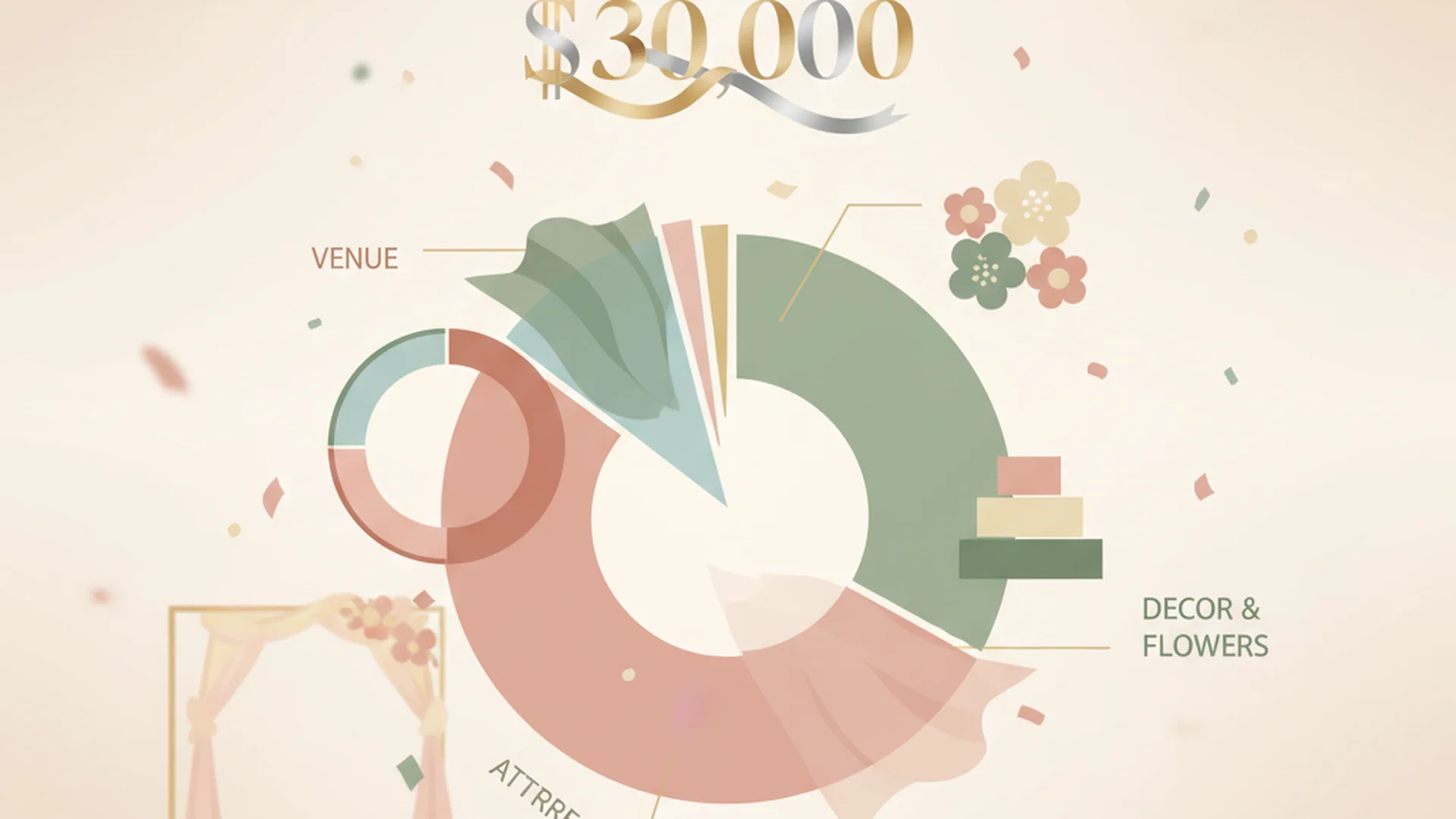
The Ultimate $30,000 Wedding Budget Breakdown for 2025-2026
Planning a wedding on a $30,000 budget? Discover a strategic breakdown of costs, 2025-2026 trends, and expert tips to maximize every dollar for your big day.
Mastering Your Budget: The Ultimate Wedding Cost Per Guest Calculator Guide
Discover how to use a wedding cost per guest calculator to manage your 2025-2026 wedding budget. Learn about average costs, hidden fees, and regional trends.