Mastering Your Wedding Budget Percentage Breakdown: 2025-2026 Planning Guide
Plan your dream day with our comprehensive 2025-2026 wedding budget percentage breakdown. Learn how to allocate funds, avoid hidden fees, and manage costs effectively.
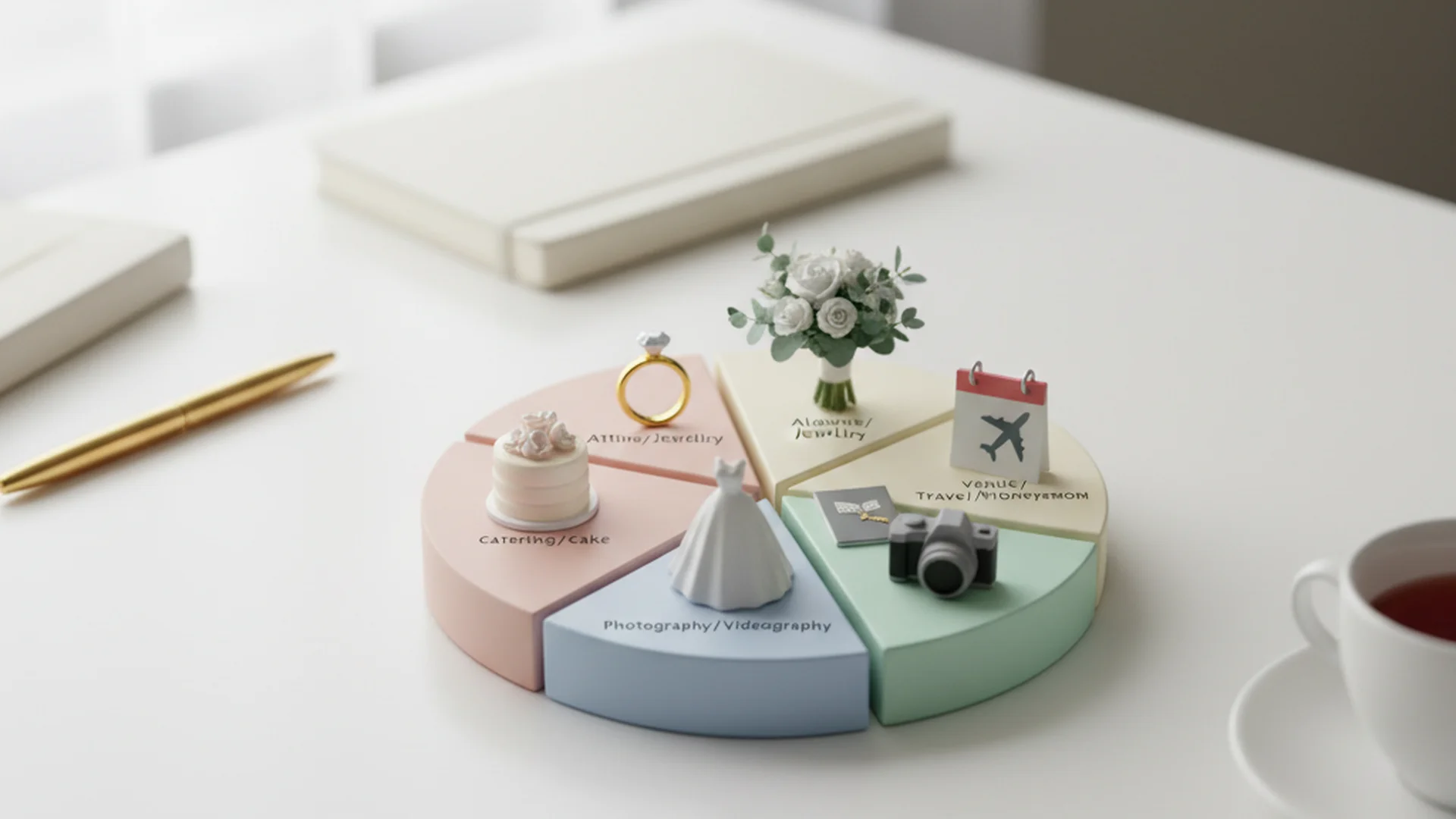
- The national median wedding cost is significantly lower than the average, reflecting a trend toward intentional spending.
- Venue and catering typically consume 35% to 50% of a modern wedding budget.
- A 10-15% contingency buffer is essential to handle rising inflation and hidden service fees.
Planning a wedding in 2025 and 2026 requires a more strategic approach than in previous years. With shifting economic landscapes, the emergence of "quiet luxury," and the integration of AI in planning, the traditional rules of the wedding budget percentage breakdown have evolved. Whether you are dreaming of a grand gala or an intimate micro-wedding, understanding where every dollar goes is the first step to a stress-free celebration.
As a professional vow ghostwriter, I see firsthand how financial stress can impact the emotional core of a wedding. When couples are overwhelmed by line items, they often lose sight of the story they are trying to tell. This guide is designed to ground your planning in reality, providing a modern framework for your expenses.
The State of Wedding Spending in 2025–2026
The wedding industry is currently witnessing a fascinating "split." On one hand, we see ultra-luxury celebrations returning to the forefront; on the other, there is a powerful movement toward intentionally intimate, high-quality gatherings.
The national average for a US wedding is projected to reach $36,000–$42,000 in the coming years. However, this number can be misleading. The national median—roughly $10,000 to $13,000—more accurately reflects what the typical couple spends when luxury outliers are removed.
Regardless of your total number, the most accurate way to predict your final spend remains the cost-per-guest model. Currently averaging $284 per person, this figure encompasses everything from the chair they sit on to the cake they eat.
Note
The Standard Wedding Budget Percentage Breakdown
To build a balanced budget, you need a starting point. The following percentages represent the current industry standards for a traditional full-service wedding.
| Category | Recommended % | Notes |
|---|---|---|
| Venue & Catering | 35% – 50% | Includes food, drink, rentals, and the space itself. |
| Photography & Video | 10% – 15% | Includes traditional media; can go higher for "docu-editorial" styles. |
| Wedding Planning | 8% – 12% | Full-service vs. day-of coordination varies significantly. |
| Flowers & Decor | 8% – 10% | Impacted by rising import costs and tariffs. |
| Entertainment | 7% – 10% | DJs ($1k–$2.5k); Live bands ($4.5k+). |
| Attire & Beauty | 5% – 8% | Includes dress, suit, alterations, and hair/makeup. |
| Stationery & Gifts | 2% – 4% | Includes invites, signage, and favors. |
| Contingency Buffer | 10% – 15% | Essential for hidden fees and last-minute needs. |
Venue and Catering: The Foundation (35%–50%)
This is almost always your largest expense. In 2025, many couples are opting for "all-inclusive" venues—hotels or estates that provide food, beverage, and rentals in one package. This strategy helps avoid the "death by a thousand cuts" caused by renting individual forks, chairs, and linens from separate vendors.
Photography and Videography: The Legacy (10%–15%)
While 10% was once the standard, the rise of "docu-editorial" and film photography has pushed this percentage higher for many couples. This is a "high-stakes" vendor category where experience often justifies a higher price tag.
The Essential Contingency Buffer (10%–15%)
When couples find their initial estimate was too low, it is usually because they skipped the buffer. This fund covers everything from a sudden rain tent rental to the 20% service fee you forgot to add to the catering bill.
Tip
Modern Trends Shifting the Budget
Wedding budgets in 2025 aren't just about flowers and cake anymore. New categories and philosophies are changing how couples allocate their funds.
Wedding Content Creators
A new line item has emerged: the Wedding Content Creator. These professionals capture iPhone-native "Behind the Scenes" content specifically for social media. Typically costing between $500 and $1,500, they allow the couple and guests to remain "unplugged" while still ensuring Reel-ready footage is available the next morning.
Quiet Luxury and "The Guest Experience"
The "Quiet Luxury" trend is a shift toward higher quality for fewer people. Instead of hosting 200 guests with standard catering, many couples are now hosting 75 guests with a multi-course, chef-led tasting menu. This often maintains a high total budget but shifts the wedding budget percentage breakdown heavily toward catering and guest comfort.
AI-Powered Planning
Couples are increasingly using AI to save time and money. From "smart guest list management" to using tools that analyze contracts for hidden clauses, technology is making the process more efficient.
Do this
Real-World Examples of Budget Allocation
To see how these percentages work in practice, let’s look at three different scenarios based on common spending levels.
Example 1: The Intimate $20,000 Celebration
- Total: $20,000
- Venue/Catering: $8,000 (Non-traditional venue like a restaurant or art gallery)
- Photo/Video: $2,500 (Focus on a great photographer, skip video)
- Flowers/Decor: $1,500 (Focus on greenery and candles)
- Other: $8,000 (Planning, attire, entertainment, and buffer)
Example 2: The $40,000 Standard Wedding
- Total: $40,000
- Venue/Catering: $18,000 (Traditional ballroom or estate)
- Photo/Video: $5,000 (Experienced professional team)
- Flowers/Decor: $4,000 (Full floral installations)
- Other: $13,000 (Full band, coordinator, and high-end stationery)
For a deeper dive into this specific tier, check out our $40000 Wedding Budget Breakdown.
Example 3: The "Quiet Luxury" $60,000 Micro-Wedding
- Total: $60,000
- Guest Count: 50
- Catering: $25,000 (Five-course meal with premium wine pairings)
- Decor: $10,000 (Customized, high-end design)
- Guest Experiences: $10,000 (Transportation, welcome gifts, and live musicians)
- Other: $15,000 (Premium photography and contingency)
From the OurVows workspace
Mapping out your budget?
Set category targets, log every payment, and see exactly where you stand — no spreadsheet required.
Common Mistakes to Avoid
Even with a perfect percentage breakdown, small oversights can lead to financial strain.
1. The "Pinterest Trap"
Expecting a celebrity-style floral wall on a standard 10% floral budget is a recipe for disappointment. High-end, "Pinterest-worthy" decor often requires 20% or more of the total spend. If the aesthetic is your priority, you must be willing to scale back on food or guest count.
2. Forgetting Service Fees and Taxes
Most quotes from venues and caterers do not include the "service charge" (often 18–25%) or state sales tax. On a $20,000 catering bill, these "hidden" costs can add $5,000 or more to your final total.
3. Hiring Based on Price Alone
Choosing the cheapest photographer or DJ often leads to "re-shoot" costs or a "stress tax." In high-stakes categories, paying for experience is a form of insurance.
Heads up
Expert Strategies for Budget Success
To make your wedding budget percentage breakdown work for you, follow these three "pro-tips" used by industry veterans.
- The "Rule of Three": Choose the top three elements that matter most to you (e.g., food, photography, and open bar). Allocate a larger percentage there and be intentionally minimalist on the rest.
- Tiered Guest Lists: Create an "A-List" (must-haves) and a "B-List." Since guest count is the #1 driver of cost, this helps you scale the budget dynamically as RSVPs come in. You can use a Guest Count Calculator to see how each additional guest impacts your bottom line.
- Sustainability Standards: Eco-conscious spending is now mainstream. Budgeting for "reusable" floral installations or digital-only invitations can save you between $500 and $2,000 while reducing your wedding's carbon footprint.
Frequently asked questions
Can I plan a full wedding for under $20,000?
How much should I tip wedding vendors?
Does location impact the budget?
How do I start a budget from scratch?
Conclusion
Creating a wedding budget percentage breakdown isn't about restricting your joy—it's about ensuring that your money is spent on the things that actually matter to you. By understanding the current 2025–2026 landscape and accounting for hidden fees and modern trends, you can walk down the aisle with financial confidence.
Remember, the goal of the day is a beautiful marriage, not just a beautiful party. Use these tools to build a foundation that supports both.
Do this
Ready when you are
Ready to Start?
Use our interactive tool to calculate your personalized budget breakdown.
Ready when you are
Plan your wedding without the chaos.
Free forever for couples just getting started. Two minutes to set up. No credit card.
Keep reading

$40,000 Wedding Budget Breakdown: A 2025-2026 Planning Guide
Discover how to allocate a $40,000 wedding budget in 2025-2026. Get expert breakdowns, real-world examples, and tips for a high-quality guest experience.

The Ultimate Wedding Budget for 150 Guests: 2025-2026 Planning Guide
Planning a wedding for 150? Discover the real costs, hidden fees, and expert tips for managing a wedding budget for 150 guests in the 2025-2026 season.

Mastering Your Wedding Budget Priorities: A Guide for 2025–2026
Navigate 2025–2026 wedding costs with expert advice on wedding budget priorities, hidden fees, and modern trends like AI and experiential spending.