Round vs Long Tables Wedding: Which Reception Layout is Right for You?
Choosing between a round vs long tables wedding layout? Discover the pros, cons, costs, and 2026 trends to design your perfect reception floor plan.
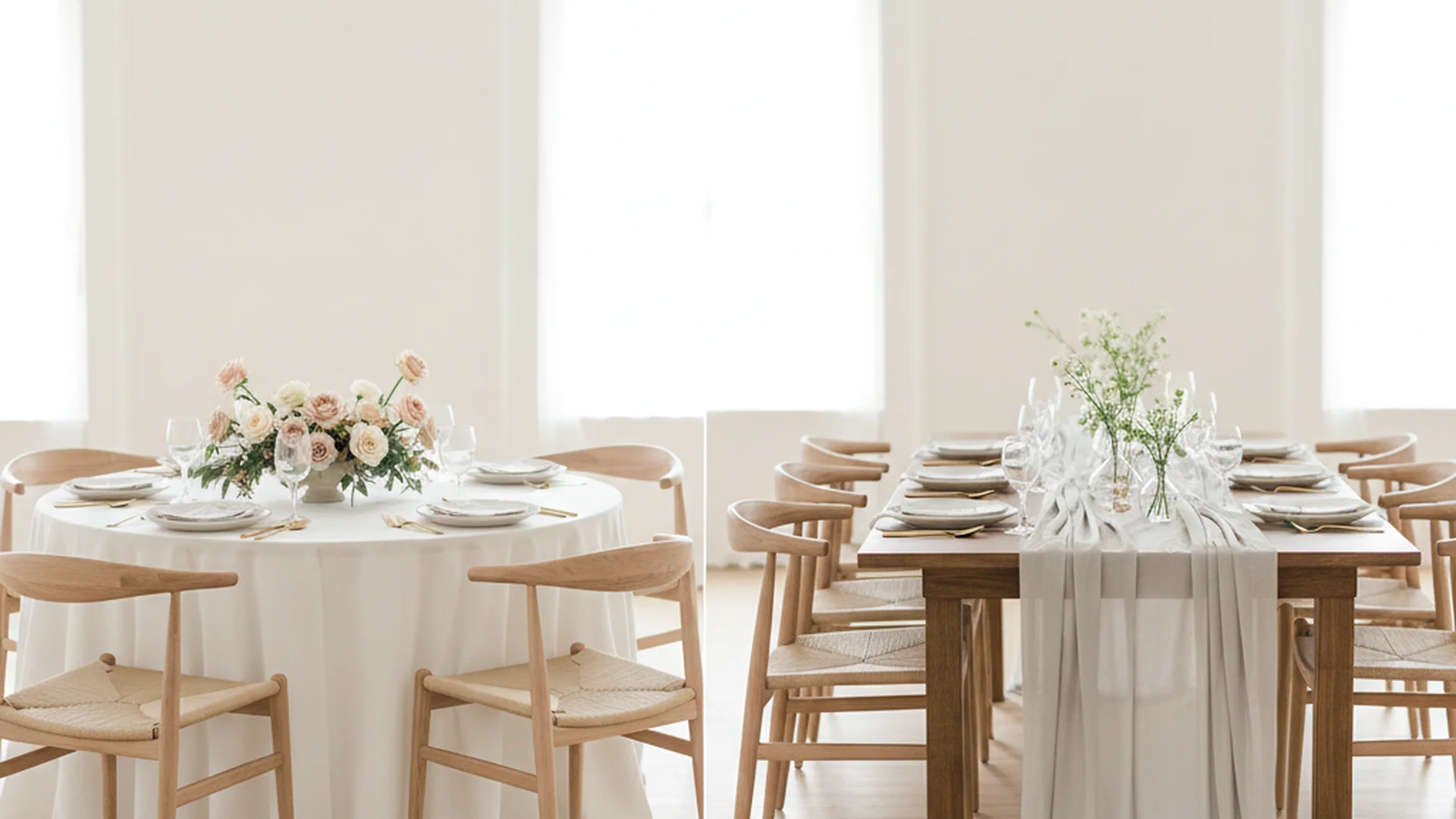
- Round tables offer superior group conversation dynamics and traditional formality.
- Long tables are space-efficient for narrow venues but often carry higher decor costs.
- Hybrid layouts (mixing both) are the top designer recommendation for 2026.
Choosing the right table shape for your wedding reception is far more than a simple design preference. In the world of event design, your floor plan dictates the flow of traffic, the social energy of the room, and—perhaps most importantly—the bottom line of your budget. When debating a round vs long tables wedding layout, you aren't just picking furniture; you are designing the experience your guests will have for four to six hours of their lives.
As an interfaith wedding officiant, I have seen ceremonies transition into receptions of every conceivable configuration. The "right" choice depends on your venue's architecture, your catering style, and the specific "vibe" you want to cultivate. Whether you are aiming for a traditional black-tie ballroom or a modern-chic industrial loft, this guide will help you navigate the logistics and trends of 2025 and 2026.
Round Tables: The Timeless Classic
Round tables have been the gold standard for wedding receptions for decades, and for good reason. They are the most egalitarian shape for social interaction. Because every guest faces toward a common center, the conversation isn't limited to the people on your immediate left or right.
Capacity and Spacing Logistics
When planning your seating chart, the dimensions of round tables are non-negotiable. A standard 60-inch round table comfortably seats 8 guests. If you need to maximize capacity, a 72-inch round can accommodate 10 to 12 guests. However, you must account for the "buffer space." Round tables require approximately 5 feet of clearance between them to allow for chair pull-out and the safe passage of servers carrying heavy trays.
Tip
The Formal Aesthetic
Historically, round tables are associated with "Black Tie" ballroom formality. They soften the harsh, square lines of a traditional hotel ballroom or a grand hall. From a decor perspective, round tables are also incredibly efficient. Each table requires exactly one centerpiece, which makes it easier to manage your floral budget.
Long Tables: Modern, Chic, and Communal
Long tables—often referred to as rectangular or banquet tables—have surged in popularity over the last five years. They offer a "refectory style" or "communal-rustic" feel that evokes the imagery of a grand feast or a family dinner.
Space Efficiency in Challenging Venues
If your venue is narrow, industrial, or an L-shaped gallery, long tables are often the superior choice. A standard 8-foot rectangular table seats 8 to 10 guests (four on each side, plus one at each head if needed). These tables can be pushed together to create continuous, dramatic rows that accentuate the length of a tent or a long hall.
Heads up
The Decor Challenge
While long tables look stunning, they are frequently more expensive to decorate. A 10-person round table needs only one centerpiece. A 10-person long table, however, often requires a continuous floral runner or a series of 3 to 5 "bud vase" clusters to avoid looking sparse. Additionally, long tables often require specialized "king" linens or floor-length drapes, which can be 20-30% more expensive than standard round linens.
| Feature | Round Tables | Long Tables |
|---|---|---|
| Social Dynamic | Full table conversation | Intimate pockets (2-3 people) |
| Space Efficiency | Lower (requires buffers) | Higher (can be joined) |
| Linen Cost | Standard / Lower | Specialized / Higher |
| Formal Vibe | Traditional / Classic | Modern / Communal |
| Decor Needs | 1 Centerpiece | Runners or multiple clusters |
The Hybrid Approach: Why Not Both?
In the 2025-2026 season, many high-end designers are moving away from the "uniformity" of a single table shape. Mixing round and long tables is a top recommendation to break up the "sea of tables" and create visual interest.
Real-World Example: The "King’s Table" Focal Point
Imagine a large ballroom where a long "King’s Table" (for the wedding party and their partners) sits in the center of the room. This long table acts as a visual anchor, surrounded by elegant 60-inch round tables for the rest of the guests. This layout creates a clear focal point and makes the wedding party feel distinguished without separating them entirely.
Real-World Example: The Industrial Loft
In an industrial warehouse venue with high ceilings, using only rounds can make the space feel cavernous and empty. By mixing in long rows of "unstyled" wood tables, the couple can ground the space, creating a "grid" that feels intentional and architectural.
Note
Best Practices and Architecture Rules
When deciding on your round vs long tables wedding strategy, follow these expert guidelines to ensure guest comfort and aesthetic success.
The Architecture Rule
Match your table shape to the venue’s architecture. Use round tables to soften the lines of a square or hexagonal room. Conversely, use long tables to accentuate the length of a gallery, a long tent, or a narrow rooftop. If you are early in your planning, referencing a 12 Month Wedding Planning Checklist can help you book the right venue for your desired table style.
The 60cm (24 Inch) Rule
To avoid guests bumping elbows, always allow at least 60cm (24 inches) of table width per person. If you are planning a "family style" dinner with large platters on the table, ensure your long tables are at least 40 inches wide. Standard 30-inch banquet tables are too narrow for both decor and shared food platters.
Centerpiece Height
For round tables, guest sightlines are crucial. Keep your centerpieces either below 12 inches (low and lush) or above 24 inches (using tall, thin stands). Anything in between will block the view of the person sitting across the table, effectively killing the conversation.
Do this
From the OurVows workspace
Turn this guide into a plan.
A checklist that knows what's next, a shared budget, and a guest list that actually works — free to start.
Recent Trends for 2025–2026
The upcoming wedding seasons are seeing a shift away from "safe" minimalism toward more daring configurations.
Serpentine & U-Shaped Layouts
Moving beyond straight rows, 2026 is the year of the serpentine (curved) table. These wind through a space like a river, creating an organic, high-fashion feel. U-shaped configurations that surround a dance floor are also making a comeback, keeping the energy centered on the party.
The Silver Renaissance
While gold and brass have dominated the wedding scene for a decade, chrome and silver accents are the leading metallic trend for 2026. Think silver candelabras on long tables and chrome chargers on round tables. This cool-toned aesthetic pairs beautifully with the "Unstyled Wood" trend.
Maximalist Tablescapes
The "less is more" era is fading. Trends now favor "abundance" decor—nestling fruits and vegetables like pomegranates, grapes, and artichokes between floral arrangements. This looks particularly striking on long tables where the "bounty" can stretch the entire length of the row.
Common Mistakes to Avoid
Even the most beautiful table layout can fail if the logistics aren't sound. Avoid these four common pitfalls:
- The "Social Island" Effect: Placing a single long table in a room full of rounds can make those guests feel like they are on display or, conversely, excluded from the main party. If you mix shapes, do so in a ratio that feels intentional (e.g., 50/50 or 70/30).
- Ignoring the "Per Foot" Decor Cost: Many couples choose long tables thinking they are cheaper because they "look simpler." In reality, filling 8 feet of table space with enough decor to look "lush" usually costs more than a single centerpiece for a 10-person round.
- Overcrowding the Center: If you are serving family-style food (large platters passed between guests), you must leave room for the food! Choosing heavy garlands or large floral arrangements on long tables leaves no room for the actual meal.
- Poor Lighting: Long tables require a different lighting strategy than rounds. While a single pin-spot can light a round table's centerpiece, long tables often need a "wash" of light or multiple hanging pendants to look their best.
Frequently asked questions
Which table shape is better for conversation?
Can I mix both round and long tables at my wedding?
Which layout is better for a small venue?
Is one shape more formal than the other?
How do I decide on the width of my long tables?
Conclusion
Whether you choose the classic elegance of round tables or the communal drama of long tables, the goal remains the same: creating a comfortable and beautiful environment for your guests to celebrate your union. Remember to consult with your florist and your venue coordinator early in the process—they can often provide a floor plan template that helps you visualize the space.
As you move forward with your planning, don't forget to keep an eye on your overall budget. A Wedding Budget Calculator can help you determine if those extra "King" linens and floral runners fit within your financial goals.
Do this
Ready when you are
Ready to Start?
Organize your guest list and floor plan today.
Ready when you are
Plan your wedding without the chaos.
Free forever for couples just getting started. Two minutes to set up. No credit card.
Keep reading
The Ultimate Wedding Day Timeline Template: A Stress-Free Guide for 2025 & 2026
Master your big day with our comprehensive wedding day timeline template. Includes expert tips on beauty timings, photography blocks, and 2025-2026 trends.
The Ultimate Week Before Wedding Checklist: Your Seven-Day Guide to Calm
Navigate your final seven days with our comprehensive week before wedding checklist. Avoid last-minute stress, manage logistics, and prepare for your 2026 celebration.
Mastering Wedding Planning When Working Full Time: A Professional Guide
Learn how to balance wedding planning when working full time. Expert strategies for the 2025–2026 engagement era, from AI automation to workplace boundaries.