The Ultimate Guide to Jewish Wedding Vows: Traditions, Trends, and Modern Promises
Explore the beauty of Jewish wedding vows. From traditional Hebrew declarations to modern 2025 trends, learn how to craft the perfect promises for your Chuppah.
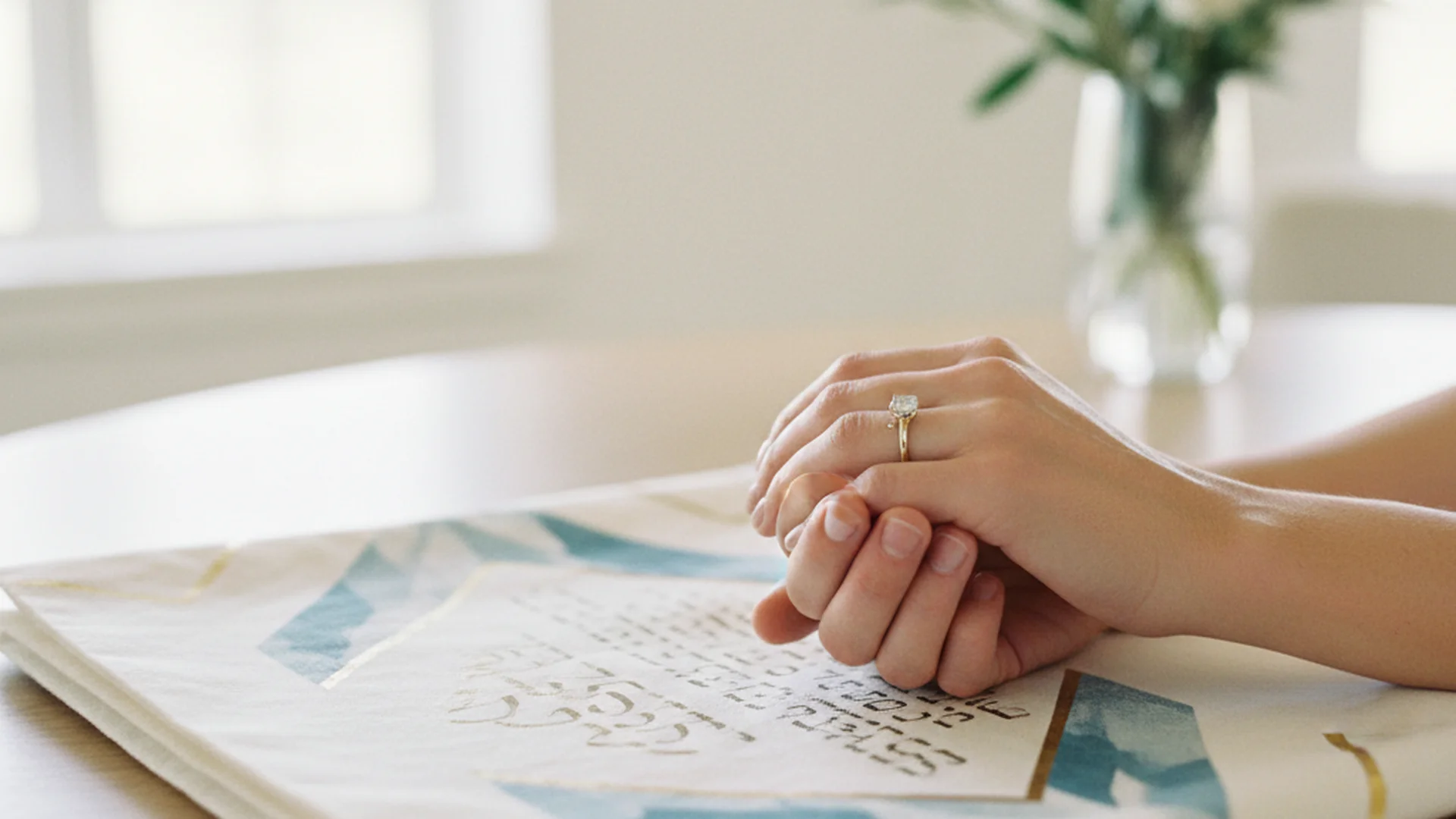
- Traditional Jewish weddings focus on a legal ring declaration rather than spoken vows.
- Many modern Jewish couples now incorporate personalized vows alongside tradition.
- Modern trends for 2025-2026 include private vow readings and gender-neutral Hebrew formulas.
Standing under the Chuppah, surrounded by family, friends, and the weight of thousands of years of history, the moment you exchange your Jewish wedding vows is the emotional heartbeat of the ceremony. However, if you are expecting a standard "I do" or a recitation of "in sickness and in health," you might be surprised to learn that Jewish tradition handles the "vow" moment quite differently than the Western secular standard.
In Judaism, the marriage is formalized not through a series of promises, but through an act of sanctification and a legal declaration. Whether you are planning a strictly Orthodox ceremony, a Reform celebration, or an interfaith union, understanding the nuances of these traditions is key to creating a meaningful experience. As a wedding humor consultant, I often tell couples: in a Jewish wedding, you don't just say you're married—you consecrate the relationship.
The "Vowless" Tradition: A Legal Perspective
One of the most fascinating aspects of a traditional Jewish ceremony is that, technically, there are no "vows" in the way most people imagine them. In many Western cultures, the spoken word is the binding element. In Judaism, the marriage is a contract (Kiddushin) formalized through the exchange of an item of value—traditionally a plain gold ring—and a specific legal formula.
The core of the ceremony is the ring declaration. This is the moment the couple becomes "set apart" or "sanctified" to one another. While the rabbi may ask questions of intent, the "I do" is actually a newcomer to the Jewish stage, primarily used in Reform or Conservative settings to satisfy modern expectations.
Note
The Golden Formula: Harei At Mekudeshet Li
If there is one phrase that defines Jewish wedding vows, it is the Hebrew formula spoken during the ring exchange. This isn't just a romantic sentiment; it is a legal seal.
The Traditional Formula: “Harei at mekudeshet li b’taba’at zo k’dat Mosheh v’Yisrael”
The Translation: “Behold, you are consecrated to me with this ring according to the laws of Moses and Israel.”
For many couples, this single sentence carries more weight than a three-page speech. It connects the couple to the lineage of Sinai and the continuity of the Jewish people. In modern egalitarian ceremonies, both partners usually recite a variation of this phrase to each other.
Tip
The Ketubah: More Than Just Art
While you are speaking your vows under the Chuppah, the Ketubah is the document that backs them up. Historically, the Ketubah was a legal document protecting the bride’s rights and financial security. In 2025 and 2026, the Ketubah has transformed into a spiritual and artistic centerpiece.
The vast majority of non-Orthodox Jewish couples now choose a Ketubah with egalitarian language. Instead of purely legalistic terms, these documents now include shared promises about the home they will build, their commitment to Tikkun Olam (repairing the world), and their dedication to Jewish life.
Heads up
Modern Trends for 2025 and 2026
The landscape of Jewish weddings is evolving rapidly. Couples are looking for ways to honor their heritage while making the ceremony feel authentic to their personal journey.
1. Private Vow Readings (The "First Look" Vows)
A major trend for the 2025 season is the private reading of personal vows. Because the Jewish ceremony is so ritual-heavy and public, many couples feel overwhelmed by the idea of sharing deeply intimate thoughts in front of 200 guests. Instead, they read their personal, emotional vows to each other during the "First Look" or just before the Bedeken (veiling ceremony), keeping only the traditional Hebrew for the Chuppah.
2. The "Joint Tisch"
Traditionally, the groom held a Tisch (table) where he would attempt to deliver a Torah lesson while his friends playfully heckled him, while the bride held a Kabbalat Panim to greet guests. In 2026, we are seeing a rise in the "Joint Tisch." The couple greets their guests together and shares their intentions and "vows" to the community before the formal ceremony begins.
3. Gender-Neutral Language
For LGBTQIA+ and non-binary weddings, the Hebrew language (which is highly gendered) has seen beautiful adaptations. New formulas like “Harei atah kodesh li” (Behold, you are holy to me) are becoming standardized. These adaptations ensure that every couple can stand under the Chuppah and feel the language reflects their true selves.
4. Vows of Resilience
Following the global events of 2023–2024, many couples are incorporating "Vows of Resilience." These are explicit mentions of their commitment to Jewish continuity and the strength of the Jewish community, acknowledging that their love exists as part of a larger, resilient history.
Do this
From the OurVows workspace
Writing your vows?
Get a heartfelt first draft to shape into your own words — then handle every other detail with OurVows.
Real-World Examples of Jewish Wedding Vows
If you are one of the many couples choosing to add personal words to your ceremony, here are three examples of how to bridge tradition and modern sentiment.
Example 1: The Traditionalist Bridge
“Harei at mekudeshet li b’taba’at zo k’dat Mosheh v’Yisrael. With this ring, I take you to be mine. I promise to honor the traditions of our ancestors while building a home filled with the same laughter and light that I see in your eyes today. I promise to support you, to challenge you, and to love you according to the laws of Moses and Israel, and the laws of my own heart.”
Example 2: The Modern Egalitarian Vow
“Ani l’dodi v’dodi li—I am my beloved’s and my beloved is mine. Today, I don’t just give you a ring; I give you my word. I promise to be your partner in all things, to practice Tzedakah (charity) by your side, and to ensure our home is always a sanctuary of peace. Just as this Chuppah is open on all four sides, I promise our lives will always be open to our community and our friends.”
Example 3: The Interfaith/Universal Adaptation
“In the tradition of Israel, I take you as my partner. I promise to respect your heritage as you respect mine. Together, we will create a family that honors the values of kindness, hospitality, and love. I choose you today and every day, in the spirit of 'Simcha' (joy), to be my lifelong companion.”
Integrating Personal Vows: Best Practices
Writing your own vows can be daunting, especially when trying to balance them with ancient rituals. If you're looking for more general inspiration, you might find our guide on Modern Wedding Vows or Personal Wedding Vows helpful.
- Consult Your Rabbi Early: This is the most important step. Different denominations have different rules about what can be added. Some Orthodox rabbis may prefer personal words to stay outside the "legal" part of the ceremony.
- Keep it under 2 Minutes: The Jewish ceremony involves the circling, the ring exchange, the Ketubah reading, and the Seven Blessings. Brevity is your friend.
- Focus on Promises, Not Just Stories: While it’s tempting to tell the story of how you met, vows are essentially a contract. Focus on what you promise to do in the future.
- Use Note Cards: Don't rely on memory. The Chuppah is an emotional place. Use high-quality cardstock that matches your wedding stationery to read from.
Common Mistakes to Avoid
Even with the best intentions, it's easy to trip over some common misconceptions regarding Jewish ceremonies.
1. The "Sickness and Health" Fallacy
Many couples want to include "for richer or poorer, in sickness and in health." These words are actually from the Anglican Book of Common Prayer. While the sentiment is beautiful, they aren't Jewish. Jewish "vows" traditionally focus on "sanctification" and "holiness" (Kiddushin). If you want to use them, try to "Jewish them up" by referencing the support of a "Bayit Ne'eman" (a faithful home).
2. The Wrong Ring
For the "vow" and ring exchange to be halakhically (legally) binding in traditional settings, the ring must be plain metal without stones. It represents an unbroken circle and a clear value. Using a diamond-encrusted band for the "vow" part of the ceremony can actually be a mistake in Conservative or Orthodox settings. You can always switch to the "blingy" ring after the ceremony!
3. The "I Do" Wait
In Western movies, the "big moment" is when the officiant says, "Do you take...?" and you say "I do." In a Jewish wedding, the legal "big moment" is when the ring is placed on the finger and the Hebrew formula is spoken. If you wait for an "I do" to feel married, you might feel the ceremony is moving backwards!
4. The Ring Finger Confusion
Traditionally, the ring is placed on the right index finger. This is believed to have a direct path to the heart. Many couples forget this and offer their left hand, leading to a clumsy moment under the Chuppah. Usually, the ring is moved to the left ring finger after the ceremony.
Heads up
| Ritual Element | Traditional Meaning | Modern Adaptation |
|---|---|---|
| Ring Exchange | Legal acquisition/sanctification | Mutual exchange of rings |
| Ketubah | Financial protection contract | Spiritual/Artistic mission statement |
| Sheva Brachot | Seven blessings for the couple | Blessings read by friends/family |
| Breaking Glass | Memory of the Temple's destruction | Commitment to repair the world |
Frequently asked questions
Do we have to say "I do"?
Can we write our own vows in a Jewish ceremony?
What if we are an interfaith couple?
Why does the groom break a glass after the vows?
Which finger does the ring go on during the vows?
Conclusion
Whether you choose to stick strictly to the ancient Hebrew formula or add pages of Romantic Wedding Vows, the essence of the Jewish wedding vow is the same: it is an act of making something holy. By standing under the Chuppah and declaring your partner "consecrated" to you, you are joining a chain of tradition that spans millennia.
Focus on the promises that matter to you, respect the rituals that have sustained the community, and don't forget to practice your Hebrew! Mazel Tov on your upcoming union.
Do this
Ready when you are
Ready to Write?
Craft your perfect Jewish wedding vows with our expert tools.
Ready when you are
Plan your wedding without the chaos.
Free forever for couples just getting started. Two minutes to set up. No credit card.
Keep reading

The Modern Guide to Wedding Vows for Her: Trends, Tips, and Examples
Learn how to write meaningful, personalized wedding vows for her with our 2025 guide. Discover trends, timing tips, and common mistakes to avoid.
Writing the Perfect Wedding Vows for Your Soulmate: A 2025 Guide
Discover how to write heartfelt wedding vows for your soulmate. Explore 2025 trends, expert tips, and structures to express your unique bond perfectly.

Mastering the Wedding Vow Structure Template: A 2025 Guide
Struggling with writer's block? Use our expert wedding vow structure template to write personalized, meaningful vows for your 2025 or 2026 ceremony.