How Much Wedding Cake Do I Need? The Ultimate 2025-2026 Planning Guide
Learn exactly how much wedding cake to order with our expert guide. From serving sizes to 2026 trends, we help you calculate the perfect amount for your guest list.
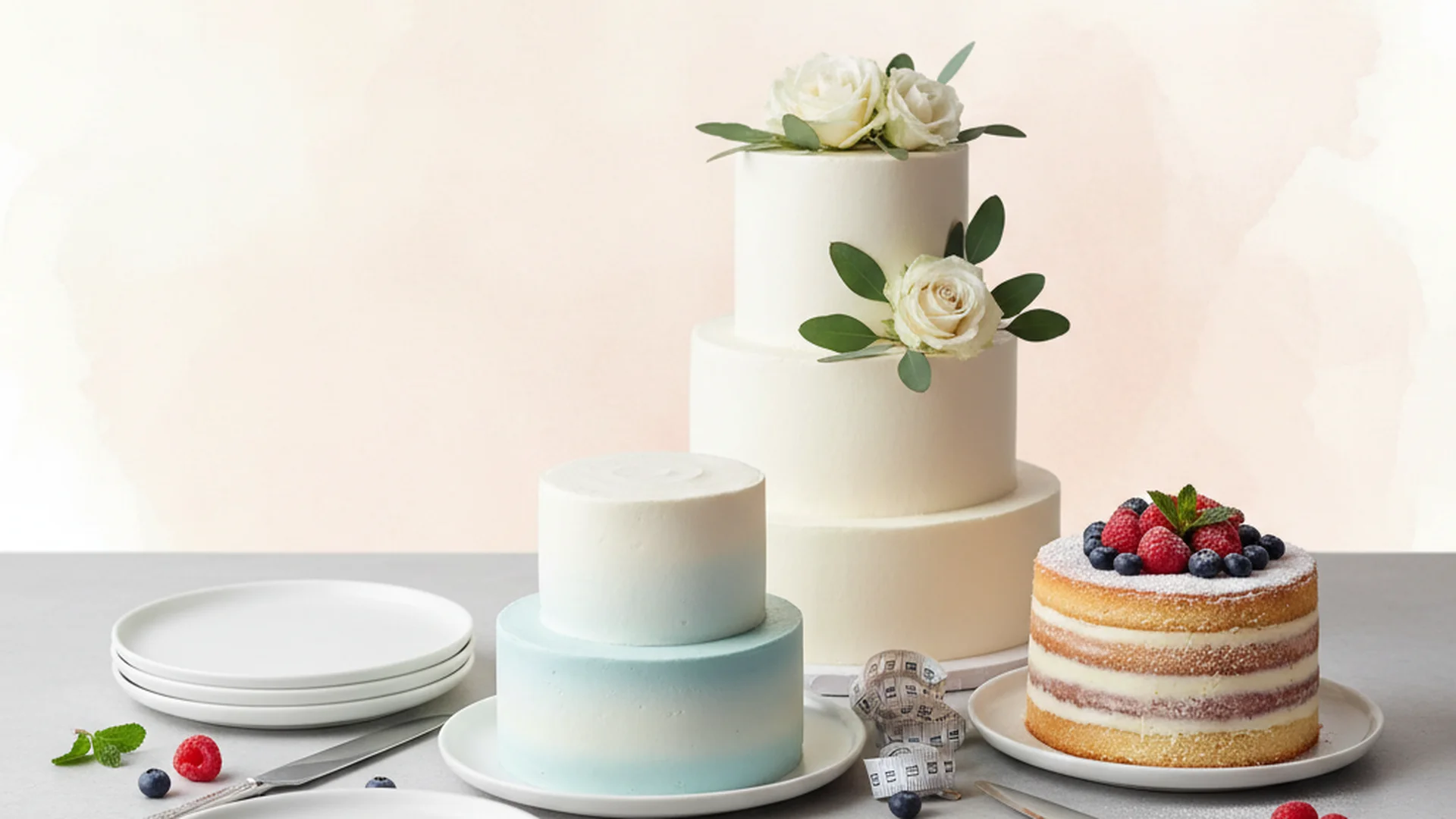
- Use the 80% rule to save money and reduce waste.
- Understand the difference between a 'Wedding Slice' and a 'Party Slice.'
- Consider a 'Kitchen Cake' to supplement your display cake.
Planning a wedding is a beautiful exercise in balance—balancing traditions, budgets, and the diverse tastes of two families coming together. As a relationship counselor, I often see couples get overwhelmed by the tiny details, but few items carry as much symbolic weight as the cutting of the cake. It represents the first task you perform together as a married couple. However, the logistical side can be daunting. One of the most common questions I hear during the reception planning phase is: how much wedding cake do I need?
Getting this number right is more than just a math problem; it’s about ensuring your guests feel cared for without overspending on sugar that might end up in the bin. Whether you are planning an intimate micro-wedding or a grand 200-guest gala, understanding serving yields and guest behavior is the key to a stress-free dessert hour.
Understanding the "Wedding Slice" vs. the "Party Slice"
Before you can calculate how much cake you need, you have to understand what a "serving" actually looks like in the wedding industry. Many couples make the mistake of envisioning a massive wedge of cake like you’d receive at a local diner.
In reality, a Standard Wedding Slice is typically 1” wide x 2” deep x 4–6” tall. Because wedding cakes are often multi-layered and incredibly rich, these smaller portions are the industry standard. This is different from a "Party Slice," which is usually 1.5” to 2” wide.
Note
The 80% Rule: Why You Don't Need a Slice for Everyone
One of the best-kept secrets in the wedding industry is that you rarely need a slice of cake for every single person on your guest list. If you have 150 guests, ordering 150 servings often results in massive leftovers.
Experts suggest that only 75% to 85% of guests will actually eat a slice of cake. This is especially true if:
- You are serving other desserts (like a doughnut wall or cookie bar).
- You have a heavy open bar (guests often prefer liquid calories late at night).
- You are serving a late-night snack like sliders or fries.
If you're looking to tighten your budget, catering to 80% of your guest count is a safe and professional bet. For more advice on managing your vendors, check out our Questions to Ask Wedding Caterer guide.
Calculating Yields by Tier Size
When you begin looking at designs, the size of the tiers will determine your serving count. Round cakes are the classic choice, but square cakes are the secret weapon for high guest counts.
Serving Yields for Round Tiers
| Tier Size (Diameter) | Servings (Wedding Slice) |
|---|---|
| 6-inch | 10–12 servings |
| 8-inch | 20–24 servings |
| 10-inch | 30–38 servings |
| 12-inch | 45–56 servings |
| 14-inch | 65–78 servings |
Tip
The "Kitchen Cake" Strategy
If you have a large guest list but a limited budget, you don't need a five-tier architectural marvel to feed everyone. Many modern couples use a Kitchen Cake.
A Kitchen Cake is a large, undecorated sheet cake kept behind the scenes in the kitchen. You display a smaller, beautifully decorated two-tier or three-tier cake for the "cake cutting" ceremony and photos. Once that cake is whisked away to be sliced, the staff also slices the sheet cake. Guests never know the difference, and you can save hundreds—or even thousands—of dollars.
Do this
From the OurVows workspace
Planning the reception?
Build the timeline, work out the bar, and seat every guest — without the spreadsheet chaos.
Wedding Cake Trends for 2025 and 2026
As we look toward the 2025 and 2026 wedding seasons, the "rules" of wedding cake design are being rewritten. If you want your cake to be a conversation starter, consider these emerging trends.
"Veggie Couture"
In a bold shift for 2026, we are seeing "Veggie Couture" take center stage. This involves adorning cakes with hyper-realistic sugar art or actual botanical elements like ornamental cabbages, heirloom tomatoes, or vibrant peppers. It’s a literal representation of "farm-to-table" aesthetics.
The Lambeth Resurgence
The "Lambeth" style—intricate, over-the-top vintage piping reminiscent of the Bridgerton era—is the dominant aesthetic for 2025. These cakes are maximalist, featuring layers of royal icing frills, swags, and pearls.
Architectural Asymmetry
Moving into 2026, the "stacked" look is getting a makeover. Instead of perfectly centered tiers, couples are opting for asymmetrical designs where no two tiers are the same shape or size. Think a hexagonal base, a round middle, and a rectangular top.
Heads up
Real-World Calculation Examples
Let’s look at how this math works in practice for three different types of weddings.
Example 1: The Intimate Micro-Wedding
- Guest Count: 40
- Dessert Plan: Cake only.
- Calculation: 100% guest count (40 servings).
- The Cake: An 8-inch tier (24) and a 6-inch tier (12) gets you close at 36 servings. You might add a few cupcakes or a slightly larger 10-inch base to ensure everyone gets a piece.
Example 2: The Mid-Size Celebration
- Guest Count: 120
- Dessert Plan: Cake plus a small dessert bar (macarons and tartlets).
- Calculation: 80% guest count (96 servings).
- The Cake: A 3-tier cake (10", 8", 6") provides about 74 servings. You would supplement this with a small kitchen cake or 25 extra servings to reach your goal.
Example 3: The Grand Reception
- Guest Count: 250
- Dessert Plan: Plated dinner with a full dessert table.
- Calculation: 70% guest count (175 servings).
- The Cake: A 4-tier display cake (12", 10", 8", 6") provides roughly 130 servings. You would use a large sheet cake in the kitchen to make up the remaining 45 servings.
Note
Common Mistakes to Avoid
Even with the best intentions, it's easy to make a "cake-tastrophe" during the planning process. Here are the most common errors I see as a consultant.
1. Cutting the Cake Like a Pizza
The biggest reason couples run out of cake isn't that they didn't order enough—it's that the person cutting it did it wrong. Tiered cakes should never be cut into wedges. They must be cut in a grid (columns and rows) to achieve the promised number of servings.
2. Forgetting the Weather
If you are planning an Outdoor Wedding Reception in July 2026, buttercream is your enemy. Without heavy-duty refrigeration, a buttercream cake can melt and lean within an hour. For outdoor summer weddings, consider "Ganache-under-Buttercream" or a high-quality fondant that can withstand higher temperatures.
3. Over-ordering for Dessert Tables
If you have a full dessert bar with 5+ options, you only need enough cake for about 50% of your guests. People love variety, and most will choose a few small bites over a full slice of cake.
4. Ignoring the Cake-Cutting Fee
Before you order a massive cake, check your venue contract. Many venues charge a "cake-cutting fee" (ranging from $1.50 to $3.00 per guest) to cover the labor of slicing, plating, and cleaning. This can add $300 to a 100-guest wedding budget instantly.
Frequently asked questions
Do I need a slice for every guest?
Should I count the top tier in my servings?
Does the time of day change how much cake I need?
What is the average cost of a wedding cake in 2025?
How far in advance should I book a tasting?
Conclusion
Determining "how much wedding cake do I need" is a blend of mathematical precision and an understanding of your unique guest list. By applying the 80% rule, considering a kitchen cake, and being mindful of your dessert variety, you can provide a sweet end to your celebration without blowing your budget. Remember, the cake is a centerpiece, but the memories of sharing it with your loved ones are what will last.
For more help organizing your big day, visit our Complete Guide to Wedding Reception Planning.
Do this
Ready when you are
Ready to Plan?
Take the stress out of your big day with our custom planning tools.
Ready when you are
Plan your wedding without the chaos.
Free forever for couples just getting started. Two minutes to set up. No credit card.
Keep reading
Mastering the Wedding Reception Order of Events: A 2025–2026 Guide
Plan the perfect wedding reception order of events with our expert guide. Explore modern timelines, 2025-2026 trends, and tips for a seamless celebration.

The Ultimate Guide to Wedding Ceremony Songs: Orchestrating Your Perfect Moment
Planning your 2025-2026 wedding? Discover the best wedding ceremony songs, from cinematic scores to modern pop covers, plus expert tips for timing and transitions.
The Ultimate Guide to Wedding Processional Songs for 2025 & 2026
Discover the perfect wedding processional songs for your big day. From classical masterpieces to modern Taylor Swift hits, learn how to time your walk perfectly.