Engagement Ring Trends 2025–2026: The Ultimate Guide to the Great Bifurcation
Discover the top engagement ring trends for 2025 and 2026. From lab-grown diamond growth to chunky yellow gold and the rise of men’s engagement rings.
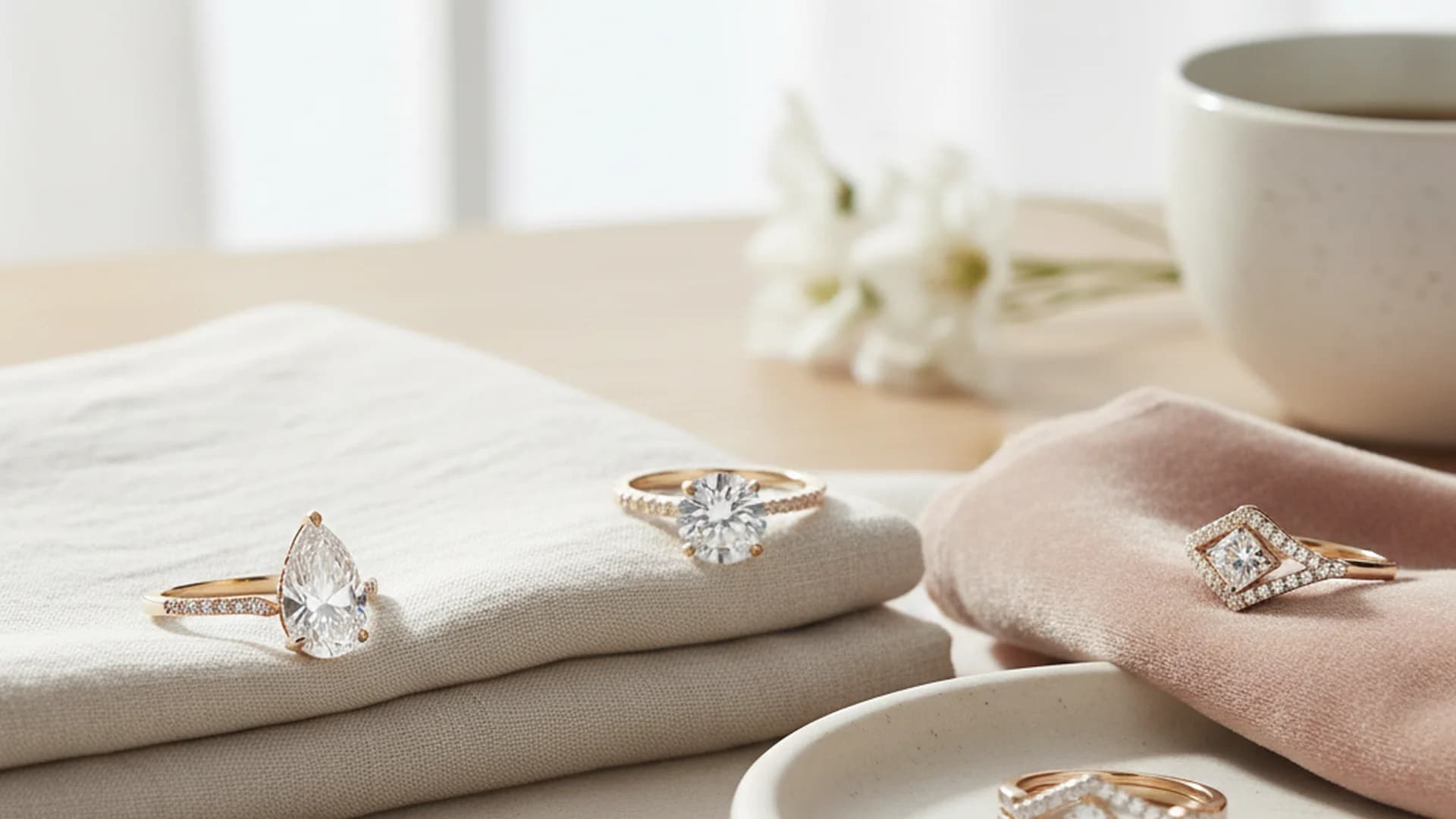
- Lab-grown diamonds now dominate the market for those seeking larger stones on a budget.
- Yellow gold has surpassed platinum as the most popular metal choice for 2025 and 2026.
- Round diamonds are losing market share to elongated shapes like Ovals and Cushions.
The world of bridal jewelry is currently experiencing a historic shift that experts call the "Great Bifurcation." As we look toward the 2025 and 2026 wedding seasons, the market for engagement ring trends has split into two distinct paths: the high-scale accessibility of lab-grown diamonds and the ultra-exclusive positioning of natural diamonds. Whether you are planning a surprise proposal or shopping as a couple, understanding these shifting aesthetics and economic realities is essential to finding a ring that reflects your personal story.
If you are just beginning this journey, you might also want to read our guide on how to get engaged to help navigate the emotional and logistical steps leading up to the "Yes."
The Great Bifurcation: Lab-Grown vs. Natural Diamonds
The most significant trend for 2025 is the clear division in how consumers view the "center stone." We are no longer in a world where a diamond is just a diamond. Instead, couples are making a conscious choice between two very different value propositions.
The Scale of Lab-Grown Diamonds
Lab-grown diamonds have officially entered the mainstream. As of late 2024, they accounted for over 45% of all US engagement ring purchases, and they are expected to cross the 50% threshold by 2026. The primary driver here is "The Size Gap." For the same budget that might buy a 1.1-carat natural diamond, couples are now securing lab-grown center stones that range from 1.75 to 2.0 carats.
The Exclusivity of Natural Diamonds
While lab-grown stones offer scale, natural diamonds are being repositioned as exclusive, high-value assets. For many, the appeal of a natural diamond lies in its rarity and the billions of years required for its formation. However, this exclusivity comes at a premium, leading many to prioritize quality and origin over sheer size.
| Feature | Natural Diamond (Average) | Lab-Grown Diamond (Average) |
|---|---|---|
| Center Stone Size (Typical) | 1.1 Carats | 1.75 – 2.0 Carats |
| Price Difference | 100% (Baseline) | 40% – 60% Less |
| Market Share (2025) | 55% | 45% |
| Chemical Composition | Carbon Crystal | Carbon Crystal |
Note
Metal Trends: The Gold Rush of 2026
For nearly two decades, platinum and white gold were the undisputed champions of engagement jewelry. That era has officially ended. Yellow gold has overtaken platinum as the #1 choice, now representing 57% of sales.
Chunky Gold and Wide Bands
In a direct reaction to the "dainty" and "minimalist" trends that dominated the 2010s, 2026 is seeing a return to bold, sculptural yellow gold. Inspired by the heavy jewelry seen on celebrities like Dua Lipa, these wider bands offer a more substantial, "fashion-forward" look.
Mixed Metals and Two-Tone Designs
Another rising trend is the strategic use of mixed metals. To get the "best of both worlds," many couples are opting for a yellow gold band paired with platinum prongs. This ensures the diamond looks bright and white (without yellow color transfer from the metal) while maintaining the warm aesthetic of the gold band. We are also seeing a surge in "Toi et Moi" (two-stone) designs that feature two different metals or even two different gemstones.
Tip
Shape Evolution: The Decline of the Round Brilliant
For generations, the Round Brilliant cut was the "default" engagement ring choice. However, its dominance is fading. In 2022, Round diamonds held 59% of the market; by 2025, that figure has dropped to 36%.
The Rise of Elongated Shapes
Ovals and Elongated Cushions are the primary beneficiaries of this shift. These shapes are favored because they maximize the "face-up" size of the diamond, making the stone look larger than a round diamond of the same carat weight.
East-West Settings
One of the most modern architectural trends for 2025 is the "East-West" setting. This involves rotating elongated stones (like Emerald, Marquise, or Oval cuts) horizontally across the finger rather than the traditional vertical orientation. It creates a sleek, low-profile look that appeals to those looking for something truly unique.
Antique and Old Mine Cuts
There is also a growing nostalgia for "glowy" rather than "sparkly" stones. Old Mine and Antique cuts—similar to the jewelry recently seen on Taylor Swift—are making a massive comeback. These stones feature larger facets and a softer sparkle that feels romantic and vintage.
Men’s Engagement Rings: A Cultural Shift
The "engagement for both" movement is no longer a niche concept. Sales for men’s engagement rings have surged by 205%, marking a significant shift in how modern couples approach the proposal.
Bold Designs for Him
Men’s rings in 2025 are moving beyond the simple wedding band. We are seeing heavy signet styles, flush-set diamonds, and textured metals like hammered gold or brushed tantalum. Once you've secured the ring, the next step is often the engagement announcement ideas to share the news with your community.
Do this
From the OurVows workspace
Newly engaged?
Start your wedding the right way: a free workspace for the checklist, budget, and guest list.
Designing for Your Lifestyle
While aesthetics are important, the best engagement ring trends are those that account for daily life.
Bezel and Low-Profile Settings
For those in healthcare, fitness, or hands-on creative fields, the "Bezel" setting is the breakout star of 2025. By wrapping the diamond in a thin rim of metal, the stone is protected from chipping and is far less likely to snag on clothing or medical gloves.
The "Eye-Clean" Hack
Experts are steering couples away from paying the "Flawless" premium. In the 2025 market, the "eye-clean" hack is standard advice. By selecting a stone in the VS1–VS2 range, you can save thousands of dollars while ensuring no inclusions are visible to the naked eye.
Heads up
Common Mistakes to Avoid
Navigating engagement ring trends can be overwhelming, leading many to fall into common traps that affect both their budget and the longevity of the ring.
- The "Round Number" Tax: Buying exactly a 1.0 or 2.0-carat stone often carries a significant price premium. "Buying shy"—selecting a 0.95 or 1.90-carat stone—can save you up to 20% with no visible difference in size.
- Ignoring the Wedding Band: Many high-profile engagement rings won't allow a standard wedding band to sit flush against them. This often leads to the unexpected expense of a custom-contoured band later on. Check out our engagement timeline to see when you should start shopping for the wedding band.
- Guessing the Ring Size: Resizing modern settings, especially those with pavé diamonds (small stones along the band), can be incredibly difficult or even impossible. Use a physical sizer or "borrow" a ring your partner wears on their ring finger.
- Valuing "Investment" Over Wearability: While natural diamonds are often marketed as investments, their resale value is typically much lower than retail. It is better to buy a ring for the joy it brings your partner than for its potential future liquidation value.
Frequently asked questions
Is a lab-grown diamond "real"?
How much should I actually spend on an engagement ring in 2025?
How long does a custom engagement ring take to make?
Does a bezel setting make the diamond look smaller?
Should I choose 14k or 18k yellow gold?
Final Thoughts on 2025 Trends
As you move closer to your proposal, remember that trends are simply a guide, not a rulebook. Whether you choose a massive lab-grown oval in a chunky gold setting or a modest natural round brilliant in a classic platinum mount, the "best" ring is the one that reflects your partner's style and your shared values.
Once the ring is on the finger, the real work begins! Be sure to check out our newly engaged checklist to keep your planning on track, or start thinking about the celebration with our engagement party planning guide.
Do this
Ready when you are
Ready to Start Planning?
From the ring to the "I do," we're here to help you every step of the way.
Ready when you are
Plan your wedding without the chaos.
Free forever for couples just getting started. Two minutes to set up. No credit card.
Keep reading
30 Creative Engagement Announcement Ideas for 2025 and 2026
From the "Hardest Launch" to paparazzi-style photography, explore the best engagement announcement ideas and etiquette for a modern, memorable reveal.

How Long to Date Before Engaged: The 2025 Guide to Timing Your Proposal
Wondering how long to date before engaged? Discover the latest 2025-2026 trends, divorce risk statistics, and expert advice from Nia Amari.
12 Undeniable Signs They’re Going to Propose: The 2026 Engagement Guide
Wondering if a proposal is coming? From behavioral shifts to secret ring shopping, discover the most common signs they're going to propose in 2025 and 2026.