Elopement vs Traditional Wedding: Choosing Your Path in 2026
Compare elopement vs traditional wedding costs, trends, and logistics for 2025-2026. Discover which celebration style aligns with your values and budget.
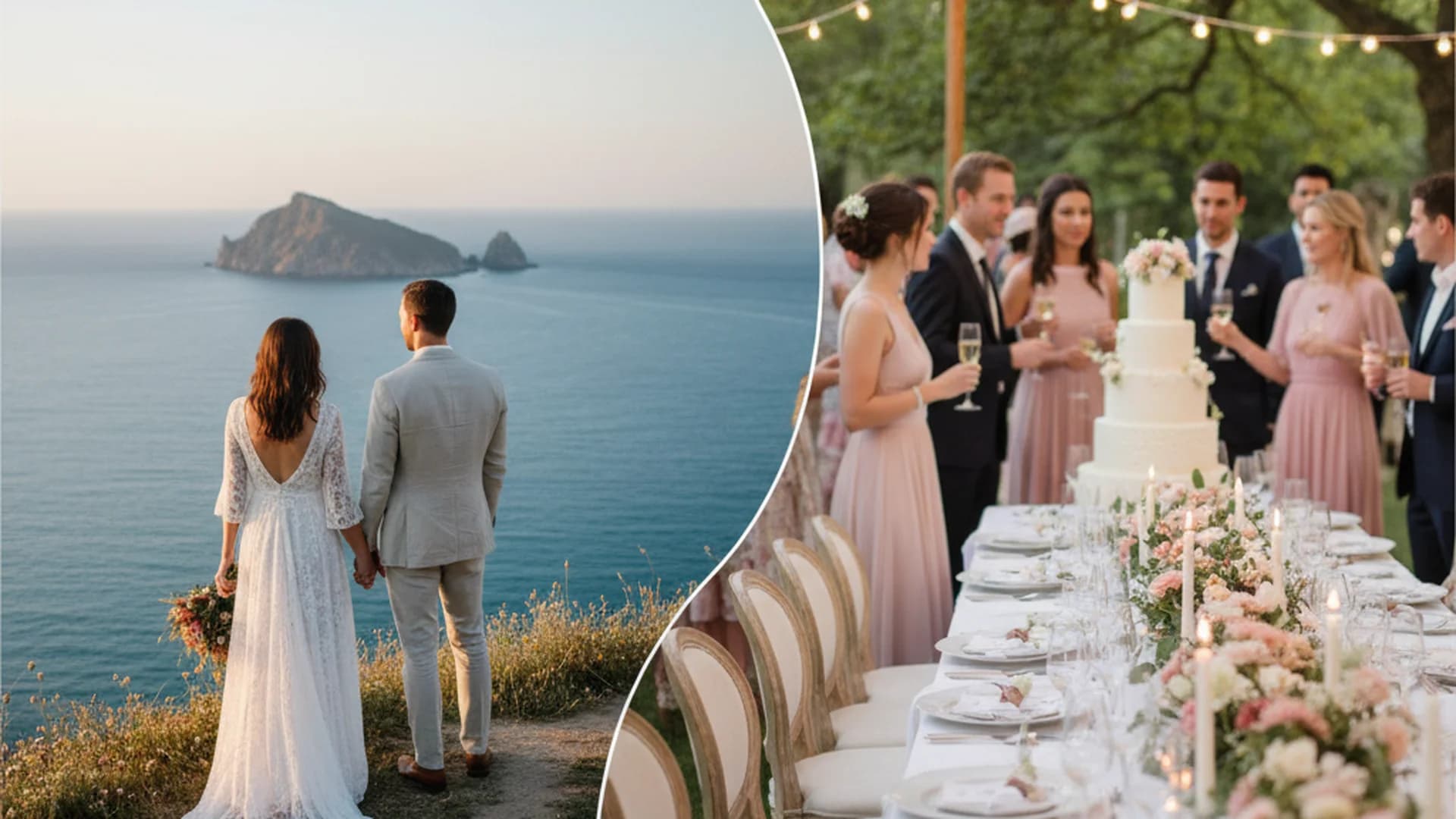
- Elopements now account for 20-25% of U.S. marriages, focusing on intentionality.
- Traditional weddings average $33,000+, while luxury elopements range from $4,500 to $20,000+.
- Hybrid "sequel weddings" offer a middle ground with a private ceremony and later reception.
The landscape of matrimony is shifting beneath our feet. For decades, the choice was binary: a massive ballroom celebration or a quick trip to the courthouse. However, as we move into 2025 and 2026, the debate of elopement vs traditional wedding has evolved into a sophisticated conversation about intentionality. Couples are no longer choosing elopements simply to save money; they are choosing them to reclaim the narrative of their wedding day. Whether you envision a 200-person gala or a silent vow exchange on a mountain peak, the decision rests on how you want to experience your commitment.
Redefining the Modern Elopement
In the past, eloping suggested a sense of rebellion or a "last resort" for those on a shoestring budget. Today, the "New Elopement" is a highly curated, luxury experience. While a traditional wedding focuses on the guest experience—the catering, the band, and the seating chart—a modern elopement prioritizes the couple’s internal experience.
Data from 2025 indicates that 90% of adventure elopers chose this path because it "aligns more with their personality." It is an act of prioritizing the bond over the performance. This shift has given rise to destination experiences that rival five-star vacations, where the "saved" money from a traditional venue is instead funneled into high-end photography, designer attire, and once-in-a-lifetime travel.
Note
The Cost Reality: A Side-by-Side Comparison
When weighing an elopement vs traditional wedding, the financial aspect is often the first consideration. However, the numbers can be surprising once you factor in the "luxury elopement" trend.
| Feature | Traditional Wedding (150+ Guests) | Luxury Elopement (0–15 Guests) |
|---|---|---|
| Average Cost | $33,000 – $36,000 (USA average) | $4,500 – $17,000 |
| Major Expense | Venue & Catering (approx. 50%) | Travel & Photography (approx. 60%) |
| Venue | Ballroom, Vineyard, or Hotel | National Park, Private Villa, or Peak |
| Planning Time | 12–18 Months | 6–12 Months |
| Stress Level | High (Logistics-heavy) | Low to Moderate (Travel-heavy) |
While a traditional wedding in a city like New York can easily exceed $80,000, an elopement allows you to reallocate those funds. Instead of feeding 150 distant relatives, you might spend $10,000 on a week-long stay in a villa and $7,000 on a photographer who captures every moment of your journey. To help visualize your own spending, you can use a (Marketing) - Tools - Wedding Budget Calculator to see how your funds distribute across these different styles.
The Emotional Choice: Performance vs. Presence
Choosing between these two paths often comes down to your personality type.
The Case for a Traditional Wedding
A traditional wedding is a communal rite of passage. If you have a large, close-knit family or a wide social circle that has supported your relationship, a traditional wedding allows you to honor those connections. It is a day of high energy, celebration, and shared history. For many, the joy of seeing all their favorite people in one room is worth every bit of the planning stress.
The Case for an Elopement
If the thought of being watched by 150 people makes you break into a cold sweat, an elopement is likely your best path. This choice is for the couple who wants to focus entirely on their vows without the "noise" of a large production. It allows for a level of intimacy that is impossible to achieve in a ballroom.
Tip
Trends for 2025 and 2026
The coming wedding seasons are defined by a move toward the "ethereal" and the "sustainable." Whether you are planning a California Destination Wedding Guide or a local affair, these trends are dominating the conversation.
Mini-Private Festivals
Destination weddings are evolving into 3-4 day "mini-festivals." Instead of a four-hour reception, couples are hosting curated weekends featuring sunrise yoga, local craft workshops, and private boat tours. This allows the celebration to feel like a shared vacation rather than just a ceremony.
Sustainable "Green" Ceremonies
Eco-consciousness is no longer optional for many 2026 couples. This includes:
- Leave No Trace: Strictly following environmental guidelines in National Parks.
- Biodegradable Elements: Moving away from plastic confetti to dried flower petals or even "seed" paper.
- Renting Over Buying: A surge in luxury bridal rentals to reduce textile waste.
Moody & Ethereal Palettes
The 2026 color palette is shifting. While classic whites remain, we are seeing a rise in "Muted Sage," "Deep Berry," and "Warm Taupe." These colors are designed to complement natural landscapes—the forest floor, the desert sand, or the rocky coastline—rather than stand out against them.
Do this
From the OurVows workspace
Planning from a distance?
A checklist tuned to your date, a shared budget, and a website your guests will actually use.
Logistical Considerations: The "How-To" of Eloping
If you decide that an elopement is right for you, the planning process is different but no less rigorous. You can follow a 12 Month Wedding Planning Checklist for a traditional event, but elopements require a more specialized approach.
1. Secure Permits Early
Public lands and National Parks require "Special Use Permits," which can range from $150 to $500. Some iconic locations for 2026 are already implementing daily caps on the number of ceremonies allowed. If you're looking for inspiration, check out our guide on the Best Places to Elope.
2. Hire an Elopement Specialist
A traditional wedding photographer stays at the venue. An elopement photographer is often part-time guide and part-time planner. They help with location scouting, timing for the "Golden Hour," and navigating remote terrain.
3. The "Morning-Of" Connection
A beautiful trend emerging for 2026 is the private breakfast. Instead of separating before the ceremony, couples spend the morning together, grounding themselves before they head out to exchange vows. This removes the "first look" pressure and replaces it with a steady, shared calm.
Heads up
Navigating Family Dynamics and "The Guilt"
One of the most common questions couples ask is: "Is eloping selfish?" As an interfaith officiant, I encourage couples to reframe this. Your wedding is the foundation of your marriage. If a large wedding will leave you in debt or emotionally depleted, it is not a healthy start for your union.
How to Tell Your Family
The best practice is to tell your "inner circle" (parents and siblings) before you elope. Explain that this decision is about how you want to experience your commitment, not about excluding them.
Creative Inclusion
- The Post-Elopement Dinner: Host a high-end dinner for 10 people after you return.
- Live-Streaming: Use technology to allow elderly relatives to view the vows from home.
- Photo Reveal Party: Since family wasn't there, the photos are the only way they can experience the day. Host a party specifically to "reveal" your wedding gallery.
Tip
Common Mistakes to Avoid
Even the most intentional couples can fall into traps when deciding between an elopement and a traditional wedding.
- Assuming Eloping is "Cheap": If you want a designer dress, a helicopter ride to a glacier, and a five-star photographer, you will still spend thousands. Always set a budget early.
- Ignoring Logistics: Forgetting to account for weather in remote locations. Always have a "Plan B" for rain, especially in mountainous or coastal areas.
- Underestimating the Guest Count: A "micro-wedding" (15–50 guests) often has the high costs of a traditional wedding without the "savings" of an elopement. If you cross the 15-guest threshold, you usually need a formal venue and catering.
- Skipping the Videographer: In an elopement, video is the only way to share the "sound" of your day—the wind, your laughter, and the trembling in your voices during vows.
Frequently asked questions
Is an elopement legally binding?
Can we have guests if we elope?
Does an elopement require a photographer?
How do we handle "The Sequel Wedding"?
Conclusion
Whether you choose an elopement or a traditional wedding, the "correct" choice is the one that allows you to feel most present. In 2026, the trend is moving away from obligation and toward authenticity. If you thrive in a crowd and love the spotlight, the ballroom is waiting for you. If you find peace in the quiet and magic in the mountains, the trail is calling. There is no wrong way to say "I do," as long as the words are spoken with intention.
Do this
Ready when you are
Ready to Start?
Begin planning your perfect celebration with our expert tools.
Ready when you are
Plan your wedding without the chaos.
Free forever for couples just getting started. Two minutes to set up. No credit card.
Keep reading
How to Plan an Elopement: The Ultimate 2025-2026 Guide
Learn how to plan an elopement in 2025-2026. From budget tips and permits to tiered celebrations, discover how to create an intentional, authentic wedding experience.
The Ultimate Guide to a Santorini Destination Wedding: 2025-2026 Edition
Planning a Santorini destination wedding? Discover costs, legal requirements for 2025-2026, the best venues, and expert tips for an iconic Greek island celebration.
The Ultimate Nashville Destination Wedding Guide: 2025-2026 Edition
Plan the perfect Nashville destination wedding with expert advice on venues, legal requirements, 2025 trends, and budgeting for the Music City experience.