The Complete Guide to Wedding Party Roles: 2025–2026 Edition
Navigate modern wedding party roles with our comprehensive 2025 guide. Learn about duties, costs, gender-neutral trends, and expert tips for choosing your crew.
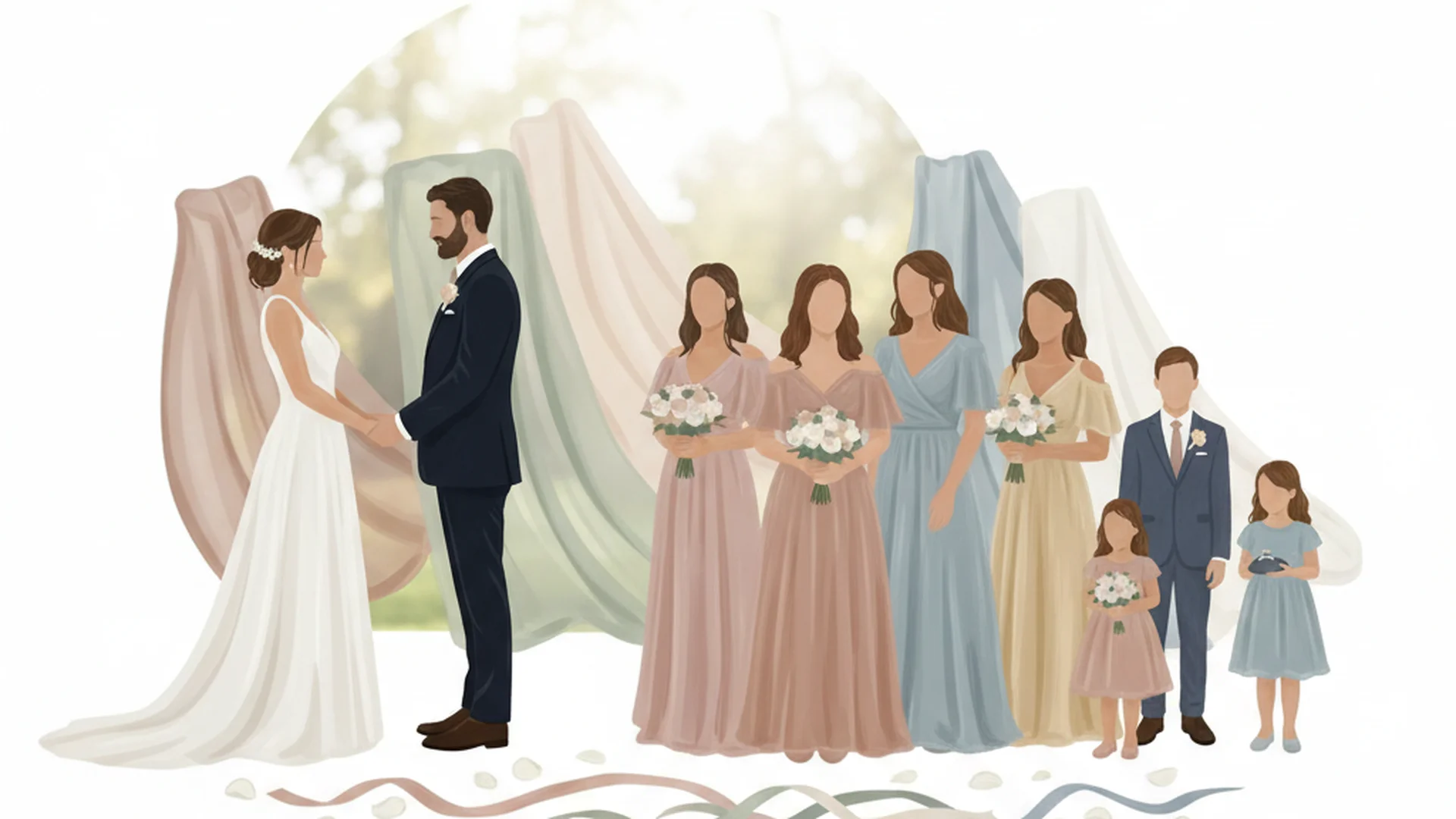
- Understand the financial and emotional commitment required of modern attendants.
- Explore gender-neutral and minimalist wedding party trends for 2025.
- Learn how to assign roles based on strengths rather than just tradition.
Selecting your inner circle is one of the most exciting—and potentially stressful—parts of the planning process. As we move into the 2025 and 2026 wedding seasons, the traditional definitions of wedding party roles are evolving. Whether you are leaning into a classic aesthetic or opting for a minimalist, non-traditional ceremony, understanding the expectations and logistics of these roles is essential for a harmonious celebration.
As an interfaith wedding officiant, I have seen firsthand how a well-organized wedding party can elevate a ceremony from a simple event to a seamless, emotional experience. This guide will walk you through everything from the financial realities of being an attendant to the emerging trends that are redefining the "I Do" crew.
The Modern Landscape of Wedding Parties
In 2025, the average wedding cost has risen to approximately $36,000, and this financial shift affects everyone involved. For members of the wedding party, the cost of participation is no longer a minor gesture. Between attire, travel, and pre-wedding celebrations, attendants often spend between $1,500 and $2,500. For destination weddings, that number can easily climb above $5,000.
Because of these rising costs, we are seeing a significant shift in demographics. Millennials remain the highest spenders on weddings, but Gen Z is increasingly opting for "micro-parties" consisting of just one or two people. This shift isn't just about money; it’s about intentionality and reducing the logistical "noise" that comes with a 20-person wedding party.
Note
Defining the Primary Wedding Party Roles
To plan effectively, you must understand what each role traditionally entails and how those duties are shifting in the modern era.
The Honor Attendants (Maid/Matron of Honor & Best Man)
The Honor Attendants are the couple's primary support system. Traditionally, a "Maid" of Honor is unmarried, while a "Matron" of Honor is married. Today, these labels are often replaced with gender-neutral terms like "Person of Honor" or "Best Person."
Their duties include:
- Pre-Wedding: Leading the planning for the bachelor or bachelorette parties and acting as a point of contact for other attendants.
- Day-Of: Holding the rings (Best Man) or the bouquet (MOH), signing the marriage license as legal witnesses, and delivering a toast at the reception.
Bridesmaids and Groomsmen
These individuals form the "squad" that supports the Honor Attendants. Their primary role is to be present, assist with DIY tasks (if requested), and help keep the energy high on the dance floor.
Ushers and Junior Attendants
Ushers are vital for logistics, especially in larger ceremonies, as they ensure guests find their seats and receive programs. Junior attendants (typically ages 8–14) provide a middle ground for family members who are too old to be flower girls/page boys but too young for the full responsibilities of a bridesmaid or groomsman.
| Role | Key Pre-Wedding Duty | Key Day-Of Duty |
|---|---|---|
| Honor Attendant (MOH/Best Man) | Plan the Bach party & lead the squad. | Sign the marriage license; give a toast. |
| Bridesmaids / Groomsmen | Assist with DIY & attend showers. | Help guests find seats; keep the dance floor moving. |
| Ushers | Attend the rehearsal. | Escort guests to seats; hand out programs. |
| Flower/Ring Attendant | Practice walking the aisle. | Add charm to the processional (can be children, adults, or pets). |
| Junior Attendants | Attend the rehearsal dinner. | Walk in the processional (perfect for ages 8–14). |
Choosing Your Crew: The "Reliability" Test
One of the most common mistakes couples make is choosing their wedding party based solely on the length of a friendship. While history matters, a wedding requires active participation and reliability.
Tip
Real-World Example: The "Financial Easy Out" Consider Sarah, a 2025 bride who wanted her best friend Emily to be her Maid of Honor. Emily had just started a demanding residency program and was struggling financially. Instead of assuming Emily would "make it work," Sarah had an honest conversation: "I love you and want you by my side, but I know your schedule is intense. Would you prefer to be a 'guest of honor' so you can just enjoy the day without the planning stress?" Emily was immensely relieved, and their friendship stayed strong without the resentment of unmet expectations.
Emerging Trends for 2025–2026
The "rules" of wedding parties are being rewritten by couples who value inclusivity and personalization over tradition.
Gender-Neutral and Mixed-Gender Roles
The binary of "men on one side, women on the other" is fading. Labels like "Bridesmate," "Groomsmaid," and "Best Woman" are now standard. This allows couples to include their "inner circle" based on the relationship rather than gender identity.
Pets of Honor
In 2025, pets are more than just "cute additions"—they are being officially listed in programs. From "Best Dogs" to "Flower Felines," couples are hiring professional handlers to ensure their furry friends can participate in the ceremony without causing chaos.
The Professional "Content Creator"
A fascinating trend for 2026 is the rise of the wedding content creator. This is a professional hired specifically to capture behind-the-scenes social media footage. This role relieves the wedding party of "photo duty," allowing them to be fully present in the moment rather than worried about capturing the perfect TikTok or Reel for the couple.
Do this
From the OurVows workspace
Leading the wedding party?
From speeches to schedules, keep your duties straight with the rest of the plan in one place.
Best Practices for Clear Communication
Misunderstandings about money and time are the leading causes of wedding party drama. To avoid this, follow these expert recommendations:
- Define Expectations Early: Provide a "soft" list of duties before they officially say yes.
- Clear Financial Talk: Be transparent about the costs of the dress, the suit, and the bachelorette weekend.
- Assign Strength-Based Roles: Instead of giving everyone the same generic tasks, ask your organized friend to manage the logistics and your social friend to act as the "hype person" on the big day.
Heads up
Common Mistakes to Avoid
- The "Reciprocity Trap": You are not obligated to ask someone to be in your wedding just because you were in theirs. Relationships evolve, and your wedding party should reflect your life now.
- Ignoring Local Logistics: If your entire wedding party lives in different time zones, don't expect them to fly in for multiple DIY "craft nights." Be realistic about what long-distance attendants can contribute.
- The "Bach" Burnout: For 2025, "Low-Key Bachs" (staycations or weekend retreats) are trending over week-long international extravaganzas to prevent bridesmaid burnout.
Tip
Frequently asked questions
What is the difference between a Maid and Matron of Honor?
How many bridesmaids/groomsmen is "too many"?
Do I have to have an even number on both sides?
Who pays for the wedding party attire?
Can I ask my parents to play a role in the wedding party?
Conclusion
Your wedding party should be your greatest source of joy, not your biggest source of stress. By being transparent about costs, choosing based on reliability, and embracing modern trends like gender-neutral roles, you can create a support system that makes your wedding day truly unforgettable.
If you are just beginning your journey, remember that planning is a marathon, not a sprint. Using a 12 Month Wedding Planning Checklist can help you stay on track as you assemble your dream team.
Do this
Ready when you are
Ready to Organize Your Crew?
Simplify your planning process with our expert tools and checklists.
Ready when you are
Plan your wedding without the chaos.
Free forever for couples just getting started. Two minutes to set up. No credit card.
Keep reading

Will You Be My Bridesmaid Ideas: The Ultimate Guide for 2025–2026
Discover the best "Will You Be My Bridesmaid" ideas for 2025-2026. From meaningful minimalism to experiential proposals, plan the perfect moment for your bridal party.

The Ultimate Guide to Usher Duties at Wedding: 2025-2026 Edition
Master the essential usher duties at a wedding for 2025-2026. From modern seating trends to digital program support, learn how to manage guest hospitality.

Wedding Party Problems Solutions: Navigating Modern Drama with Grace and Humor
Manage wedding party conflict, budget issues, and logistical stress with our expert guide to Wedding Party Problems Solutions for 2025 and 2026.